
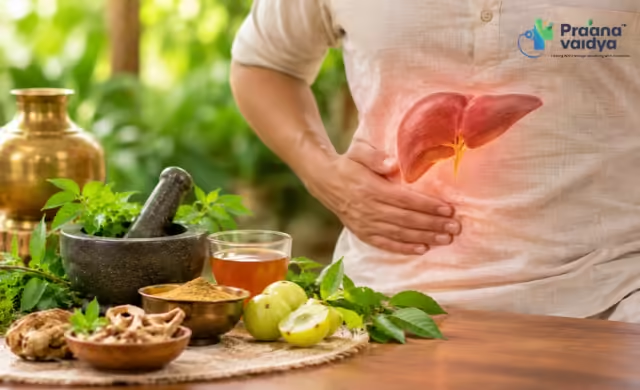
Cirrhosis is a long-term liver condition involving scarring of liver tissue. People searching for liver cirrhosis ayurvedic treatment often want to understand what Ayurveda involves, whether it can be considered alongside existing care, and how an Ayurvedic consultation may be personalised.
Ayurveda takes an individual approach to food, daily routine, digestion, sleep, stress and overall wellbeing. At Praanavaidya, people exploring Ayurvedic care can discuss their health history and current treatment before considering any traditional formulation or therapy.
If you are exploring Ayurvedic care for liver health, consider a consultation at Praanavaidya to discuss your concerns and understand what may be appropriate for you.
If you are considering Ayurvedic care for liver health, professional guidance is important. Do not start herbs, supplements or restrictive diets based only on general online advice.
What Is Liver Cirrhosis?
Cirrhosis refers to scarring of the liver that develops over time. Its causes and course can vary, so the needs of one person may be very different from another.
A person with cirrhosis may already have a medical care plan involving monitoring, medicines, dietary guidance or other interventions. Any additional approach should take that existing care into account.
How Can Ayurvedic Care Fit Into Liver Cirrhosis Care?
People looking for Ayurvedic treatment for liver cirrhosis may be interested in a traditional whole-person approach. Rather than selecting one remedy based only on a diagnosis, an Ayurvedic consultation may consider several aspects of the person’s lifestyle and health history.
These may include:
- Food habits and meal routines
- Digestion and dietary tolerance
- Sleep and daily schedule
- Activity and rest
- Stress and relaxation
- Current medicines and supplements
- Previous health conditions and treatments
The purpose is to understand the individual before discussing whether any Ayurvedic approach is appropriate.
How Can Ayurvedic Care Be Personalised?
There is no single Ayurvedic plan that suits everyone with cirrhosis. A practitioner may ask about current concerns, eating patterns, sleep, activity, previous treatments and medicines.
This information can help shape a discussion around appropriate diet and lifestyle practices and whether any traditional Ayurvedic formulation or therapy should be considered.
Why Professional Supervision Matters
Searching for the best Ayurvedic medicine for liver cirrhosis can make treatment seem simpler than it is. People with liver conditions may also be taking prescription medicines or managing other health concerns.
Natural or herbal does not automatically mean suitable for every person. Ingredients, formulation, dosage, existing medicines and individual health factors need to be considered.
Diet and Daily Routine in Ayurvedic Care
Food and routine can form part of an Ayurvedic consultation, but people with cirrhosis should be cautious about following generic online diet plans.
An individual consultation may discuss:
- Regular meal patterns
- Food preferences and tolerances
- Hydration habits
- Sleep and waking routines
- Activity and rest
- Stress-management practices
Avoid making major dietary changes, prolonged fasting or using “liver detox” products without appropriate professional guidance.
What About Ayurvedic Therapies and Panchakarma?
Ayurveda includes different traditional therapies, but having cirrhosis does not automatically make every therapy suitable.
The decision may depend on the person’s overall health, diagnosis, medicines, nutritional status and other relevant factors. Some approaches may need to be avoided or modified.
This is why choosing a therapy from a general online list is different from having an individual assessment.
Ayurveda and Conventional Medical Care
Ayurvedic care should not be presented as a replacement for appropriate medical evaluation or ongoing care for cirrhosis. If you are already seeing a doctor, continue that care and discuss any complementary Ayurvedic approach with the relevant professionals.
Share information about your medicines, supplements and existing treatment with your Ayurvedic practitioner. Likewise, tell your medical doctor about Ayurvedic products or therapies you are considering.
This open communication is especially important when several forms of care are being used at the same time.
Want to understand whether Ayurvedic care can be discussed alongside your current health routine? Contact Praanavaidya for an individual consultation.
When Should You Seek Medical Evaluation?
New or worsening symptoms should not be managed only with online advice or self-treatment.
Seek prompt medical attention for concerning changes such as:
- New or rapidly worsening abdominal swelling
- Yellowing of the skin or eyes
- Vomiting blood or passing black stools
- New confusion or unusual sleepiness
- Severe or rapidly worsening symptoms
These situations require appropriate medical assessment.
How to Choose Ayurvedic Care for Liver Cirrhosis
If you are exploring Ayurvedic care, look beyond claims about quick results or a single “best” medicine.
A useful consultation should involve:
- Review of your health history
- Discussion of current medicines and supplements
- Clear explanation of what is being recommended
- Individualised rather than one-size-fits-all guidance
- Appropriate medical referral when needed
- Follow-up based on your circumstances
Ayurvedic Consultation at Praanavaidya
At Praanavaidya, people exploring Ayurvedic care can discuss their concerns, lifestyle, food habits, daily routine, health history and current care with a practitioner. The focus is on understanding the individual before discussing suitable traditional approaches.
Can Ayurveda Replace Medical Treatment for Cirrhosis?
No. Ayurvedic care should not be presented as a guaranteed cure or substitute for appropriate medical care. If you have cirrhosis, discuss any complementary approach with qualified professionals and continue recommended medical monitoring.
The more useful question is not simply, “Which Ayurvedic medicine is best for cirrhosis?” It is, “What type of Ayurvedic care, if any, is appropriate for my current health situation?”
Looking for Ayurvedic consultation ? Praanavaidya can help you understand the consultation process and discuss your individual needs.
Visit Us at Your nearest branch:
Rajajinagar- 08065903133
Hubballi – 08065903145
Indiranagar- 08065903135
Mumbai-08065903118
Yelahanka- 08065903134
Mangaluru-08065903136
Jayanagar- 08065903132
Delhi-08065903140
Lucknow-08065903130
FAQs
Can Ayurveda treat liver cirrhosis?
Ayurvedic care should not be presented as a guaranteed treatment or cure for cirrhosis. People may explore it as an individualised approach to diet, routine and traditional care alongside appropriate medical evaluation.
What is the best Ayurvedic medicine for liver cirrhosis?
There is no single medicine that is appropriate for everyone with cirrhosis. Any Ayurvedic formulation should be considered after reviewing the person’s health history, medicines and current situation.
Is Ayurvedic treatment for liver cirrhosis safe?
Suitability depends on the individual. People with liver conditions should not assume that every herbal product or Ayurvedic formulation is suitable for them. Professional guidance is important.
Can I take Ayurvedic medicines with my liver medicines?
Do not assume that Ayurvedic and prescription medicines can always be combined. Tell both your Ayurvedic practitioner and medical doctor about all medicines, supplements and formulations you use or are considering.
Can diet help someone with cirrhosis?
Dietary needs can vary between people with liver conditions. Avoid restrictive diets, prolonged fasting or “detox” programmes based only on general online advice.
Is Panchakarma suitable for liver cirrhosis?
Panchakarma is not automatically suitable for everyone with cirrhosis. Whether a traditional therapy is appropriate depends on the person’s health status, medical history and professional assessment.
When should someone with cirrhosis see a doctor?
Cirrhosis may require ongoing medical evaluation. New, worsening or concerning symptoms should be assessed promptly rather than managed through self-treatment.
Praanavaidya
Healthcare Professional
Focused on patient-centric care and evidence-based treatment plans.
More from Praanavaidya