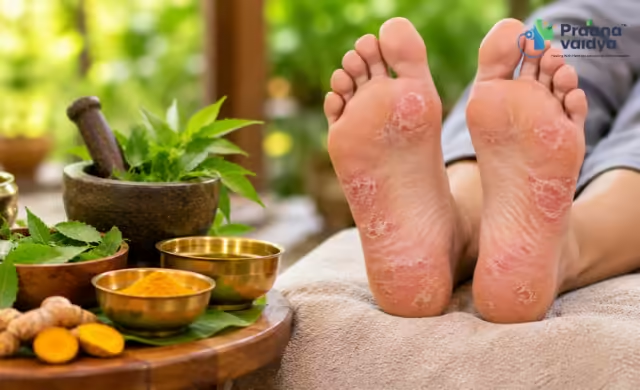
Plantar psoriasis affects the skin on the soles of the feet, where constant pressure and friction can make skin changes especially noticeable. Thickened skin, scaling, dryness or cracks may make walking and standing uncomfortable.
If you are searching for plantar psoriasis ayurvedic treatment, it helps to understand the condition before choosing a care approach. This guide covers common causes and symptoms, how plantar psoriasis can resemble other foot conditions, and what an Ayurvedic approach may involve.
If you have persistent scaling, thickening or cracking on your feet, consider getting the cause assessed before choosing a treatment. You can also explore an Ayurvedic consultation with Praanavaidya.
What Is Plantar Psoriasis?
Plantar psoriasis is psoriasis that affects the soles of the feet. It may appear on pressure areas such as the heels and balls of the feet.
The skin may become dry, thick, scaly or cracked. Some people notice itching, tenderness or discomfort, while others mainly notice changes in texture and appearance.
Because the skin of the soles is naturally thicker, plantar psoriasis can look different from psoriasis on other parts of the body. It is also easy to confuse with eczema, fungal infections, contact dermatitis or calluses.
What Causes Plantar Psoriasis?
The exact cause of psoriasis is complex. It is associated with changes in the immune response and can occur in people with a genetic tendency towards the condition.
Factors that may influence when symptoms appear or become more noticeable include:
- Family history of psoriasis
- Physical stress or repeated friction on the feet
- Skin injuries or irritation
- Emotional stress
- Certain infections or illnesses
- Smoking or alcohol use
- Changes in weather and skin dryness
- Some medicines in susceptible individuals
Not every factor affects every person. Keeping a simple record of symptoms, footwear, skin products, stress and lifestyle changes can help you identify patterns to discuss with a healthcare professional.
Plantar Psoriasis Symptoms to Look For
Symptoms can vary, but common changes include:
Thickened Skin on the Soles
Areas of the sole may become noticeably thicker or rougher, particularly around pressure points.
Dry, Scaly Patches
The affected skin may look dry and develop visible scaling. Colour and appearance can vary across skin tones.
Cracks or Fissures
Dry, thickened skin can develop cracks that become uncomfortable when walking or when the feet are repeatedly exposed to pressure.
Itching, Tenderness or Discomfort
Some people experience itching or tenderness. Discomfort may become more noticeable after prolonged standing or walking.
Changes Elsewhere on the Body
Psoriasis can affect more than one area. If you notice similar skin changes elsewhere, mention them during an assessment.
Plantar Psoriasis vs Other Foot Conditions
Plantar psoriasis can resemble several other conditions, so self-diagnosis can be difficult.
Plantar Psoriasis vs Eczema
Both can involve dryness, itching, scaling and irritation. Their distribution, appearance and history can help a healthcare professional distinguish between them.
Plantar Psoriasis vs Fungal Infection
Fungal infections can also cause scaling and itching. The pattern and associated symptoms may differ, so persistent changes should be assessed rather than assumed to be psoriasis.
Plantar Psoriasis vs Calluses
Calluses commonly develop where repeated pressure or friction thickens the skin. When thickening is widespread, recurrent or accompanied by other changes, an assessment can help clarify the cause.
If you are unsure whether you have psoriasis on the soles of your feet, clarifying the diagnosis is an important first step.
What Does Ayurvedic Treatment for Plantar Psoriasis Involve?
People searching for plantar psoriasis ayurvedic treatment may be interested in an approach that considers skin concerns alongside individual constitution, routines, diet and lifestyle.
In Ayurveda, skin concerns may be viewed through a broader assessment rather than focusing only on visible changes. An Ayurvedic practitioner may ask about:
- Daily routine and sleep
- Food habits and meal timing
- Digestion and bowel patterns
- Stress and activity levels
- Previous skin concerns
- Seasonal changes
- Current medicines or supplements
- Skin-care products and personal habits
Depending on the consultation, an Ayurvedic practitioner may discuss diet and routine adjustments, external skin-care practices and, where appropriate, Ayurvedic formulations.
The exact approach should be individualised rather than copied from a general online remedy. Herbal preparations and internal medicines may not be appropriate for everyone and can interact with medicines, so they should be discussed with a qualified practitioner.
Why Individual Assessment Matters
There is no single Ayurvedic routine that suits every person with plantar psoriasis. People with similar symptoms may have different triggers and health histories.
A consultation can help organise these factors and determine which Ayurvedic practices are appropriate to discuss. It can also help avoid unverified home remedies that may irritate cracked skin.
Looking for an Ayurvedic approach to plantar psoriasis? Speak with Praanavaidya to discuss your symptoms, daily routine and treatment preferences with an Ayurveda practitioner.
Everyday Foot Care for Plantar Psoriasis
Alongside any treatment plan, gentle daily habits can help avoid unnecessary irritation.
Keep the Skin Moisturised
Regular moisturising can help with excessive dryness. Choose a product that suits your skin and stop using it if it causes burning or irritation.
Reduce Unnecessary Friction
Tight footwear and rough materials can increase friction. Comfortable, well-fitting footwear may reduce avoidable pressure.
Avoid Scratching or Picking
Scratching can further irritate the skin. If itching is persistent, discuss suitable options with a healthcare professional.
Maintain Foot Hygiene
Keep the feet clean and dry, especially between the toes. Avoid harsh scrubbing when the skin is cracked.
Track Your Symptoms
A simple weekly note of symptoms, footwear, products and lifestyle changes can make consultations more useful.
When Should You Get Your Feet Assessed?
Persistent or recurring changes on the soles deserve attention, particularly when the cause is unclear.
Consider an assessment if:
- Thickening or scaling keeps returning
- Cracks are painful or repeatedly reopen
- The affected area is spreading
- Symptoms interfere with walking or daily activities
- You have similar skin changes elsewhere
- Products used at home cause irritation
- You are unsure whether the problem is psoriasis, eczema, fungal infection or a callus
Seek prompt medical attention for significant swelling, severe pain, pus, fever or rapidly worsening skin changes.
How Praanavaidya Approaches Ayurvedic Care
At Praanavaidya, an Ayurvedic consultation can begin with understanding a person’s symptoms, health history, lifestyle and daily routine rather than relying on a generic remedy.
For people exploring plantar psoriasis ayurvedic treatment, this creates a structured discussion around skin care, lifestyle and Ayurvedic practices that may be appropriate for their individual situation.
Praanavaidya has locations in Bangalore, Hubballi, Mangalore, Mumbai, Delhi and Lucknow, allowing people in multiple cities to explore consultations.
If you are looking for Ayurvedic care for plantar psoriasis, connect with Praanavaidya in
Rajajinagar- 08065903133
Hubballi – 08065903145
Indiranagar- 08065903135
Mumbai-08065903118
Yelahanka- 08065903134
Mangaluru-08065903136
Jayanagar- 08065903132
Delhi-08065903140
Lucknow-08065903130
FAQs
What Is Plantar Psoriasis?
Plantar psoriasis is psoriasis that affects the soles of the feet. It may cause thickened, dry or scaly skin and can sometimes be associated with cracking, itching or discomfort.
What Are the Common Symptoms of Plantar Psoriasis?
Common symptoms include thickened skin, dryness, scaling, cracks, itching, tenderness and discomfort on the soles. The appearance can vary between individuals.
What Causes Psoriasis on the Soles of the Feet?
Psoriasis is associated with immune-system changes and genetic susceptibility. Factors such as skin irritation, stress, illness and certain lifestyle or environmental factors may influence symptoms in some people.
Is Plantar Psoriasis the Same as Eczema on the Feet?
No. Plantar psoriasis and foot eczema can look similar, but they are different conditions. A healthcare professional can assess the pattern and history of the skin changes to help distinguish between them.
What Is Plantar Psoriasis Ayurvedic Treatment?
Plantar psoriasis ayurvedic treatment refers to an Ayurvedic approach to the condition. Depending on individual assessment, an Ayurvedic practitioner may discuss diet, daily routines, skin-care practices and appropriate Ayurvedic formulations.
Can I Use Home Remedies for Plantar Psoriasis?
It is better not to rely on a home remedy simply because it is described as natural. Some substances can irritate dry or cracked skin. Discuss home remedies or herbal preparations with a qualified practitioner before using them.
When Should I See a Doctor for Plantar Psoriasis?
Consider an assessment when symptoms persist, recur frequently, become painful, interfere with walking or are difficult to distinguish from another foot condition. Prompt medical attention is appropriate for severe pain, swelling, pus, fever or rapidly worsening symptoms.
Can Plantar Psoriasis Come Back After It Improves?
Psoriasis can follow a recurring course, with periods when symptoms are more noticeable and periods when they are less noticeable. Tracking individual triggers and maintaining an agreed care routine may make future consultations more informative.
Praanavaidya
Healthcare Professional
Focused on patient-centric care and evidence-based treatment plans.
More from Praanavaidya