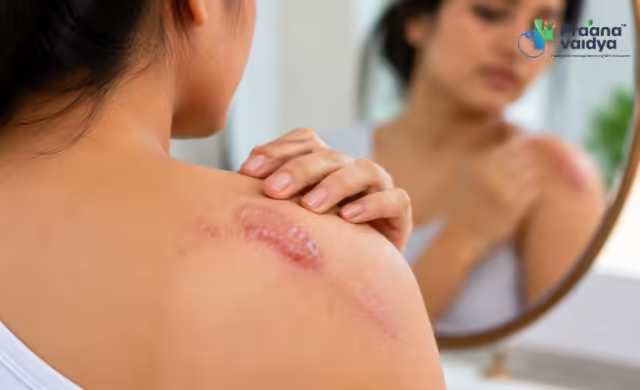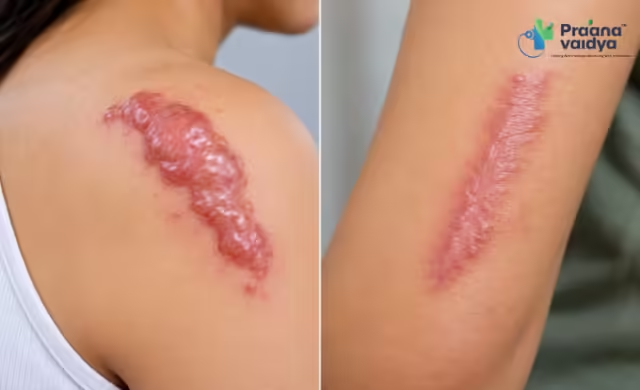

A keloid may seem like a cosmetic concern when it is small and unchanged. But when a scar becomes itchy, painful, or noticeably larger, it is natural to wonder whether it needs attention.
This guide explains which changes are worth monitoring, when an assessment may be useful, what a consultation can cover, and how to prepare for a discussion about a changing scar. Praanavaidya offers consultations for people seeking guidance about keloids and raised scars.
If your keloid has recently become itchy, painful, or larger, consider booking a consultation with Praanavaidya to discuss the change and understand the next steps.
What does an itchy, painful or growing keloid mean?
A keloid is a raised scar that extends beyond the area of the original skin injury. Its appearance and feel can change over time. Some people notice itching or tenderness, while others are mainly concerned about gradual growth.
Not every change means the same thing. However, a scar that is noticeably changing is worth paying attention to rather than judging only by appearance.
Itchy keloid
Itching can become distracting when clothing rubs against the area or when the skin feels irritated. Occasional itching may be easy to manage, but persistent or increasingly bothersome itching is a reason to discuss the scar with a practitioner.
Painful keloid
A painful keloid can be uncomfortable when the area is pressed, rubbed, or stretched. New, persistent, or increasing discomfort is worth mentioning during an assessment.
Rather than trying to determine the cause from appearance alone, an assessment allows the practitioner to consider the scar’s history, location, size, texture, and recent changes.
Growing keloid
A keloid may change gradually, making growth difficult to notice from day to day. Comparing the scar with older photographs can help you recognise whether its size or shape has changed.
If a keloid is clearly getting bigger or changing shape, consider arranging an assessment.
When should you seek assessment for a keloid?
You do not have to wait until a keloid becomes severely uncomfortable before discussing it. An assessment may be useful when you notice a meaningful change or when the scar starts affecting everyday life.
Consider seeking assessment if:
- The keloid is becoming noticeably larger.
- Itching has become frequent or difficult to ignore.
- Pain or tenderness is new or persistent.
- The scar is repeatedly irritated by clothing, jewellery, movement, or daily activities.
- The colour, texture, shape, or surface has changed.
- You are unsure whether the raised area is a keloid or another type of scar.
- The scar is causing ongoing concern about its appearance or comfort.
- A previously stable scar has started changing and you want it reviewed.
If there is a sudden or unexplained change, arranging an assessment can help replace guesswork with a clearer understanding of what is happening.
Why is it useful to assess a changing keloid?
Not every raised scar has the same characteristics. Location, duration, size, appearance, and the history of the original skin injury can all provide useful context.
An assessment can help answer practical questions such as:
Is it actually a keloid?
A raised area is not automatically a keloid. Reviewing the scar’s history and appearance can help clarify what type of scar is being discussed.
Has the scar changed?
The timing of a change matters. A scar that has remained stable for a long period is different from one that has recently become larger, itchier, or more uncomfortable.
What may be irritating it?
Clothing, straps, jewellery, repeated rubbing, and pressure can make a raised scar more noticeable or uncomfortable. Identifying these everyday factors can make it easier to describe the problem during a consultation.
What should be monitored?
A practitioner can discuss which changes are worth watching and whether a follow-up assessment would be useful.
What happens during a keloid assessment?
A consultation generally begins with questions about the scar and its history. You may be asked:
- When the scar first appeared
- What caused the original skin injury
- How its size or appearance has changed
- When itching, tenderness, or pain began
- Whether clothing or movement irritates the area
- Whether you have previously tried any approaches for the scar
The scar can then be reviewed based on its location, size, shape, surface, and general appearance.
You do not need to remember every detail. Older photographs can be particularly helpful if you want to explain how the scar has changed over time.
How can you prepare for a keloid consultation?
A little preparation can make the discussion more useful.
Take dated photographs
If the scar has been changing, keep photographs taken in similar lighting and from similar angles. This creates a simple visual record.
Note when symptoms occur
Instead of simply writing “it itches”, note when the itching occurs and whether clothing, movement, or another activity makes it more noticeable.
Make a short timeline
Record when the scar first appeared, when you noticed growth, and when itching or pain became noticeable.
List previous care
Make a note of products, procedures, or other approaches you have already tried. This gives the practitioner a clearer picture of the scar’s history.
Should you ignore an itchy or growing keloid?
It is easy to ignore a scar when it has been present for a long time. But when the scar starts changing, keeping track of those changes can be useful.
You do not need to panic about every small variation. A practical approach is to observe the scar, record meaningful changes, and seek an assessment when growth is noticeable, symptoms persist, or you are uncertain about what you are seeing.
The goal is to understand the current status of the scar rather than relying on assumptions based on appearance alone.
If you are noticing an itchy, painful, or growing keloid, Praanavaidya can help you discuss the change during a consultation. Consultations are available across
Rajajinagar- 08065903133
Hubballi – 08065903145
Indiranagar- 08065903135
Mumbai-08065903118
Yelahanka- 08065903134
Mangaluru-08065903136
Jayanagar- 08065903132
Delhi-08065903140
Lucknow-08065903130
Keloid vs other raised scars
People often use “keloid” to describe any raised scar, but different raised scars can have different characteristics. This distinction matters when you are trying to understand what you are seeing.
For a detailed comparison, see our related guide on Keloid vs Hypertrophic Scar: Understanding the Difference.
Keeping this topic separate from general keloid treatment information also makes it easier to find the right information for your specific concern.
Common mistakes when dealing with a changing keloid
Relying only on online photographs
Online photographs can help with general education, but they do not provide the full history of a scar. Location, duration, original injury, and changes over time all matter.
Waiting until discomfort becomes disruptive
You do not have to wait until discomfort is severe before discussing a persistent change.
Constantly touching or checking the scar
Frequent touching, pressing, or rubbing can make an already sensitive area more noticeable. Occasional photographs are usually a more useful way to monitor visual changes.
Starting several approaches at once
Trying multiple new products or approaches simultaneously can make it difficult to understand what has changed. Discussing the scar first can create a clearer starting point.
When should you arrange a follow-up?
Follow-up may be useful when a practitioner has already assessed the scar and suggested monitoring. It can also be reasonable to arrange another assessment if a previously stable keloid changes again or if your concern has changed.
Keep earlier photographs and consultation notes where possible. They can make comparisons easier during a future discussion.
FAQs
Is an itchy keloid a reason to seek assessment?
Persistent or bothersome itching can be a reason to discuss a keloid with a practitioner, particularly if the itching is new or becoming more frequent.
What should I do if my keloid is getting bigger?
If you notice clear growth, consider arranging an assessment rather than judging the change from memory. Dated photographs can help show how the scar has changed.
Can a keloid be painful?
A keloid can feel uncomfortable or tender for some people. New or persistent pain is worth mentioning during an assessment.
How can I tell if a raised scar is a keloid?
A practitioner can consider the scar’s history, location, appearance, and relationship to the original injury. A photograph alone may not provide enough context.
Should I monitor a growing keloid?
Monitoring can help you notice meaningful changes. Taking occasional photographs in similar lighting and from similar angles can make comparisons easier.
Praanavaidya
Healthcare Professional
Focused on patient-centric care and evidence-based treatment plans.
More from Praanavaidya