
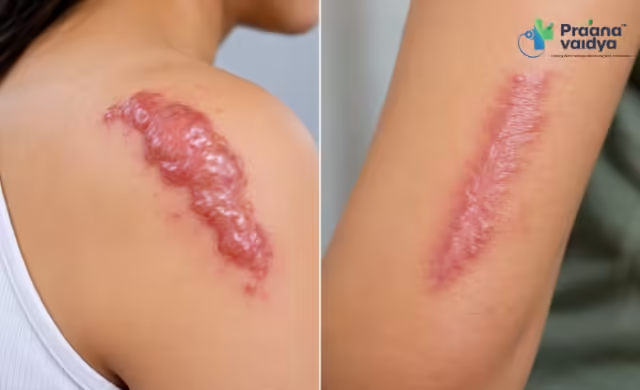
A scar can change in size, shape, colour and texture as it develops. When a scar becomes raised, many people wonder whether it is a keloid or hypertrophic scar. Although these two types of raised scars can look similar, there is an important difference between them.
The easiest way to understand the distinction is to look at how the scar relates to the original wound. A keloid extends beyond the original area of injury, while a hypertrophic scar generally remains within it.
Understanding this difference can help you describe what you are noticing during a consultation. At Praanavaidya, we encourage people to understand the basic characteristics of a raised scar rather than relying only on photographs or self-diagnosis.
What Is a Keloid?
A keloid is a raised scar that extends beyond the original boundaries of the wound or injury. Instead of remaining limited to the area that was initially damaged, the raised scar tissue extends into the surrounding skin.
Keloids may appear following different types of skin injuries, including cuts, surgical wounds, burns, piercings or other forms of skin trauma.
The original injury may be relatively small compared with the resulting raised area, which is one reason keloids can sometimes be confused with other types of scars.
How a keloid may look
A keloid can appear as a raised, firm or smooth area of scar tissue. Its colour may differ from the surrounding skin, and the shape may extend beyond the original wound.
Some features people may notice include:
- The scar is raised above the surrounding skin.
- The raised area extends beyond the original injury.
- The scar may feel firm or thick.
- The colour may differ from nearby skin.
- The shape may not follow the original wound exactly.
These features can vary between individuals, so appearance alone should not be used to determine the type of scar.
What Is a Hypertrophic Scar?
A hypertrophic scar is also a raised scar, but it generally remains within the boundaries of the original wound or injury.
This provides the simplest way to remember the keloid vs hypertrophic scar difference:
A hypertrophic scar stays within the original wound, while a keloid extends beyond it.
A hypertrophic scar may develop following an injury or surgical wound and can remain raised or thickened as the scar changes over time.
How a hypertrophic scar may look
A hypertrophic scar can appear raised, firm or thicker than the surrounding skin.
People may notice:
- A raised area over the original wound.
- A thicker or firmer texture.
- A difference in colour compared with nearby skin.
- A scar that generally follows the area of the initial injury.
The appearance of a hypertrophic scar can vary, which is why the history of the original wound is useful when discussing it with a healthcare professional.
Keloid vs Hypertrophic Scar: The Main Difference
The most useful distinction is the relationship between the raised scar and the original wound.
Quick Comparison: Keloid vs Hypertrophic Scar
| Feature | Keloid | Hypertrophic Scar |
| Relationship to original wound | Extends beyond the original wound | Remains within the original wound |
| Appearance | Raised and often thickened | Raised and often thickened |
| Scar boundaries | May grow into surrounding skin | Generally follows the original wound boundaries |
| Shape | May extend beyond the shape of the original injury | Usually follows the shape of the original injury |
| Texture | May feel firm or thick | May feel firm or thick |
| Common confusion | Can be mistaken for another raised scar | Can resemble a keloid because both are raised |
| Key point | Extends beyond the original injury | Stays within the original injury |
The main difference between a keloid and hypertrophic scar is the scar’s relationship to the original wound. Both can be raised and noticeable, so simply seeing a raised scar is not enough to distinguish between them.
Why Are Keloids and Hypertrophic Scars Often Confused?
Both keloids and hypertrophic scars are raised scars. They can also share visible characteristics such as thickness, firmness and changes in colour.
The confusion often happens when someone looks at the current scar without considering what the original wound looked like.
For example, a raised scar following a surgical incision may appear prominent. To understand whether it is more consistent with a hypertrophic scar or a keloid, it is useful to consider whether the raised area remains within the original incision or extends beyond it.
This is one reason an online photograph may not provide enough context. The history of the injury, location of the scar, changes over time and relationship to the original wound can all be relevant.
Keloid vs Hypertrophic Scar: A Simple Way to Compare Them
If you are trying to understand whether a raised scar resembles a keloid or hypertrophic scar, start with the original wound.
Step 1: Identify the original injury
Think about where the original cut, surgical incision, piercing, burn or other injury occurred.
Step 2: Look at the current scar
Observe the current size, shape and boundaries of the raised area.
Step 3: Compare the boundaries
Ask whether the raised scar remains within the original injury or extends beyond it.
If it remains within the original area, it may be consistent with a hypertrophic scar. If it extends beyond the original wound, it may be consistent with a keloid.
This comparison can help you understand the terminology, but it should not be treated as a way to diagnose a scar yourself.
Where Can Raised Scars Appear?
Keloids and hypertrophic scars can appear in different areas of the body after skin injury. The location can provide useful context, but location alone does not determine the type of scar.
Raised scars may be noticed after:
- Surgical procedures
- Accidental cuts
- Burns
- Piercings
- Skin injuries
- Other forms of trauma
When discussing a raised scar, it can be helpful to remember what caused the original injury and approximately when the scar began to change.
What Details Should You Note About a Raised Scar?
If you plan to discuss a raised scar with a healthcare professional, a few basic details can make the conversation clearer.
How did the scar begin?
Note whether it followed surgery, a piercing, a cut, burn or another type of skin injury.
Where is the scar located?
Record the body area where the scar appeared and whether it is associated with a previous surgical or injury site.
Does it remain within the original wound?
This is one of the most useful details when considering the difference between a keloid and hypertrophic scar.
Has the scar changed?
Consider whether you have noticed changes in its size, thickness, colour, texture or shape.
When did you first notice the change?
A simple timeline can help explain how the scar has developed.
When Should a Raised Scar Be Assessed?
A raised scar may be worth discussing with a healthcare professional when you are uncertain about what it is, when its appearance is changing, or when it is causing discomfort or concern.
Rather than attempting to identify a keloid or hypertrophic scar solely from an online image, consider discussing the scar with a qualified professional. An assessment can take into account the original injury as well as the current appearance of the scar.
Can a Keloid and Hypertrophic Scar Look the Same?
They can appear similar at first glance because both involve raised scar tissue. The difference is not simply whether the scar is raised.
The more useful question is whether the raised scar remains within the original wound or extends beyond it.
Other details, including the history and location of the injury, may also provide useful context.
This is why terms such as “raised scar”, “keloid” and “hypertrophic scar” should not automatically be treated as interchangeable. They describe related but distinct scar patterns.
Understanding the Difference Before Seeking Care
Knowing the difference between a keloid and hypertrophic scar is a useful starting point, but identifying the exact type of scar is an individual matter.
Avoid judging a scar only by its colour, thickness or appearance in a photograph. Instead, consider the original wound, the scar’s boundaries and how its appearance has changed over time.
For readers exploring scar-related care, Praanavaidya provides consultation options across
Rajajinagar- 08065903133
Hubballi – 08065903145
Indiranagar- 08065903135
Mumbai-08065903118
Yelahanka- 08065903134
Mangaluru-08065903136
Jayanagar- 08065903132
Delhi-08065903140
Lucknow-08065903130
If you have a raised, changing or concerning scar, contact Praanavaidya to discuss your concerns and understand what type of assessment may be appropriate for you.
FAQs
What is the difference between a keloid and a hypertrophic scar?
The main difference is how the raised scar relates to the original wound. A hypertrophic scar generally remains within the original wound, while a keloid extends beyond its original boundaries.
How can you tell a keloid from a hypertrophic scar?
Look at the boundaries of the original injury. If the raised scar remains within the original area, it may be consistent with a hypertrophic scar. If it extends beyond that area, it may be consistent with a keloid.
Is a keloid a raised scar?
Yes, a keloid is a type of raised scar that extends beyond the original area of skin injury.
Is a hypertrophic scar raised?
Yes, a hypertrophic scar is generally raised or thickened compared with the surrounding skin and remains within the original wound area.
Can a scar after surgery become raised?
A surgical scar can become raised. The relationship between the raised area and the original surgical wound can be useful when distinguishing between different types of raised scars.
Can a keloid develop after piercing?
A raised scar can develop at a piercing site. If the raised area extends beyond the original injury, it may be consistent with a keloid, although individual assessment is needed.
When should I see a doctor about a raised scar?
Consider professional assessment if you are unsure what type of scar you have, notice changes in its appearance, or have concerns about the scar.
Praanavaidya
Healthcare Professional
Focused on patient-centric care and evidence-based treatment plans.
More from Praanavaidya