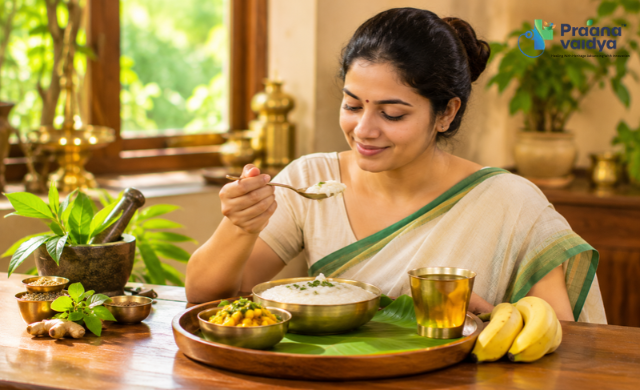
After Virechana therapy, what you eat matters because the digestive routine is traditionally brought back gradually rather than immediately returning to heavy, rich meals. If you are wondering what to eat after Virechana, a simple, light and gradually progressing food plan can make the transition easier to follow.
In Ayurveda, the post-Virechana dietary sequence is commonly referred to as Samsarjana Krama. The exact food progression can vary depending on the individual, the therapy plan and the guidance provided by the Ayurveda practitioner.
This guide from Praanavaidya explains a practical day-by-day approach to food after Virechana, including what you can consider eating, what foods are better avoided initially and how to gradually return to your usual meals.
Planning Virechana therapy?
Why Is Diet Important After Virechana?
Virechana is a traditional Ayurvedic Panchakarma procedure. After the procedure, Ayurveda traditionally recommends a gradual transition from very light foods to regular meals.
The idea is simple: instead of going directly from the therapy to a heavy meal, food is introduced in stages.
Your practitioner may consider factors such as:
- The nature of the Virechana procedure
- The individual’s digestive tolerance
- The intensity and duration of the procedure
- The person’s usual dietary pattern
- How the person feels after the procedure
- The overall Panchakarma plan
Therefore, there is no single Virechana diet plan that is appropriate for everyone.
What to Eat After Virechana: Day-by-Day Guide
The following is a general food framework for understanding the traditional progression. Your Ayurveda practitioner may modify the sequence, portions or duration based on your individual plan.
Day 1: Keep Meals Very Light
The first day is generally focused on simple foods that are easy to eat and prepare.
Depending on the plan provided by your practitioner, options may include:
- Thin rice water or rice gruel
- Very light rice preparations
- Warm, freshly prepared meals
- Small portions taken according to appetite
- Plain, lightly cooked foods
Avoid turning the first meal into a regular feast simply because you feel hungry.
The focus should be on keeping meals uncomplicated rather than adding multiple ingredients, spices or rich preparations.
Day 2: Gradually Increase the Consistency of Food
As the dietary sequence progresses, food may become slightly thicker and more substantial.
Possible options can include:
- Soft-cooked rice
- Light rice porridge
- Thin moong dal preparations
- Soft khichdi
- Lightly seasoned cooked foods
Keep the preparation simple. Avoid making khichdi or dal heavy with oil, chilli or multiple spices.
Portion size can also be increased gradually rather than moving immediately to large meals.
Day 3: Introduce Soft, Simple Meals
By this stage, the diet may begin to resemble a simple home-cooked meal.
You can consider foods such as:
- Soft rice
- Moong dal
- Simple khichdi
- Well-cooked vegetables
- Light soups
- Soft-cooked grains, depending on your practitioner’s advice
Freshly prepared food is generally a better fit for a simple post-Virechana meal plan than highly processed or packaged foods.
Day 4 and Beyond: Gradual Return to Your Regular Diet
Once your practitioner advises that you can return to a broader diet, introduce regular foods gradually.
A simple meal could include:
- Rice or another familiar grain
- Dal or another suitable protein source
- Cooked vegetables
- A small amount of suitable fat
- Warm fluids as advised
There is no need to suddenly add restaurant food, fried snacks, desserts or very rich meals simply because the dietary restriction period is ending.
A gradual transition is easier to manage and allows you to understand how your body responds to different foods.
Foods to Avoid After Virechana
During the initial post-Virechana dietary period, it is generally sensible to keep food choices simple.
Depending on your individual instructions, you may be asked to avoid or limit:
- Deep-fried foods
- Very spicy foods
- Heavy gravies
- Very oily meals
- Processed and packaged foods
- Excessively rich desserts
- Large portions
- Alcohol
- Very heavy restaurant meals
- Foods that are difficult for you to tolerate
Raw salads, very spicy chutneys and heavily seasoned dishes may also be temporarily avoided as part of a simplified food routine.
The important point is not to treat the post-Virechana diet as a permanent restriction. It is a structured transition period, and your practitioner can tell you when and how to expand your food choices.
What About Tea and Coffee After Virechana?
Tea and coffee may be part of your normal routine, but they may not fit into the initial post-Virechana dietary schedule recommended by your practitioner.
Instead of deciding independently when to restart them, ask your Ayurveda practitioner when they can be reintroduced.
The same applies to:
- Carbonated beverages
- Alcohol
- Energy drinks
- Very sweet beverages
- Strong caffeinated drinks
When returning to your normal diet, introduce familiar foods and beverages gradually rather than adding everything back at once.
How Much Water Should You Drink?
Hydration is an important part of maintaining a regular daily routine, but there is no need to force excessive amounts of water.
Follow the hydration instructions provided as part of your post-Virechana plan.
Warm fluids may be included in some traditional Ayurvedic dietary routines, but the exact recommendation can vary from person to person.
If your practitioner has given you specific instructions about fluids, follow those instructions rather than using a generic online schedule.
Can You Eat Fruits After Virechana?
Fruit may not be introduced immediately in every post-Virechana dietary plan.
The timing can depend on the dietary sequence recommended by your practitioner. When fruits are reintroduced, choose simple options that are familiar to you rather than immediately consuming large fruit portions, fruit juices or mixed fruit preparations.
Avoid assuming that every food considered healthy is automatically appropriate immediately after Virechana. Timing and individual tolerance matter.
Can You Eat Dal and Vegetables After Virechana?
Yes, dal and cooked vegetables can become part of the diet as the food sequence progresses, but they may not be introduced in the same quantity or preparation immediately after therapy.
Moong dal is often used in simple Ayurvedic meal preparations because it works well in dishes such as light khichdi.
Vegetables are generally easier to incorporate when they are:
- Freshly cooked
- Soft
- Lightly seasoned
- Not deep-fried
- Not covered in heavy sauces
Your practitioner can guide you on when to introduce these foods and how much to eat.
Simple Meal Ideas After Virechana
If you are looking for practical foods to eat after Virechana, keep meals uncomplicated.
Light meal ideas
- Thin rice gruel
- Soft rice with a simple dal
- Moong dal khichdi
- Light vegetable soup
- Soft-cooked vegetables with rice
- Simple home-cooked meals with minimal seasoning
The goal is not to create complicated recipes. Simple preparation can make it easier to follow the dietary sequence recommended after therapy.
Common Mistakes to Avoid After Virechana
Following the diet for only part of the recommended period can make the transition inconsistent.
Some common mistakes include:
Returning to heavy food too quickly
A large, oily or spicy meal may be very different from the simple foods recommended immediately after therapy.
Eating large portions
Even when the food itself is simple, large portions may not fit the dietary progression suggested by your practitioner.
Trying too many new foods
The post-Virechana period is not necessarily the best time to experiment with several unfamiliar foods, supplements or elaborate recipes.
Following someone else’s diet plan
A diet recommended for one person may not be the same as the plan given to another person.
Ignoring practitioner instructions
If your practitioner has provided a specific Samsarjana Krama schedule, use that plan as your primary reference.
What Is Samsarjana Krama?
Samsarjana Krama is the traditional Ayurvedic dietary progression followed after certain Panchakarma procedures, including Virechana.
Rather than moving directly from a procedure to a regular diet, food is traditionally introduced progressively.
The sequence may involve moving from very light preparations toward thicker and more substantial foods before returning to a regular diet.
The duration and specific foods are not necessarily identical for every person. Your Ayurveda practitioner can determine the appropriate progression based on your individual consultation and therapy plan.
If you are unsure about what to eat after Virechana, Praanavaidya can help you understand the dietary instructions associated with your individual therapy plan.
When Should You Return to Your Normal Diet?
There is no universal day on which everyone should return to their usual diet.
Some people may receive a shorter dietary progression, while others may be advised to follow a longer sequence. Your practitioner may consider the therapy plan, your food tolerance and how the post-procedure period is progressing.
Instead of following a fixed internet schedule, use the plan provided by the Ayurveda professional overseeing your Virechana therapy.
A Simple Post-Virechana Diet Checklist
Before returning to your normal eating pattern, consider whether you have:
- Followed the dietary sequence provided by your practitioner
- Gradually increased meal consistency
- Avoided heavy and highly processed foods during the initial period
- Kept portions moderate
- Introduced regular foods progressively
- Followed the specific instructions given after your therapy
- Asked your practitioner before making major dietary changes
The post-Virechana diet does not need to be complicated. Consistency and following the individualized instructions are more useful than trying to create an elaborate meal plan yourself.
Praanavaidya for Virechana and Ayurvedic Care
Virechana is traditionally practiced as part of Panchakarma and is generally approached through an Ayurveda consultation and an individualized plan.
At Praanavaidya, the focus is on understanding the individual’s requirements before recommending an Ayurvedic therapy or associated dietary routine.
If you are considering Virechana, speak with the Praanavaidya team about preparation, the therapy process and the dietary plan to follow afterward.
Praanavaidya has centres in
Rajajinagar- 08065903133
Hubballi – 08065903145
Indiranagar- 08065903135
Mumbai-08065903118
Yelahanka- 08065903134
Mangaluru-08065903136
Jayanagar- 08065903132
Delhi-08065903140
Lucknow-08065903130
FAQs
What should I eat immediately after Virechana?
Immediately after Virechana, the dietary plan is generally kept simple and light. Depending on your individual instructions, this may include thin rice preparations or other light foods. Follow the specific plan provided by your Ayurveda practitioner.
Can I eat rice after Virechana?
Rice can be included in many traditional post-Virechana dietary preparations. It may initially be served in a softer or thinner form before progressing toward regular rice meals.
Can I eat dal after Virechana?
Dal may be introduced gradually as the post-Virechana diet progresses. Simple preparations such as moong dal may be included depending on the dietary plan recommended by your practitioner.
Can I eat fruits after Virechana?
Fruit may be reintroduced according to your individual dietary schedule. It is better to ask your practitioner when and which fruits can be added rather than assuming all fruits should be eaten immediately after therapy.
How many days should I follow a Virechana diet?
There is no single number of days that applies to everyone. The duration of the post-Virechana dietary sequence can vary according to the individual therapy plan and practitioner guidance.
Can I drink tea or coffee after Virechana?
Tea and coffee may need to be temporarily limited depending on your post-Virechana instructions. Ask your practitioner when they can be reintroduced into your regular routine.
What foods should I avoid after Virechana?
The initial diet commonly focuses on simple meals rather than heavy, fried, very spicy, oily or highly processed foods. Your practitioner may provide additional food restrictions based on your individual plan.
What is Samsarjana Krama after Virechana?
Samsarjana Krama is the traditional Ayurvedic dietary progression used after certain Panchakarma procedures. It involves gradually moving from lighter foods toward more substantial meals before returning to a regular diet.
Praanavaidya
Healthcare Professional
Focused on patient-centric care and evidence-based treatment plans.
More from Praanavaidya