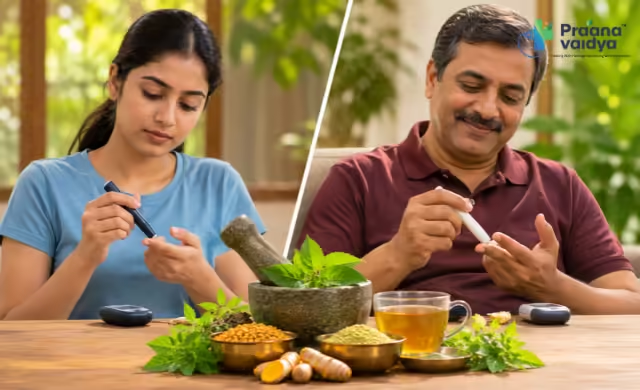
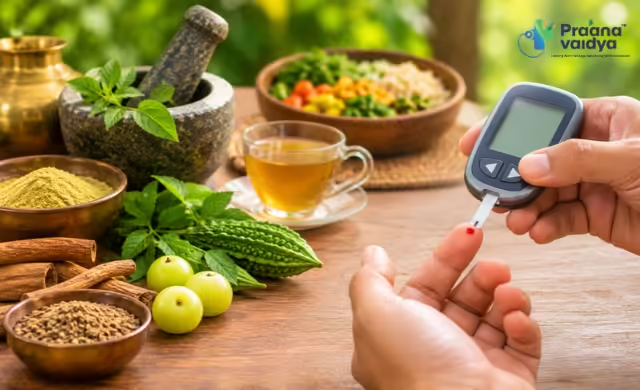
Living with diabetes often means paying attention to more than one factor at a time: food choices, daily routine, physical activity, stress, sleep and regular monitoring. Ayurveda approaches health through the idea that everyday habits and an individual’s overall constitution can influence how care is planned. One traditional Ayurvedic concept discussed in this context is Madhumeha.
This guide explains diabetes management in Ayurveda in simple terms, including how Madhumeha is understood traditionally, the role of food and routine, where practitioner-guided Ayurvedic care may fit, and what to consider before using herbs or specialised therapies. Praanavaidya offers Ayurveda consultations across Bangalore, Hubballi, Mangalore, Mumbai, Delhi and Lucknow for people who want to discuss an individualised approach.
Looking to understand how Ayurveda can fit into your diabetes care routine?
Understanding Madhumeha in Ayurveda
What does Madhumeha mean?
Madhumeha is a traditional Ayurvedic term described in classical Ayurvedic literature. The word is commonly associated with the idea of sweetness and urine, but the Ayurvedic concept should not simply be treated as a one-to-one translation of modern diabetes.
Ayurveda looks at health through multiple factors, including diet, digestion, activity, daily habits, constitution and overall balance. For someone exploring diabetes management in Ayurveda, understanding this broader framework can be useful.
Ayurveda and modern diabetes care
Ayurveda and modern diabetes care use different systems of understanding and assessment. An Ayurvedic consultation may focus on diet, routine, lifestyle and practitioner-selected interventions, while modern diabetes care may involve clinical evaluation, blood glucose monitoring and prescribed medicines.
These approaches should not be treated as interchangeable. If you already use prescribed diabetes medication, do not stop, reduce or replace it on your own. Discuss any changes in your care plan with the appropriate healthcare professional.
What Does Diabetes Management in Ayurveda Focus On?
1. Personalised diet and eating habits
Food is an important part of an Ayurvedic lifestyle plan. Rather than following a generic “diabetes diet,” an Ayurvedic practitioner may review eating patterns, meal timing, food preferences, digestion and daily routine before suggesting changes.
Practical habits may include:
- Building balanced meals instead of relying on one type of food.
- Paying attention to portion sizes and meal timing.
- Including a variety of vegetables and other nutrient-dense foods.
- Reducing reliance on highly processed foods and excess added sugar.
- Keeping regular meal patterns that fit the person’s routine.
- Choosing foods based on individual tolerance and practitioner guidance.
The goal is not to follow extreme restrictions. Sustainable habits are easier to maintain than short-term diets built around eliminating large numbers of foods.
2. Daily routine and physical activity
Ayurveda places importance on maintaining an organised daily routine. For someone managing diabetes, this can mean creating consistent habits around waking, meals, movement, work and sleep.
Physical activity can also be incorporated according to a person’s age, fitness, health status and daily schedule. Walking, yoga or other suitable forms of movement may be discussed during a consultation.
The important point is consistency. A routine that can realistically be followed is more useful than an ambitious plan that lasts only a few days.
3. Sleep and stress management
Sleep and stress are often overlooked when people focus only on food. Ayurveda considers daily habits as part of an individual’s overall health routine.
A practitioner may discuss simple practices such as:
- Maintaining a consistent sleep schedule.
- Creating a calmer evening routine.
- Taking short breaks during a busy workday.
- Practising suitable breathing or relaxation exercises.
- Limiting habits that interfere with regular sleep.
These practices are supportive lifestyle measures, not substitutes for diabetes monitoring or prescribed care.
Ayurvedic Herbs and Formulations for Madhumeha
Herbs and traditional formulations are often discussed when people search for Ayurvedic diabetes management. However, choosing an Ayurvedic formulation should not be based only on a product name or an online list of herbs.
Why practitioner guidance matters
A qualified Ayurvedic practitioner can consider the individual’s health history, current medicines, dietary habits, routine and other relevant factors before suggesting any formulation.
This is particularly important for people already taking diabetes medicines or managing other health conditions. Some herbs or formulations may not be appropriate for everyone or may require additional consideration alongside existing medicines.
Avoid self-prescribing herbal products simply because they are described online as being useful for Madhumeha.
Is Panchakarma Part of Diabetes Management?
Panchakarma is another term people commonly encounter while researching Ayurveda. However, it should not automatically be considered part of every diabetes-focused Ayurvedic plan.
How is suitability decided?
The choice of any specialised Ayurvedic procedure depends on the individual’s overall assessment and the practitioner’s clinical judgement. A practitioner may first review diet, routine, digestion, lifestyle and other relevant factors before deciding whether a procedure is appropriate.
Panchakarma should therefore be approached as an individualised option rather than a standard step that everyone with diabetes needs to undergo.
Building a Practical Ayurvedic Lifestyle Routine
A useful starting point is to focus on habits that can be maintained consistently.
Morning
Begin the day with a regular routine. Depending on individual suitability, this may include gentle movement, yoga or breathing exercises.
During the day
Keep meals reasonably structured and make time for appropriate physical activity. Avoid allowing work schedules to completely disrupt meals, movement or hydration.
Evening
Choose a calmer routine and aim for a consistent bedtime. Reducing unnecessary screen time and late-night eating may also be discussed as part of an overall lifestyle plan.
Keep monitoring part of the routine
Lifestyle changes should not mean ignoring regular diabetes monitoring. Keep following the monitoring and treatment plan provided by your healthcare team.
Want a personalised Ayurvedic perspective on your daily routine, food habits and Madhumeha-related concerns? Speak with the Praanavaidya team to explore an approach suited to your needs.
What to Discuss During an Ayurvedic Consultation
Before your consultation, make a simple list of:
- Your current food and meal patterns.
- Your usual daily activity.
- Sleep schedule and stress-related habits.
- Current medicines and supplements.
- Any existing health concerns.
- Previous Ayurvedic treatments or formulations you have used.
- Your main goals and concerns.
Sharing this information helps the practitioner understand your routine instead of looking at one symptom or one food in isolation.
Choosing an Ayurveda Clinic for Diabetes Management
When comparing Ayurveda clinics, look beyond promotional claims. Consider whether the clinic provides practitioner-led consultations, explains the proposed approach clearly, asks about existing medicines and health history, and avoids promising guaranteed outcomes.
For people looking for diabetes management in Ayurveda, Praanavaidya provides consultation access across Bangalore, Hubballi, Mangalore, Mumbai, Delhi and Lucknow. The focus should be on understanding the individual and building a practical, sustainable care routine.
A Balanced Approach to Madhumeha Management
Diabetes management is not usually about finding one food, herb or therapy that solves everything. A more practical approach is to look at the complete routine: what you eat, when you eat, how active you are, how you sleep, how you manage stress and how consistently you follow your established care plan.
Ayurveda can offer a traditional framework for discussing these lifestyle factors. The most useful approach is one that is personalised, realistic and coordinated with appropriate medical care.
If you are exploring Ayurveda for Madhumeha-related lifestyle support, contact Praanavaidya for a consultation in
Rajajinagar- 08065903133
Hubballi – 08065903145
Indiranagar- 08065903135
Mumbai-08065903118
Yelahanka- 08065903134
Mangaluru-08065903136
Jayanagar- 08065903132
Delhi-08065903140
Lucknow-08065903130
FAQs
What is Madhumeha in Ayurveda?
Madhumeha is a traditional Ayurvedic concept described in classical Ayurvedic literature. It is often discussed in relation to conditions involving sweetness and urine, but it should not automatically be considered an exact equivalent of modern diabetes.
Can Ayurveda be used for diabetes management?
Ayurveda can provide a traditional framework for discussing diet, daily routine, physical activity, stress management and practitioner-guided care. It should not be considered a replacement for prescribed diabetes care or regular monitoring.
What is an Ayurvedic diet for diabetes?
An Ayurvedic dietary approach is generally individualised. A practitioner may consider eating habits, meal timing, food preferences, digestion and daily routine before suggesting practical dietary changes rather than following a single diet for everyone.
Are Ayurvedic herbs suitable for everyone with diabetes?
No single Ayurvedic herb or formulation is appropriate for everyone. People taking diabetes medicines or other prescribed treatments should discuss any herbal formulation with a qualified practitioner and their healthcare team before using it.
Is Panchakarma necessary for Madhumeha?
Panchakarma is not automatically required for everyone discussing Madhumeha. Whether a specialised Ayurvedic procedure is appropriate depends on an individual’s assessment and practitioner guidance.
How long does Ayurvedic diabetes management take?
There is no single timeline that applies to everyone. An Ayurvedic approach may involve gradual changes to food habits, daily routine and lifestyle, with the plan adjusted according to individual circumstances and ongoing assessment.
Can I stop my diabetes medicine if I follow Ayurveda?
Prescribed diabetes medicines should not be stopped, reduced or replaced without guidance from the healthcare professional managing the treatment. Any complementary Ayurvedic approach should be discussed with the relevant healthcare team.
Praanavaidya
Healthcare Professional
Focused on patient-centric care and evidence-based treatment plans.
More from Praanavaidya