When people search for an Ayurvedic treatment plan, they often want to know what happens after the first consultation. Is there one standard sequence? Does every plan include Panchakarma? How do diet, lifestyle guidance and therapies fit together?
There is no single three-step plan that applies to everyone. Ayurvedic approaches can be individualised according to the person, their routine, preferences and the practitioner’s assessment. Still, a simple way to understand a structured plan is through three broad ideas: cleanse, calm and rebuild.
In this guide, Praanavaidya explains what each stage can mean, how the stages may connect and what to consider before starting a plan.
Exploring an Ayurvedic treatment plan?
What Is an Ayurvedic Treatment Plan?
An Ayurvedic treatment plan is a structured approach that may bring together consultation, daily routine guidance, food and lifestyle considerations, traditional Ayurvedic therapies and practitioner-guided practices.
The plan does not have to look identical for two people. The sequence, focus and combination of practices can differ.
For a simple overview:
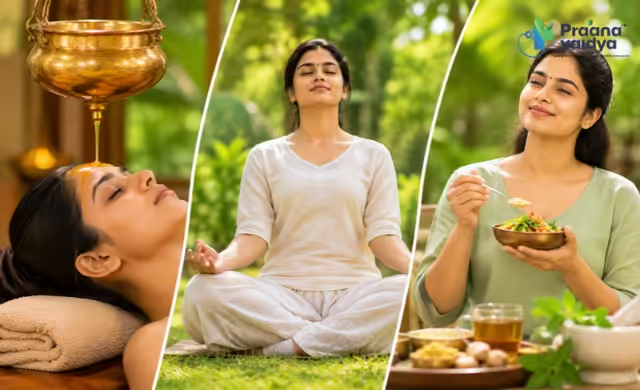
- Cleanse: preparation and, where appropriate, selected cleansing-oriented practices.
- Calm: creating a more settled routine and focusing on consistency.
- Rebuild: supporting sustainable daily habits and an ongoing wellness routine.
These stages may overlap and should be viewed as a framework rather than a universal rule.
Stage 1: Cleanse
The first stage is often described using the idea of cleansing. In an Ayurvedic context, this can refer to practitioner-guided preparation or selected traditional cleansing approaches.
The word “cleanse” can be misunderstood online. It does not mean that everyone needs the same detox routine, fasting schedule or therapy. The appropriate approach depends on the individual and the practitioner’s assessment.
What can be part of the cleanse stage?
Depending on the plan, this may involve:
- Reviewing current food and lifestyle routines
- Making gradual changes to daily habits
- Preparing for selected Ayurvedic therapies
- Following practitioner-provided dietary guidance
- Establishing a consistent routine before the next phase
The emphasis is on structure rather than simply adding more therapies.
Stage 2: Calm
The next stage can focus on creating a consistent and manageable routine. In this framework, “calm” refers to reducing unnecessary complexity and building habits that can realistically be followed.
What can the calm stage include?
A personalised plan may focus on:
- Regular meal and sleep routines
- Practical lifestyle adjustments
- Mindful daily practices
- Practitioner-guided Ayurvedic therapies where appropriate
- Reviewing how well the routine fits the person’s schedule
This stage is not about following a rigid routine perfectly. A useful plan should be practical enough to fit everyday life.
Consistency can also make a plan easier to review. If several habits are introduced at once and the routine becomes difficult to maintain, the practitioner can reassess what needs to be simplified or adjusted.
Want to understand which parts of an Ayurvedic treatment plan may fit your lifestyle? Speak with Praanavaidya to discuss your routine and explore a personalised approach.
Stage 3: Rebuild
The final stage in this framework is “rebuild.” The focus is on maintaining practical habits and creating a sustainable routine rather than continually adding new interventions.
“Rebuild” should be understood as a wellness-oriented concept, not a medical promise. It describes the transition towards habits that can be carried forward in everyday life.
What can the rebuild stage involve?
It may include:
- Continuing suitable daily routines
- Maintaining practical food and lifestyle habits
- Reviewing ongoing Ayurvedic practices
- Identifying habits that are easy to sustain
- Scheduling follow-ups when appropriate
- Adjusting routines as priorities change
The central idea is sustainability. A simple routine that fits daily life can be easier to maintain than one filled with complicated instructions.
Cleanse, Calm and Rebuild: How the Stages Work Together
The three stages are best understood as a connected process.
Cleanse: Create a structured starting point
The initial stage focuses on understanding the person’s routine and, where appropriate, incorporating selected cleansing-oriented practices under practitioner guidance.
Calm: Establish consistency
The next stage focuses on practical routines, manageable habits and a steady rhythm that fits everyday life.
Rebuild: Make the routine sustainable
The final stage focuses on carrying suitable habits forward and making adjustments when circumstances change.
A person may move between these concepts rather than completing each one once. An Ayurvedic treatment plan can be reviewed and adapted over time.
Does Every Ayurvedic Treatment Plan Follow These Three Stages?
No. “Cleanse, calm and rebuild” is an educational framework, not a universal Ayurvedic treatment sequence.
Some plans may place more emphasis on daily routine and lifestyle from the beginning. Others may include specific traditional therapies or Panchakarma-related practices where the practitioner considers them appropriate. Some people may not require a cleansing-focused stage at all.
The important part is individualisation. A plan should be based on consultation and should be clear enough for the person to understand what they are expected to do and why each part has been included.
What Should You Ask Before Starting an Ayurvedic Treatment Plan?
Before beginning a structured plan, consider asking:
- What is the purpose of each stage?
- Which practices are included in my plan?
- What changes should I make to my daily routine?
- Are there dietary instructions I need to follow?
- Which therapies, if any, are included?
- How often should the plan be reviewed?
- What should I do if a routine is difficult to maintain?
- Which parts are short-term and which are ongoing?
Clear answers can make an Ayurvedic plan easier to understand and follow.
How Praanavaidya Approaches an Ayurvedic Treatment Plan
At Praanavaidya, an Ayurvedic treatment plan can be approached through consultation rather than a one-size-fits-all routine. Discussing your history, daily habits and expectations can help the practitioner understand what kind of approach may be appropriate.
Depending on the individual plan, this may bring together Ayurvedic consultation, lifestyle guidance, dietary considerations and traditional therapies. The exact combination should be discussed with the practitioner.
This makes the three-stage framework useful as a starting point: understand the cleansing phase, build a calmer and more consistent routine, and work towards sustainable habits.
Conclusion
An Ayurvedic treatment plan does not have to be complicated to understand. The simple framework of cleanse, calm and rebuild can help explain how a structured approach may progress from preparation and selected cleansing practices to routine-building and sustainable habits.
However, these stages should not be treated as a fixed formula. Ayurvedic approaches can vary, and the appropriate plan depends on consultation, individual circumstances and practitioner guidance.
If you are exploring Ayurveda, focus on understanding the plan rather than simply counting the number of therapies involved. Ask questions, understand the purpose of each stage and choose a routine that can realistically fit your everyday life.
Looking to explore an Ayurvedic treatment plan with Praanavaidya? Book a consultation at your nearest Praanavaidya location:
Rajajinagar- 08065903133
Hubballi – 08065903145
Indiranagar- 08065903135
Mumbai-08065903118
Yelahanka- 08065903134
Mangaluru-08065903136
Jayanagar- 08065903132
Delhi-08065903140
Lucknow-08065903130
Frequently Asked Questions
What is an Ayurvedic treatment plan?
An Ayurvedic treatment plan is a personalised approach that may combine consultation, dietary and lifestyle guidance, daily routines and selected traditional Ayurvedic practices. The exact plan can vary from person to person.
What are the three stages of an Ayurvedic treatment plan?
For educational purposes, an Ayurvedic treatment plan can be explained through three broad stages: cleanse, calm and rebuild. These describe preparation or cleansing-oriented practices, routine and consistency, and sustainable ongoing habits. They are not a universal three-step protocol.
Is cleansing always the first step in Ayurveda?
Not necessarily. Different Ayurvedic plans can have different priorities. A practitioner may decide that a cleansing-focused approach is suitable, or the plan may begin with routine, diet, lifestyle or other considerations.
Does every Ayurvedic treatment plan include Panchakarma?
No. Panchakarma is not automatically part of every Ayurvedic treatment plan. Whether a traditional therapy is included depends on the individual’s consultation and the practitioner’s approach.
Can diet and lifestyle be part of an Ayurvedic treatment plan?
Yes. Diet and lifestyle guidance can be incorporated where appropriate, with recommendations shaped around the person’s routine and preferences.
Can the three stages overlap?
Yes. Cleanse, calm and rebuild are broad concepts rather than strict stages with fixed boundaries. A plan may be reviewed and adjusted, and different elements can overlap.
How do I choose an Ayurvedic treatment plan?
Start with a consultation and ask the practitioner to explain the purpose of each part of the plan. Understanding the routine, therapies, dietary guidance and follow-up process can help you make an informed decision.
Praanavaidya
Healthcare Professional
Focused on patient-centric care and evidence-based treatment plans.
More from Praanavaidya