
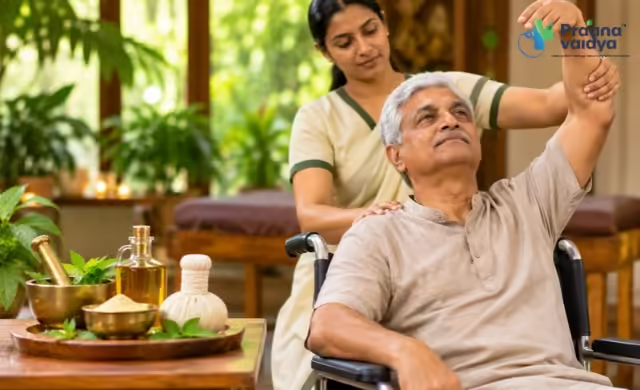
Paralysis can change everyday life in ways that go beyond movement. Simple activities such as walking, holding an object, changing position, or maintaining a routine may suddenly require more time and support. For people exploring Ayurveda, one of the most common questions is what Ayurvedic treatment for paralysis involves and what they should realistically expect.
Ayurveda approaches health through an individual assessment of the person’s condition, daily routine, diet, strength, and overall wellbeing. It is important to understand where traditional Ayurvedic care may fit within a broader healthcare plan.
Considering Ayurvedic care for paralysis?
Understanding Paralysis and Why Care Can Vary
Paralysis generally refers to a significant loss or reduction of voluntary movement in part of the body. It can affect one limb, one side of the body, the lower half of the body, or more extensive areas.
The underlying causes and severity can vary considerably from person to person. Paralysis may be associated with conditions affecting the brain, spinal cord, nerves or muscles, so understanding the underlying cause is an important part of appropriate medical care.
This is why there is no single Ayurvedic treatment plan or fixed recovery schedule that applies to everyone. Care needs to be considered in the context of the person’s medical history, current abilities, medicines, rehabilitation needs and day-to-day challenges.
What Does Ayurvedic Treatment for Paralysis Involve?
When people search for Ayurvedic treatment for paralysis, they may expect one specific therapy. In practice, Ayurvedic care can involve several components selected according to an individual assessment.
Ayurvedic consultation and assessment
The first step is understanding the person rather than choosing a therapy based only on the word “paralysis.”
An Ayurvedic practitioner may discuss:
- Current movement and functional difficulties
- Daily routine and sleep
- Appetite and digestion
- Dietary habits
- Previous medical history
- Current medicines and supplements
- Physical activity and rehabilitation
- General strength and wellbeing
This discussion helps the practitioner understand the person’s broader situation and consider whether Ayurvedic care may be appropriate as part of their overall care plan.
Traditional Ayurvedic practices
Depending on the consultation, traditional Ayurvedic practices may be considered as part of supportive care. These can include supervised body therapies, routine-based practices, dietary guidance and other approaches used within Ayurveda.
A named Ayurvedic therapy should not automatically be assumed to be suitable for every person with paralysis. The choice, frequency and duration should be determined by a qualified practitioner after an individual assessment.
Diet and daily routine
Food and routine can become practical areas of focus during long-term care. Rather than following a generic “paralysis diet”, it can be more useful to look at the person’s usual meals, appetite, digestion, hydration, sleep pattern and activity level.
Depending on individual needs, routine planning may include:
- Keeping regular meal and sleep timings
- Choosing meals that are practical for the person’s needs
- Maintaining appropriate hydration
- Avoiding unnecessary self-prescribed supplements
- Following movement or rehabilitation guidance provided by the relevant healthcare professional
What to Expect During the Recovery Journey
Recovery from paralysis is not a single event. It can involve medical care, rehabilitation, family support, changes to the home environment and adjustments to everyday routines.
Progress can be different for each person
Some people may experience changes in certain abilities while other areas remain challenging. Progress can also vary depending on the underlying condition, the extent of movement difficulty, general health and participation in rehabilitation.
For this reason, be cautious about any approach that promises a fixed recovery period or guaranteed restoration of movement.
Recovery should be discussed in terms of the individual’s condition and goals rather than comparing one person’s experience with another’s.
Care may involve several professionals
Paralysis can require coordinated support. Depending on the individual situation, a person may already be working with doctors, physiotherapists, occupational therapists, nurses or other healthcare professionals.
Ayurvedic consultation can be considered alongside appropriate medical and rehabilitation care when suitable. Keeping every practitioner informed about current medicines, supplements, therapies and major changes in health can help avoid confusion.
Family support matters
A family member or caregiver often plays an important role in daily routines. Practical support can include helping with appointments, keeping track of instructions, making the home easier to navigate and encouraging the person without creating pressure.
The goal is not to measure recovery only by large changes. Improvements in daily function, confidence, independence or routine may also be meaningful to the individual and family.
How Praanavaidya Approaches Ayurvedic Care
At Praanavaidya, the focus of an Ayurvedic consultation is to understand the individual rather than treat a label in isolation.
The consultation can consider the person’s history, current routine, dietary habits, functional concerns and existing healthcare plan.
Depending on the assessment, the discussion may include traditional Ayurvedic practices, diet and routine guidance and supportive wellbeing measures.
Any ongoing medical treatment or rehabilitation should remain part of the conversation. Patients should also inform the Ayurvedic practitioner about prescribed medicines, supplements and other treatments they are currently receiving.
If you want to understand whether Ayurvedic care may be appropriate alongside your existing care plan, enquire with Praanavaidya for an individual consultation.
Practical Tips for People Living With Paralysis
Day-to-day planning can make care easier for both the individual and caregiver. Useful areas to review include:
- Keep a simple record of appointments, medicines and important instructions.
- Make frequently used items easier to reach.
- Follow the movement and rehabilitation plan provided by the appropriate healthcare professional.
- Discuss any new supplement or traditional preparation with the relevant practitioner before adding it.
- Maintain a consistent routine where practical.
- Give caregivers clear responsibilities instead of expecting one person to manage everything.
- Track functional changes without comparing one person’s recovery with someone else’s.
- Keep all members of the healthcare team informed about significant changes in symptoms or daily function.
These steps are intended as practical considerations and are not a substitute for professional medical care.
When to Seek Immediate Medical Attention
Paralysis or sudden weakness can sometimes indicate a medical emergency. Do not wait for an Ayurvedic consultation if symptoms develop suddenly.
Seek immediate medical attention if someone develops:
- Sudden weakness or paralysis, particularly on one side
- Sudden facial drooping
- Difficulty speaking or understanding speech
- Sudden loss of balance or coordination
- Sudden vision changes
- A sudden, severe headache
- Loss of consciousness
- New or rapidly worsening neurological symptoms
These symptoms require urgent medical assessment. Ayurvedic treatment or other complementary care should not delay emergency evaluation.
For someone with an existing condition, new or worsening symptoms should also be discussed promptly with the appropriate medical professional.
Ayurvedic Treatment for Paralysis: A Realistic Perspective
Searching for Ayurvedic treatment for paralysis often reflects a desire for additional support during a difficult recovery journey.
Ayurveda can be explored as a traditional system of care, but it should not be presented as a replacement for emergency treatment, diagnosis, prescribed medicines or rehabilitation. There is no universal Ayurvedic routine, guaranteed timeline or single therapy that applies to every person with paralysis.
A thoughtful care plan considers the individual’s condition, existing medical care, rehabilitation, daily routine, diet and personal circumstances.
For people considering Ayurveda, a professional consultation can help them understand whether traditional Ayurvedic care may have a place alongside their existing healthcare plan.
Looking for Ayurvedic care for paralysis? Visit your nearest branch
Rajajinagar- 08065903133
Hubballi – 08065903145
Indiranagar- 08065903135
Mumbai-08065903118
Yelahanka- 08065903134
Mangaluru-08065903136
Jayanagar- 08065903132
Delhi-08065903140
Lucknow-08065903130
Medical Disclaimer: This article is provided for general educational and informational purposes only. It is not intended to diagnose, treat, cure, or prevent paralysis or any other medical condition, and it should not be considered a substitute for examination, diagnosis, emergency care, prescribed medicines, physiotherapy, rehabilitation, or other treatment recommended by a qualified healthcare professional. Paralysis can have serious underlying causes. Sudden weakness, paralysis, facial drooping, speech difficulty, loss of balance, severe headache, loss of consciousness, or other sudden neurological symptoms require immediate medical evaluation. Do not delay emergency care to try Ayurvedic treatment or any other complementary approach. Any Ayurvedic care should be discussed with the appropriate healthcare professionals, particularly when a person has an existing medical condition or is taking medicines.
FAQs
Can Ayurveda cure paralysis?
There is no universal Ayurvedic treatment that can be presented as a guaranteed cure for paralysis. Ayurvedic care may be considered as traditional supportive care alongside appropriate medical evaluation and rehabilitation.
What does Ayurvedic treatment for paralysis involve?
It may involve an Ayurvedic consultation, review of diet and daily routine, traditional Ayurvedic practices and supportive wellbeing guidance. The approach depends on the individual’s health history and current needs.
How long does Ayurvedic treatment for paralysis take?
There is no standard timeline that applies to everyone. The care approach and duration depend on the individual’s situation, underlying condition, existing healthcare needs and overall care plan.
Can Ayurveda be used along with physiotherapy?
Ayurvedic care and rehabilitation may be discussed as complementary parts of a broader care plan. It is important to keep the relevant healthcare professionals informed about all treatments, therapies, medicines and supplements being used.
Is Ayurvedic care suitable after a stroke?
It depends on the individual’s situation. Anyone recovering after a stroke should receive appropriate medical assessment and follow the rehabilitation plan recommended by their healthcare team. Ayurveda can then be discussed as an additional form of traditional care where appropriate.
What should I discuss during an Ayurvedic consultation for paralysis?
Discuss the person’s medical history, current symptoms, medicines, supplements, rehabilitation, diet, sleep, daily routine and functional difficulties. Complete information can help the practitioner understand the broader context of the person’s care.
Praanavaidya
Healthcare Professional
Focused on patient-centric care and evidence-based treatment plans.
More from Praanavaidya