
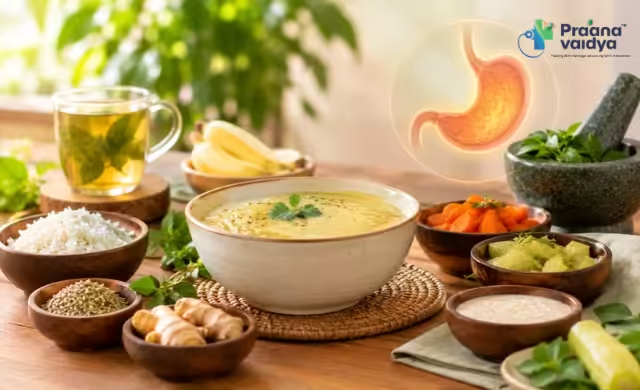
Gastritis can make everyday eating feel uncomfortable. Foods that usually feel fine may suddenly seem too heavy, spicy, sour or difficult to tolerate. This often leads people to search for simple dietary changes that can fit into their daily routine.
An Ayurvedic diet for gastritis focuses on mindful food choices, regular eating habits and paying attention to individual digestive comfort. Instead of following a rigid food list, Ayurveda-inspired dietary planning can be adapted according to a person’s routine, food preferences and individual needs.
In this guide, Praanavaidya explains which foods can be considered as part of a gentler eating pattern, which foods may be better limited, and how simple meal habits can make everyday eating easier to manage.
Looking for personalized dietary guidance?
What Is an Ayurvedic Diet for Gastritis?
An Ayurvedic diet for gastritis is an eating approach that places emphasis on simple meals, balanced portions, regular meal timings and foods that are comfortable for the individual.
Ayurveda traditionally looks at digestion as an important part of overall wellbeing. However, there is no single gastritis diet that works in exactly the same way for everyone.
A food that feels comfortable for one person may not suit another. This is why an individualised approach is often more practical than following a long list of strict restrictions.
The basic principles can include:
- Choosing freshly prepared and simple meals
- Avoiding very large meals
- Eating at reasonably consistent times
- Limiting foods that repeatedly cause discomfort
- Paying attention to portion sizes
- Eating slowly and mindfully
- Keeping meals relatively simple rather than combining too many heavy foods
Foods to Include in an Ayurvedic Diet for Gastritis
The goal is not to create a complicated diet plan. Simple, familiar foods can form the foundation of an everyday meal pattern.
Soft and Lightly Prepared Grains
Rice, soft-cooked oats and other simply prepared grains can be considered when planning meals.
Plain rice-based preparations are often easier to customise because they can be paired with mild vegetables or dals without making the meal overly complicated.
Moong Dal
Moong dal is commonly used in simple Indian meals and can be prepared in a relatively light form.
A simple moong dal preparation with rice or soft-cooked vegetables can be one option for people who prefer uncomplicated meals.
Well-Cooked Vegetables
Instead of heavily fried or highly spiced vegetables, consider simply cooked vegetables such as:
- Carrot
- Pumpkin
- Bottle gourd
- Ridge gourd
- Ash gourd
- Zucchini
- Other vegetables that you personally tolerate well
Cooking vegetables until they are soft can also make meals easier to eat.
Mild Fruits
Fruit choices can be individual. Some people may prefer mild, ripe fruits in moderate portions rather than very sour fruits.
Banana, ripe papaya or stewed apple may be considered depending on personal tolerance.
The important point is not to assume that every fruit will suit everyone. Notice how your body responds to particular foods.
Simple Soups and Home-Cooked Meals
Lightly prepared soups, rice-based meals and simple home-cooked dishes can be useful options when you want to keep meals uncomplicated.
Avoid turning a simple meal into a heavily spiced or oily preparation.
Foods That May Be Better Limited
There is no universal list of foods that every person with gastritis must completely eliminate. However, certain foods are commonly associated with digestive discomfort for some people.
Consider limiting foods that repeatedly make you uncomfortable.
Very Spicy Foods
Chilli-heavy gravies, very spicy pickles and heavily seasoned dishes may not feel comfortable for everyone.
If spicy food consistently causes discomfort, reducing the quantity can be a practical starting point.
Fried and Greasy Foods
Deep-fried snacks and very oily meals can feel heavy, particularly when consumed in large portions.
Choose simpler cooking methods such as steaming, boiling or light cooking when possible.
Very Sour Foods
Highly sour foods and drinks may not suit everyone experiencing gastric discomfort.
If particular sour foods repeatedly make you uncomfortable, consider reducing them and observing whether your eating experience changes.
Excessive Tea and Coffee
Tea and coffee are part of many people’s daily routines. However, some individuals may notice discomfort after consuming them, particularly on an empty stomach.
Instead of automatically eliminating them, pay attention to your individual response and discuss persistent concerns with a qualified professional.
Carbonated and Very Sugary Drinks
Soft drinks and heavily sweetened beverages can make a meal less balanced and may not be ideal choices when you are trying to keep your diet simple.
Water and other suitable beverages can form the foundation of your daily hydration routine.
An Ayurvedic-Friendly Meal Pattern for Gastritis
What you eat is only one part of your daily routine. How and when you eat can also influence your overall eating experience.
A simple day could look like this:
Morning:
Start the day with a suitable beverage and a simple breakfast such as soft oats or another easily prepared meal that suits your preferences.
Mid-morning:
If hungry, choose a moderate portion of a fruit that you tolerate well.
Lunch:
A simple combination of rice, moong dal and cooked vegetables can keep the meal uncomplicated.
Evening:
If you usually have tea or coffee, pay attention to how you feel after consuming it. A light snack may be preferable to very spicy or fried foods.
Dinner:
Choose a lighter, simply prepared meal and avoid making dinner excessively large.
This is only an example of a simple meal structure, not a fixed diet plan. Individual dietary requirements can differ.
Simple Eating Habits to Consider
Dietary changes do not always need to involve completely changing your menu.
Small habits can make your daily routine more consistent:
Eat at Regular Times
Try to maintain reasonably consistent meal timings instead of frequently skipping meals and then eating a very large meal.
Keep Portions Moderate
Large meals can feel uncomfortable. Moderate portions allow you to pay closer attention to how different foods suit you.
Eat Slowly
Eating slowly gives you more time to notice fullness and discomfort rather than rushing through a meal.
Keep a Food Journal
If you frequently experience discomfort after eating, maintain a simple food diary.
Record:
- What you ate
- Approximate portion
- Meal timing
- Beverages consumed
- Any discomfort noticed afterwards
Over time, this can help you identify patterns worth discussing with a professional.
Can Ayurveda Provide a Personalised Gastritis Diet?
Ayurvedic dietary planning is not necessarily about following the same menu every day.
An Ayurvedic practitioner may consider individual factors such as eating habits, lifestyle, food preferences and overall digestive comfort when discussing dietary choices.
This can be particularly useful if you find that general online food lists are too restrictive or do not match your regular Indian diet.
Want guidance beyond a generic food list? Speak with Praanavaidya about creating a personalised Ayurvedic dietary approach based on your individual requirements.
Common Mistakes to Avoid When Following a Gastritis Diet
Searching for “what to eat for gastritis” can sometimes lead to overly restrictive diets. A few common mistakes are worth avoiding.
Completely Removing Too Many Foods
Eliminating multiple food groups without understanding your individual tolerance can make your diet unnecessarily difficult.
Following Someone Else’s Diet Plan
A diet that works for a friend or family member may not suit your routine or preferences.
Focusing Only on Individual Foods
Gastritis-friendly eating is not simply about finding one “best” food. Meal size, preparation method, timing and individual tolerance also matter.
Making Sudden Changes
A complicated diet plan may be difficult to maintain. Simple, gradual adjustments are often easier to incorporate into everyday life.
Building a Sustainable Ayurvedic Diet for Gastritis
A useful diet is one that you can realistically follow.
Instead of asking, “What foods should I never eat again?”, consider asking:
- Which foods feel comfortable for me?
- Which foods repeatedly cause discomfort?
- Am I eating very large portions?
- Do I regularly skip meals?
- Am I relying heavily on spicy or fried foods?
- Am I drinking tea or coffee on an empty stomach?
- Can I make my meals simpler?
These questions can help you create a more practical eating routine rather than following a generic list found online.
Ayurvedic Diet for Gastritis: The Key Takeaway
An Ayurvedic diet for gastritis does not have to be complicated. Simple home-cooked meals, moderate portions, regular eating habits and attention to individual food tolerance can form the foundation of a more mindful eating routine.
Foods such as simply prepared rice, moong dal, cooked vegetables and suitable mild fruits may be considered, while very spicy, heavily fried, highly sour or personally irritating foods can be limited according to individual tolerance.
Most importantly, avoid treating an online food list as a one-size-fits-all diet. Personalised guidance can help you understand how dietary choices fit into your individual routine.
For personalized Ayurvedic dietary guidance, connect with Praanavaidya at our centres in
Rajajinagar- 08065903133
Hubballi – 08065903145
Indiranagar- 08065903135
Mumbai-08065903118
Yelahanka- 08065903134
Mangaluru-08065903136
Jayanagar- 08065903132
Delhi-08065903140
Lucknow-08065903130
FAQs
What is an Ayurvedic diet for gastritis?
An Ayurvedic diet for gastritis focuses on simple meals, suitable food choices, moderate portions and regular eating habits. The approach can be adapted according to individual food tolerance, lifestyle and dietary preferences.
Which foods can be included in an Ayurvedic diet for gastritis?
Simply prepared foods such as rice, moong dal, soft-cooked vegetables, oats and suitable mild fruits may be considered. Individual tolerance should guide food choices.
Which foods should be limited during gastritis?
Very spicy foods, heavily fried meals, highly sour foods, carbonated drinks and beverages that personally cause discomfort may be better limited. There is no single restriction list that applies equally to everyone.
Is rice good for a gastritis diet?
Simply prepared rice can be included in a gastritis-friendly meal pattern for people who tolerate it well. It can be paired with mild dal and cooked vegetables for a simple meal.
Can I drink tea or coffee if I have gastritis?
Tea and coffee affect people differently. If you notice discomfort after drinking them, especially on an empty stomach, consider reducing the quantity and discussing your individual dietary pattern with a qualified professional.
Can I eat fruit during gastritis?
Fruit can be included depending on individual tolerance. Mild, ripe fruits may be preferred by some people, while very sour fruits may not suit everyone.
Is an Ayurvedic gastritis diet the same for everyone?
No. Dietary preferences, eating patterns and individual tolerance can differ. An Ayurvedic approach can be personalised instead of relying on a single fixed meal plan.
How can I get personalised Ayurvedic diet guidance for gastritis?
You can speak with a qualified Ayurvedic practitioner at Praanavaidya to discuss your eating habits, preferences and individual requirements and understand suitable dietary options.
Praanavaidya
Healthcare Professional
Focused on patient-centric care and evidence-based treatment plans.
More from Praanavaidya