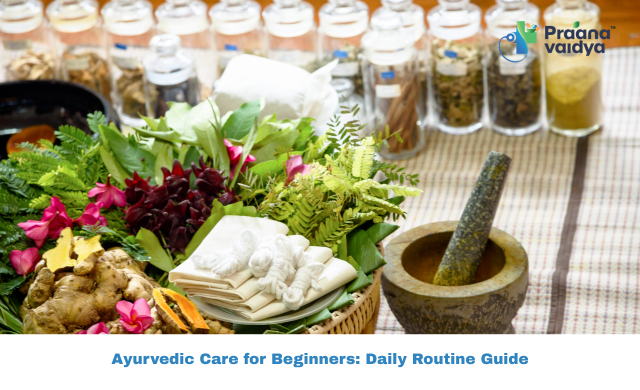
Ayurvedic care is not just about remedies or herbal products—it’s a complete system of daily living designed to keep your body balanced, your digestion strong, and your mind clear.
At its core, Ayurveda focuses on maintaining harmony between the three doshas—Vata, Pitta, and Kapha—while preventing the buildup of toxins (Ama), which are considered a root cause of many chronic conditions.
If you’re new to Ayurveda, the good news is this:
👉 You don’t need complex treatments to get started.
Simple daily practices can make a meaningful difference.
📞 Call / WhatsApp: 08065903127 | +91 96117 73811
What Is Ayurvedic Care?
Ayurvedic care is built on three key pillars:
- Dinacharya (daily routine) – everyday habits that maintain health
- Ritucharya (seasonal routine) – adjustments based on climate
- Chikitsa (treatment) – clinical care when illness develops
This guide focuses on Dinacharya, the easiest and most powerful place to begin.
Understanding the Three Doshas
Each person has a unique balance of:
- Vata (air + space) – controls movement, circulation, and the nervous system
- Pitta (fire + water) – governs digestion, metabolism, and heat
- Kapha (earth + water) – provides structure, stability, and immunity
When these are balanced, you feel energetic and stable.
When imbalanced, symptoms begin to appear.
7 Daily Ayurvedic Practices for Beginners
You can start these today—no equipment or prior knowledge required.
1. Wake Up Early
Waking up before sunrise (around 5–6 AM) aligns your body with natural rhythms.
It helps improve mental clarity, energy, and emotional balance.
2. Tongue Scraping
Use a tongue scraper before brushing your teeth.
Benefits:
- Removes toxins (Ama)
- Improves digestion
- Freshens breath
3. Oil Pulling
Swish 1 tablespoon of oil (sesame or coconut) in your mouth for 5–10 minutes.
Benefits:
- Supports oral health
- Reduces bacteria
- Improves digestion
4. Drink Warm Water
Start your day with 1–2 glasses of warm water.
Why it matters:
- Stimulates digestion
- Flushes toxins
- Boosts metabolism
5. Abhyanga (Oil Massage)
Apply warm oil to your body before bathing.
Benefits:
- Improves circulation
- Reduces stress and anxiety
- Nourishes skin and joints
Tip: Sesame oil works well for most people.
6. Practice Pranayama
Spend 5–10 minutes on breathing exercises like:
- Nadi Shodhana (alternate breathing)
- Bhramari (humming breath)
These help calm the mind and balance the nervous system.
7. Follow Proper Meal Timing
- Breakfast: light and warm
- Lunch: main meal of the day
- Dinner: light and early
Eating in sync with your digestion improves energy and reduces toxin buildup.
Simple Diet Tips Based on Dosha
- Vata: warm, cooked, nourishing foods
- Pitta: cooling, less spicy foods
- Kapha: light, warm, and less oily foods
Avoid cold, processed, and heavy meals whenever possible.
Seasonal Awareness Matters
Your body reacts to seasons:
- Summer → increases Pitta
- Monsoon → weakens digestion
- Winter → increases Kapha
Adjusting food and habits accordingly helps maintain balance.
When Daily Practices Are Not Enough
While daily routines help maintain health, you may need expert care if:
- Symptoms persist or worsen
- You have a diagnosed condition
- Lifestyle changes alone aren’t helping
In such cases, a structured Ayurvedic consultation can guide you further.
A Holistic Approach to Long-Term Health
At Praanavaidya, Ayurvedic care is not a one-time treatment. It’s a continuous process that includes:
- Personalized consultation
- Herbal support
- Panchakarma (when needed)
- Diet and lifestyle guidance
- Long-term follow-up
This integrated approach helps address both symptoms and root causes.
Final Thoughts
Ayurvedic care begins with small, consistent steps.
You don’t need to change everything at once. Start with 2–3 daily practices, build gradually, and observe how your body responds.
Over time, these habits can:
- Improve digestion
- Boost energy
- Reduce stress
- Support long-term wellness
Visit our Centres near you
Rajajinagar- 08065903133
Hubballi – 08065903145
Indiranagar- 08065903135
Mumbai-08065903118
Yelahanka- 08065903134
Mangaluru-08065903136
Chamrajpet-08065903132
FAQs
1. Can I start Ayurvedic care on my own?
Yes, basic daily practices like warm water, tongue scraping, and meal timing are safe to begin.
2. How soon will I see results?
Some benefits appear within 1–2 weeks, while deeper changes take a few months.
3. Do I need a doctor for Ayurveda?
For general wellness, no. For medical conditions, consultation is recommended.
4. Is Ayurveda safe with modern medicine?
In most cases, yes—especially when guided by a qualified practitioner.
Praanavaidya
Healthcare Professional
Focused on patient-centric care and evidence-based treatment plans.
More from Praanavaidya