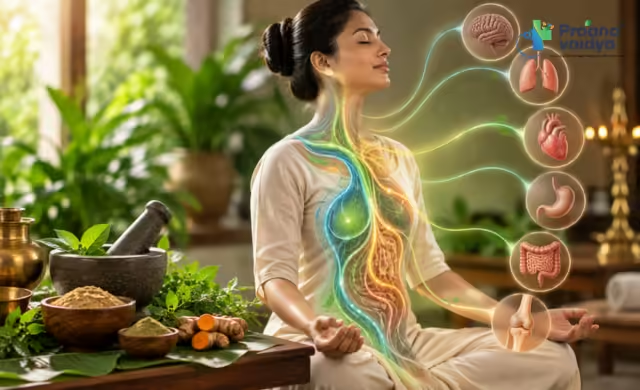
Srotas in Ayurveda refers to the channels or pathways through which substances, nutrients, energies, and waste products are traditionally understood to move throughout the body.
The Sanskrit word Srotas is related to the idea of flowing or moving. Ayurveda uses this concept to describe pathways involved in processes such as nourishment, respiration, circulation, digestion, elimination, and reproduction.
Rather than viewing the body as a collection of completely separate organs, classical Ayurveda describes interconnected systems through which materials and physiological functions are coordinated.
Srotas are therefore an important part of Ayurvedic physiology.
It is important to note that Srotas are a traditional Ayurvedic concept and should not automatically be equated with modern anatomical structures such as blood vessels, nerves, lymphatic vessels, or ducts.
Why Are Srotas Important in Ayurveda?
According to Ayurvedic theory, the proper movement of substances through the body’s channels is important for maintaining physiological balance.
Srotas are traditionally associated with:
- Transportation of nourishment
- Movement of respiratory substances
- Digestion and absorption
- Elimination of waste
- Movement of reproductive substances
- Maintenance of tissue nourishment
- Regulation of different bodily processes
When these pathways function properly according to the Ayurvedic framework, the body is considered better able to maintain balance.
When their flow is disturbed, Ayurveda describes this as Srotas Dushti, or disturbance of the Srotas.
How Many Srotas Are There?
Classical Ayurvedic texts describe numerous Srotas throughout the body.
Some texts specifically identify major paired Srotas associated with important physiological processes. The number and classification can vary depending on the Ayurvedic text and interpretive tradition.
Among the commonly discussed Srotas are:
- Pranavaha
- Udakavaha
- Annavaha
- Rasavaha
- Raktavaha
- Mamsavaha
- Medovaha
- Asthivaha
- Majjavaha
- Shukravaha
- Mutravaha
- Purishavaha
- Swedavaha
- Artavavaha
These classifications reflect the Ayurvedic model rather than a direct classification used in modern anatomy.
Major Srotas and Their Traditional Functions
1. Pranavaha Srotas
Pranavaha Srotas are traditionally associated with the movement of Prana, particularly respiration and vital functions.
Ayurveda connects these channels with breathing and the movement of vital energy.
Healthy breathing, appropriate physical activity, and maintaining a supportive daily routine are traditionally considered important for Prana-related wellbeing.
Modern respiratory disorders, however, require appropriate medical diagnosis and treatment.
2. Udakavaha Srotas
Udakavaha Srotas are associated with the movement and regulation of water or fluid within the body.
Ayurvedic descriptions connect these channels with hydration and fluid balance.
Adequate hydration is also important from a modern health perspective, although the Ayurvedic concept of Udakavaha Srotas should not be treated as identical to any single modern fluid-transport system.
3. Annavaha Srotas
Annavaha Srotas are traditionally associated with the movement and processing of food. They are closely connected with digestion.
Ayurveda emphasizes maintaining healthy digestive function through appropriate food choices, meal timing, eating according to digestive capacity, and healthy lifestyle habits.
Persistent abdominal pain, vomiting, difficulty swallowing, unexplained weight loss, or prolonged digestive symptoms require medical assessment.
4. Rasavaha Srotas
Rasavaha Srotas are traditionally associated with the movement of Rasa Dhatu and nourishment throughout the body.
The concept is connected with tissue nourishment and distribution of nutrients.
It is important to remember that Rasavaha Srotas is an Ayurvedic concept and does not simply mean the modern circulatory or lymphatic system.
5. Raktavaha Srotas
Raktavaha Srotas are associated with Rakta Dhatu, traditionally corresponding broadly to blood.
Ayurvedic texts discuss these channels in relation to the formation, movement, and maintenance of Rakta.
Modern blood circulation involves an anatomically defined cardiovascular system. Therefore, Raktavaha Srotas should be understood within the traditional Ayurvedic framework rather than used as a replacement for cardiovascular terminology.
6. Mamsavaha Srotas
Mamsavaha Srotas are traditionally associated with Mamsa Dhatu, or muscle tissue.
They are considered involved in the nourishment and maintenance of muscular tissue.
Ayurvedic approaches may consider nutrition, physical activity, rest, and individual constitution when discussing Mamsa health.
7. Medovaha Srotas
Medovaha Srotas are associated with Meda Dhatu, traditionally connected with fatty tissue.
Ayurveda discusses these channels in relation to the formation, storage, and movement of Meda.
Traditional approaches to healthy Meda may emphasize balanced food intake, physical activity, digestive health, and lifestyle management.
8. Asthivaha Srotas
Asthivaha Srotas are traditionally connected with Asthi Dhatu, or the body’s skeletal tissue.
Ayurveda considers the nourishment and maintenance of bones part of overall Dhatu health.
Adequate nutrition, weight-bearing activity, appropriate exercise, and medical evaluation of bone health are important in modern healthcare.
9. Majjavaha Srotas
Majjavaha Srotas are traditionally associated with Majja Dhatu.
The Ayurvedic concept of Majja has associations with bone marrow and certain nervous-system-related functions, making this Srotas particularly complex when compared with modern anatomical classifications.
It is best understood within the traditional Ayurvedic model rather than translated into a single modern body system.
10. Shukravaha Srotas
Shukravaha Srotas are associated with Shukra Dhatu and reproductive functions.
Ayurveda traditionally considers these channels important for reproductive tissue and fertility-related functions.
Reproductive problems can have many causes. Persistent fertility concerns, hormonal problems, menstrual abnormalities, or sexual health issues should be medically evaluated.
11. Mutravaha Srotas
Mutravaha Srotas are traditionally associated with urine formation, movement, and elimination.
Ayurveda considers proper urinary elimination important for maintaining internal balance.
Symptoms such as painful urination, blood in urine, fever, severe back pain, or difficulty passing urine require prompt medical attention.
12. Purishavaha Srotas
Purishavaha Srotas are associated with the formation, movement, and elimination of fecal matter.
Healthy bowel elimination is an important part of Ayurvedic daily health practices.
Ayurveda traditionally emphasizes appropriate diet, hydration, physical activity, and digestive health for maintaining regular elimination.
Persistent constipation, recurrent diarrhea, blood in the stool, unexplained weight loss, or significant abdominal pain should be evaluated medically.
13. Swedavaha Srotas
Swedavaha Srotas are traditionally associated with sweat and its movement or elimination.
Ayurvedic descriptions connect sweating with temperature regulation and the body’s metabolic processes.
Swedana therapies, including certain Ayurvedic steam treatments, are traditionally designed to promote sweating under controlled conditions.
14. Artavavaha Srotas
Artavavaha Srotas are traditionally associated with the movement and functioning of Artava, particularly in relation to female reproductive processes and menstruation.
Ayurvedic discussions of menstrual health may consider diet, Dosha balance, digestion, stress, lifestyle, and reproductive health.
However, heavy bleeding, severe menstrual pain, irregular cycles, missed periods, or other persistent changes require appropriate gynecological assessment.
What Is Srotas Dushti?
Srotas Dushti refers to disturbance or dysfunction of a Srotas according to Ayurvedic theory.
Ayurveda describes different patterns of Srotas disturbance, including:
- Excessive flow
- Obstruction
- Abnormal movement
- Reduced flow
- Changes in the quality or function of the transported substance
The specific manifestation depends on which Srotas is involved.
For example, digestive, urinary, respiratory, reproductive, and elimination-related complaints may be interpreted differently within Ayurvedic assessment.
These traditional classifications should not be used as a substitute for modern medical diagnosis.
What Can Affect the Srotas?
Ayurveda considers several factors when discussing the health of the body’s channels.
These may include:
Poor Dietary Habits
Repeated overeating, highly processed foods, irregular meals, or foods that do not suit an individual’s digestive capacity may be considered disruptive to healthy flow.
Sedentary Lifestyle
Insufficient movement can affect digestion, circulation, muscular function, and bowel regularity.
Chronic Stress
Stress can influence sleep, appetite, digestion, and many physiological functions.
Poor Sleep
Inadequate or irregular sleep can affect energy, appetite, mood, and overall wellbeing.
Dehydration
Insufficient fluid intake may contribute to constipation and other health problems.
Suppression of Natural Urges
Classical Ayurveda discusses the suppression of certain natural bodily urges as a factor that may disturb normal physiological processes.
Srotas and the Three Doshas
Srotas and Doshas are interconnected concepts in Ayurveda.
Vata is traditionally associated with movement. Pitta is associated with transformation and metabolism, while Kapha is associated with structure, stability, and lubrication.
Because Srotas involve movement and transportation, Vata is particularly important in Ayurvedic discussions of channel function.
However, all three Doshas may influence different Srotas depending on the individual’s constitution and condition.
Srotas and Dhatus
Srotas are also closely related to the concept of Dhatus, the seven fundamental tissue categories described in Ayurveda.
The Dhatus include:
- Rasa
- Rakta
- Mamsa
- Meda
- Asthi
- Majja
- Shukra
Ayurveda describes specific Srotas associated with the nourishment and movement of these tissue-related substances.
This creates an interconnected model in which digestion produces nourishment, nourishment supports Dhatus, and Srotas provide pathways for movement and distribution.
How Ayurveda Traditionally Supports Healthy Srotas
Ayurvedic approaches to maintaining healthy Srotas generally focus on supporting normal physiological functions rather than attempting to “clean” or “detox” specific anatomical channels.
Traditional lifestyle principles may include:
Eat According to Digestive Capacity
Eating appropriate portions and avoiding habitual overeating can support comfortable digestion.
Maintain Regular Physical Activity
Movement supports general physical health, muscle function, cardiovascular health, and bowel regularity.
Stay Hydrated
Adequate fluid intake supports normal physiological functions.
Prioritize Sleep
A consistent sleep routine supports physical and mental wellbeing.
Manage Stress
Breathing practices, yoga, meditation, relaxation techniques, and other healthy coping strategies may support overall wellbeing.
Follow Seasonal Routines
Ayurveda traditionally recommends adapting food and lifestyle according to seasonal changes.
Are Ayurvedic Herbs Used for Srotas?
Ayurvedic practitioners may recommend different herbs or formulations based on the specific Srotas and the individual’s condition.
However, there is no single herb that universally “cleans all Srotas.”
Herbal products can have pharmacological effects and may interact with medications or be unsuitable for certain individuals.
Pregnant individuals, children, older adults, and people taking prescription medication should consult an appropriately qualified healthcare professional before using herbal preparations.
Srotas and the Modern Understanding of the Body
One of the most important points when learning about Srotas is understanding that Ayurvedic anatomy and modern anatomy use different frameworks.
Modern medicine identifies specific anatomical structures such as:
- Blood vessels
- Airways
- Gastrointestinal tract
- Lymphatic vessels
- Urinary tract
- Reproductive organs
- Nerves
Srotas provide a broader traditional framework for understanding movement, nourishment, transportation, and elimination.
Therefore, Srotas should not be described as direct equivalents of modern anatomical structures without qualification.
When Should You Seek Medical Care?
Traditional Ayurvedic concepts can provide a framework for understanding health, but serious symptoms should always receive appropriate medical attention.
Seek medical care for symptoms such as:
- Chest pain
- Severe breathing difficulty
- Blood in urine or stool
- Persistent vomiting
- Severe abdominal pain
- Unexplained weight loss
- Persistent fever
- Severe or sudden neurological symptoms
- Heavy or unusual bleeding
- Severe dehydration
These symptoms can indicate conditions that require prompt diagnosis and treatment.
How Praanavaidya Approaches Srotas-Based Ayurvedic Care
At Praanavaidya, the traditional concept of Srotas can be considered as part of a broader Ayurvedic assessment.
Rather than focusing on a single channel in isolation, an Ayurvedic practitioner may consider the individual’s Prakriti, Vikriti, Dosha balance, Agni, Dhatus, digestion, lifestyle, and presenting symptoms.
Based on this assessment, appropriate dietary, lifestyle, therapeutic, or herbal recommendations may be considered.
The goal is to apply traditional Ayurvedic principles in an individualized and responsible way while recognizing when modern medical evaluation is necessary.
Visit Us in-
Rajajinagar- 08065903133
Hubballi – 08065903145
Indiranagar- 08065903135
Mumbai-08065903118
Yelahanka- 08065903134
Mangaluru-08065903136
Chamrajpet-08065903132
Delhi-08065903140
Lucknow-08065903130
Frequently Asked Questions About Srotas in Ayurveda
What Are Srotas in Ayurveda?
Srotas are channels or pathways described in Ayurveda through which substances, nourishment, waste products, and physiological processes are traditionally understood to move throughout the body.
How Many Srotas Are There in Ayurveda?
Ayurvedic texts describe numerous Srotas, and classifications can vary between classical texts. Several major Srotas are associated with respiration, digestion, tissue nourishment, urination, elimination, sweating, and reproduction.
What Is Srotas Dushti?
Srotas Dushti refers to disturbance or dysfunction of a channel according to Ayurvedic theory. Ayurveda describes patterns such as obstruction, excessive flow, deficient flow, and abnormal movement.
Are Srotas the Same as Blood Vessels?
No. Srotas are a broader Ayurvedic physiological concept and should not be considered identical to blood vessels or any single modern anatomical structure.
What Are the Main Srotas?
Commonly discussed Srotas include Pranavaha, Udakavaha, Annavaha, Rasavaha, Raktavaha, Mamsavaha, Medovaha, Asthivaha, Majjavaha, Shukravaha, Mutravaha, Purishavaha, Swedavaha, and Artavavaha Srotas.
What Is Annavaha Srotas?
Annavaha Srotas is traditionally associated with the movement and processing of food and is closely related to digestive functions.
What Is Pranavaha Srotas?
Pranavaha Srotas is traditionally associated with the movement of Prana and respiratory functions, particularly breathing.
How Can I Support Healthy Srotas Naturally?
Ayurveda traditionally emphasizes appropriate nutrition, digestion, hydration, physical activity, adequate sleep, stress management, and healthy daily routines as part of maintaining overall physiological balance.
Can Herbs Cleanse the Srotas?
Ayurveda uses various herbs and therapies according to individual conditions, but there is no universal herbal “cleanse” for all Srotas. Herbal products should be used appropriately and professionally when necessary.
Are Srotas Scientifically Proven?
Srotas are a concept from classical Ayurvedic physiology. They should be understood as part of the traditional Ayurvedic framework rather than presented as scientifically established anatomical structures equivalent to modern body systems.
Praanavaidya
Healthcare Professional
Focused on patient-centric care and evidence-based treatment plans.
More from Praanavaidya