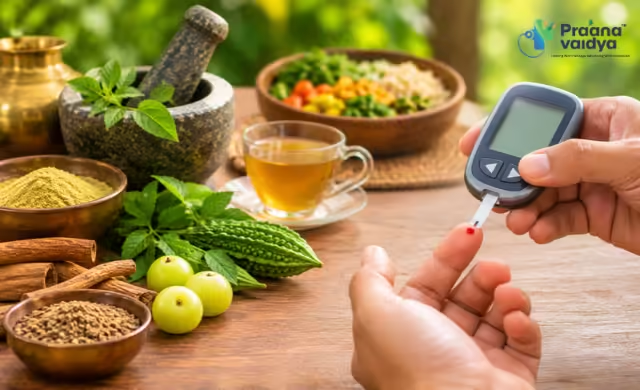
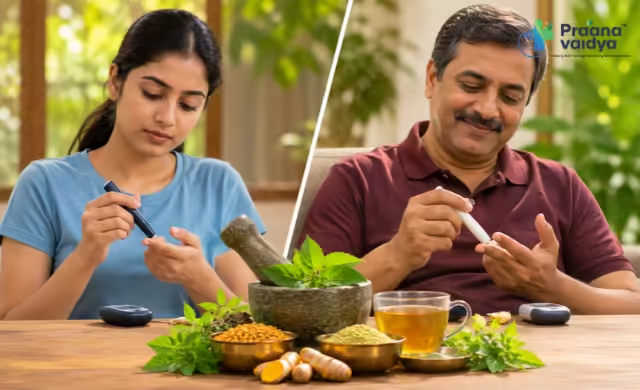
Type 1 and Type 2 diabetes are often discussed together, but they are different conditions with different underlying processes and care requirements. People searching for Type 1 vs Type 2 diabetes in Ayurveda often want to know whether Ayurveda approaches both in the same way and whether traditional Ayurvedic principles can be applied differently depending on the type.
The first important point is that Ayurveda and modern medicine use different classification systems. Ayurveda has traditional concepts such as Prameha and Madhumeha, while modern medicine classifies diabetes into categories such as Type 1 and Type 2. These terms should not be treated as exact equivalents.
An Ayurvedic consultation may instead look at an individual’s food habits, daily routine, activity, sleep, digestion, constitution and other traditional assessment factors before discussing a personalised wellness approach.
At Praanavaidya, consultations can focus on understanding the individual’s overall lifestyle and health context rather than treating Type 1 and Type 2 diabetes as identical conditions.
Looking to understand how Ayurveda may fit into your overall diabetes care?
What Is the Difference Between Type 1 and Type 2 Diabetes?
The most important difference is how the body handles insulin.
Type 1 Diabetes
Type 1 diabetes is associated with the body’s inability to produce sufficient insulin. People with Type 1 diabetes generally require insulin as part of their prescribed medical care.
Because insulin requirements are an important part of Type 1 diabetes care, an Ayurvedic approach should never be considered a substitute for prescribed insulin or medical supervision.
From an Ayurveda perspective, the discussion may focus on areas such as food habits, daily routine, digestion, sleep, stress and other individual factors as complementary areas of wellness.
Type 2 Diabetes
Type 2 diabetes commonly involves insulin resistance and changes in the body’s insulin production. Lifestyle, food patterns, physical activity, body weight and other factors can be relevant to an individual’s overall care plan.
This is where searches for Type 2 diabetes Ayurveda often become focused on diet, daily routine, movement and personalised Ayurvedic consultation.
However, the appropriate approach can differ significantly from person to person. An Ayurvedic practitioner should consider the individual’s health situation rather than applying the same routine to everyone.
Does Ayurveda Classify Type 1 and Type 2 Diabetes Separately?
Not in the same way modern medicine does.
Ayurvedic texts use traditional concepts including Prameha and Madhumeha. These concepts developed within a different medical framework and should not simply be labelled as Type 1 diabetes or Type 2 diabetes.
This distinction matters when discussing Madhumeha and diabetes online.
A responsible Ayurvedic discussion should acknowledge that traditional terminology and modern diagnostic categories are different. Instead of trying to force a direct comparison, Ayurveda may be used as a traditional framework for discussing diet, lifestyle, routine and individual constitution.
How an Ayurvedic Approach May Differ for Type 1 and Type 2
The biggest difference is not necessarily a separate Ayurvedic “treatment” for each modern diabetes type. Instead, the consultation should recognise the person’s existing medical care and individual circumstances.
For Someone With Type 1 Diabetes
An Ayurvedic consultation may discuss:
- Regular food habits and meal patterns
- Daily routine
- Physical activity appropriate to the person’s situation
- Sleep habits
- Stress and relaxation practices
- General digestive and lifestyle considerations
- How traditional wellness practices can fit alongside existing care
Any changes involving insulin, medication or prescribed diabetes care should remain under the supervision of the appropriate healthcare professional.
For Someone With Type 2 Diabetes
The discussion may include:
- Current eating patterns
- Meal timing and food choices
- Physical activity
- Sleep routine
- Weight-related lifestyle factors
- Stress and daily habits
- Individual Ayurvedic assessment
- Long-term consistency with healthy routines
This is why an Ayurvedic approach to diabetes should be personalised rather than presented as a single plan that applies to everyone.
The Role of Diet in Ayurveda and Diabetes
Diet is an important part of Ayurvedic lifestyle discussions. However, an Ayurvedic diet for diabetes should not be interpreted as a universal food list.
Different people can have different dietary habits, schedules, preferences and health considerations. A practitioner may therefore review the person’s existing diet before suggesting practical changes.
Useful areas to discuss can include:
- Meal regularity
- Portion awareness
- Overall food quality
- Excessively processed foods
- Sugary foods and beverages
- Fibre-rich food choices
- Adequate hydration
- Eating patterns that fit the person’s daily schedule
Rather than following an internet-generated “diabetes diet,” personalised guidance can help make dietary changes more practical and sustainable.
Daily Routine and Lifestyle Considerations
Ayurveda places considerable emphasis on daily routine. For someone living with diabetes, consistent habits can also be an important part of maintaining an organised lifestyle.
An Ayurvedic consultation may explore:
Sleep
Irregular sleep schedules can make healthy routines harder to maintain. Establishing a consistent sleep and wake pattern can be discussed as part of overall lifestyle planning.
Physical Activity
Movement should be appropriate to the person’s age, health status and existing care plan. The goal is to develop a routine that can realistically be followed rather than adopting an unnecessarily demanding programme.
Stress Management
Stress can influence eating habits, sleep patterns and daily routines. Breathing exercises, relaxation practices or other suitable wellness activities may be discussed according to individual needs.
Meal Routine
Consistent meal patterns can make it easier for people to organise their daily food choices. Any dietary changes should take existing medical advice and individual requirements into account.
Why Personalisation Matters in Ayurvedic Diabetes Care
One of the common problems with online Ayurveda content is that it can make every person’s situation appear identical.
Diabetes is not simply a matter of choosing one herb, one food or one routine.
A person’s age, existing treatment, lifestyle, food habits, activity levels, sleep, family situation and other health considerations can all affect what type of guidance is appropriate.
For this reason, Ayurvedic diabetes care should begin with an individual consultation rather than a generic recommendation.
If you are comparing Type 1 diabetes Ayurveda and Type 2 diabetes Ayurveda approaches, a consultation at Praanavaidya can help you understand which lifestyle and wellness discussions are relevant to your individual situation.
Can Ayurveda and Modern Diabetes Care Be Discussed Together?
Yes, but the roles should remain clear.
Ayurveda can be discussed as a traditional system that may provide perspectives on diet, routine, lifestyle and personalised wellness. Modern medical diagnosis and prescribed diabetes care remain important, particularly when a person requires insulin or other medication.
The two approaches should not be presented as competing choices.
People should not stop, reduce or change prescribed diabetes medication or insulin based on an online article, Ayurvedic product or self-directed routine.
A coordinated and informed approach is more appropriate than replacing one system with another without professional guidance.
Common Mistakes to Avoid When Searching for Ayurveda for Diabetes
People researching Ayurveda for diabetes may come across very strong promises online. It is important to approach such information carefully.
Avoid relying on content that promises:
- A guaranteed outcome
- A permanent cure
- Immediate results
- A universal herbal solution
- Replacement of prescribed medication
- A fixed timeline for improvement
- The same treatment for every person
Instead, look for information that explains the difference between traditional Ayurvedic concepts and modern diabetes classifications and encourages personalised guidance.
When Should You Consider an Ayurvedic Consultation?
An Ayurvedic consultation may be useful if you want to discuss how traditional principles around diet, routine and lifestyle can fit into your broader health plan.
Before a consultation, it can be helpful to keep information about:
- Current medications or prescribed treatment
- Typical daily meals
- Work and sleep schedule
- Physical activity
- Existing health concerns
- Previous consultations or relevant reports
This gives the practitioner a clearer understanding of your overall situation.
Final Thoughts on Type 1 vs Type 2 Diabetes in Ayurveda
The key takeaway from Type 1 vs Type 2 diabetes in Ayurveda is that the two modern diabetes categories should not simply be given identical Ayurvedic labels or identical routines.
Ayurveda has its own traditional concepts, including Prameha and Madhumeha, while modern medicine uses classifications such as Type 1 and Type 2. Understanding this difference helps prevent confusion and unrealistic expectations.
For people interested in Ayurveda, the more useful conversation is often about personalised diet, daily routine, movement, sleep and lifestyle practices that can be discussed alongside appropriate medical care.
Connect with the nearest Praanavaidya centre to discuss your individual requirements with an Ayurveda practitioner.
Rajajinagar- 08065903133
Hubballi – 08065903145
Indiranagar- 08065903135
Mumbai-08065903118
Yelahanka- 08065903134
Mangaluru-08065903136
Jayanagar- 08065903132
Delhi-08065903140
Lucknow-08065903130
FAQs
Is Type 1 and Type 2 diabetes the same according to Ayurveda?
No. Type 1 and Type 2 are modern medical classifications, while Ayurveda uses traditional concepts such as Prameha and Madhumeha. These systems should not be treated as directly interchangeable.
Can Ayurveda treat Type 1 diabetes?
Ayurveda should not be presented as a replacement for prescribed Type 1 diabetes care or insulin. An Ayurvedic consultation may instead discuss complementary areas such as diet, daily routine, sleep and lifestyle while the person’s existing care continues under appropriate medical supervision.
What is the Ayurvedic approach to Type 2 diabetes?
An Ayurvedic consultation may consider food habits, daily routine, physical activity, sleep, stress and individual constitution. The approach should be personalised rather than based on one standard routine.
What is Madhumeha in Ayurveda?
Madhumeha is a traditional Ayurvedic concept associated with the broader discussion of Prameha. It should not automatically be described as being identical to modern Type 1 or Type 2 diabetes.
Is there a specific Ayurvedic diet for Type 1 and Type 2 diabetes?
There should not be one universal diet for everyone. Dietary guidance should take the person’s existing medical care, food habits, lifestyle and individual requirements into consideration.
Can I stop diabetes medicine while following Ayurveda?
No. Prescribed medication or insulin should not be stopped, reduced or changed based on an online article or self-directed Ayurvedic plan. Any changes to prescribed care should be discussed with the appropriate healthcare professional.
Can Ayurveda and modern diabetes care be followed together?
Ayurvedic lifestyle and wellness practices can be discussed alongside existing diabetes care, provided the roles of each approach are understood and prescribed treatment is not changed without appropriate medical guidance.
Should Type 1 and Type 2 diabetes have the same Ayurvedic approach?
Not necessarily. Although Ayurveda uses traditional frameworks rather than the modern Type 1/Type 2 classification, individual circumstances can differ considerably. Personalised assessment is more appropriate than applying one routine to everyone.
Praanavaidya
Healthcare Professional
Focused on patient-centric care and evidence-based treatment plans.
More from Praanavaidya