Back stiffness that keeps returning can affect simple parts of everyday life, from getting out of bed to sitting at work or moving comfortably through the day. For people living with ankylosing spondylitis, understanding their symptoms and maintaining an appropriate long-term care routine can be important.
Many people searching for Ayurvedic treatment for ankylosing spondylitis want to know whether Ayurveda can be incorporated into their overall approach to care, what an Ayurvedic consultation involves and which lifestyle practices may be discussed.
At Praanavaidya, Ayurvedic care begins with understanding the individual rather than applying the same approach to everyone. A practitioner may review symptoms, lifestyle, food habits, sleep patterns, daily activity and existing healthcare before discussing suitable Ayurvedic options.
Looking for Ayurvedic guidance for ankylosing spondylitis?
What Is Ankylosing Spondylitis?
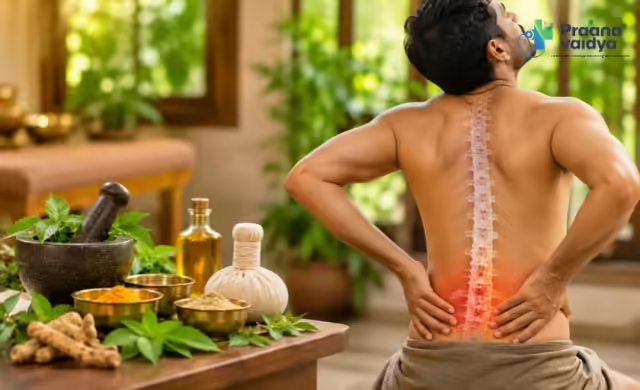
Ankylosing spondylitis is a condition associated with the spine and surrounding joints. People may experience symptoms such as back stiffness, discomfort and changes in mobility.
The experience can vary considerably from one person to another. Some people may notice greater stiffness after periods of inactivity, while others may find that certain activities or prolonged sitting affect their comfort.
Because symptoms and individual circumstances differ, an Ayurvedic consultation should focus on the person rather than simply applying a standard treatment routine.
Why Does Back Stiffness Matter in Daily Life?
Back stiffness can affect more than physical comfort. It may influence how someone moves, works, sleeps and manages everyday activities.
Common concerns may include:
- Stiffness after waking
- Discomfort after sitting for extended periods
- Difficulty maintaining regular physical activity
- Reduced comfort during certain movements
- Changes in sleep or daily routines
- Concern about recurring stiffness
Keeping a simple record of symptoms can make healthcare consultations more informative. You might note when stiffness occurs, how long you have been sitting, your activity levels, sleep patterns and any other changes you notice.
Ayurvedic Approach to Ankylosing Spondylitis
Ayurveda follows its own traditional framework for assessing an individual’s health and symptoms. An Ayurvedic practitioner may consider factors such as constitution, digestion, routine, sleep, activity, food habits and the pattern of symptoms.
For someone exploring Ayurvedic care for ankylosing spondylitis, this assessment can help the practitioner determine which traditional approaches may be appropriate to discuss.
The focus does not have to be on one particular therapy or medicine. Instead, the practitioner may discuss a combination of traditional Ayurvedic approaches and lifestyle considerations based on the individual’s circumstances.
It is important to disclose existing medical conditions, prescribed medicines and other treatments during an Ayurvedic consultation. Any Ayurvedic care should be discussed as part of the person’s overall healthcare rather than as a replacement for necessary medical management.
Ayurvedic Therapies That May Be Discussed
Depending on an individual’s assessment, an Ayurvedic practitioner may discuss traditional approaches commonly used in Ayurveda for musculoskeletal concerns and general wellbeing.
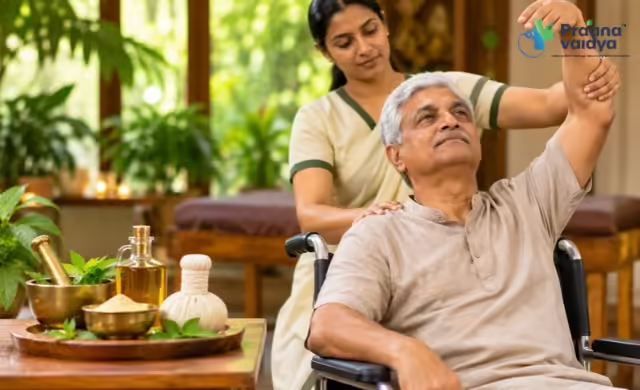
Abhyanga
Abhyanga is a traditional Ayurvedic oil massage practice. The technique, oil selection and duration may vary according to the individual’s assessment and the practitioner’s approach.
Swedana
Swedana refers to traditional Ayurvedic sweating or fomentation practices. Whether this type of therapy is appropriate depends on the individual’s health and circumstances.
Kati Basti
Kati Basti is a traditional Ayurvedic local therapy involving a specially prepared area over the lower back. It may be discussed when lower-back discomfort is a concern, but suitability should be determined individually.
Basti
Basti is a traditional Ayurvedic procedure with different forms and applications. It should not be attempted independently. A qualified Ayurvedic practitioner should determine whether it is appropriate for a particular person.
These approaches are not automatically suitable for everyone with ankylosing spondylitis. Any Ayurvedic procedure or medicine should be considered following appropriate professional assessment.
Diet and Daily Habits During Ayurvedic Care
People searching for diet for ankylosing spondylitis Ayurveda may expect a fixed list of foods to eat or avoid. However, dietary discussions may be more useful when they take the person’s routine, food preferences, digestion and individual circumstances into account.
Instead of following a restrictive diet without professional guidance, you can discuss:
- Regular meal timing
- Balanced meals
- Adequate fluid intake
- Personal food preferences and tolerance
- Irregular eating patterns
- Eating habits around work and sleep
- Any recurring digestive concerns
A simple food and symptom journal may also help you identify patterns that can be discussed during a consultation.
Movement and Gentle Exercise
Maintaining an appropriate level of movement may form part of an individual’s broader approach to managing daily stiffness.
People searching for yoga for ankylosing spondylitis should avoid assuming that every posture or exercise is appropriate for them. A movement routine should take individual mobility, symptoms and existing medical advice into account.
Depending on individual circumstances, a practitioner or healthcare professional may discuss activities such as:
- Short walks
- Comfortable mobility exercises
- Suitable stretching
- Posture awareness during desk work
- Regular breaks from prolonged sitting
The goal should be a practical routine that can be maintained comfortably rather than forcing the body through painful or unsuitable movements.
If a particular activity repeatedly causes significant discomfort or your symptoms change noticeably, discuss this with an appropriate healthcare professional.
How Praanavaidya Approaches Ayurvedic Care
At Praanavaidya, the starting point is an individual consultation rather than a one-size-fits-all treatment plan.
The discussion may include:
- Understanding your current concerns
- Reviewing your daily routine and lifestyle
- Discussing food and sleep patterns
- Understanding existing medicines and healthcare
- Considering the Ayurvedic perspective
- Discussing potentially suitable Ayurvedic approaches
- Identifying practical lifestyle considerations
- Reviewing the approach when appropriate
This individualised approach can make a consultation more relevant for people searching for Ayurvedic treatment for ankylosing spondylitis while keeping their existing healthcare needs in view.
Want to understand which Ayurvedic options may be appropriate for your situation? Speak with Praanavaidya about your back stiffness, discomfort and daily routine.
When Should You Seek Medical Evaluation?
Back stiffness can have many possible causes. New, severe, rapidly worsening or unusual symptoms should not automatically be attributed to ankylosing spondylitis.
If you have not received a diagnosis, seek appropriate medical evaluation rather than attempting to identify the cause yourself.
People who have already been diagnosed with ankylosing spondylitis should continue their recommended medical follow-up. Tell every healthcare professional involved in your care about the medicines, supplements, therapies and procedures you are using.
Urgent medical assessment is particularly important when symptoms are severe or rapidly worsening, or when concerning neurological or other emergency symptoms occur.
Ayurvedic consultation may be considered for complementary care and lifestyle discussions, but it should not replace necessary diagnosis, monitoring or medical treatment.
Making Everyday Life More Manageable
Long-term care can be easier to maintain when changes fit naturally into everyday life.
Depending on your individual circumstances, practical habits to discuss with your healthcare professionals may include:
- Taking regular movement breaks during prolonged sitting
- Maintaining a consistent sleep routine
- Choosing physical activities appropriate for your mobility
- Keeping track of symptom patterns
- Discussing dietary habits during consultations
- Avoiding self-prescribed Ayurvedic medicines or procedures
- Following recommendations from your treating healthcare professionals
Small and sustainable changes may be easier to incorporate than making several major changes at once.
Ayurvedic Treatment for Ankylosing Spondylitis: A Personalised Approach
There is no single Ayurvedic routine that should automatically be followed by everyone with ankylosing spondylitis.
An Ayurvedic consultation may involve traditional therapies, lifestyle discussions, dietary considerations and ongoing assessment, depending on the individual’s circumstances.
The important first step is to understand your symptoms and overall health before choosing any medicine, therapy or procedure.
If you are exploring Ayurvedic care for back stiffness and ankylosing spondylitis, you can discuss your concerns and individual requirements with a qualified Ayurvedic practitioner.
Book a consultation with Praanavaidya in
Rajajinagar- 08065903133
Hubballi – 08065903145
Indiranagar- 08065903135
Mumbai-08065903118
Yelahanka- 08065903134
Mangaluru-08065903136
Jayanagar- 08065903132
Delhi-08065903140
Lucknow-08065903130
FAQs
Is Ayurvedic treatment suitable for ankylosing spondylitis?
Ayurvedic care can be discussed on an individual basis. Suitability depends on factors such as symptoms, health history, current medicines and existing healthcare. Consult a qualified Ayurvedic practitioner before beginning any Ayurvedic medicine or procedure.
Can Ayurveda treat ankylosing spondylitis?
This article does not establish Ayurveda as a treatment or cure for ankylosing spondylitis. People may discuss Ayurvedic care as a complementary approach with a qualified practitioner while continuing appropriate medical evaluation and management.
Can Ayurveda help with back stiffness associated with ankylosing spondylitis?
People may explore Ayurvedic care in relation to stiffness and general wellbeing. The appropriate approach varies between individuals and should be determined following professional assessment.
What Ayurvedic therapies may be discussed for back stiffness?
Depending on an individual’s assessment, traditional approaches such as Abhyanga, Swedana, Kati Basti or Basti may be discussed. These procedures are not appropriate for everyone and should only be considered with suitable professional guidance.
Can I follow Ayurveda while taking prescribed medicines?
Tell your Ayurvedic practitioner about all medicines, supplements and treatments you are currently using. Do not stop, reduce or change prescribed medicines without discussing this with the healthcare professional who prescribed them.
Is there a specific Ayurvedic diet for ankylosing spondylitis?
There is no single diet that is appropriate for everyone. Dietary discussions may take into account individual food habits, digestion, routine, preferences and other relevant factors.
Can yoga be included in an Ayurvedic care routine?
Movement or yoga may be discussed as part of a broader lifestyle routine. Exercises and postures should be appropriate for the individual’s mobility and circumstances. Avoid starting an unfamiliar exercise routine without suitable guidance if you have significant symptoms or mobility limitations.
Medical Disclaimer
This article is provided for general educational purposes only. It is not intended to diagnose, treat, cure or prevent ankylosing spondylitis or any other medical condition, and it should not replace advice from a qualified doctor or other healthcare professional. Ankylosing spondylitis requires appropriate medical evaluation and ongoing care. Ayurvedic medicines, therapies and procedures may not be suitable for everyone and may have risks, precautions or interactions with other medicines. Do not stop, reduce or change prescribed medicines, or delay recommended medical evaluation, based on information in this article. Before beginning Ayurvedic treatment, discuss your plans with your treating doctor and a qualified Ayurvedic practitioner, particularly if you take prescription medicines, have other health conditions, are pregnant or breastfeeding, or have new or worsening symptoms. Seek prompt medical attention for severe or rapidly worsening symptoms or symptoms that require urgent evaluation.
Praanavaidya
Healthcare Professional
Focused on patient-centric care and evidence-based treatment plans.
More from Praanavaidya