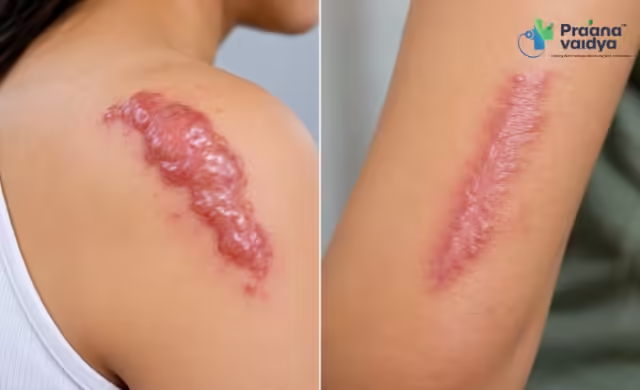

A keloid may change after treatment, and seeing a previously treated raised scar become more noticeable can be worrying. People often want to know whether the scar is recurring, whether the change is significant, and what they should do next.
Keloid recurrence after treatment refers to a treated area becoming raised or noticeable again. However, not every change means the same thing. A scar may remain raised, change gradually, or develop a new raised area close to the original site.
This guide explains what recurrence can mean, what changes to document, how to prepare for an assessment, and which questions can make a consultation more useful.
If a treated keloid has changed in appearance or you are unsure whether it is recurring, consider arranging a consultation with Praanavaidya to discuss the change and your previous treatment history.
What Does Keloid Recurrence After Treatment Mean?
Keloid recurrence means that raised scar tissue becomes noticeable again after an earlier treatment or period of stability. The change may be seen in the previously treated area, around its edges, or close to the original scar.
The word “recurrence” can make it sound as though the original problem has returned in exactly the same way. In reality, a treated scar can change for different reasons, and appearance alone may not be enough to determine what is happening.
Recurrence Is Not the Same as a Scar That Never Fully Settled
A scar can remain visible or raised after treatment without necessarily representing a new episode. This is why comparing the scar over time can be more useful than judging it from a single photograph.
A New Raised Area Can Also Be Confusing
If a new bump appears close to an old scar, it may be difficult to tell whether it is part of the previous scar or a separate change. An assessment can help clarify the situation rather than relying on assumptions.
Why Do Keloids Recur After Treatment?
People often search for “why do keloids recur after treatment?” because a change can feel unexpected, especially when the scar appeared stable.
When a recurring or changing scar is reviewed, several details may be relevant:
- The original location and size of the keloid
- How long ago the previous treatment took place
- What the scar looked and felt like before treatment
- How it changed during healing
- Whether the area experienced further irritation or injury
- Whether the current change is in the original scar or around it
- Whether itching, tenderness or discomfort has changed
No single factor automatically explains recurrence. The individual’s history and the current appearance need to be considered together.
What Does a Recurrent Keloid Look or Feel Like?
There is no single appearance that applies to every recurrent keloid. Changes that may lead someone to seek an assessment include:
- A previously treated area becoming more raised
- A firmer or more noticeable scar
- A gradual change in size or outline
- Increased itching or tenderness
- A change in colour or surface appearance
- A new raised section near the original scar
The most useful detail is often how the scar has changed over time.
Keep Track of Changes
Consider noting:
- When you first noticed the change
- Whether it has stayed the same or progressed
- Any new sensations such as itching or tenderness
- Whether clothing, jewellery or friction affects the area
- Any previous procedures or treatments involving the scar
Dated photographs taken in similar lighting and from a similar angle can also help you describe changes during a consultation.
What Should You Do If a Keloid Comes Back?
If you notice a recurring keloid, start by documenting the change and gathering information about the previous treatment.
Step 1: Review the Timeline
Write down when the original treatment happened and when you first noticed the new change.
Step 2: Compare Older and Newer Photographs
If you have photographs from before or after treatment, compare them with recent images. Look for differences in size, outline, texture and appearance.
Step 3: Record Symptoms
Note whether the area is itchy, tender, uncomfortable or simply more noticeable. Record when these sensations occur and whether they are changing.
Step 4: Gather Previous Treatment Details
Keep previous prescriptions, procedure details, consultation notes or photographs available if you have them.
Step 5: Arrange an Assessment If the Change Concerns You
A consultation can focus on what has changed, your previous history and the next steps that may be relevant to your situation.
CTA: If you have noticed a change in a previously treated keloid, Praanavaidya can provide a consultation focused on your scar history, current concerns and questions about what to do next.
Keloid Recurrence vs Hypertrophic Scar
Keloids and hypertrophic scars are often discussed together because both can appear raised. However, they are not interchangeable terms.
For someone who notices a raised scar after treatment, the distinction can matter during assessment. The location, appearance, history and pattern of the scar all form part of the discussion.
If you are unsure which type of raised scar you have, avoid trying to diagnose it from photographs alone. A professional assessment provides a better basis for understanding the change.
When Should You Get a Recurring Keloid Assessed?
Consider arranging an assessment when a previously treated scar is clearly changing or when you are uncertain about what you are seeing.
A consultation may be useful if:
- The raised area appears to be increasing
- The scar’s shape or texture has changed
- New itching, tenderness or discomfort has appeared
- A new raised section has developed near the old scar
- You are unsure whether the change represents recurrence
- You want to review previous treatment and possible next steps
The aim is not to make every scar change alarming. It is to replace uncertainty with a clearer understanding of what has changed.
How to Prepare for Your Appointment
A few details can make the discussion more focused. Bring or note:
- Previous treatment dates
- The type of treatment you received, if known
- Older photographs
- When you first noticed the current change
- Any symptoms you have noticed
- Any recent injury or irritation to the area
- Your main questions and concerns
If the keloid is in a visible area, you can also explain whether your concern is mainly about appearance, sensation, recurrence, or a combination of these.
Final Thoughts on Keloid Recurrence After Treatment
Keloid recurrence after treatment can raise understandable questions, but the appearance of a treated scar does not always explain the reason for the change by itself. The most useful approach is to consider the original scar, previous treatment, timeline, symptoms and current appearance together.
If you notice a recurring or changing raised scar, document what you see, gather your previous treatment information and consider discussing it with a qualified professional.
Have questions about a keloid that has changed after treatment? Contact Praanavaidya to discuss your concerns and arrange a consultation at a convenient location.
Visit Us in-
Rajajinagar- 08065903133
Hubballi – 08065903145
Indiranagar- 08065903135
Mumbai-08065903118
Yelahanka- 08065903134
Mangaluru-08065903136
Jayanagar- 08065903132
Delhi-08065903140
Lucknow-08065903130
FAQs
Can a keloid come back after treatment?
A treated keloid can become noticeable again, but a change in a scar does not automatically confirm recurrence. The previous treatment, timeline and current appearance should be considered together.
How do I know if my keloid is recurring?
Look for changes compared with the scar’s previous appearance, such as increased prominence, a changed outline, altered texture or new sensations. Photographs taken over time can help document changes.
What should I do if my keloid starts growing again?
Document when you noticed the change, compare it with older photographs if available, note any symptoms and gather your previous treatment details. Consider arranging an assessment if the change concerns you.
Can a scar stay raised after treatment without being recurrent?
A treated scar may remain noticeable or raised, so a raised appearance alone does not establish that a new recurrence has occurred. An assessment can help clarify the situation.
Is keloid recurrence the same as a hypertrophic scar?
No. Keloids and hypertrophic scars are different types of raised scars, even though they can look similar. The location, appearance and history are relevant when distinguishing them.
Should I take photos of a recurring keloid?
Dated photographs can be useful for documenting changes. Try to use similar lighting, distance and angles so that comparisons are easier.
Praanavaidya
Healthcare Professional
Focused on patient-centric care and evidence-based treatment plans.
More from Praanavaidya