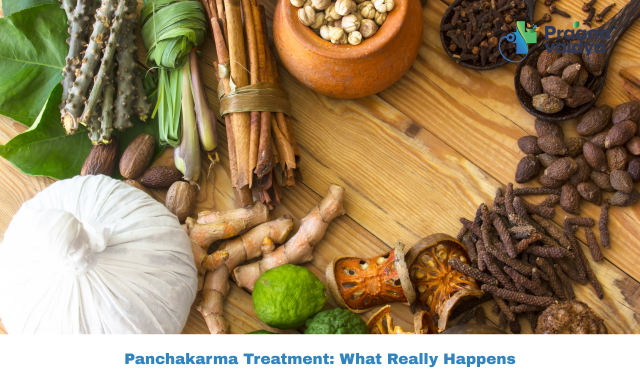
Panchakarma treatment is the most complete healing system in ayurveda — and also the most misunderstood. It is described in wellness marketing as a detox, a cleanse, a luxury retreat experience. In clinical reality, it is a three-phase physician-directed programme that eliminates accumulated metabolic waste from the body’s deep tissues, corrects the dosha imbalance underlying chronic disease, and rebuilds the digestive and metabolic function that allows the body to sustain recovery.
The word Panchakarma comes from pancha (five) and karma (action). It is documented in the Charaka Samhita and Sushruta Samhita — the foundational texts of ayurveda — and administered in its classical form at Praanavaidya today. Every course begins with a diagnostic consultation by a BAMS doctor who designs a protocol specific to your condition, constitution, digestive strength, age, and medical history. No two courses are identical.
This guide explains every phase, every therapy, and every step — so you know exactly what you are committing to before treatment begins.
| Consult a Praanavaidya doctor for panchakarma treatment Call / WhatsApp: 08065903127 | +91 96117 73811 |
Phase 1: Purva Karma — preparation
Snehana – internal and external oleation
Medicated ghee or oil is consumed internally each morning in progressively increasing doses over 3 to 7 days. This internal oleation penetrates the seven tissue levels (Dhatus), loosening Ama that has adhered to tissue walls and mobilising it toward the digestive tract. Simultaneously, Abhyanga — two therapists applying warm medicated oil in synchronised strokes for 45 to 60 minutes — loosens surface and mid-level Ama. The oil is prescribed by your doctor based on your condition: Ksheerabala for neurological conditions, Dhanwantaram for musculoskeletal, Sahacharadi for Vata-dominant conditions.
Swedana — Bashpasweda (herbalised steam)
Immediately following Abhyanga, the patient enters the Bashpasweda steam chamber infused with therapeutic herbs. The heat opens the Srotas (body channels), causing Ama mobilised during Abhyanga to flow toward the digestive tract for elimination. Without Bashpasweda, toxins loosened during massage have no exit pathway and simply redistribute within the tissues. This Abhyanga-Bashpasweda sequence is the non-negotiable preparation for every elimination therapy that follows.
Phase 2: Pradhana Karma — the five elimination therapies
Your doctor prescribes the specific Karmas indicated for your condition — typically 2 to 3 of the five — along with supporting therapies such as Shirodhara, Kati Basti, Janu Basti, Greeva Basti, or Udwarthana where clinically appropriate.
| Karma | Clinical action | Used at Praanavaidya for |
| Vamana | Therapeutic emesis — expels Kapha Ama via the upper GI tract | Asthma, sinusitis, obesity, chronic skin diseases |
| Virechana | Controlled purgation — eliminates Pitta Ama via the intestines | PCOD, thyroid, liver conditions, skin disease, metabolic disorders |
| Basti | Medicated enema — the most powerful Vata therapy; nourishes and cleanses via the colon | Joint and back pain, sciatica, disc disease, neurological conditions, PCOD |
| Nasya | Nasal medicated oil administration — clears channels in head, neck, and sinuses | Migraines, sinusitis, hair loss, cervical spondylosis, stress |
| Raktamokshana | Blood purification — via Siravyadha (venesection) or Jaulakavacharana (leech therapy) | Varicose veins, gout, chronic skin conditions, blood vitiation disorders |
Phase 3: Paschat Karma — recovery
The recovery phase is as clinically important as the treatment itself. During Pradhana Karma, digestive fire (Agni) is intentionally reduced to allow deep tissue work. Returning immediately to normal food creates a new wave of Ama that directly undoes a significant portion of the treatment’s benefit.
Praanavaidya provides a structured Samsarjana Krama — a graded dietary protocol for 3 to 7 days post-treatment. Herbal Rasayanas are prescribed for 1 to 3 months of home use. Follow-up consultations are scheduled at 30 and 90 days. Every patient leaves with a written recovery plan.
What a typical treatment day looks like at Praanavaidya
| Time of day | What happens |
| Morning | Doctor consultation — response assessment and protocol adjustment if needed |
| Mid-morning | Internal oleation or pre-therapy preparation |
| Late morning | Abhyanga (45-60 min) immediately followed by Bashpasweda, then primary Karma therapy |
| Afternoon | Prescribed rest — clinically required, not optional |
| Evening | Herbal medicine administration and doctor check-in |
Treatment outcomes by timeframe
| Timeframe | What typically happens |
| Days 1-3 | Reduced acute symptoms. Some patients notice temporary increased awareness of discomfort as toxins mobilise — expected therapeutic response. |
| Days 4-7 | Main therapies produce visible improvement. Pain, stiffness, and inflammation reduce noticeably. |
| Days 8-14 | Significant functional improvement. Painkiller use reduces or stops in most joint and pain patients. |
| Days 15-21 | Sustained improvement. Neurological symptoms (sciatica, numbness) begin to resolve. |
| 30 and 90 day follow-up | Herbal protocol reviewed. Dietary guidelines confirmed. Long-term progress monitored. |
Frequently asked questions
1. How long does a panchakarma treatment course take?
Seven days for mild conditions and preventive wellness. Fourteen to twenty-one days for chronic conditions including disc herniation, arthritis, PCOD, skin disease, and metabolic disorders. Duration is determined at the initial consultation.
2. Is panchakarma treatment painful?
No. The therapies are therapeutic. Some patients experience mild fatigue or temporary skin flushing during the elimination phase — expected responses that are monitored by the treating doctor.
3. Can I continue my current medication during treatment?
In most cases, yes. Praanavaidya doctors review your full medication list before treatment begins and coordinate with your existing physician where needed. Medication is never stopped without medical advice.
4. Is panchakarma treatment at Praanavaidya covered by insurance?
Yes. Praanavaidya accepts most major insurance providers. The team handles complete claims documentation including medicines and investigations. Call 08065903127 to confirm your insurer.
5. Which conditions respond best to panchakarma treatment?
Praanavaidya sees the strongest outcomes in joint and back pain, PCOD, skin diseases (eczema, psoriasis), fatty liver, digestive disorders, and chronic inflammatory conditions. Panchakarma is also used for annual preventive detox in otherwise healthy individuals.
Visit Praanavaidya near you
Praanavaidya
Healthcare Professional
Focused on patient-centric care and evidence-based treatment plans.
More from Praanavaidya