
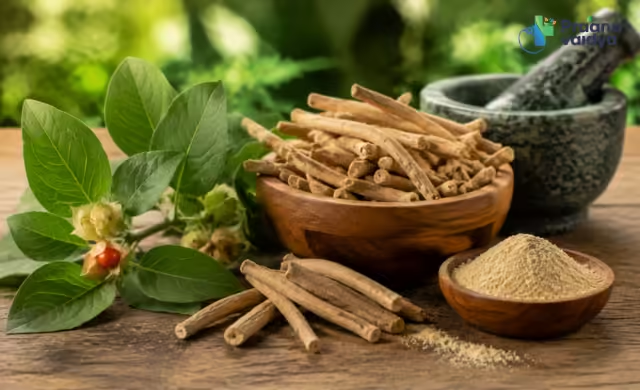
Ashwagandha is one of the best-known herbs associated with Ayurveda. Traditionally known as Ashwagandha or Withania somnifera, it has been used in Ayurvedic practice as a Rasayana, a category of preparations traditionally associated with nourishment, vitality, resilience, and healthy ageing.
The growing popularity of Ashwagandha has also brought many modern claims about stress, sleep, energy, hormones, muscle strength, and immunity. While some areas have been studied scientifically, not every traditional claim has been clinically established.
Understanding the Ayurvedic health benefits of Ashwagandha therefore requires looking at both its traditional properties and the limits of modern evidence.
In Ayurveda, Ashwagandha is not simply treated as a universal supplement. Its suitability can depend on factors such as Prakriti, Vikriti, Agni, age, strength, season, diet, and current health status.
At Praanavaidya, traditional Ayurvedic herbs can be considered as part of a personalised approach rather than following a standard recommendation for everyone.
What Is Ashwagandha?
Ashwagandha is a medicinal plant traditionally used in Ayurveda. Its botanical name is Withania somnifera.
The root is particularly important in traditional Ayurvedic preparations.
The herb is also known by names such as:
- Ashwagandha
- Indian ginseng
- Winter cherry
- Withania somnifera
Although it is sometimes called “Indian ginseng,” Ashwagandha is botanically unrelated to true ginseng.
Traditionally, Ashwagandha is valued for its nourishing and strengthening qualities and is frequently discussed in the context of Rasayana therapy.
Ashwagandha Through the Ayurvedic Lens
Ayurveda evaluates herbs through traditional concepts such as:
- Rasa – taste
- Guna – qualities
- Virya – potency
- Vipaka – post-digestive effect
- Prabhava – specific traditional action
Ashwagandha is traditionally described as having a predominantly sweet taste and Guru (heavy) and Snigdha (unctuous) qualities.
It is generally described as warming in potency.
These properties help explain why it has traditionally been used in situations associated with weakness, depletion, fatigue, and Vata-related imbalance.
However, the traditional properties of an herb should not be confused with modern pharmacological measurements.
What Is Ashwagandha Rasayana?
One of the most important Ayurvedic contexts for understanding Ashwagandha is Rasayana.
Rasayana is a broad Ayurvedic concept associated with supporting nourishment, vitality, resilience, healthy ageing, and overall wellbeing.
Ashwagandha has traditionally been included in Rasayana-oriented formulations, particularly when strengthening and nourishing qualities are desired.
The purpose is not simply to “boost” one biological function.
A traditional Ayurvedic approach considers whether the herb is appropriate for the individual’s:
- Age
- Constitution
- Strength
- Digestion
- Lifestyle
- Current condition
This makes Rasayana different from the modern idea of taking a supplement solely for a specific symptom.
8 Traditional and Potential Wellness Benefits of Ashwagandha
1. Traditionally Used for Stress and Mental Fatigue
Ashwagandha is widely discussed today for stress management.
Ayurvedic traditions have long used the herb in formulations intended to support resilience and balance in people experiencing weakness or depletion.
Modern research has also investigated Ashwagandha extracts for perceived stress and anxiety-related outcomes, with some studies reporting potential benefits.
However, it should not be described as a guaranteed treatment for anxiety or other mental-health conditions.
Persistent or severe psychological symptoms require appropriate professional care.
2. May Support Healthy Sleep
Ashwagandha has traditionally been associated with calming and restorative applications.
Some modern studies have investigated its potential effects on sleep quality and sleep-related measures.
People often consider Ashwagandha when dealing with:
- Difficulty relaxing
- Occasional sleep disturbance
- Stress-related tiredness
- Non-restorative sleep
However, chronic insomnia can have many causes.
Sleep problems associated with depression, anxiety, sleep apnoea, medication, or other medical conditions should be professionally evaluated.
3. Traditionally Used to Support Strength and Vitality
Ashwagandha has traditionally been used in Ayurvedic preparations intended to support Bala, or strength.
This makes it particularly interesting in traditional wellness approaches involving:
- General weakness
- Physical fatigue
- Reduced stamina
- Recovery after exertion
- Supporting strength in appropriate individuals
Modern research has also examined Ashwagandha in relation to exercise performance and muscle strength.
The results are promising in some studies but do not mean that Ashwagandha can replace appropriate nutrition, exercise, protein intake, or medical care.
4. May Support Physical Recovery
Traditional Ayurvedic practice has used Ashwagandha as a nourishing herb in situations where strengthening and restoration are considered appropriate.
It may be incorporated into a broader routine involving:
- Adequate food
- Proper sleep
- Physical activity
- Stress management
- Appropriate rest
The herb should not be viewed as a substitute for recovery fundamentals.
5. Traditionally Associated With Vata Balance
Ashwagandha is often discussed in Ayurveda in relation to Vata Dosha.
Vata is traditionally associated with qualities such as:
- Dryness
- Lightness
- Mobility
- Irregularity
- Coldness
Ashwagandha’s traditionally heavy, nourishing, unctuous, and warming qualities are considered potentially supportive when Vata qualities are prominent.
This does not mean everyone with Vata characteristics should take Ashwagandha.
The complete Ayurvedic assessment remains important.
6. May Support Healthy Ageing
As a traditional Rasayana herb, Ashwagandha has historically been associated with vitality and healthy ageing.
The modern scientific interest in Ashwagandha includes research into oxidative stress, inflammation, cognition, physical performance, and other areas.
However, “anti-ageing” is a broad marketing term.
Ashwagandha should not be promoted as a way to reverse ageing or prevent every age-related disease.
Healthy ageing depends on multiple factors, including:
- Nutrition
- Physical activity
- Sleep
- Social connection
- Preventive healthcare
- Stress management
- Management of chronic conditions
7. May Support Cognitive and Mental Performance
Traditional Ayurvedic use includes Ashwagandha in preparations associated with mental and physical wellbeing.
Modern research has explored its potential effects on aspects of memory, attention, and cognitive performance.
The evidence is still developing, and more research is needed to determine which preparations, doses, and populations may benefit.
Therefore, Ashwagandha should not be presented as a treatment for dementia, neurological disease, or significant cognitive impairment.
8. May Support Overall Resilience
One reason Ashwagandha remains important in Ayurveda is its broad traditional role.
Rather than being used exclusively for one symptom, it has historically been incorporated into formulations aimed at supporting:
- Strength
- Nourishment
- Vitality
- Recovery
- Stress resilience
- Healthy ageing
This broader concept fits the Ayurvedic approach of supporting the person as a whole.
Can Ashwagandha Help With Weight Management?
Ashwagandha is sometimes marketed as a weight-loss herb.
That is not an accurate way to understand its traditional role.
Some research has examined whether stress-related changes and Ashwagandha supplementation may influence body weight or eating behaviour, but this does not make Ashwagandha a standalone weight-loss treatment.
Healthy weight management depends on:
- Diet
- Energy balance
- Physical activity
- Sleep
- Stress
- Metabolic health
- Medical factors
Ashwagandha should not be marketed as a “fat burner.”
Final Thoughts
Ashwagandha occupies an important place in traditional Ayurvedic herbal practice, particularly as a Rasayana associated with nourishment, strength, vitality, resilience, and healthy ageing.
The Ayurvedic health benefits of Ashwagandha are best understood within this traditional framework rather than through modern marketing claims that suggest it can cure stress, balance every hormone, burn fat, or replace medical treatment.
Modern research has explored several potential applications, including stress, sleep, physical performance, and aspects of cognitive wellbeing. While some findings are encouraging, evidence varies according to the extract, dose, study population, and outcome being measured.
From an Ayurvedic perspective, the more important question is not simply whether Ashwagandha is “good” but whether it is appropriate for a particular person.
Factors such as Prakriti, Vikriti, Agni, Dosha status, age, strength, diet, lifestyle, medications, and existing health conditions can influence how the herb is traditionally used.
At Praanavaidya, Ashwagandha can be considered as part of a broader personalised Ayurvedic approach that may include diet, daily routine, yoga, meditation, herbal formulations, and traditional therapies.
Used thoughtfully and appropriately, Ashwagandha can be understood not as a miracle supplement, but as a traditional Ayurvedic herb with a long history of use and an evolving body of modern research.
Visit Us in-
Rajajinagar- 08065903133
Hubballi – 08065903145
Indiranagar- 08065903135
Mumbai-08065903118
Yelahanka- 08065903134
Mangaluru-08065903136
Chamrajpet-08065903132
Delhi-08065903140
Lucknow-08065903130
Frequently Asked Questions About Ashwagandha in Ayurveda
What are the Ayurvedic health benefits of Ashwagandha?
Traditionally, Ashwagandha is valued as a nourishing Rasayana herb associated with strength, vitality, resilience, recovery, and healthy ageing. Modern research has also investigated its potential effects on stress, sleep, and physical performance.
What is Ashwagandha called in Ayurveda?
Ashwagandha is its traditional Sanskrit-derived name and refers to Withania somnifera. The root is commonly used in Ayurvedic preparations.
Is Ashwagandha a Rasayana?
Yes. Ashwagandha is traditionally regarded as a Rasayana herb and has historically been used in preparations associated with nourishment, vitality, strength, and healthy ageing.
Can Ashwagandha help with stress?
Some modern studies suggest that certain Ashwagandha extracts may help reduce perceived stress in some people. It should not be considered a replacement for professional treatment of anxiety or other mental-health conditions.
Can Ashwagandha improve sleep?
Research suggests that some Ashwagandha preparations may support aspects of sleep quality. Persistent insomnia should be evaluated for underlying causes.
Is Ashwagandha safe to take daily?
Some people take it regularly, but safety depends on the preparation, dose, duration, health status, and medications. Long-term use should be discussed with a qualified professional when appropriate.
Does Ashwagandha treat thyroid problems?
Ashwagandha should not be used as a replacement for thyroid diagnosis or prescribed treatment. People with thyroid disorders should consult their healthcare professional before using it.
Praanavaidya
Healthcare Professional
Focused on patient-centric care and evidence-based treatment plans.
More from Praanavaidya