Sandalwood, traditionally known as Chandana or Chandan, has held a distinctive place in Ayurvedic traditions for centuries. Its naturally fragrant wood and cooling qualities have made it a familiar ingredient in traditional skin-care preparations, aromatic practices, and selected Ayurvedic formulations.
Unlike many modern beauty ingredients that are promoted for a single purpose, sandalwood has traditionally been understood through Ayurveda’s broader system of Rasa, Guna, Virya, Vipaka, Dosha, and individual suitability.
The benefits of sandalwood in Ayurveda are particularly associated with its traditionally cooling and soothing nature. It has commonly been used in preparations intended to support skin comfort and balance conditions in which heat or irritation is prominent.
At the same time, sandalwood should not be treated as a cure-all. Modern evidence for many traditional applications remains limited, and the quality and identity of sandalwood products can vary considerably.
What Is Sandalwood?
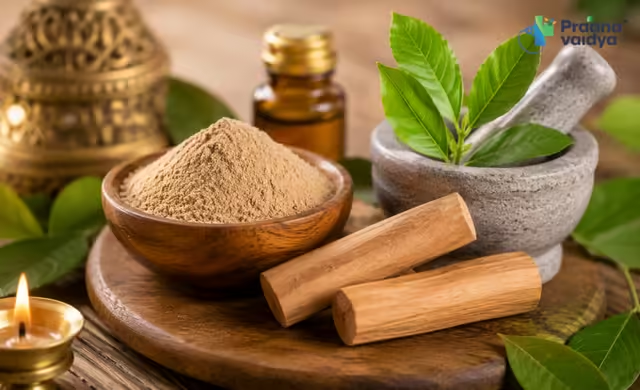
Sandalwood generally refers to fragrant wood obtained from trees of the Santalum genus. Santalum album, commonly called Indian sandalwood, has a long history of traditional use in South Asian practices.
The wood may be processed into:
- Fine powder
- Paste
- Infused preparations
- Essential oil
- Traditional formulations
- Cosmetic preparations
In Ayurveda, sandalwood is commonly referred to as Chandana.
Its characteristic fragrance comes from naturally occurring aromatic compounds, particularly santalols found in sandalwood oil.
Sandalwood Through the Ayurvedic Perspective
Ayurveda describes herbs and substances according to traditional attributes rather than evaluating them only by their modern chemical composition.
Sandalwood is traditionally considered:
- Cooling in nature
- Fragrant
- Soothing
- Relatively light
- Associated with Pitta-balancing applications
Its cooling quality is one of the main reasons it has historically been used in traditional preparations involving excess heat.
However, Ayurvedic properties are part of a traditional medical framework and should not be interpreted as equivalent to modern clinical measurements.
9 Potential and Traditional Benefits of Sandalwood in Ayurveda
1. Traditionally Used for Cooling Skin Care
One of the most recognised traditional uses of sandalwood is topical skin care.
Sandalwood paste has historically been applied to the skin as part of cooling and soothing routines.
This traditional application may be particularly relevant when the skin feels:
- Warm
- Irritated
- Uncomfortable
- Sensitive after environmental heat exposure
A sandalwood preparation should be used gently, particularly on sensitive skin.
2. May Support a Soothing Skin-Care Routine
Sandalwood is often included in traditional face packs and external preparations.
Its fragrance and traditionally cooling character make it a popular ingredient in Ayurvedic-inspired skin care.
However, sandalwood should not automatically be considered a treatment for every skin condition.
Persistent acne, eczema, dermatitis, unexplained rashes, or pigmentation should be professionally evaluated rather than treated exclusively with homemade sandalwood preparations.
3. Traditionally Associated With Pitta Balance
Among the three Doshas, sandalwood is especially associated with Pitta-oriented approaches because of its traditionally cooling qualities.
Pitta is traditionally linked with qualities such as:
- Heat
- Sharpness
- Intensity
- Fluidity
- Transformation
When Pitta-type qualities are considered excessive, Ayurveda may emphasise cooling foods, routines, herbs, and external practices.
Sandalwood may be included in such traditional approaches where appropriate.
This does not mean that everyone with a Pitta constitution should use sandalwood regularly.
4. Used Traditionally for Heat-Related Skin Discomfort
Traditional Ayurvedic preparations containing sandalwood have been used in contexts involving heat and skin discomfort.
For example, sandalwood paste has historically been applied externally in traditional routines when the skin feels overheated.
It is important to distinguish traditional use from proven treatment. A persistent burning sensation, severe redness, swelling, or rash may indicate a medical condition requiring evaluation.
5. Its Fragrance May Support Relaxation
Sandalwood is widely appreciated for its distinctive aroma.
Sandalwood fragrance has a long history of use in:
- Meditation
- Prayer
- Traditional rituals
- Aromatic practices
- Personal care
A calming fragrance may contribute to a relaxing environment for some people.
However, fragrance should not be described as a treatment for anxiety, depression, insomnia, or other mental-health disorders.
6. Traditionally Used in Aromatic and Meditative Practices
Sandalwood has a strong cultural connection with contemplative practices.
Its fragrance is often associated with:
- Meditation spaces
- Yoga environments
- Traditional ceremonies
- Relaxation rituals
In this context, sandalwood may contribute to the sensory environment rather than acting as a standalone medical intervention.
7. May Provide Antioxidant-Related Plant Compounds
Sandalwood contains naturally occurring compounds that have attracted scientific interest.
Laboratory research has investigated sandalwood constituents for antioxidant and other biological activities.
However, laboratory findings should not be interpreted as proof that applying sandalwood to the skin will prevent ageing or cure disease.
Human clinical evidence is necessary before making therapeutic claims.
8. Traditionally Used in Selected Ayurvedic Preparations
Sandalwood has historically been incorporated into various traditional formulations.
Depending on the formulation, plant part, preparation method, and intended purpose, it may be combined with other herbs.
This highlights an important Ayurvedic principle: the effect of a formulation cannot always be attributed to one ingredient alone.
Traditional preparations should therefore be obtained from reliable sources and used under appropriate guidance when intended for therapeutic purposes.
9. Can Be Part of a Gentle Personal-Care Routine
Sandalwood powder is sometimes used in traditional face packs and body-care preparations.
When appropriately prepared, it may be incorporated into a simple personal-care routine.
The emphasis should be on moderation rather than frequent aggressive application.
Skin care should also include:
- Gentle cleansing
- Moisturisation
- Sun protection
- Adequate nutrition
- Good sleep
- Avoidance of irritating products
No single herbal ingredient can replace a complete skin-care routine.
Sandalwood for Face Care
Sandalwood has a long traditional association with facial skin care.
A traditional sandalwood paste may be prepared by mixing sandalwood powder with a suitable liquid to form a smooth paste.
Depending on the individual’s skin type and traditional practice, ingredients may include:
- Plain water
- Rose water
- Other suitable herbal liquids
The preparation should be applied gently and should not be scrubbed aggressively.
If the skin is sensitive, a small patch test is advisable before applying a new preparation to a larger area.
Can Sandalwood Help With Acne?
Sandalwood is frequently promoted online as an Ayurvedic acne treatment.
This claim requires caution.
Sandalwood has traditionally been used in external skin-care preparations, and laboratory research has explored antimicrobial and anti-inflammatory properties of some sandalwood constituents.
However, this does not establish sandalwood as a proven treatment for acne.
Acne can involve:
- Excess sebum
- Blocked follicles
- Inflammation
- Hormonal influences
- Bacterial interactions
Moderate or severe acne may require dermatological treatment.
Sandalwood for Pigmentation
Traditional beauty practices sometimes use sandalwood in face packs intended to improve the appearance of the skin.
However, there is a major difference between soothing the skin and treating pigmentation.
Dark spots can have many causes, including:
- Sun exposure
- Post-inflammatory pigmentation
- Hormonal changes
- Certain medications
- Skin disorders
If pigmentation is persistent or changing, identifying the underlying cause is more useful than repeatedly applying home remedies.
Daily sun protection remains particularly important for pigmentation management.
How Is Sandalwood Traditionally Used?
Sandalwood can be used in several traditional ways.
Sandalwood Paste
Powder can be mixed with an appropriate liquid to make a topical paste.
Sandalwood Powder
Small quantities may be incorporated into traditional face or body preparations.
Sandalwood Oil
Sandalwood essential oil is highly concentrated and should not generally be applied undiluted to the skin.
Traditional Formulations
Sandalwood may appear as one ingredient among several herbs in Ayurvedic preparations.
The method of use depends on the purpose and the specific preparation.
Common Mistakes When Using Sandalwood
Applying It to Broken Skin
Do not apply homemade preparations to open wounds or damaged skin.
Scrubbing the Face
Sandalwood paste should not be used as an abrasive scrub.
Mixing Too Many Ingredients
Combining several herbs, acids, essential oils, and cosmetic products can increase irritation.
Using Essential Oil Directly
Undiluted essential oil can irritate the skin.
Expecting Instant Results
Traditional skin-care practices generally work as part of a broader routine rather than providing instant transformation.
Ignoring Persistent Skin Problems
Recurring rashes, severe acne, unexplained pigmentation, or persistent itching should be professionally assessed.
Is Sandalwood Safe for Everyone?
Sandalwood used as a culinary or traditional external ingredient is not automatically risk-free.
People with sensitive skin or known fragrance allergies should be cautious.
Stop using a sandalwood preparation if you develop:
- Burning
- Itching
- Redness
- Swelling
- Rash
People considering sandalwood-containing oral Ayurvedic preparations should seek professional guidance, particularly if they are pregnant, breastfeeding, taking medications, or managing an existing medical condition.
Final Thoughts
The benefits of sandalwood in Ayurveda are rooted in a long tradition of using Chandana for its distinctive fragrance and traditionally cooling, soothing qualities.
Its most familiar role is in external skin care, where sandalwood paste and powder have traditionally been used in cooling preparations. It is also associated with Pitta-oriented practices and has a longstanding connection with meditation, traditional rituals, and aromatic wellbeing.
Modern research has investigated sandalwood and its constituents for various biological properties, but many popular online claims go beyond the available evidence. Sandalwood should therefore not be promoted as a cure for acne, pigmentation, anxiety, or other medical conditions.
For everyday skin care, a simple approach is best: use reputable products, patch-test unfamiliar preparations, avoid undiluted essential oils, and discontinue use if irritation develops.
From an Ayurvedic perspective, the more useful question is not simply whether sandalwood is beneficial, but whether its qualities are appropriate for the individual’s constitution, current condition, season, and intended use.
At Praanavaidya, personalised Ayurvedic guidance can help integrate traditional herbs, diet, daily routines, and appropriate therapies into a broader approach to wellbeing.
Sandalwood is best understood not as a miracle ingredient, but as a traditional Ayurvedic substance whose cooling and aromatic qualities can have a meaningful place in carefully selected wellness and skin-care practices.
Visit Us in-
Rajajinagar- 08065903133
Hubballi – 08065903145
Indiranagar- 08065903135
Mumbai-08065903118
Yelahanka- 08065903134
Mangaluru-08065903136
Chamrajpet-08065903132
Delhi-08065903140
Lucknow-08065903130
Frequently Asked Questions About Sandalwood in Ayurveda
What are the benefits of sandalwood in Ayurveda?
Sandalwood is traditionally valued for its cooling, fragrant, and soothing qualities. It has commonly been used in Ayurvedic external skin-care preparations and Pitta-oriented traditional practices.
What is sandalwood called in Ayurveda?
Sandalwood is traditionally known as Chandana or Chandan in Ayurveda.
Is sandalwood good for the skin?
Sandalwood has a long history of traditional topical use and is often included in cooling and soothing skin-care preparations. However, it should not be considered a proven treatment for every skin condition.
Can sandalwood remove pigmentation?
Sandalwood is traditionally used in cosmetic preparations, but there is insufficient evidence to say that it reliably removes pigmentation. Persistent pigmentation should be assessed for its underlying cause.
Can sandalwood help with acne?
Sandalwood has traditional skin-care applications, but it should not be considered a proven standalone acne treatment. Persistent or moderate-to-severe acne may require dermatological care.
Is sandalwood cooling according to Ayurveda?
Yes. Sandalwood is traditionally described as cooling and is consequently associated with practices intended to balance excess heat, particularly Pitta-related qualities.
Praanavaidya
Healthcare Professional
Focused on patient-centric care and evidence-based treatment plans.
More from Praanavaidya