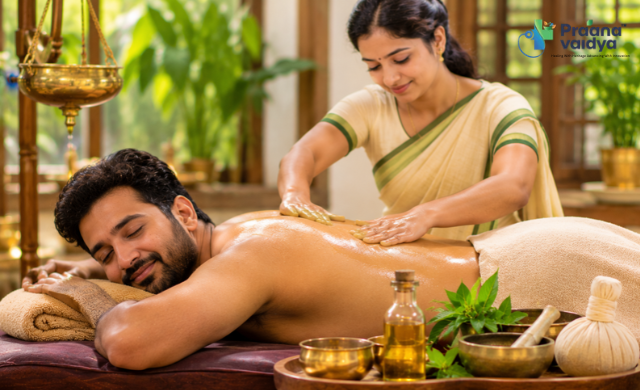
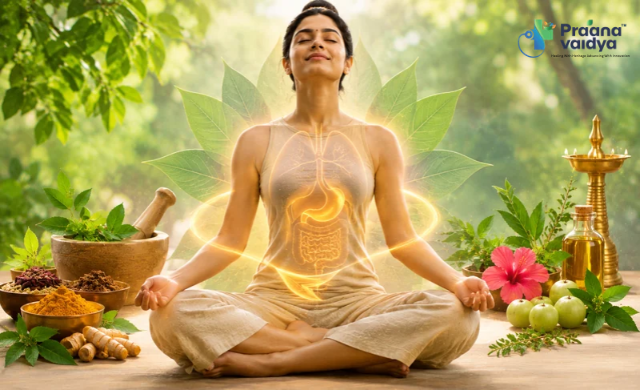
When people hear the word Ayurveda, they often think of herbal preparations, traditional therapies, massage, or changes to their diet. But what does Ayurveda actually do to your body?
Ayurveda takes a broader approach than focusing on one isolated part of the body. Traditionally, it looks at factors such as food habits, daily routines, sleep, activity, individual constitution, and overall lifestyle. The approach can therefore look different from one person to another.
At Praanavaidya, Ayurveda is approached as a personalised system of care where the individual’s habits, concerns, lifestyle, and overall needs are considered before suggesting an appropriate plan.
Want to explore Ayurveda based on your individual needs?
What Is Ayurveda?
Ayurveda is a traditional system of health and wellness that originated in India. The word Ayurveda is commonly translated as “knowledge of life.”
Rather than following one identical routine for everyone, traditional Ayurveda considers the individual as a whole. Food, daily habits, seasonal changes, sleep, activity, and personal constitution are all part of the Ayurvedic perspective.
This is why two people with similar concerns may receive different Ayurvedic recommendations.
The purpose of an Ayurvedic approach is not simply to focus on a single symptom. It may involve understanding a person’s routine and creating practical changes around diet, lifestyle and traditional Ayurvedic practices.
How Does Ayurveda Work on the Body?
There is no single thing that Ayurveda “does” to every body. The approach depends on the person’s constitution, lifestyle and the type of Ayurvedic care being considered.
Ayurveda considers your individual constitution
One of the fundamental concepts in Ayurveda is Prakriti, or an individual’s natural constitution.
Ayurveda traditionally describes three doshas:
- Vata
- Pitta
- Kapha
These concepts are used within Ayurveda to describe different patterns and characteristics of the body and mind.
An Ayurvedic consultation may consider these traditional concepts along with lifestyle, food habits, sleep patterns and other individual factors.
Ayurveda focuses on daily habits
Your everyday routine can have a significant influence on how you feel throughout the day.
Ayurvedic lifestyle planning may look at habits such as:
- Meal timing
- Food choices
- Sleep schedule
- Daily movement
- Personal care
- Work and rest patterns
- Seasonal routines
Rather than making numerous changes at once, an Ayurvedic approach may focus on practical habits that can realistically become part of everyday life.
Ayurveda considers food as part of daily wellness
Food is an important part of traditional Ayurveda.
Instead of simply asking what foods are considered “healthy,” an Ayurvedic approach may consider how a person’s eating habits fit into their individual routine and traditional constitution.
Factors such as meal timing, food combinations, portion sizes and seasonal eating may be discussed during an Ayurvedic consultation.
The idea is to make food choices more intentional rather than following the same dietary pattern throughout the year.
What Happens During an Ayurvedic Consultation?
An Ayurvedic consultation is generally more than simply identifying one complaint.
Depending on the consultation, an Ayurvedic practitioner may discuss:
- Current concerns
- Previous health and lifestyle history
- Eating habits
- Sleep patterns
- Daily routine
- Physical activity
- Stress and rest patterns
- Seasonal changes
- Personal preferences
The practitioner may then use traditional Ayurvedic concepts to understand the person’s overall pattern and suggest an appropriate plan.
This personalised approach is one reason Ayurveda can look different from person to person.
What Changes Might an Ayurvedic Routine Include?
An Ayurvedic routine does not necessarily mean making dramatic changes to your lifestyle.
Depending on the individual’s needs, an Ayurvedic plan may involve areas such as:
Food and meal routines
The focus may be on developing more consistent eating habits and making food choices that fit the individual’s routine.
Daily schedule
An Ayurvedic routine may include structured timings for waking, meals, work, rest and sleep.
Traditional therapies
Ayurveda includes a range of traditional practices and therapies. The specific therapy, frequency and duration can vary depending on the individual plan.
Personal care practices
Some Ayurvedic routines may include traditional approaches to self-care, including oil-based practices, massage or other routine-based activities.
The important point is that Ayurveda is not one single treatment. It is a broad traditional system with different approaches that can be selected according to the individual.
Does Ayurveda Focus Only on Physical Health?
No. Traditional Ayurveda takes a whole-person perspective.
Along with physical routines, Ayurvedic lifestyle discussions can include sleep, rest, daily activity, food habits and mental wellbeing.
For example, someone may be looking to create a more structured daily routine, while another person may be interested in traditional dietary practices or Ayurvedic therapies.
The emphasis is on understanding the person rather than applying one standard routine to everyone.
How Long Does It Take to Adjust to an Ayurvedic Routine?
There is no universal timeline.
Some lifestyle changes may feel simple to incorporate, while others can require more time and consistency. Your response can also depend on your existing habits, schedule and the type of Ayurvedic plan being followed.
It is better to think of Ayurveda as an approach that can involve gradual changes rather than expecting an overnight transformation.
Consistency is often more practical than trying to change everything at once.
Can Ayurveda Be Part of a Healthy Lifestyle?
Ayurvedic practices can be incorporated into a broader lifestyle depending on personal preferences and professional guidance.
Simple areas to explore may include:
- Maintaining regular meal timings
- Creating a consistent sleep routine
- Choosing foods mindfully
- Making time for daily movement
- Following appropriate personal-care routines
- Paying attention to seasonal changes
- Creating space for rest
The key is to choose habits that are realistic and sustainable for your everyday life.
Ayurveda at Praanavaidya
At Praanavaidya, the Ayurvedic approach begins with understanding the individual rather than recommending the same routine to everyone.
Our Ayurvedic centres provide consultations across Bangalore, Hubballi, Mangalore, Mumbai, Delhi and Lucknow, allowing people to explore traditional Ayurvedic care closer to where they live.
If you are curious about Ayurveda and want to understand which approach may be appropriate for your individual needs, a consultation can be a useful starting point.
Interested in exploring Ayurveda for your lifestyle and wellness needs? Contact Praanavaidya to discuss your requirements with an Ayurvedic practitioner.
What Should You Expect From Ayurveda?
It is important to have realistic expectations.
Ayurveda is a traditional system with its own concepts, practices and approaches. It should not be understood as a single solution that produces the same outcome for everyone.
Your experience may depend on the type of consultation, lifestyle changes, traditional therapies and consistency with the recommended routine.
The best starting point is to understand your individual needs and choose an approach that fits your lifestyle.
Final Thoughts
So, what does Ayurveda do to your body?
There is no one-size-fits-all answer. Ayurveda takes a traditional, whole-person approach that considers factors such as individual constitution, food habits, daily routine, sleep, activity and lifestyle.
Rather than focusing on one universal routine, Ayurvedic care can be personalised around the individual. For people interested in traditional Indian wellness practices, understanding this approach can be the first step toward making more informed lifestyle choices.
Looking to explore Ayurveda ? Connect with Praanavaidya to learn more about personalized Ayurvedic care.
Rajajinagar- 08065903133
Hubballi – 08065903145
Indiranagar- 08065903135
Mumbai-08065903118
Yelahanka- 08065903134
Mangaluru-08065903136
Jayanagar- 08065903132
Delhi-08065903140
Lucknow-08065903130
FAQs
What does Ayurveda do to your body?
Ayurveda takes a traditional whole-person approach that considers factors such as food habits, daily routine, sleep, activity, individual constitution and lifestyle. The approach can vary from person to person.
How does Ayurveda work on the body?
Ayurveda traditionally considers the individual’s constitution, lifestyle and daily habits. An Ayurvedic plan may include dietary guidance, routine changes and traditional Ayurvedic practices depending on the individual’s needs.
What are the three doshas in Ayurveda?
The three doshas are Vata, Pitta and Kapha. They are traditional Ayurvedic concepts used to describe different patterns and characteristics of the body and mind.
Does Ayurveda involve changing your diet?
Diet is an important part of traditional Ayurveda. An Ayurvedic approach may consider meal timing, food choices, eating habits and individual factors when discussing dietary routines.
How long does it take to see changes with Ayurveda?
There is no standard timeline. The experience can vary depending on the individual, the type of Ayurvedic routine being followed and how consistently lifestyle recommendations are incorporated.
Is Ayurveda only about herbal remedies?
No. Ayurveda encompasses much more than herbal preparations. Traditional Ayurvedic practice can include dietary guidance, daily routines, lifestyle practices and various traditional therapies.
Can Ayurveda be part of a daily wellness routine?
Ayurvedic principles can be incorporated into everyday routines through areas such as mindful eating, regular schedules, sleep habits, movement and traditional self-care practices.
Is Ayurvedic care the same for everyone?
No. Ayurveda traditionally emphasises an individualised approach. Recommendations may differ according to a person’s constitution, lifestyle, preferences and individual requirements.
Praanavaidya
Healthcare Professional
Focused on patient-centric care and evidence-based treatment plans.
More from Praanavaidya