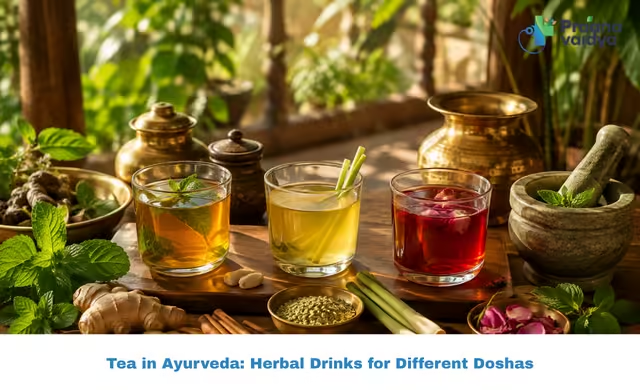
A warm cup of tea can be part of a daily routine, but tea in Ayurveda is viewed from a broader perspective than simply choosing a flavour or beverage. Ayurveda considers the qualities of an ingredient, its effect on digestion, the individual’s Dosha, the time of day, season, and overall health.
Traditional Ayurvedic practices commonly use herbal infusions made from ingredients such as ginger, cumin, coriander, fennel, tulsi, cinnamon, cardamom, and other herbs and spices.
These preparations are different from conventional tea made from Camellia sinensis, such as black tea, green tea, and white tea. Many Ayurvedic herbal drinks are naturally caffeine-free, although some traditional beverages may contain caffeinated tea leaves.
The right herbal drink therefore depends on the person and the purpose. A warming infusion may be appropriate in a cold environment, while a cooling preparation may be preferred when heat-related qualities are prominent.
At Praanavaidya, Ayurvedic consultation can help determine which herbal preparations may be appropriate according to an individual’s constitution, digestion, lifestyle, and current health needs.
What Does Tea Mean in Ayurveda?
Ayurveda does not treat every tea or herbal infusion as the same.
Each ingredient has traditionally described qualities, tastes, potency, and effects on the Doshas.
For example:
- Ginger is traditionally considered warming.
- Fennel is generally regarded as gentle and cooling.
- Cumin is commonly used in digestive preparations.
- Tulsi is traditionally valued in herbal wellness practices.
- Cinnamon has warming qualities.
- Coriander is often used in cooling and digestive preparations.
When these ingredients are prepared as beverages, their effects can vary depending on quantity, combination, preparation method, and the individual’s constitution.
Therefore, an Ayurvedic approach is less about finding one “best tea” and more about selecting an appropriate preparation for the individual.
Herbal Tea vs Conventional Tea
The word “tea” is often used for many different beverages.
Conventional Tea
Black, green, white, and oolong teas are made from the tea plant, Camellia sinensis. They naturally contain caffeine.
Herbal Infusions
Herbal drinks may be prepared using:
- Herbs
- Seeds
- Spices
- Flowers
- Roots
- Fruits
Many herbal infusions do not naturally contain caffeine.
This distinction is useful when discussing tea in Ayurveda, because a traditional herbal infusion is not necessarily the same as a cup of black or green tea.
How Ayurveda Selects a Tea or Herbal Infusion
An Ayurvedic practitioner may consider several factors before recommending a particular preparation.
Prakriti
The individual’s natural constitution.
Vikriti
The current state of Dosha imbalance or disturbance.
Agni
Digestive capacity and pattern.
Season
Ayurveda traditionally adjusts diet and daily practices according to seasonal changes.
Time of Day
A preparation suitable in the morning may not necessarily be ideal immediately before bedtime.
Current Symptoms
Digestive discomfort, heaviness, dryness, excess heat, or congestion may influence the choice.
This personalised approach is one reason there is no universal Ayurvedic tea that everyone should drink every day.
Tea and the Three Doshas
A simple way to understand Ayurvedic herbal drinks is to consider their relationship with Vata, Pitta, and Kapha.
Herbal Tea for Vata Dosha
Vata is traditionally associated with qualities such as:
- Dryness
- Coldness
- Lightness
- Irregularity
- Mobility
When Vata qualities are prominent, Ayurveda generally favours warmth, nourishment, and grounding.
Commonly Used Ingredients
Depending on the individual, warming ingredients may include:
- Ginger
- Cinnamon
- Cardamom
- Fennel
- Licorice
- Cumin
A warm herbal infusion may be particularly comforting during colder weather.
Simple Vata-Friendly Infusion
A mild combination of ginger and cardamom can be prepared as a warm infusion.
The amount should remain moderate, particularly for people who are sensitive to warming spices.
Herbal Tea for Pitta Dosha
Pitta is traditionally associated with:
- Heat
- Intensity
- Sharpness
- Transformation
When Pitta qualities are prominent, excessively hot, spicy, or stimulating drinks may not be ideal.
Ayurvedic traditions commonly favour gentler and more cooling ingredients in such situations.
Commonly Used Ingredients
These may include:
- Coriander
- Fennel
- Rose
- Mint
- Licorice
Simple Pitta-Friendly Infusion
A mild fennel and coriander infusion can provide a gentle herbal beverage.
Very strong ginger, chilli, or excessive cinnamon may not be appropriate for someone experiencing significant heat or sensitivity.
Herbal Tea for Kapha Dosha
Kapha is traditionally associated with:
- Heaviness
- Coolness
- Sluggishness
- Stability
- Moisture
When Kapha qualities are excessive, Ayurveda traditionally favours lighter and warming ingredients.
Commonly Used Ingredients
These may include:
- Ginger
- Cinnamon
- Tulsi
- Black pepper
- Cumin
- Clove
Simple Kapha-Friendly Infusion
A light ginger and tulsi infusion may be used as a warming herbal beverage.
Again, individual tolerance matters. More spice does not automatically mean greater benefit.
Ginger Tea in Ayurveda
Ginger is one of the most commonly used ingredients in traditional Ayurvedic beverage preparations.
It is traditionally considered:
- Warming
- Pungent
- Supportive of digestion
A mild ginger infusion may be suitable when coldness and sluggish digestion are prominent.
However, people who experience significant acidity, heartburn, heat sensitivity, or irritation may not tolerate strong ginger preparations well.
This illustrates an important Ayurvedic principle:
An ingredient that suits one person may not suit another.
Fennel Tea in Ayurveda
Fennel seeds are commonly used in traditional digestive preparations.
Fennel is generally considered milder and more cooling than strongly warming spices.
A fennel infusion may be particularly appealing after meals.
It can be prepared simply by steeping lightly crushed fennel seeds in hot water and allowing the infusion to cool to a comfortable temperature.
Tulsi Tea in Ayurveda
Tulsi, also known as holy basil, has a long history of use in Indian traditional practices.
It is commonly prepared as an infusion and consumed as a warm herbal beverage.
Tulsi is traditionally valued for its aromatic and warming qualities.
It can be combined with other ingredients depending on the desired preparation.
People taking medication or managing a health condition should check with an appropriate healthcare professional before regularly consuming concentrated herbal preparations.
Cinnamon Tea in Ayurveda
Cinnamon is traditionally considered warming and aromatic.
It may be included in herbal infusions, particularly during colder weather.
Because cinnamon can be quite strong, excessive consumption is not advisable.
The type and amount of cinnamon also matter. Regularly consuming large quantities of certain cinnamon varieties can increase exposure to coumarin.
A moderate culinary amount is generally different from taking concentrated supplements.
How Much Herbal Tea Should You Drink?
More is not necessarily better.
The appropriate quantity depends on:
- Ingredients
- Concentration
- Individual tolerance
- Diet
- Health condition
- Other medications
- Overall fluid intake
For general wellness, a mild herbal infusion may be used as a beverage.
Therapeutic herbal preparations are different and should follow practitioner guidance.
Tea in Ayurveda: A Personalised Approach
The most important principle is that tea in Ayurveda is not a one-drink-fits-all concept.
A person with prominent Vata qualities may benefit from a different type of herbal infusion than someone with strong Pitta characteristics.
Likewise, the drink that feels appropriate during winter may not be suitable during a hot summer.
An Ayurvedic approach considers:
Person → Dosha → Season → Digestion → Symptoms → Herbal qualities → Preparation
This helps make the choice more individualised.
Final Takeaway
Tea in Ayurveda is best understood as more than a daily beverage. Traditional Ayurvedic herbal infusions are selected according to the qualities of their ingredients and the individual’s Dosha, digestion, season, lifestyle, and current needs.
Warming preparations containing ingredients such as ginger or cinnamon may traditionally be considered for Vata or Kapha patterns, while gentler ingredients such as fennel and coriander may be preferred when Pitta-related heat is a consideration.
However, these traditional principles should not be used to self-diagnose a Dosha imbalance or replace medical care.
A simple herbal infusion can be a pleasant addition to a balanced routine, but therapeutic herbs should be used thoughtfully. If you want to use herbal preparations regularly for a specific health concern, personalised Ayurvedic consultation can help determine what may be appropriate for you.
At Praanavaidya, consultation can provide individualised guidance based on your constitution, digestion, lifestyle, and current health needs.
Visit Us in-
Rajajinagar- 08065903133
Hubballi – 08065903145
Indiranagar- 08065903135
Mumbai-08065903118
Yelahanka- 08065903134
Mangaluru-08065903136
Chamrajpet-08065903132
Delhi-08065903140
Lucknow-08065903130
Frequently Asked Questions
What is tea in Ayurveda?
Tea in Ayurveda refers broadly to herbal infusions and traditional beverages prepared from herbs, seeds, spices, flowers, and other plant ingredients. Ayurveda considers their qualities and suitability according to the individual.
Which tea is best according to Ayurveda?
There is no single best tea for everyone. The appropriate herbal infusion depends on Dosha, digestion, season, symptoms, and individual tolerance.
What is a good Ayurvedic tea for Vata?
Warming ingredients such as ginger, cardamom, and cinnamon are traditionally used in Vata-oriented herbal preparations, although suitability varies by individual.
What herbal tea is suitable for Pitta?
Cooling or gentler ingredients such as fennel, coriander, rose, and mint are traditionally used in Pitta-oriented preparations.
What tea is suitable for Kapha?
Warming and aromatic ingredients such as ginger, cinnamon, tulsi, and selected spices are traditionally used in Kapha-oriented preparations.
Is Ayurvedic tea the same as green tea?
Not necessarily. Green tea comes from Camellia sinensis and contains caffeine. Many Ayurvedic herbal infusions are made from herbs and spices and may naturally be caffeine-free.
Can Ayurvedic herbal tea help digestion?
Certain herbs, including ginger, cumin, fennel, and coriander, have traditionally been used in digestive preparations. Persistent digestive symptoms should receive appropriate medical assessment.
Can I drink herbal tea every day?
Some mild herbal infusions may be suitable for regular consumption, but concentrated preparations may not be appropriate for everyone. Individual health conditions and medications should be considered.
Is herbal tea safe during pregnancy?
Not every herb is considered appropriate during pregnancy. Pregnant individuals should consult a qualified healthcare professional before using medicinal or concentrated herbal preparations.
Praanavaidya
Healthcare Professional
Focused on patient-centric care and evidence-based treatment plans.
More from Praanavaidya