
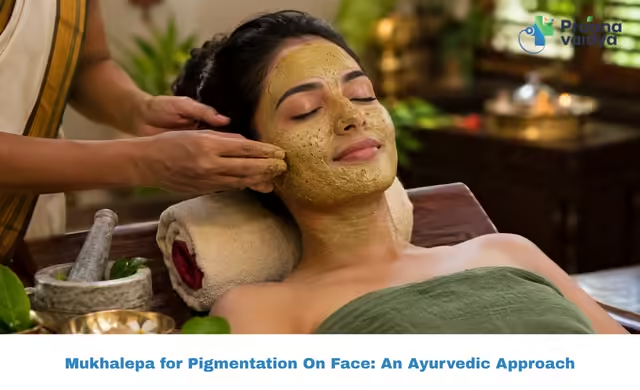
Pigmentation on face can appear as dark patches, brown marks, uneven skin tone, or areas that look darker than the surrounding skin. Sun exposure, acne, inflammation, hormonal changes, and certain skin conditions can all contribute to facial pigmentation.
Ayurveda approaches skin concerns from a broader perspective. Instead of focusing only on the visible pigmentation, an Ayurvedic assessment may consider the person’s Prakriti, Vikriti, Dosha balance, diet, digestion, lifestyle, sleep, and environmental exposure.
One traditional Ayurvedic therapy used in facial care is Mukhalepa.
Mukhalepa involves applying a carefully prepared herbal paste to the face. Depending on the individual’s skin condition, different herbs and formulations may be selected.
When used for pigmentation concerns, Mukhalepa for pigmentation on face is generally approached as supportive skin care rather than as a guaranteed method of removing dark patches.
At Praanavaidya, consultation can help assess the nature of facial pigmentation and determine whether Mukhalepa or another Ayurvedic approach is suitable.
What Is Mukhalepa?
Mukhalepa is a traditional Ayurvedic facial application.
The term comes from:
- Mukha – face
- Lepa – paste or application
A Mukhalepa preparation may contain powdered herbs, herbal extracts, oils, liquids, or other ingredients selected for a particular purpose.
Unlike a generic cosmetic face mask, Ayurvedic Mukhalepa may be personalised according to:
- Skin type
- Skin condition
- Dosha considerations
- Season
- Age
- Treatment objective
The formulation is therefore not necessarily the same for everyone.
What Causes Pigmentation on Face?
Before discussing Ayurvedic treatment, it is useful to understand why facial pigmentation develops.
Common causes include:
Sun Exposure
Ultraviolet radiation can stimulate melanin production and make existing pigmentation more noticeable.
Acne and Skin Inflammation
A dark mark may remain after an acne lesion or other inflammation has healed. This is commonly known as post-inflammatory hyperpigmentation.
Hormonal Changes
Hormonal fluctuations can contribute to conditions such as melasma, which commonly appears on the cheeks, forehead, nose, or upper lip.
Skin Irritation
Repeated rubbing, aggressive exfoliation, or unsuitable skin-care products can sometimes trigger or worsen pigmentation.
Certain Medications or Medical Conditions
Some medicines and underlying health conditions can affect skin pigmentation.
Because the causes vary, persistent pigmentation should not automatically be assumed to be a simple cosmetic concern.
How Does Ayurveda Understand Facial Pigmentation?
Ayurveda traditionally considers the skin in relation to the Doshas and overall health.
Pitta Dosha may receive particular attention when there are signs associated with heat, sensitivity, redness, or inflammatory tendencies.
Vata may be considered when the skin is particularly dry, rough, or sensitive.
Kapha may be considered when heaviness, oiliness, or congestion are prominent.
These are traditional Ayurvedic concepts rather than direct equivalents of modern dermatological diagnoses.
The purpose of an Ayurvedic assessment is to understand the individual’s overall pattern and select appropriate care.
How Can Mukhalepa Help With Pigmentation on Face?
Mukhalepa is traditionally used as a topical facial therapy.
When considered for pigmentation on face, its potential role may include supporting the overall appearance and condition of the skin.
1. Supports More Even-Looking Skin
Certain traditional herbal formulations are selected for their complexion-supporting properties.
With appropriate use, Mukhalepa may help the skin appear more refreshed and even.
It should not, however, be considered a bleaching treatment.
2. Supports Skin After Inflammation
Pigmentation can sometimes remain after acne or other skin inflammation has settled.
An appropriately selected facial application may form part of a gentle skin-care routine once active inflammation has reduced.
Aggressive application to irritated skin should be avoided.
3. Helps Maintain Skin Condition
Ayurvedic facial care focuses not only on pigmentation but also on the overall quality of the skin.
Depending on the formulation, Mukhalepa may be selected to support:
- Skin softness
- Smoothness
- General complexion
- Skin comfort
- Balanced appearance
4. Complements a Broader Ayurvedic Routine
Mukhalepa is only one part of Ayurvedic skin care.
An Ayurvedic approach may also consider:
- Diet
- Sleep
- Stress
- Digestion
- Hydration
- Sun exposure
- Daily routine
This broader perspective can be particularly useful when pigmentation is recurrent.
Mukhalepa and Pitta-Related Skin Concerns
Ayurveda traditionally associates Pitta with heat, intensity, and transformation.
When facial skin appears sensitive, warm, or prone to inflammatory changes, an Ayurvedic practitioner may consider Pitta-related factors.
In such cases, formulations with traditionally cooling or soothing properties may be considered.
However, pigmentation alone does not establish a Pitta imbalance.
The same facial pigmentation can have completely different causes in different people.
How Is Mukhalepa Applied for Facial Pigmentation?
The procedure can vary depending on the formulation.
A typical professional approach may involve the following steps.
Step 1: Skin Assessment
The practitioner examines the nature of the pigmentation and considers the individual’s skin type.
Step 2: Formulation Selection
Appropriate herbs and ingredients are selected based on the treatment objective.
Step 3: Facial Cleansing
The skin is gently cleansed before applying the preparation.
Step 4: Herbal Paste Application
The prepared Mukhalepa is applied evenly to the appropriate areas of the face.
Sensitive areas around the eyes and lips are avoided.
Step 5: Resting Period
The paste remains on the skin for the recommended duration.
Step 6: Removal
The preparation is gently removed without aggressive rubbing.
Step 7: Post-Treatment Care
The practitioner may recommend suitable moisturisation and sun protection.
How Long Should Mukhalepa Stay on the Face?
There is no single duration suitable for every person.
The recommended time may depend on:
- Formulation
- Skin type
- Sensitivity
- Treatment purpose
- Environmental conditions
Leaving the paste on for longer does not necessarily increase its benefits.
If burning, itching, or significant irritation develops, the preparation should be removed.
How Often Can Mukhalepa Be Used?
Frequency depends on the individual’s skin and the formulation being used.
Using a facial application too frequently may cause:
- Dryness
- Irritation
- Redness
- Skin barrier disruption
A practitioner may recommend a specific schedule based on the skin’s response.
Consistency with a suitable formulation is more important than excessive application.
Mukhalepa for Sun-Related Facial Pigmentation
Frequent sun exposure can make facial pigmentation darker or more noticeable.
Even if an Ayurvedic topical treatment is being used, continued exposure to ultraviolet radiation can work against pigmentation management.
Therefore, sun protection should be an essential part of any routine.
Consider:
- Using broad-spectrum sunscreen
- Wearing a hat outdoors
- Seeking shade during intense sunlight
- Limiting unnecessary prolonged sun exposure
- Reapplying sunscreen as recommended
Mukhalepa should complement sun protection rather than replace it.
Can Mukhalepa Remove Pigmentation Permanently?
It is important to have realistic expectations.
Mukhalepa should not be promoted as a guaranteed permanent solution for facial pigmentation.
Pigmentation can result from different conditions, including:
- Melasma
- Post-inflammatory hyperpigmentation
- Sun-related pigmentation
- Hormonal changes
- Certain medications
- Other skin disorders
If the underlying trigger continues, pigmentation may recur even after it becomes lighter.
The most appropriate treatment therefore depends on the cause.
Conclusion
Pigmentation on face can develop for many reasons, including sun exposure, acne, inflammation, hormonal changes, and certain skin conditions. Because the cause varies from person to person, effective care begins with understanding what is contributing to the pigmentation.
In Ayurveda, Mukhalepa offers a traditional topical approach in which carefully selected herbal preparations are applied to the face. When appropriate, it may support the appearance, texture, and overall condition of pigmented skin.
However, Mukhalepa should not be considered a guaranteed pigmentation-removal treatment. Its role is best understood as part of a broader Ayurvedic approach that may also consider Dosha balance, diet, digestion, lifestyle, sleep, and sun exposure.
At Praanavaidya, consultation can help assess the nature of pigmentation on face and determine whether Mukhalepa or another Ayurvedic approach is appropriate for your individual skin needs.
Visit Us in-
Rajajinagar- 08065903133
Hubballi – 08065903145
Indiranagar- 08065903135
Mumbai-08065903118
Yelahanka- 08065903134
Mangaluru-08065903136
Chamrajpet-08065903132
Delhi-08065903140
Lucknow-08065903130
Frequently Asked Questions
What is Mukhalepa for pigmentation on face?
Mukhalepa is a traditional Ayurvedic facial application involving herbal preparations applied to the face. It may be considered as supportive care for uneven skin tone and facial pigmentation after individual assessment.
Can Mukhalepa reduce pigmentation on face?
Mukhalepa may support the appearance and overall condition of pigmented skin, but it should not be presented as a guaranteed method of removing pigmentation. Results depend on the cause and individual response.
Which herbs are used for facial pigmentation in Ayurveda?
Traditional formulations may include herbs such as Manjistha, turmeric, sandalwood, licorice, and neem. The exact ingredients should be selected according to the individual’s skin condition.
Is Mukhalepa suitable for sensitive skin?
Some formulations may not be suitable for sensitive skin. Individual assessment and appropriate formulation selection are important to reduce the risk of irritation.
Can Mukhalepa treat pigmentation caused by acne?
It may be considered as supportive care for post-inflammatory pigmentation after active inflammation has settled. The underlying acne should also be addressed.
Can Mukhalepa remove melasma?
Melasma can be persistent and is often influenced by hormonal and environmental factors. Mukhalepa may be considered as supportive Ayurvedic skin care, but melasma should be properly evaluated and managed.
How frequently should Mukhalepa be used?
There is no universal frequency. The schedule depends on the formulation, skin type, sensitivity, and treatment plan.
Is sun protection necessary while using Mukhalepa?
Yes. Sun exposure can worsen many types of facial pigmentation. Appropriate sun protection is an important part of pigmentation management.
Praanavaidya
Healthcare Professional
Focused on patient-centric care and evidence-based treatment plans.
More from Praanavaidya