In today’s digital world, our eyes are under constant strain. Long hours spent looking at computers, smartphones, tablets, and television screens often lead to symptoms such as dryness, burning, tired eyes, blurred vision, and headaches. While artificial tears and lifestyle modifications may provide temporary relief, many people also look for holistic approaches that support long-term eye comfort.
One of Ayurveda’s specialised therapies for eye care is Netra Tarpana. This classical Panchakarma procedure involves retaining medicated ghee around the eyes for a specific duration under the supervision of a qualified Ayurvedic physician. Traditionally, it is used to nourish the eyes, support lubrication, and promote overall eye health.
At Praanavaidya, Netra Tarpana is recommended only after a detailed consultation to determine whether the therapy is appropriate for the individual’s condition and overall health.
This article explains what Netra Tarpana is, how it is performed, its traditional Ayurvedic benefits, who may benefit from it, and why professional supervision is essential.
What Is Netra Tarpana?
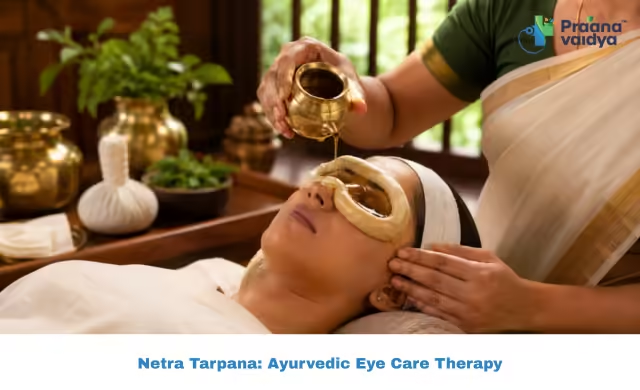
Netra Tarpana is a specialised Ayurvedic eye therapy in which warm medicated ghee is gently retained around the eyes for a prescribed period.
The word Netra means “eye,” while Tarpana means “nourishment” or “satiation.” Together, the therapy is intended to nourish and lubricate the eyes according to Ayurvedic principles.
Unlike eye drops or external applications, Netra Tarpana is a structured Panchakarma procedure performed in a clinical setting using carefully selected medicated ghee and traditional techniques.
How Does Ayurveda View Eye Health?
Ayurveda considers the eyes to be closely associated with Alochaka Pitta, a subtype of Pitta Dosha responsible for vision and visual perception.
Healthy vision depends upon:
- Balanced Doshas
- Proper nourishment of body tissues
- Strong digestive fire (Agni)
- Healthy circulation
- Adequate rest
Modern lifestyles, prolonged screen exposure, stress, poor sleep, and ageing may disturb this balance, contributing to eye discomfort.
Ayurveda therefore focuses on maintaining overall systemic health while supporting the eyes through appropriate therapies and lifestyle practices.
When Is Netra Tarpana Traditionally Recommended?
After clinical assessment, Ayurvedic physicians may recommend Netra Tarpana for selected individuals experiencing:
- Dry eyes
- Eye fatigue
- Digital eye strain
- Burning sensation in the eyes
- Mild eye irritation
- Feeling of dryness after prolonged screen use
- Eye discomfort associated with long reading hours
- General eye nourishment
It is important to note that Netra Tarpana is not a replacement for ophthalmological treatment and is not suitable for all eye conditions.
Individuals with eye infections, acute injuries, glaucoma, or other serious eye diseases require evaluation by an ophthalmologist before considering complementary Ayurvedic therapies.
How Is Netra Tarpana Performed?
Although the exact method may vary slightly depending on the physician and the individual’s condition, the procedure generally follows these steps.
Initial Consultation
The Ayurvedic physician evaluates:
- Present eye symptoms
- Medical history
- Eye health
- Body constitution (Prakriti)
- Dosha imbalance
- Existing medications
This helps determine whether Netra Tarpana is appropriate.
Preparation
The patient lies comfortably while the eye area is gently cleaned.
A soft ring made from black gram flour dough is carefully placed around each eye to create a leak-proof boundary.
Application of Medicated Ghee
Warm medicated ghee is slowly poured into the dough reservoir until it surrounds the closed eyes.
Once comfortable, the patient is instructed to slowly open and close the eyes within the medicated ghee, allowing the preparation to bathe the surface of the eyes.
The duration varies depending on the physician’s assessment.
Completion
The medicated ghee is gently removed, the dough ring is discarded, and the eye area is cleaned.
Patients are usually advised to avoid excessive screen exposure, bright sunlight, and eye strain immediately after the therapy.
Benefits of Netra Tarpana According to Ayurveda
Classical Ayurvedic texts describe several traditional benefits of Netra Tarpana.
These include supporting:
- Eye lubrication
- Comfort in dry eyes
- Relaxation of tired eyes
- Reduced eye strain
- Overall nourishment of the eyes
- Healthy functioning of Alochaka Pitta
- Comfort after prolonged visual work
The response to therapy varies from person to person, and outcomes depend on the individual’s condition and overall health.
Can Netra Tarpana Help People Who Use Screens Frequently?
Many professionals spend eight or more hours each day using computers.
Extended screen time often reduces blinking frequency, contributing to eye dryness and fatigue.
As part of a personalised Ayurvedic care plan, Netra Tarpana may be recommended for individuals experiencing digital eye strain after a comprehensive evaluation.
Along with therapy, physicians may advise:
- Regular screen breaks
- Proper lighting
- Adequate sleep
- Eye exercises
- Hydration
- Workplace ergonomics
How Praanavaidya Approaches Netra Tarpana
At Praanavaidya, Netra Tarpana is performed only after a detailed consultation and clinical evaluation.
The treatment plan is personalised according to:
- Eye symptoms
- Overall health
- Body constitution (Prakriti)
- Dosha imbalance
- Lifestyle
- Occupational demands
- Existing eye conditions
Depending on the assessment, the physician may recommend:
- Netra Tarpana
- Appropriate Ayurvedic medicines
- Dietary guidance
- Lifestyle modifications
- Stress management strategies
- Follow-up consultations
The objective is to support eye comfort and overall well-being through personalised Ayurvedic care.
Conclusion
Netra Tarpana is one of Ayurveda’s classical eye care therapies, traditionally used to nourish the eyes, support lubrication, and relieve discomfort associated with dryness and prolonged visual strain. Rather than treating symptoms alone, Ayurveda considers overall health, Dosha balance, digestion, and lifestyle when planning personalised care.
At Praanavaidya, experienced Ayurvedic physicians carefully assess each individual before recommending Netra Tarpana or other supportive therapies. If you experience persistent dry eyes, eye fatigue, or discomfort after long hours of screen use, consult a qualified Ayurvedic physician and an ophthalmologist to determine the most appropriate approach for maintaining your eye health.
Visit Us At –
Rajajinagar- 08065903133
Hubballi – 08065903145
Indiranagar- 08065903135
Mumbai-08065903118
Yelahanka- 08065903134
Mangaluru-08065903136
Chamrajpet-08065903132
Frequently Asked Questions
Is Netra Tarpana painful?
No. Most people describe the therapy as soothing and relaxing. The medicated ghee used during the procedure is comfortably warm and applied under professional supervision.
How many sessions are required for netra tarpana?
The number of sessions depends on the individual’s condition, symptoms, and physician’s assessment.
Can Netra Tarpana improve eyesight?
Netra Tarpana is traditionally used to nourish and support eye health. It should not be considered a substitute for medical treatment of refractive errors or serious eye diseases.
Can I undergo Netra Tarpana if I wear spectacles?
Yes. Wearing spectacles does not automatically prevent someone from receiving the therapy, but suitability depends on the overall eye condition.
Is Netra Tarpana suitable for everyone?
No. A consultation is essential because certain eye conditions require different management or specialist ophthalmological care.
Praanavaidya
Healthcare Professional
Focused on patient-centric care and evidence-based treatment plans.
More from Praanavaidya