
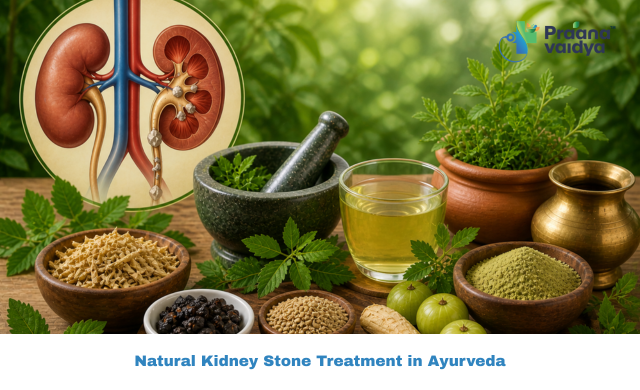
Sharp, sudden pain in the lower back or abdomen can be a warning sign of kidney stones — a condition that affects millions worldwide. While modern treatments often rely on painkillers or surgery, Ayurveda offers a natural and holistic approach that focuses on dissolving stones, easing discomfort, and preventing them from coming back.
Kidney stone Ayurvedic treatment works by correcting internal imbalances, improving digestion, and flushing out toxins from the body. Instead of just treating the symptoms, Ayurveda aims to address the root cause — making it a long-term solution for kidney health.
📞 Call / WhatsApp: 08065903127 | +91 96117 73811
What Are Kidney Stones?
Kidney stones are hard deposits made of minerals and salts that form inside the kidneys. They can vary in size — from tiny crystals to larger stones that can block the urinary tract.
Common Symptoms
- Severe pain in the back, side, or lower abdomen
- Burning sensation during urination
- Frequent urge to urinate
- Blood in urine
- Nausea or vomiting
Kidney stones may develop due to dehydration, poor diet, excess mineral buildup, or metabolic imbalances.
Kidney Stones in Ayurveda: Understanding the Root Cause
In Ayurveda, kidney stones are referred to as Mutrashmari — where “Mutra” means urine and “Ashmari” means stone. This condition is caused by an imbalance in the three doshas, especially Kapha and Vata, along with improper digestion (low Agni).
How Stones Form (Ayurvedic View)
- Weak digestion leads to toxin buildup (Ama)
- Excess Kapha causes stickiness and accumulation
- Vata dries and hardens these deposits into stones
- These crystals grow and obstruct the urinary system
This explains why kidney stone Ayurvedic treatment focuses on cleansing, balancing doshas, and improving metabolism.
Kidney Stone Ayurvedic Treatment: A Complete Approach
Ayurveda treats kidney stones through a combination of herbs, detox therapies, and lifestyle changes.
1. Herbal Medicines for Kidney Stones
Ayurvedic herbs are known for their ability to break down stones and support kidney function.
2. Panchakarma Therapies
For recurring or stubborn stones, detox therapies help cleanse the system deeply.
Virechana (Therapeutic Purgation)
Helps remove toxins and balance Pitta, which plays a role in stone formation.
Basti (Medicated Enema)
Supports urinary system cleansing and balances Vata, helping ease stone passage.
Uttarbasti (Specialised Therapy)
In some cases, medicated oils are used under expert supervision to treat urinary disorders.
3. Diet for Kidney Stone Prevention
Diet plays a major role in kidney stone Ayurvedic treatment.
Foods to Include
- Plenty of water and herbal fluids
- Coconut water
- Barley water
- Fresh fruits like watermelon and citrus fruits
- Light, easily digestible meals
Foods to Avoid
- Excess salt and processed foods
- Spinach and oxalate-rich foods (in excess)
- Red meat
- Sugary drinks and sodas
Home Remedies for Kidney Stones (Ayurveda)
These natural remedies can support kidney stone Ayurvedic treatment:
- Lemon water: Helps break down calcium deposits
- Coriander water: Supports detoxification
- Cumin seed water: Improves digestion and reduces toxin buildup
- Basil (Tulsi) leaves: Helps in dissolving stones
Note: Always consult an Ayurvedic practitioner before starting remedies.
How Long Does Ayurvedic Treatment Take?
The duration depends on the size and type of stone:
| Condition | Expected Duration |
| Small stones | 2–4 weeks |
| Moderate stones | 1–3 months |
| Large or recurrent stones | 3–6 months |
Consistency with herbs, diet, and lifestyle is key for effective results.
Can Ayurveda Prevent Kidney Stones?
Yes. One of the biggest advantages of kidney stone Ayurvedic treatment is prevention.
Ayurveda helps:
- Improve digestion (Agni)
- Reduce toxin accumulation (Ama)
- Balance doshas
- Strengthen kidney and urinary health
This reduces the chances of stones forming again.
Start Your Natural Healing Journey
Kidney stones don’t have to lead to repeated pain or surgery. With the right Ayurvedic approach, you can dissolve stones, restore balance, and protect your kidney health naturally.
Book your consultation today and take the first step toward a pain-free life.
Visit Us at –
Rajajinagar- 08065903133
Hubballi – 08065903145
Indiranagar- 08065903135
Mumbai-08065903118
Yelahanka- 08065903134
Mangaluru-08065903136
Chamrajpet-08065903132
Frequently Asked Questions (FAQs)
1. Can Ayurveda dissolve kidney stones completely?
Yes, small to moderate stones can often be dissolved naturally with Ayurvedic treatment. Larger stones may require longer treatment.
2. Is Ayurvedic treatment safe for kidney stones?
When prescribed by a qualified practitioner, Ayurvedic treatment is safe and focuses on natural healing.
3. Can I avoid surgery with Ayurveda?
In many cases, yes — especially if stones are detected early. Ayurveda aims to dissolve and flush out stones naturally.
4. How much water should I drink?
At least 2.5–3 liters daily, unless advised otherwise by your doctor.
Praanavaidya
Healthcare Professional
Focused on patient-centric care and evidence-based treatment plans.
More from Praanavaidya