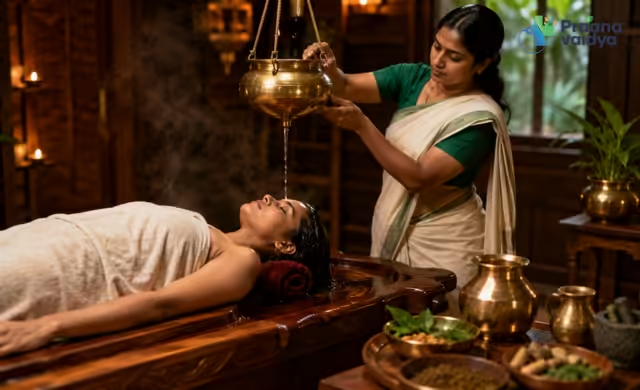
Ayurveda includes several traditional external therapies that use herbal preparations in different ways. Kashaya Dhara is one such therapy in which a prepared herbal liquid, usually a decoction, is poured or allowed to flow continuously over a selected area of the body for a prescribed period.
Unlike oil-based Dhara therapies, Kashaya Dhara uses a medicated herbal liquid prepared according to the individual’s treatment requirements. The herbs, concentration, temperature, treatment area, duration, and frequency can vary depending on the Ayurvedic assessment.
The continuous flow of the liquid creates a gentle and sustained external application. Ayurveda traditionally uses this approach for selected conditions involving the skin, musculoskeletal system, and other concerns where an external herbal therapy may be considered.
At Praanavaidya, an Ayurvedic consultation can help determine whether Kashaya Dhara is appropriate and which type of preparation may be suitable for an individual’s needs.
What Is Kashaya Dhara?
The term can be understood through two components:
- Kashaya – a herbal decoction or medicinal liquid preparation
- Dhara – a continuous or rhythmic pouring/flow of a liquid
Therefore, Kashaya Dhara refers broadly to a traditional Ayurvedic therapy involving the continuous application of a medicated herbal liquid.
The treatment is generally performed externally and can be adapted to a particular body region or, in some therapeutic settings, a broader area.
It is different from drinking a herbal decoction. The liquid used in Kashaya Dhara is prepared specifically for external therapeutic application.
How Is Kashaya Dhara Different From Oil Dhara?
The primary difference is the substance being poured.
| Kashaya Dhara | Oil-based Dhara |
| Uses herbal decoction or medicated liquid | Uses oil or another suitable liquid |
| Primarily an external herbal application | Primarily an oil-based therapy |
| Preparation depends on treatment needs | Oil selection depends on the individual’s condition |
| Temperature is carefully controlled | Oil temperature is carefully controlled |
| Can be directed to a selected body area | May also be localised or broader |
The choice between different Dhara therapies depends on the individual’s Ayurvedic assessment.
How Is Kashaya Dhara Prepared?
There is no single Kashaya Dhara formulation for every person.
The practitioner may select herbs according to factors such as:
- Nature of the complaint
- Treatment area
- Skin condition
- Dosha considerations
- Season
- Individual constitution
- Current health status
The selected herbs are traditionally prepared into a decoction using an appropriate method.
The resulting liquid is then filtered and prepared for external application.
The temperature should be checked carefully before and throughout the procedure.
What Happens During a Kashaya Dhara Session?
The exact procedure varies according to the treatment plan, but a session may generally involve several stages.
1. Ayurvedic Assessment
The practitioner first evaluates the individual’s concern and determines whether an external Dhara therapy is appropriate.
2. Herbal Preparation
The selected herbs are prepared into a suitable Kashaya or medicated liquid.
3. Temperature Check
The liquid is brought to an appropriate temperature.
It should be comfortable and should never be excessively hot.
4. Patient Positioning
The patient is positioned comfortably according to the area being treated.
5. Continuous Pouring
The herbal liquid is poured or allowed to flow over the selected area in a controlled manner.
The flow may be continuous or rhythmic depending on the treatment method.
6. Duration
The therapy is continued for the period determined by the practitioner.
7. Post-Treatment Care
After the session, the remaining liquid is removed and the area may be cleaned appropriately.
The practitioner may provide additional lifestyle or post-treatment instructions.
What Are the Traditional Uses of Kashaya Dhara?
Ayurvedic practitioners may consider Kashaya Dhara for selected conditions where an external herbal liquid application is appropriate.
Traditional applications may relate to:
- Certain skin concerns
- Localised discomfort
- Stiffness
- Musculoskeletal complaints
- Selected inflammatory presentations
- Conditions requiring a cooling or cleansing external approach
The exact indication depends on the herbal preparation and the individual’s assessment.
It should not be assumed that Kashaya Dhara is appropriate for every skin or musculoskeletal condition.
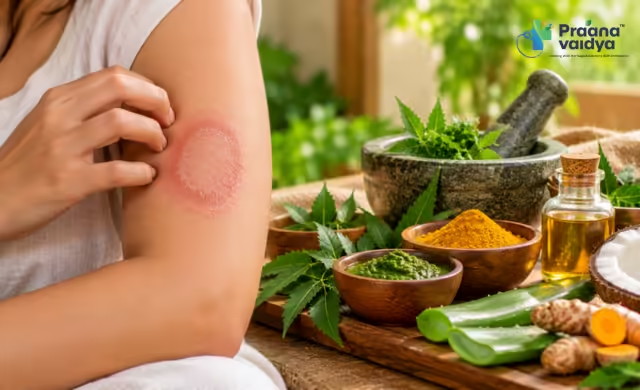
Kashaya Dhara for Skin Care
Some herbal decoctions used in Ayurveda have traditionally been applied externally to the skin.
Depending on the formulation, Kashaya Dhara may be considered when there are concerns involving:
- Irritation
- Excessive oiliness
- Certain itching tendencies
- Localised skin discomfort
- Other selected skin presentations
However, skin disorders can have many causes.
Persistent rashes, rapidly spreading lesions, wounds, infections, unexplained pigmentation, or severe itching should be evaluated appropriately rather than self-treated with herbal liquids.
Kashaya Dhara for Musculoskeletal Comfort
Warm or appropriately prepared herbal liquids may be used externally over selected musculoskeletal areas.
Ayurvedic practitioners may consider Kashaya Dhara when symptoms involve:
- Local stiffness
- Muscular discomfort
- Heaviness
- Restricted movement
The effect can vary depending on the underlying cause.
For example, a chronic musculoskeletal complaint may require exercise, physiotherapy, medical treatment, or other interventions in addition to traditional external therapy.
What Are the Traditional Benefits of Kashaya Dhara?
The traditional use of Kashaya Dhara may be associated with several supportive effects.
Provides Local Herbal Application
The therapy delivers a prepared herbal liquid directly to the selected area.
Provides Continuous External Contact
The flowing liquid maintains contact with the skin throughout the treatment.
May Provide a Soothing Sensation
Depending on the preparation and temperature, the therapy may feel calming or soothing.
Supports Selected Skin Care Approaches
Certain herbal decoctions are traditionally used for external skin applications.
May Support Musculoskeletal Comfort
In selected cases, the therapy may be incorporated into a broader approach for stiffness or local discomfort.
These are traditional therapeutic applications and should not be interpreted as guaranteed medical outcomes.
Final Takeaway
Kashaya Dhara is a traditional Ayurvedic medicated liquid flow therapy that uses a prepared herbal decoction or other suitable medicinal liquid for controlled external application. The continuous flow distinguishes it from simply applying a herbal paste or compress.
Ayurvedic practitioners may consider the therapy for selected skin, musculoskeletal, and other external therapeutic applications, depending on the individual’s condition and the formulation used.
The treatment is highly dependent on the choice of herbs, temperature, treatment area, duration, and frequency. Therefore, there is no single Kashaya Dhara protocol that is appropriate for everyone.
At Praanavaidya, consultation can help determine whether Kashaya Dhara is suitable for your individual needs and how it can be incorporated into a personalised Ayurvedic treatment plan.
As with any traditional therapy, Kashaya Dhara should be used appropriately and should not replace necessary medical diagnosis or treatment.
Visit Us in-
Rajajinagar- 08065903133
Hubballi – 08065903145
Indiranagar- 08065903135
Mumbai-08065903118
Yelahanka- 08065903134
Mangaluru-08065903136
Chamrajpet-08065903132
Delhi-08065903140
Lucknow-08065903130
Frequently Asked Questions
What is Kashaya Dhara?
Kashaya Dhara is a traditional Ayurvedic external therapy in which a medicated herbal liquid or decoction is poured or allowed to flow continuously over a selected area of the body.
What does Kashaya mean in Ayurveda?
Kashaya commonly refers to a herbal decoction or medicinal preparation made by processing selected herbs with water according to traditional methods.
Is Kashaya Dhara an oil treatment?
No. Kashaya Dhara primarily uses a herbal decoction or medicated liquid. Oil-based Dhara therapies use medicated oils instead.
Can Kashaya Dhara be used for skin problems?
It may be considered for selected skin concerns depending on the herbal preparation and Ayurvedic assessment. Persistent or serious skin symptoms should receive appropriate medical evaluation.
Can Kashaya Dhara help with joint stiffness?
It may be considered as supportive external therapy for selected musculoskeletal presentations. The underlying cause of stiffness should be assessed before treatment.
Praanavaidya
Healthcare Professional
Focused on patient-centric care and evidence-based treatment plans.
More from Praanavaidya