
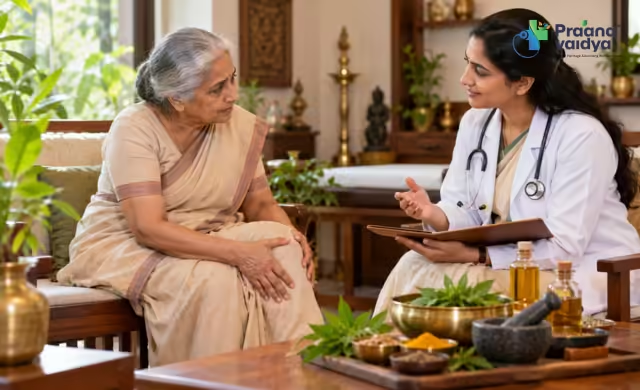
Osteoporosis can develop quietly. A person may have reduced bone strength for years without noticing any symptoms until a fall or minor injury results in a fracture. As people learn more about bone health, many are looking for natural approaches, including an Ayurvedic approach to osteoporosis.
Ayurveda places importance on food, daily routines, movement, rest, and overall balance. These principles can complement a healthy lifestyle, but osteoporosis also needs proper medical evaluation because established bone loss may require medical treatment.
In this guide, we explain what osteoporosis is, how Ayurveda views bone-supportive habits, which foods can provide important nutrients, and why exercise, vitamin D, bone-density testing, and appropriate medical care still matter.
If you are exploring Ayurveda for bone health, consider an Ayurvedic consultation with Praanavaidya to discuss diet, daily routines, and lifestyle practices suited to your overall wellness needs.
What Is Osteoporosis?
Osteoporosis is a condition in which bones become less dense and more fragile. This can increase the risk of fractures, particularly in areas such as the hip, spine, and wrist.
Bone is living tissue. The body continually removes old bone and replaces it with new bone. With ageing and certain health conditions, bone loss can become greater than bone formation.
Several factors can affect bone health, including:
- Increasing age
- Menopause and declining oestrogen levels
- Family history of osteoporosis
- Low body weight
- Inadequate calcium or vitamin D intake
- Limited physical activity
- Smoking
- Excessive alcohol consumption
- Certain medicines and medical conditions
How Does Ayurveda Approach Bone Health?
Traditional Ayurveda discusses the body through concepts that differ from modern medical terminology. In Ayurveda, bone tissue is associated with Asthi Dhatu, one of the seven dhatus described in classical texts.
An Ayurvedic approach generally gives attention to diet, digestion, daily routine, activity, rest, and overall wellbeing rather than focusing on one isolated factor.
However, it is important to distinguish traditional Ayurvedic principles from modern clinical evidence. There is currently not enough high-quality evidence to conclude that Ayurvedic medicine can reverse osteoporosis or restore lost bone density.
For this reason, Ayurveda is best considered as part of a broader approach to maintaining bone health rather than as a replacement for appropriate osteoporosis care.
Ayurvedic Foods That Can Support Bone Health
Food is an important part of maintaining healthy bones. An Ayurveda-informed diet can include a variety of nutrient-rich foods while also considering individual dietary preferences and tolerance.
Calcium-rich foods
Calcium is an important mineral for maintaining normal bone structure.
Depending on dietary preferences, useful sources can include:
- Milk and yoghurt
- Paneer
- Ragi
- Sesame seeds
- Tofu made with calcium
- Certain leafy green vegetables
- Fortified foods
Vitamin D sources
Vitamin D helps the body absorb calcium and plays an important role in bone health.
Sources include:
- Sunlight exposure
- Fortified foods
- Fatty fish
- Egg yolks
- Vitamin D supplements when recommended by a healthcare professional
Vitamin D requirements vary between individuals, and supplementation should not automatically be assumed to be necessary for everyone.
Protein-rich foods
Protein contributes to the structure and maintenance of many tissues, including bone.
An overall balanced diet can include:
- Dal
- Beans and legumes
- Milk and yoghurt
- Paneer
- Eggs
- Fish
- Soy-based foods
- Nuts and seeds
Rather than relying on one “bone-strengthening” food, it is more useful to maintain a varied diet that supplies adequate protein, calcium, vitamin D, and other nutrients.
Ayurvedic Herbs and Bone Health
Searches for Ayurvedic herbs for bone health often include ingredients such as sesame, amla, ashwagandha, and other traditional Ayurvedic preparations.
However, traditional use does not automatically mean that an ingredient has been proven to prevent or treat osteoporosis.
The safety of herbal products can also vary depending on the ingredient, preparation, dose, quality, and other medicines a person takes.
Therefore, avoid starting concentrated Ayurvedic medicines or herbal supplements simply because they are described online as natural bone-strengthening remedies.
A qualified healthcare professional or Ayurvedic practitioner can help determine whether a particular product is appropriate, while your medical team can assess osteoporosis risk and treatment needs.
Can Exercise Help Maintain Strong Bones?
Yes. Physical activity is an important part of maintaining bone and muscle health.
Weight-bearing activities and resistance exercises can provide mechanical stimulus to bones and help maintain muscle strength and physical function.
Examples may include:
- Walking
- Stair climbing
- Resistance exercises
- Strength training
- Certain balance exercises
However, exercise recommendations are not identical for everyone.
Someone with diagnosed osteoporosis, a previous fracture, significant back pain, or a high risk of falling may need a more carefully planned exercise programme. High-impact activity or certain bending and twisting movements may not be appropriate in some situations.
The goal should be safe, regular movement rather than simply exercising harder.
Ayurveda, Daily Routine, and Bone Wellness
Ayurveda traditionally places considerable importance on maintaining a consistent daily routine.
For general bone wellness, healthy habits can include:
- Eating a varied and nutritious diet
- Staying physically active
- Maintaining adequate sleep
- Avoiding tobacco
- Limiting excessive alcohol consumption
- Maintaining a healthy body weight
- Getting appropriate sunlight exposure for vitamin D
- Paying attention to balance and fall prevention
These habits may support general health, but they should not be presented as a cure for osteoporosis.
If you want to understand how Ayurvedic principles can fit into your overall wellness routine, Praanavaidya provides consultation-led Ayurvedic guidance focused on diet, lifestyle, and daily habits.
When Should You Consider a Bone Density Test?
A bone density test, commonly called a DXA or DEXA scan, measures bone mineral density.
It can help identify low bone density and assess fracture risk in people for whom testing is recommended.
Testing may be particularly important when someone has risk factors such as:
- Older age
- Previous fragility fracture
- Family history of hip fracture
- Certain long-term medicines
- Conditions associated with bone loss
- Low body weight
- Early menopause or other factors affecting bone health
A medical professional can determine whether bone-density testing is appropriate based on age, sex, health history, and risk factors.
Can Ayurveda Replace Osteoporosis Medication?
This is an important question, particularly for people who have already been diagnosed with osteoporosis.
There is currently insufficient evidence to recommend Ayurvedic treatment as a replacement for proven osteoporosis medicines when those medicines are medically indicated.
Some people may use Ayurveda alongside conventional healthcare for dietary and lifestyle support. If you are already taking osteoporosis medication or other prescription medicines, discuss any Ayurvedic herbs or supplements with your healthcare professional before starting them.
Stopping prescribed treatment without medical guidance can increase health risks.
A Practical Approach to Supporting Bone Health
Rather than searching for one food, herb, or treatment that promises stronger bones, consider bone health as a long-term process.
A practical approach includes:
- Eat a nutrient-rich diet with adequate calcium, protein, vitamin D, and other nutrients.
- Stay physically active with suitable weight-bearing and resistance activities.
- Support muscle strength and balance to help maintain physical function and reduce fall risk.
- Avoid smoking and excessive alcohol.
- Discuss risk factors with a healthcare professional.
- Consider bone-density testing when medically appropriate.
- Use Ayurvedic practices thoughtfully, particularly when considering herbal medicines or supplements.
- Do not stop prescribed osteoporosis treatment without discussing it with your doctor.
Bone health is not built through one “natural” remedy. It depends on nutrition, movement, ageing, hormones, medical conditions, lifestyle, and appropriate healthcare working together.
When to Seek Medical Evaluation
Do not rely only on home remedies or dietary changes if you have concerns about osteoporosis.
Medical evaluation is especially important after a fracture caused by a minor fall or injury, persistent back pain, noticeable loss of height, or other factors that may indicate increased fracture risk.
Early evaluation can help identify whether bone-density testing or further assessment is appropriate.
Final Thoughts
An Ayurvedic approach to bone health can focus on nutritious food, balanced routines, appropriate physical activity, and overall wellbeing. These habits can form part of a healthy lifestyle, but they should not be confused with proven treatment for established osteoporosis.
If you have osteoporosis or are at increased risk, combine lifestyle measures with appropriate medical evaluation. Ayurveda and modern healthcare can be discussed together so that decisions about supplements, medicines, exercise, and nutrition are made safely and with the full picture in mind.
Looking for Ayurvedic guidance? Connect with Praanavaidya to explore consultation-led Ayurvedic guidance for diet, lifestyle, and overall wellness.
Rajajinagar- 08065903133
Hubballi – 08065903145
Indiranagar- 08065903135
Mumbai-08065903118
Yelahanka- 08065903134
Mangaluru-08065903136
Jayanagar- 08065903132
Delhi-08065903140
Lucknow-08065903130
Frequently Asked Questions
Can Ayurvedic treatment cure osteoporosis?
There is not enough high-quality scientific evidence to say that Ayurvedic treatment can cure or reverse osteoporosis. Ayurvedic diet and lifestyle practices may be considered as part of overall wellness, but they should not replace medically appropriate osteoporosis care.
What are the best Ayurvedic foods for strong bones?
An Ayurveda-informed diet can include nutrient-rich foods such as milk, yoghurt, paneer, ragi, sesame seeds, legumes, nuts, seeds, and suitable vegetables. The overall diet matters more than relying on one specific food.
Can Ayurveda increase bone density?
There is currently insufficient evidence to conclude that Ayurvedic medicines can reliably increase bone mineral density in people with osteoporosis. Bone density should be assessed through appropriate medical testing when indicated.
Is ragi good for bone health?
Ragi can contribute calcium and other nutrients to the diet, making it a useful food within a balanced eating pattern. However, eating ragi alone cannot prevent or treat osteoporosis.
Can Ayurvedic herbs be taken with osteoporosis medicines?
Not necessarily. Some herbal products can interact with medicines or may have safety concerns. Always discuss Ayurvedic herbs or supplements with your doctor and Ayurvedic practitioner before combining them with prescription medicines.
What exercise is good for osteoporosis?
Weight-bearing and resistance exercises can support bone and muscle health. Walking, strength training, and suitable balance exercises may be useful, but people with osteoporosis or a history of fractures should seek appropriate professional guidance before starting a new exercise programme.
How is osteoporosis diagnosed?
Osteoporosis is commonly assessed using a bone mineral density test called a DXA or DEXA scan. A healthcare professional may also consider age, fracture history, medical conditions, medicines, and other risk factors.
Can osteoporosis be managed naturally?
Lifestyle measures such as nutritious food, suitable physical activity, adequate vitamin D, avoiding tobacco, limiting excessive alcohol, and preventing falls can support bone health. However, lifestyle measures alone may not be sufficient for everyone with osteoporosis.
Praanavaidya
Healthcare Professional
Focused on patient-centric care and evidence-based treatment plans.
More from Praanavaidya