
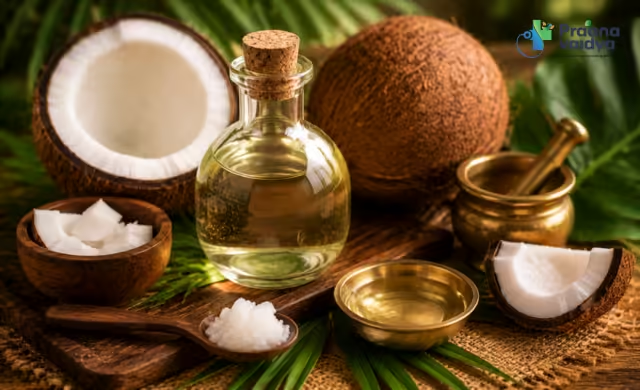
Coconut oil has been used for generations in traditional food, personal care, and wellness practices. In Ayurveda, coconut and coconut-based preparations are traditionally valued for their cooling, soothing, and nourishing qualities and are incorporated into dietary and external self-care routines.
The Ayurvedic health benefits of coconut oil are traditionally discussed in relation to nourishment, skin care, hair care, massage, and everyday wellness. Coconut oil is also commonly used as a traditional massage oil and as an ingredient in various Ayurvedic preparations.
At Praanavaidya, Ayurvedic practices are approached according to individual constitution, lifestyle, digestion, and overall well-being. Coconut oil may be included in a personalised routine when appropriate.
However, traditional Ayurvedic uses should be distinguished from modern medical evidence. Coconut oil is a food and topical oil and should not be considered a substitute for medical treatment or prescribed medication.
What Is Coconut Oil?
Coconut oil is extracted from the flesh of mature coconuts. It contains a high proportion of saturated fat, including lauric acid, along with smaller amounts of other fatty acids.
Common types include:
- Virgin coconut oil
- Cold-pressed coconut oil
- Refined coconut oil
- Unrefined coconut oil
Processing methods can affect the oil’s flavour, aroma, texture, and other characteristics.
For traditional wellness practices, the choice of oil may depend on how it will be used, individual preference, and the intended purpose.
Coconut Oil in Ayurveda
Ayurvedic traditions describe substances according to qualities, properties, and their traditional effects on the body.
Coconut and coconut oil are traditionally associated with cooling, soothing, and nourishing qualities. Because of these characteristics, coconut oil has traditionally been used for:
- Abhyanga or Ayurvedic oil massage
- Scalp and hair care
- Skin moisturisation
- Certain traditional oral-care practices
- Food preparation
- Personal wellness routines
Ayurvedic recommendations are generally individualised. An oil that suits one person may not necessarily be appropriate for another.
Ayurvedic Health Benefits of Coconut Oil
The traditional benefits of coconut oil include both external and dietary applications.
1. Traditionally Considered Cooling
One of the commonly described qualities of coconut oil in Ayurveda is its cooling nature.
It may therefore be incorporated into routines traditionally intended to provide a soothing and nourishing quality, particularly in practices associated with Pitta balance.
However, Ayurvedic suitability varies between individuals and should not be determined solely by dosha classification.
2. Supports Skin Moisturisation
Coconut oil can help reduce water loss from the skin and may work as a moisturising oil for people who tolerate it well.
It can traditionally be applied to:
- Dry skin
- Rough areas
- Hands and feet
- Elbows and knees
- The body during massage
- Skin after bathing
People with acne-prone skin should be cautious when applying coconut oil to the face because heavier oils may not suit every skin type.
3. Traditional Support for Hair Care
Coconut oil has a long history of use as a hair oil.
It may help:
- Reduce the feeling of dryness
- Improve hair softness
- Reduce friction
- Make hair easier to manage
- Improve the appearance of conditioned hair
Research has also examined coconut oil’s interaction with the hair shaft and its potential to reduce protein loss. However, this does not mean coconut oil can treat every cause of hair loss.
Persistent hair loss, scalp inflammation, or sudden changes in hair growth should be evaluated by an appropriate healthcare professional.
4. Used in Ayurvedic Oil Massage
One of the best-known traditional applications of coconut oil is Abhyanga, or Ayurvedic oil massage.
Oil massage is traditionally used as part of personal care and wellness routines. Coconut oil may be selected when a cooling and nourishing oil is considered suitable for the individual.
The massage process itself may also promote relaxation and a sense of physical comfort.
5. Provides Dietary Fat
Coconut oil is an energy-dense source of dietary fat.
Dietary fats have several important functions, including:
- Providing energy
- Supporting absorption of fat-soluble vitamins
- Contributing to cell structures
- Supporting normal physiological functions
However, coconut oil is high in saturated fat. It should therefore be consumed in moderation as part of an overall balanced dietary pattern.
Coconut Oil and Digestion
Ayurveda places significant emphasis on digestion and individual food tolerance.
Coconut is traditionally consumed in several forms, including fresh coconut, coconut milk, and coconut oil.
Coconut oil itself is primarily fat, and consuming large amounts may cause digestive discomfort in some people.
Possible symptoms may include:
- Loose stools
- Nausea
- Abdominal discomfort
- Bloating
People with ongoing digestive symptoms should not rely on coconut oil as a treatment without determining the underlying cause.
Coconut Oil and Pitta Dosha
In traditional Ayurveda, coconut oil is often associated with cooling and soothing qualities.
Because Pitta is traditionally associated with heat and intensity, coconut-based preparations may be included in certain Pitta-oriented routines.
However, dosha-based recommendations are individualised.
Factors such as constitution, current state of balance, digestion, climate, lifestyle, diet, and overall health may influence whether coconut oil is considered appropriate.
These are traditional Ayurvedic concepts and should not be interpreted as modern medical diagnoses.
Coconut Oil for Vata and Kapha
Coconut oil should not automatically be classified as suitable or unsuitable for an entire dosha category.
Vata
Vata is traditionally associated with qualities such as dryness and lightness. A nourishing oil may sometimes be incorporated into Vata-oriented external routines.
Kapha
Kapha is traditionally associated with qualities such as heaviness and oiliness. An individual with Kapha-related concerns may therefore benefit from a more personalised approach to the amount and frequency of oil use.
These traditional concepts are intended to guide individualised Ayurvedic practices rather than provide medical diagnoses.
Coconut Oil for Skin Care
Coconut oil is widely used as a natural body moisturiser.
It may be particularly useful for areas that tend to become dry, including:
- Elbows
- Knees
- Feet
- Hands
- Legs
A small amount can be gently applied to slightly damp skin after bathing.
If you have sensitive skin or have never used coconut oil before, consider testing a small area first.
If a rash, irritation, itching, or other reaction develops, discontinue use and seek appropriate advice.
Coconut Oil for Hair and Scalp
A traditional coconut oil hair-care routine can be simple.
Step 1: Choose a Suitable Oil
Select a good-quality coconut oil intended for topical use.
Step 2: Apply a Small Amount
Apply a small quantity to the scalp and hair according to individual preference and tolerance.
Step 3: Leave It for an Appropriate Period
The amount of time the oil remains on the hair can vary according to hair type, scalp condition, and personal preference.
Step 4: Wash Thoroughly
Cleanse the hair and scalp appropriately to remove excess oil.
Coconut oil may help condition hair, but it should not be expected to reverse genetic, hormonal, nutritional, or medically caused hair loss.
Coconut Oil for Traditional Oral Care
Oil pulling is a traditional practice in which an edible oil is swished around the mouth and then spat out.
Coconut oil is sometimes used for this purpose.
However, oil pulling should not replace brushing with fluoride toothpaste, cleaning between the teeth, or regular dental check-ups.
Maintaining evidence-based oral hygiene remains important for protecting dental health.
How to Use Coconut Oil in Your Daily Routine
Coconut oil can be incorporated into everyday routines in different ways.
For Cooking
Use appropriate quantities while considering your total intake of saturated fat from all dietary sources.
For Body Massage
Apply a suitable amount to the body as part of a traditional oil massage routine.
For Hair Care
Use as a pre-wash hair oil or conditioning treatment if your hair and scalp tolerate it.
For Dry Skin
Apply a small amount to dry areas of the body.
For Everyday Self-Care
Coconut oil can be part of a broader wellness routine that also includes balanced nutrition, adequate sleep, regular physical activity, and good personal hygiene.
Coconut Oil and Modern Nutrition
Traditional Ayurveda and modern nutrition evaluate food from different perspectives.
Ayurveda considers qualities, constitution, digestion, preparation methods, food combinations, lifestyle, and individual suitability.
Modern nutrition focuses on measurable nutrients, energy intake, dietary patterns, and health outcomes.
Coconut oil contains a substantial amount of saturated fat. Therefore, it should not automatically be considered a healthier replacement for every other cooking oil.
A balanced dietary pattern can include a variety of foods and appropriate sources of dietary fat.
Is Coconut Oil Good for Everyone?
No.
Although coconut oil is widely used, individual responses can differ.
Some people may experience digestive discomfort after consuming large amounts, while others may find topical application unsuitable because of skin sensitivity or individual skin characteristics.
People who have been advised to modify their dietary fat intake or who have specific health or dietary concerns should discuss significant dietary changes with a qualified healthcare professional.
How Much Coconut Oil Should You Use?
There is no single amount that is appropriate for everyone.
The quantity may depend on:
- Overall diet
- Energy requirements
- Cooking habits
- Individual tolerance
- Health goals
- Intended use
Because coconut oil is calorie-dense, excessive consumption can add substantial calories to the diet.
For topical use, starting with a small amount can help determine how well the skin or hair tolerates it.
Coconut Oil: Common Mistakes to Avoid
Using Too Much
Natural does not mean unlimited. Coconut oil is energy-dense and should be used sensibly.
Assuming It Treats Every Skin Problem
Coconut oil may moisturise dry skin, but persistent rashes, infections, or unexplained skin changes require appropriate evaluation.
Applying It to Acne-Prone Skin Without Testing
Coconut oil may feel heavy on some facial skin types and may not be suitable for everyone.
Replacing Medical Treatment
Coconut oil should not replace prescribed treatment for chronic or serious health conditions.
Treating Traditional Claims as Proven Medical Benefits
Traditional Ayurvedic concepts and modern scientific evidence are different frameworks. Traditional use should not automatically be presented as proof of a medical treatment effect.
Who Should Be Cautious With Coconut Oil?
Extra care may be appropriate for people who:
- Have allergies or sensitivities
- Experience digestive problems after consuming high-fat foods
- Have been advised to limit saturated fat
- Have specific dietary restrictions
- Have acne-prone or highly sensitive skin
If you have a medical condition or specific dietary requirements, seek individual guidance before making significant dietary changes.
Final Thoughts
Coconut oil has a long history of use in traditional food, personal care, and Ayurvedic wellness practices.
The Ayurvedic health benefits of coconut oil are traditionally associated with cooling, nourishment, moisturisation, massage, and skin and hair care. Its dietary use also provides energy through fat, although its high saturated-fat content means that moderation is important.
Whether coconut oil is appropriate depends on how it is being used and on individual factors. It may form part of a broader wellness routine, but it should not be viewed as a cure-all.
For personalised Ayurvedic guidance, Praanavaidya can help individuals understand how traditional dietary and lifestyle practices may fit into their broader wellness routine while recognising when appropriate medical care is needed.
Visit Us in-
Rajajinagar- 08065903133
Hubballi – 08065903145
Indiranagar- 08065903135
Mumbai-08065903118
Yelahanka- 08065903134
Mangaluru-08065903136
Chamrajpet-08065903132
Delhi-08065903140
Lucknow-08065903130
Frequently Asked Questions
What are the Ayurvedic health benefits of coconut oil?
Traditionally, coconut oil is valued for cooling, nourishing, moisturising, and soothing qualities. It is commonly used in Ayurveda for massage, hair care, skin care, and certain dietary practices.
Is coconut oil good according to Ayurveda?
Coconut oil has several traditional uses in Ayurveda, particularly in practices associated with cooling, nourishment, massage, and external care. However, its suitability depends on the individual and the intended use.
Can coconut oil be used for hair?
Yes. Coconut oil has traditionally been used as a hair oil and may help improve softness and reduce dryness. It should not be considered a treatment for medically caused hair loss.
Can coconut oil be applied to the skin?
Yes. Coconut oil can be used as a body moisturiser by people who tolerate it well. Testing a small area first may be helpful for people with sensitive skin.
Is coconut oil cooling in Ayurveda?
Coconut and coconut oil are traditionally described as having cooling qualities and are therefore commonly associated with certain Pitta-oriented Ayurvedic practices.
Can coconut oil improve digestion?
Coconut oil is a dietary fat and may be tolerated as part of a balanced diet. However, consuming large quantities may cause digestive discomfort in some people.
Can I use coconut oil every day?
Coconut oil can be used regularly if it suits you. The amount and frequency should depend on whether it is being used for cooking, skin care, hair care, or massage.
Is coconut oil suitable for everyone?
No. Individual tolerance varies. People with certain dietary, digestive, or skin concerns may need to limit or avoid it.
Can coconut oil replace other cooking oils?
Not necessarily. Coconut oil is high in saturated fat, so moderation and dietary variety are important.
Can coconut oil cure skin or hair conditions?
No. Coconut oil may help moisturise or condition skin and hair, but it should not be promoted as a cure for medical skin or hair disorders.
Praanavaidya
Healthcare Professional
Focused on patient-centric care and evidence-based treatment plans.
More from Praanavaidya