Skin care does not always have to involve complicated routines or a long list of products. Sometimes, simple practices that have been used traditionally can become meaningful additions to everyday self-care.
Ayurvedic face massage is one such practice.
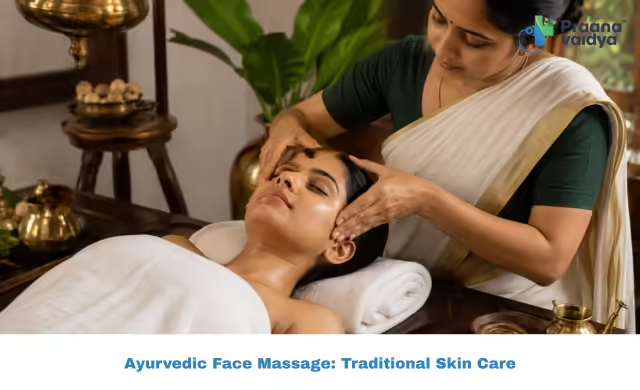
Known in the broader Ayurvedic tradition as part of Mukha Abhyanga and related self-care practices, facial massage involves applying a suitable oil or preparation to the face using gentle, deliberate movements.
Traditionally, the practice is associated with nourishment of the skin, relaxation, and balancing certain Dosha-related qualities. From a modern skin-care perspective, gentle massage can also provide a pleasant sensory experience and temporarily improve the appearance of circulation and facial relaxation.
However, facial massage is not a treatment for every skin condition. People with active infections, severe acne, open wounds, or unexplained skin changes should seek appropriate professional advice before massaging affected areas.
At Praanavaidya, Ayurvedic consultations may include personalised guidance on traditional skin-care practices based on an individual’s constitution, skin characteristics, lifestyle, and health needs.
What Is Ayurvedic Face Massage?
Ayurvedic face massage is a traditional facial self-care practice involving gentle massage of the face, usually with a suitable oil.
The practice may involve the:
- Forehead
- Cheeks
- Jawline
- Chin
- Nose area
- Temples
- Neck
The movements are generally performed gently rather than using excessive pressure.
Ayurveda views the skin as an important interface between the internal and external environment. Traditional Ayurvedic skin-care practices therefore focus not only on external appearance but also on lifestyle, nutrition, sleep, stress, and overall well-being.
How Is Facial Massage Different From a Regular Face Massage?
The basic physical action may appear similar, but Ayurvedic facial care places additional emphasis on:
- Choice of oil
- Individual constitution
- Skin type
- Dosha considerations
- Season
- Time of day
- Overall lifestyle
- Gentle and consistent practice
Rather than treating facial massage as a purely cosmetic procedure, Ayurveda traditionally places it within a broader self-care routine.
Potential Benefits of Ayurvedic Face Massage
Regular gentle massage may provide several supportive benefits.
1. Promotes Relaxation
Facial muscles can become tense because of:
- Stress
- Prolonged screen use
- Jaw clenching
- Concentration
- Lack of sleep
Gentle massage around the forehead, temples, cheeks, and jaw can feel relaxing.
This may make facial massage particularly useful as part of an evening wind-down routine.
2. Supports a Relaxed Facial Appearance
Stress can contribute to unconscious tension in areas such as the forehead and jaw.
Gentle massage may help temporarily relax these muscles, making the face feel less tense.
This should not be confused with permanent facial reshaping.
3. Helps Spread Facial Oil Evenly
If an appropriate facial oil is being used, massage can distribute it across the skin more evenly.
This may help reduce the need to repeatedly apply large amounts of product.
The amount of oil should remain appropriate for the person’s skin type.
4. Supports Skin Moisturisation
Facial oils can help reduce the feeling of dryness by supporting the skin’s surface barrier.
People with naturally dry skin may find an appropriate oil particularly comfortable.
However, oils are not universally suitable for every skin type.
5. Encourages a Self-Care Routine
One of the most practical benefits may simply be consistency.
Taking a few minutes to slow down, massage the face, and focus on breathing can create a mindful transition between work and rest.
A skin-care routine becomes easier to maintain when it is simple enough to repeat.
Ayurvedic Face Massage and the Doshas
Ayurveda describes three Doshas:
- Vata
- Pitta
- Kapha
Each is traditionally associated with different qualities.
These qualities may influence the way Ayurvedic skin-care practices are selected.
Vata and Facial Skin
Vata is traditionally associated with qualities such as dryness, lightness, and roughness.
People with Vata-predominant skin may traditionally benefit from nourishing and moisturising approaches.
A suitable oil may be selected to provide a more comfortable, moisturising experience.
Pitta and Facial Skin
Pitta is associated with heat and sensitivity.
People who experience facial sensitivity or a tendency toward redness may need a gentler approach.
Very hot oils, vigorous massage, or strongly fragranced products may not be appropriate for sensitive skin.
Kapha and Facial Skin
Kapha is traditionally associated with heaviness and oiliness.
People with oily or congestion-prone skin may need lighter products and less frequent oil application.
Using a heavy oil repeatedly on acne-prone skin may worsen congestion for some individuals.
This is why skin type should be considered alongside Ayurvedic principles.
Which Oils Are Used for Ayurvedic Face Massage?
The choice of oil depends on the individual and the purpose of the practice.
Traditionally used oils may include:
Sesame Oil
Sesame oil is widely used in Ayurveda and is traditionally associated with Vata-balancing qualities.
However, it may feel too heavy for some oily or acne-prone skin types.
Coconut Oil
Coconut oil has traditionally been used in various Ayurvedic skin-care practices.
It can feel moisturising, but it may not suit everyone, particularly those prone to facial congestion.
Almond Oil
Almond oil is sometimes used in cosmetic facial care because of its emollient properties.
People with nut allergies should avoid it.
Herbal Oils
Certain Ayurvedic oils may contain herbal ingredients selected according to traditional formulations.
These should preferably be chosen with professional guidance, particularly when being used on sensitive skin.
How to Choose the Right Oil
There is no single “best” oil for every face.
Consider:
- Skin type
- Acne tendency
- Sensitivity
- Allergies
- Season
- Climate
- Ayurvedic constitution
- Existing skin conditions
For example, someone with very dry skin may prefer a richer oil, while someone with oily or acne-prone skin may prefer a lighter formulation—or may be better off using a non-comedogenic moisturiser instead.
A Simple Ayurvedic Face Massage Technique
You do not need complicated techniques to practise facial massage at home.
Step 1: Clean Your Face
Wash your face using a gentle cleanser suitable for your skin.
Pat dry rather than rubbing aggressively.
Step 2: Apply a Small Amount of Oil
Place a few drops of a suitable oil on clean fingertips.
Do not saturate the face.
Step 3: Start With the Forehead
Using the fingertips, gently move from the centre of the forehead outward toward the temples.
Repeat several times.
Step 4: Massage the Cheeks
Use gentle upward and outward movements across the cheeks.
Avoid excessive pressure.
Step 5: Massage Around the Jaw
Move along the jawline using comfortable circular or upward strokes.
This can be especially relaxing for people who clench their jaw.
Step 6: Massage the Temples
Use small circular movements around the temples.
Keep the pressure light.
Step 7: Finish With the Neck
If appropriate, extend the massage gently down the sides of the neck.
Avoid pressing directly over the front of the throat.
How Long Should You Massage Your Face?
A facial massage does not need to be long.
Around 5–10 minutes can be sufficient for a simple self-care session.
Longer or more vigorous massage is not necessarily better.
The goal is comfortable, gentle movement rather than force.
How Often Can You Practise Ayurvedic Face Massage?
Frequency depends on skin type and the product being used.
Some people may prefer:
- A few times per week
- A short daily massage
- Occasional evening massage
Those with oily, acne-prone, or sensitive skin may need less frequent oil application.
If irritation, itching, redness, or breakouts develop, discontinue the product and reassess whether it is appropriate.
Morning or Night: When Is Better?
There is no universal requirement to perform facial massage at one particular time.
Morning
A short massage can become part of a morning self-care routine.
Evening
An evening massage may be more relaxing and can be incorporated into a wind-down routine.
For most people, consistency and skin tolerance matter more than a specific clock time.
Can Face Massage Reduce Wrinkles?
Facial massage should not be presented as a proven method for permanently removing wrinkles.
Gentle massage may temporarily improve the appearance of facial relaxation and hydration when combined with suitable skin care.
For long-term protection against premature skin ageing, more established measures include:
- Sun protection
- Avoiding smoking
- Adequate nutrition
- Moisturising
- Sufficient sleep
- Appropriate dermatological care
Can Ayurvedic Face Massage Change Face Shape?
No massage technique should be promoted as a reliable method for permanently changing bone structure or facial shape.
Massage may temporarily affect:
- Muscle relaxation
- Perceived facial tension
- Skin appearance
- Mild temporary puffiness
But it cannot permanently reshape the facial bones.
Claims about permanently lifting or reshaping the face through massage should therefore be approached cautiously.
Be Careful With Essential Oils
Natural does not automatically mean safe for the face.
Undiluted essential oils can irritate or sensitise the skin.
If essential oils are used at all, they should be appropriately diluted in a suitable carrier and avoided around the eyes and other sensitive areas.
Patch testing is sensible when introducing a new product.
Conclusion
Ayurvedic face massage can be a simple addition to a daily self-care routine. Traditionally associated with practices such as Mukha Abhyanga, it combines gentle facial massage with the use of suitable oils and broader Ayurvedic principles of skin care and wellness.
Potential benefits include relaxation, temporary reduction in facial tension, moisturisation when an appropriate oil is used, and a more mindful approach to personal care.
However, the practice should be adapted to individual skin type and health needs. A heavy oil may not suit acne-prone skin, vigorous massage can irritate sensitive skin, and persistent skin conditions require appropriate professional evaluation.
Ayurvedic facial care also looks beyond the skin itself, considering factors such as diet, digestion, sleep, stress, daily routine, and seasonal changes.
At Praanavaidya, Ayurvedic consultations can help determine which traditional skin-care practices, oils, and lifestyle recommendations may be appropriate for your individual needs.
isit Us in-
Rajajinagar- 08065903133
Hubballi – 08065903145
Indiranagar- 08065903135
Mumbai-08065903118
Yelahanka- 08065903134
Mangaluru-08065903136
Chamrajpet-08065903132
Delhi-08065903140
Lucknow-08065903130
Frequently Asked Questions
What is Ayurvedic face massage?
Ayurvedic face massage is a traditional self-care practice involving gentle massage of the face, often with a suitable oil, as part of Ayurvedic facial and wellness routines.
Which oil is best for Ayurvedic face massage?
There is no single best oil for everyone. Sesame, coconut, almond, and traditional herbal oils may be used depending on skin type and individual suitability.
Can I do Ayurvedic face massage every day?
Some people may tolerate gentle daily massage, while others may do better with a few sessions per week. Oily, sensitive, or acne-prone skin may require a different approach.
Does facial massage remove wrinkles?
Massage should not be considered a proven method for permanently removing wrinkles. It may temporarily promote a more relaxed appearance and can be part of a broader skin-care routine.
Can face massage reduce puffiness?
Gentle massage may temporarily improve the appearance of mild facial puffiness, but persistent or sudden swelling should be medically evaluated.
Is Ayurvedic face massage suitable for acne?
It depends on the type and severity of acne. Vigorous massage or heavy oils may aggravate some acne-prone skin. Active inflammatory acne should be assessed before introducing facial massage.
Can Ayurvedic face massage change facial shape?
Massage cannot permanently change facial bone structure. Claims of permanent facial reshaping through massage should be treated cautiously.
Praanavaidya
Healthcare Professional
Focused on patient-centric care and evidence-based treatment plans.
More from Praanavaidya