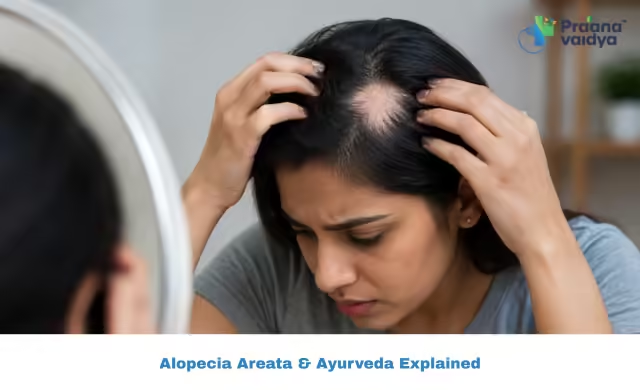
One morning, while combing your hair or looking in the mirror, you notice a smooth, round bald patch on your scalp. It isn’t painful, there is no obvious rash, and the surrounding hair appears normal. Naturally, questions arise: Why has this happened? Will the hair grow back? Is it permanent?
This pattern of sudden, patchy hair loss is commonly associated with Alopecia Areata, an autoimmune condition in which the body’s immune system mistakenly attacks hair follicles. Although the condition is not life-threatening, it can have a significant emotional impact, affecting self-confidence and quality of life.
From a modern medical perspective, Alopecia Areata is linked to immune system dysfunction, genetics, and environmental triggers. Alopecia Areata Ayurveda approaches the condition differently. Classical Ayurvedic texts describe a similar condition called Indralupta, where an imbalance of Pitta, Vata, Kapha, and Rakta Dhatu (blood tissue) is believed to affect the nourishment of hair follicles.
Rather than concentrating only on the visible bald patch, Ayurveda seeks to understand why the scalp environment has become disturbed and how internal balance can be restored through personalised treatment, diet, and lifestyle.
At Praanavaidya, Ayurvedic physicians conduct a detailed consultation to understand each patient’s constitution, health history, and possible contributing factors before recommending an individualised treatment plan.
What Is Alopecia Areata?
Alopecia Areata is a condition that causes sudden patchy hair loss.
The hair typically falls out in one or more round or oval areas on the scalp, although it may also affect:
- Beard
- Eyebrows
- Eyelashes
- Body hair
In many cases, the skin over the bald patch appears smooth and healthy.
The condition affects both men and women and may occur at any age.
Why Does Alopecia Areata Occur?
Modern medicine considers Alopecia Areata an autoimmune disorder.
Instead of attacking harmful organisms, the immune system mistakenly targets healthy hair follicles, interrupting the normal hair growth cycle.
Possible contributing factors include:
- Genetic predisposition
- Autoimmune disorders
- Emotional stress
- Viral illnesses
- Family history
- Environmental influences
However, the exact cause varies between individuals.
Understanding Indralupta in Ayurveda
In Ayurveda, patchy hair loss resembling Alopecia Areata is described as Indralupta.
According to classical texts:
- Pitta and Vata disturb the hair follicles.
- Rakta Dhatu may become affected.
- Kapha and vitiated tissues may obstruct healthy hair growth.
This imbalance is believed to interfere with nourishment reaching the hair roots, leading to localised hair loss.
Ayurveda therefore focuses on correcting internal imbalance while supporting scalp health.
The Role of Doshas in Hair Health
Healthy hair depends on the balanced functioning of all three Doshas.
Vata
Vata governs circulation and nourishment.
Its aggravation may contribute to dryness and reduced nourishment of the hair roots.
Pitta
Pitta influences metabolism and heat within the body.
Excess Pitta is associated with inflammatory processes that may affect scalp health.
Kapha
Kapha provides nourishment and stability.
When disturbed, it may contribute to obstruction of normal follicular function according to Ayurvedic principles.
Could Digestion Influence Hair Health?
Ayurveda places great importance on Agni, the digestive and metabolic fire.
If digestion becomes weak, incompletely processed metabolic waste (Ama) may accumulate.
According to Ayurvedic theory, Ama can interfere with tissue nourishment, including the tissues responsible for healthy hair growth.
For this reason, digestive health is often considered during Ayurvedic assessment.
Signs That Require Evaluation
People with Alopecia Areata may notice:
- One or more smooth bald patches
- Sudden hair shedding
- Hair falling out in circular areas
- Nail pitting in some cases
- Hair regrowth in one patch while new patches appear elsewhere
Because several scalp disorders can resemble Alopecia Areata, proper diagnosis is important.
How Ayurveda Evaluates Alopecia Areata
At Praanavaidya, treatment begins with understanding the individual rather than the bald patch alone.
The physician evaluates:
- Body constitution (Prakriti)
- Dosha imbalance (Vikriti)
- Digestive strength (Agni)
- Presence of Ama
- Stress levels
- Sleep quality
- Medical history
- Family history
- Existing autoimmune disorders
- Previous hair loss treatments
This comprehensive assessment guides the treatment plan.
Ayurvedic Treatment for Alopecia Areata
The Ayurvedic approach is personalised because every patient’s condition differs.
Nasya Therapy
Nasya involves administering physician-prescribed medicated oils or herbal preparations through the nasal passages.
According to Ayurveda, Nasya supports the health of structures above the neck and may be recommended in selected patients with scalp disorders.
Shiro Abhyanga
Medicated scalp massage may be included as part of a personalised treatment plan to support scalp nourishment and relaxation.
Shirodhara
Stress is known to influence many autoimmune conditions.
Where appropriate, Shirodhara may be recommended to promote relaxation and support emotional well-being alongside comprehensive treatment.
Panchakarma
Depending on the patient’s Dosha imbalance, Panchakarma therapies may be advised to support internal cleansing and restore balance.
The specific therapy is always determined after evaluation.
Can Hair Grow Back?
Hair regrowth varies widely.
Some individuals experience spontaneous regrowth, while others may have recurring episodes.
The outcome depends on several factors, including:
- Extent of hair loss
- Duration of the condition
- Individual immune response
- Overall health
- Consistency of treatment
No treatment system can guarantee complete hair regrowth in every case.
Conclusion
Patchy hair loss can be emotionally distressing, but understanding the condition is the first step toward managing it effectively. Alopecia Areata Ayurveda views this disorder through the principles of Indralupta, where Dosha imbalance, digestive health, tissue nourishment, and overall well-being are considered together rather than focusing solely on the scalp.
Through personalised herbal medicines, therapies such as Nasya, Shiro Abhyanga, and selected Panchakarma procedures, Ayurveda aims to support healthy scalp function while addressing the individual’s internal balance. Along with a nourishing diet, stress management, and healthy daily routines, these measures form a comprehensive approach to care.
At Praanavaidya, experienced Ayurvedic physicians evaluate each patient individually before recommending a customised treatment plan. If you notice sudden bald patches or unexplained hair loss, seeking early evaluation from both a dermatologist and a qualified Ayurvedic physician can help you better understand your condition and explore appropriate management options.
Visit Us in-
Rajajinagar- 08065903133
Hubballi – 08065903145
Indiranagar- 08065903135
Mumbai-08065903118
Yelahanka- 08065903134
Mangaluru-08065903136
Chamrajpet-08065903132
Delhi-08065903140
Lucknow-08065903130
Frequently Asked Questions
Is Alopecia Areata contagious?
No. Alopecia Areata cannot spread from one person to another.
Is Alopecia Areata permanent?
Not always. Some people experience complete regrowth, while others may have recurring episodes.
Can Ayurveda cure Alopecia Areata?
Ayurveda aims to support scalp health and restore internal balance. Individual outcomes vary, and no treatment can guarantee complete recovery.
Can stress trigger Alopecia Areata?
Stress is considered a possible trigger in some individuals, although it is not the only cause.
Should I continue dermatology treatment?
Yes. Continue prescribed medications unless your dermatologist advises otherwise. Ayurvedic care may be used as a complementary approach under professional guidance.
Praanavaidya
Healthcare Professional
Focused on patient-centric care and evidence-based treatment plans.
More from Praanavaidya