
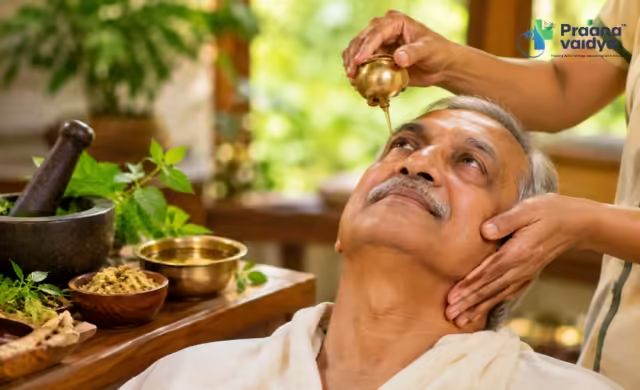
Cataracts can gradually make vision appear cloudy, hazy or less clear. Everyday activities such as reading, recognising details or seeing clearly in changing light may become more difficult, which is why many people begin looking for different approaches to eye care.
The search for cataract ayurvedic treatment often comes from an interest in understanding how traditional Ayurvedic principles approach eye wellness and what kind of practitioner-guided care may be considered alongside appropriate eye assessment.
At Praanavaidya, Ayurvedic care focuses on understanding the individual rather than following a single routine for everyone. This guide explains cataracts in simple terms, explores the Ayurvedic perspective on eye wellness and outlines what you may want to discuss during a consultation.
Looking to understand Ayurvedic care for cloudy vision?
What Is a Cataract?
A cataract refers to clouding of the eye’s natural lens. The lens normally helps focus light so that images appear clear. When it becomes cloudy, vision can gradually appear different.
Common experiences associated with cloudy vision may include:
- Hazy or blurred vision
- Difficulty seeing fine details
- Increased sensitivity to bright light
- Glare around lights
- Difficulty seeing clearly in low-light conditions
- Colours appearing less distinct
The experience can vary from person to person. Changes in vision can also have several possible causes, so persistent or noticeable changes should not be assumed to be caused by a cataract alone.
Why Do People Search for Cataract Ayurvedic Treatment?
People interested in Ayurveda may want to understand whether traditional approaches can form part of their broader approach to eye and overall wellness.
Ayurveda traditionally looks at health through an individualised framework involving factors such as:
- Daily routine
- Food and dietary habits
- Sleep patterns
- Lifestyle
- Seasonal changes
- Individual constitution
- General wellbeing
This means that an Ayurvedic consultation is not necessarily centred on one condition alone. A practitioner may first seek to understand the person’s overall routine and concerns before discussing suitable traditional practices.
It is important to distinguish between exploring Ayurvedic care for eye wellness and making claims about reversing or removing an established cataract. Ayurveda should not be presented as a guaranteed alternative to professional eye assessment or as a replacement for care recommended by an eye specialist.
How Ayurveda Looks at Eye Wellness
Traditional Ayurvedic literature places importance on maintaining balance through appropriate daily habits and routines. In modern practice, an Ayurvedic consultation may therefore include discussion around lifestyle and general wellness.
Individual assessment
An Ayurvedic practitioner may ask about your routine, diet, sleep, work habits and general health concerns.
The purpose is to understand the individual context rather than simply recommend the same approach to everyone searching for cataract ayurvedic treatment.
Daily routine and eye habits
Long periods of visually demanding work can make people more conscious of their eye comfort. A balanced daily routine may include practical habits such as taking regular breaks from screens, maintaining comfortable lighting and allowing adequate rest.
These habits should be viewed as general wellness practices rather than as a way of claiming to remove a cataract.
Nutrition and lifestyle discussion
Food and lifestyle are important parts of the broader Ayurvedic approach to wellbeing. During a consultation, practitioners may discuss dietary patterns and everyday habits according to the individual’s needs.
Rather than following a generic “cataract diet”, it is more appropriate to consider overall dietary quality and personal requirements.
What Can You Discuss During an Ayurvedic Consultation?
If you are considering Ayurvedic care for cloudy vision, it can be useful to arrive at your consultation with a clear picture of what you have been experiencing.
You may want to discuss:
- When you first noticed changes in your vision
- Whether the change is gradual or noticeable over a short period
- Any existing eye-related evaluations
- Your daily screen or visual-work routine
- Sleep and lifestyle patterns
- Current dietary habits
- Any ongoing health concerns
- Questions about traditional Ayurvedic approaches to eye wellness
Sharing relevant information helps create a more informed conversation with the practitioner.
Cataract and Ayurveda: What Should You Keep in Mind?
Searches for cataract ayurvedic treatment can sometimes lead to very broad promises online. It is worth approaching such information carefully.
Avoid guaranteed outcome claims
There is no need to rely on statements promising that a particular Ayurvedic routine will reverse, dissolve or permanently remove a cataract.
A responsible approach should explain what the practice involves without guaranteeing a particular result.
Do not ignore changes in vision
Cloudy or blurred vision deserves appropriate attention. If you notice a significant or persistent change in your eyesight, an eye examination can help determine what is happening.
Ayurvedic consultation and professional eye evaluation can serve different purposes. One should not be assumed to replace the other.
Share your existing care information
If you have already undergone an eye examination or are following advice from an eye-care professional, share relevant information during your Ayurvedic consultation.
This gives the practitioner useful context when discussing your overall wellness routine.
Ayurvedic Care for Cloudy Vision: A Practical Approach
For someone exploring Ayurveda, the most useful starting point is often understanding what the consultation actually involves.
A practical approach may look like this:
1. Understand the concern
Start by describing your vision-related concerns and what you have already noticed.
2. Review your routine
Discuss sleep, food, work patterns, screen exposure and other lifestyle factors.
3. Explore Ayurvedic principles
Ask the practitioner how traditional Ayurvedic principles relate to your individual wellness needs.
4. Understand the recommended routine
If a practitioner suggests traditional practices, make sure you understand how they are intended to fit into your routine.
5. Continue appropriate eye care
Do not delay an eye assessment because you are exploring an Ayurvedic approach.
Interested in understanding your options? Speak with a Praanavaidya practitioner about your concerns and learn more about an individualised Ayurvedic approach to wellness.
When Should You Have Your Vision Assessed?
Changes in vision should not automatically be attributed to cataracts. Cloudiness, blurring, glare or other changes can have different causes.
An eye assessment is particularly important when:
- Vision changes noticeably
- The change interferes with everyday activities
- One eye appears different from the other
- Vision changes suddenly
- You have ongoing concerns about your eyesight
An Ayurvedic consultation can be approached as a separate conversation about traditional wellness practices. It should not delay appropriate assessment of a new or significant vision change.
Choosing an Ayurvedic Centre for Eye Wellness
When researching Ayurvedic eye care, look beyond promotional promises. A useful consultation should give you an opportunity to explain your concerns and understand the approach being discussed.
Consider asking:
- Is the consultation individualised?
- Will my existing health information be considered?
- Can I ask questions about the traditional practices being suggested?
- Are the recommendations explained clearly?
- Am I being given realistic information rather than guaranteed outcomes?
At Praanavaidya, the focus is on practitioner-guided Ayurvedic care and understanding the individual context before discussing an appropriate approach.
Final Thoughts on Cataract Ayurvedic Treatment
Cataract-related cloudy vision can lead people to explore different approaches to health and wellness. If Ayurveda interests you, understanding its traditional perspective can help you have a more informed conversation with a practitioner.
The key is to keep expectations realistic. Cataract ayurvedic treatment should not be presented through unsupported promises or as a substitute for appropriate eye evaluation.
For people exploring traditional Ayurvedic care, a personalised consultation can be a useful starting point for discussing lifestyle, daily routines and broader wellness considerations.
If you are exploring Ayurvedic care for cloudy vision, you can connect with Praanavaidya in
Rajajinagar- 08065903133
Hubballi – 08065903145
Indiranagar- 08065903135
Mumbai-08065903118
Yelahanka- 08065903134
Mangaluru-08065903136
Jayanagar- 08065903132
Delhi-08065903140
Lucknow-08065903130
FAQs
Can Ayurveda treat cataracts?
People searching for cataract ayurvedic treatment are often interested in the traditional Ayurvedic perspective on eye wellness. Ayurveda should not be presented as a guaranteed method for reversing or removing an established cataract. An appropriate eye assessment remains important when vision changes occur.
What is Ayurvedic care for cloudy vision?
Ayurvedic care for cloudy vision may involve an individual discussion of lifestyle, diet, daily routine and traditional Ayurvedic principles. The approach can vary according to the person’s overall circumstances and should be discussed with a qualified practitioner.
Is cloudy vision always caused by a cataract?
No assumption should be made based only on cloudy or blurred vision. Changes in eyesight can have different causes, which is why an appropriate eye assessment is important when vision changes persist or become noticeable.
What happens during an Ayurvedic eye-care consultation?
A consultation may involve discussing your concerns, daily routine, dietary habits, sleep, lifestyle and relevant health information. The practitioner can then explain the Ayurvedic approach that may be appropriate to discuss for your individual situation.
Can I explore Ayurveda after an eye examination?
Yes. If you are interested in Ayurveda, you can discuss traditional wellness approaches after sharing relevant information from your eye evaluation with the Ayurvedic practitioner. Keeping both conversations informed can help you make better decisions about your care.
What lifestyle habits can support general eye wellness?
General wellness habits may include maintaining a balanced routine, getting adequate rest, taking sensible breaks during prolonged screen use and following a balanced diet. These practices should not be presented as a way to reverse a cataract.
Is Ayurvedic care the same as cataract surgery?
No. Ayurvedic care and ophthalmic procedures are different approaches. If an eye specialist recommends a particular option after evaluating your vision, Ayurvedic consultation should not be considered a substitute for that professional assessment.
Praanavaidya
Healthcare Professional
Focused on patient-centric care and evidence-based treatment plans.
More from Praanavaidya