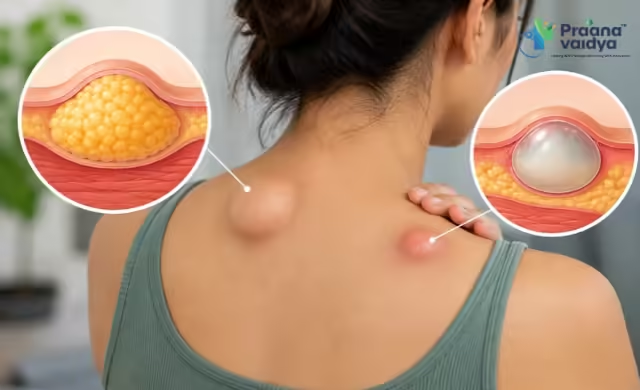

A lump under the skin may not attract much attention when it stays the same for a long time. But when it becomes painful, starts getting bigger, feels different, or changes in appearance, it is natural to wonder whether it needs to be checked.
A painful lipoma or growing lump should not simply be judged by appearance alone. A lump that has changed deserves appropriate assessment so that its nature can be understood before deciding what to do next.
At Praanavaidya, we encourage people to approach changing lumps thoughtfully rather than relying on self-diagnosis or home remedies. This article explains what changes to notice, when an assessment may be appropriate, and what information can help during a consultation.
If you have noticed a painful or growing lump
What Is a Lipoma?
A lipoma is commonly described as a soft lump located beneath the skin. Many people notice one incidentally, particularly when it remains unchanged and does not cause discomfort.
However, not every lump beneath the skin should automatically be assumed to be a lipoma.
A person may describe a lump as a lipoma because of its appearance, location or a previous opinion. If a lump is new or has changed, an appropriate assessment can help clarify what is being observed.
This is especially relevant when the lump is:
- Becoming larger
- Becoming painful or uncomfortable
- Feeling harder or firmer than before
- Less mobile than it previously seemed
- Changing in appearance
- Associated with changes in the surrounding skin
- Persisting without a clear explanation
The important point is simple: a change in a previously noticed lump is worth paying attention to.
Why Can a Lipoma Become Painful?
Many people searching for a painful lipoma are concerned because the lump did not previously cause discomfort.
Pain can make the situation feel different, but pain alone does not explain why a lump has changed. The location of the lump, pressure on surrounding structures, local irritation and other factors may need to be considered during an assessment.
Rather than trying to determine the reason at home, note when the discomfort began and whether it is associated with any other changes.
Questions to consider
Before your consultation, it may help to note:
- When did the pain begin?
- Is the discomfort constant or occasional?
- Has the lump changed in size?
- Does the area feel different from before?
- Has the skin around it changed?
- Has the lump become more noticeable during movement or pressure?
- Have you noticed any other new lumps?
These details can give the healthcare professional a clearer picture of how the lump has changed over time.
What Does a Growing Lipoma Mean?
A growing lipoma can cause concern, particularly when the change happens over a relatively short period.
It is useful to distinguish between a lump that has remained stable for a long time and one that is noticeably changing. A change in size does not provide enough information by itself to determine what the lump represents.
This is why measuring or estimating the change can be useful.
For example, instead of simply saying, “It has become bigger,” you can record:
- Approximate size when first noticed
- Current approximate size
- When you first noticed the increase
- Whether the change has been gradual or noticeable over a shorter period
- Whether pain or tenderness appeared alongside the growth
Keeping a simple record can make changes easier to discuss during an assessment.
When Should a Lipoma Be Assessed?
Not every lump requires the same approach. However, a new, unexplained, painful or growing lump deserves attention rather than being dismissed based only on how it looks.
Consider seeking an assessment if you notice:
A noticeable increase in size
If a lump that was previously stable is becoming larger, make a note of the change and consider having it assessed.
New or increasing pain
A lump that becomes painful after being comfortable for a long period is a change worth discussing with a healthcare professional.
A change in firmness
If a lump feels harder, firmer or noticeably different from how it felt previously, assessment can help clarify the change.
Reduced movement
Some people notice that a lump seems to move differently beneath the skin than it did before. This is another detail worth mentioning during a consultation.
Changes around the lump
Changes involving the skin or surrounding area should also be mentioned rather than ignored.
Multiple changes happening together
A lump that is growing and becoming painful, for example, deserves more attention than simply monitoring it without recording any changes.
If you are unsure whether a change in a lump is significant, an assessment is a more useful next step than trying to identify it yourself from photographs or online descriptions.
What Information Should You Take to a Lipoma Assessment?
A consultation becomes easier when you can explain how the lump has changed.
You can prepare by recording:
- The approximate location
- When you first noticed it
- Whether it has changed in size
- Whether it is painful
- Whether the pain is occasional or persistent
- Whether its texture has changed
- Whether it appears different from nearby skin
- Whether you have noticed other lumps
- Any previous assessment or documentation relating to the lump
If you have photographs showing changes over time, they may also help you explain what you have noticed.
The aim is not to diagnose the lump yourself. Instead, the information helps provide a clearer history for the person assessing it.
Lipoma vs Cyst: Why Appearance Can Be Misleading
One common search is “lipoma vs cyst”. People often try to determine the difference by looking at a lump themselves.
Although appearance and feel can provide useful information during an examination, self-assessment has limitations. Different types of lumps can appear similar to someone without clinical training.
This is particularly important when a lump is:
- New
- Growing
- Painful
- Firm
- Changing
- Associated with changes in the surrounding area
If you are uncertain whether a lump is a lipoma, cyst or something else, it is better to seek an appropriate assessment rather than choosing a treatment based on an assumption.
What Happens During an Assessment?
An assessment generally begins with a discussion about the lump and how it has changed.
The healthcare professional may want to understand:
- When the lump was first noticed
- Whether its size has changed
- Whether it causes pain or discomfort
- Whether its texture or movement has changed
- Whether there are any other noticeable changes
Depending on the situation, further evaluation may be considered to understand the nature of the lump.
The next step should therefore be based on what is found during the assessment rather than on the name a person has given the lump.
Should You Keep Monitoring a Lipoma?
Monitoring can be useful when you have already been advised to observe a lump. The important part is knowing what changes to watch for.
You can keep a simple record of:
- Size
- Location
- Pain or discomfort
- Texture
- Movement
- Visible changes
- Date of each observation
If something changes, update the healthcare professional rather than assuming that the change is unimportant.
Monitoring is particularly useful when it creates a clear record instead of relying on memory.
What About Ayurveda for a Painful or Growing Lipoma?
People interested in Ayurveda may want to understand whether an Ayurveda-based approach is appropriate for their situation.
The first step should remain proper assessment of the lump, particularly when it is painful, growing or changing.
At Praanavaidya, an Ayurveda-based consultation can be discussed in the context of the individual’s situation after appropriate assessment. It is important not to assume that every lump is a lipoma or that one approach is suitable for every person.
Ayurvedic care should also not be presented as a guaranteed way to dissolve a lump, prevent future lumps or provide a fixed result within a specific period.
The focus should instead be on understanding the individual situation and discussing appropriate options with a qualified practitioner.
If you have questions about a painful or growing lump and want to understand whether an Ayurveda-based consultation is appropriate, you can contact Praanavaidya for an assessment-focused consultation.
When Not to Rely on Home Observation
Searching for home remedies is common when people discover a lump. However, home observation should not replace assessment when a lump is changing.
Avoid making decisions based only on:
- Online photographs
- Social media posts
- Home remedies
- Assumptions based on the location of the lump
- Someone else’s experience with a similar-looking lump
A lump that looks similar to another person’s lump may still require a different approach.
The more useful question is not simply, “How can I reduce this lump?” but “Has this lump changed, and does it need to be assessed?”
A Practical Checklist for a Painful or Growing Lump
If you have noticed a change, use this quick checklist before your consultation:
- Size: Has it become larger?
- Pain: Has discomfort started or increased?
- Texture: Does it feel different?
- Movement: Does it seem less mobile?
- Appearance: Has the skin or surrounding area changed?
- Timing: When did the change begin?
- Other lumps: Have you noticed anything similar elsewhere?
- Previous assessment: Has the lump been evaluated before?
This information can help make the consultation more focused and useful.
Final Thoughts
A lump that has remained unchanged may feel easy to ignore, but a painful lipoma or growing lump deserves a closer look.
Changes in size, pain, firmness, movement or appearance are useful details to record and discuss. Most importantly, avoid assuming that every lump is a lipoma simply because it looks similar to one you have seen before.
An appropriate assessment can help establish what the lump represents and what the next step should be.
For people considering an Ayurveda-based approach, Praanavaidya provides consultations with the focus on understanding the individual’s situation before discussing care options.
If you have noticed a painful or growing lump, contact Praanavaidya to arrange an assessment at a centre convenient for you.
Visit Us in –
Rajajinagar- 08065903133
Hubballi – 08065903145
Indiranagar- 08065903135
Mumbai-08065903118
Yelahanka- 08065903134
Mangaluru-08065903136
Jayanagar- 08065903132
Delhi-08065903140
Lucknow-08065903130
FAQs
Is a painful lipoma something that should be assessed?
A lump that has become painful after previously being comfortable is a change worth discussing with a healthcare professional. An assessment can help clarify what the lump represents and what should happen next.
Why is my lipoma getting bigger?
A change in the size of a lump can have different explanations, and size alone cannot establish what the lump is. If a lump is noticeably growing, recording the change and seeking an assessment can be appropriate.
When should I get a lipoma checked?
Consider getting a lump assessed if it is new, growing, painful, becoming firmer, changing in movement or showing other noticeable changes.
Can a lipoma become painful?
A lump that was previously comfortable can become painful or uncomfortable. When this happens, it is useful to note when the discomfort began and discuss the change during an assessment.
How can I tell the difference between a lipoma and a cyst?
Lipomas and cysts can sometimes appear similar to someone looking at them without clinical training. If you are uncertain about a lump, assessment is preferable to relying solely on appearance.
Should I monitor a growing lipoma?
If you have been advised to monitor a lump, keep track of its approximate size, pain, texture, movement and other changes. Any noticeable change should be discussed during follow-up.
Can I treat a painful lump at home?
It is better not to assume that an unexplained painful lump is a lipoma and choose a home treatment based on that assumption. Assessment can help determine what the lump represents before deciding on an appropriate approach.
Is Ayurveda appropriate for a painful or growing lipoma?
An Ayurveda-based consultation can be discussed after appropriate assessment of the lump. The suitability of any approach depends on the individual situation, and no fixed outcome or timeline should be assumed.
Praanavaidya
Healthcare Professional
Focused on patient-centric care and evidence-based treatment plans.
More from Praanavaidya