
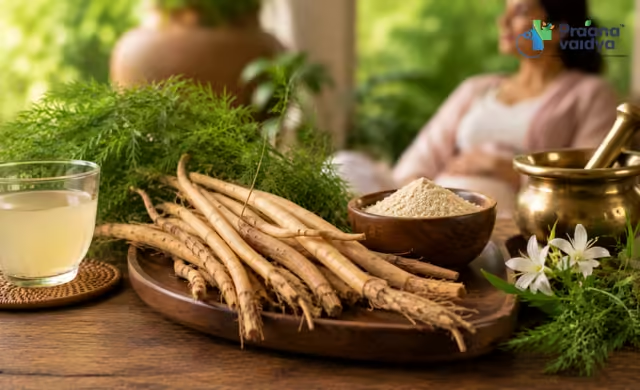
Shatavari is one of the best-known herbs in traditional Ayurveda, particularly for women’s wellness and reproductive health. Traditionally identified as Asparagus racemosus, the herb has been used in Ayurvedic formulations associated with nourishment, vitality, digestive wellness, reproductive health, and rejuvenation.
The Ayurvedic health benefits of Shatavari are traditionally linked with its nourishing and supportive qualities. Ayurvedic practitioners have historically incorporated Shatavari into different formulations according to individual needs and stages of life.
Shatavari is also increasingly discussed in modern wellness because of its traditional association with women’s reproductive and hormonal health. However, traditional Ayurvedic use and modern scientific evidence are not the same. Research on Shatavari is still developing, and it should not be presented as a guaranteed treatment for hormonal, reproductive, digestive, or other medical conditions.
At Praanavaidya, Ayurvedic herbs are considered as part of an individualized wellness approach. The suitability of Shatavari may depend on factors such as constitution, digestion, age, lifestyle, existing health concerns, and medicines or supplements being used.
What Is Shatavari?
Shatavari is an Ayurvedic herb traditionally identified as Asparagus racemosus, a plant belonging to the asparagus family.
The plant has slender stems and tuberous roots. Its roots are the part most commonly used in traditional Ayurvedic preparations.
Shatavari may be available in several forms, including:
- Root powder
- Capsules
- Tablets
- Liquid extracts
- Herbal formulations
- Traditional preparations
The concentration can vary considerably between products. A particular quantity of Shatavari powder should therefore not automatically be considered equivalent to the same quantity of a concentrated extract.
Shatavari in Ayurveda
Shatavari has traditionally been described as a nourishing and rejuvenating herb.
It is particularly associated with women’s wellness, although its traditional applications are not limited exclusively to women.
Ayurvedic traditions have used Shatavari in connection with:
- Reproductive wellness
- Lactation support
- Menstrual wellness
- Nourishment
- Digestive comfort
- Vitality
- Stress resilience
- Rejuvenation
Traditional Ayurvedic recommendations are individualized. An herb that may be suitable for one person may not necessarily be appropriate for another.
Ayurvedic Health Benefits of Shatavari
1. Traditionally Supports Women’s Wellness
Shatavari is particularly well known in Ayurveda for its traditional applications in women’s health.
It has historically been incorporated into Ayurvedic routines focused on nourishment and reproductive wellness during different stages of life.
However, symptoms such as irregular periods, unusually heavy bleeding, pelvic pain, or fertility difficulties can have many causes. These concerns require appropriate medical evaluation rather than self-treatment with Shatavari.
2. Traditionally Used for Reproductive Wellness
Ayurveda has historically associated Shatavari with reproductive tissues and reproductive vitality.
The traditional Ayurvedic concept of Shukra Dhatu relates to reproductive tissue and reproductive vitality. Shatavari may therefore be included in traditional formulations intended to support reproductive wellness.
This traditional use should not be interpreted as proof that Shatavari can treat infertility or guarantee pregnancy.
Fertility difficulties can involve factors affecting either partner and may require evaluation by an appropriate healthcare professional.
3. May Support Menstrual Wellness
Menstrual changes can occur for many reasons, including hormonal changes, stress, nutritional factors, medications, and underlying health conditions.
Traditional Ayurvedic practice has used Shatavari in wellness routines intended to support nourishment and menstrual balance.
Modern research has also investigated Shatavari in relation to women’s reproductive health, but evidence remains limited for many specific claims.
Persistent menstrual irregularities, unusually heavy bleeding, severe pain, or sudden changes in the menstrual cycle should be evaluated by a qualified healthcare professional.
4. Traditionally Used During Lactation
Shatavari is widely recognised in traditional Ayurvedic practice for its association with breastfeeding and lactation.
It has traditionally been used as a galactagogue, meaning a substance intended to support milk production.
However, breastfeeding difficulties do not always result from insufficient milk production. Factors such as infant latch, feeding frequency, breast problems, hormonal conditions, and certain medications can also affect breastfeeding.
Anyone considering Shatavari while breastfeeding should discuss its use with an appropriate healthcare professional.
5. Supports Nourishment and Vitality
Shatavari is traditionally regarded as a nourishing herb.
Ayurvedic rejuvenation practices may focus on maintaining nourishment, strength, vitality, and resilience.
For this reason, Shatavari may be included in selected traditional formulations intended to support general well-being.
Healthy nutrition, adequate sleep, physical activity, and effective stress management remain important foundations of overall wellness.
6. Traditionally Used for Digestive Wellness
Shatavari has also been used traditionally in Ayurvedic approaches to digestive wellness.
Its traditional nourishing qualities may make it appropriate in selected formulations intended to support digestive comfort.
However, herbal preparations can affect individuals differently. Some people may experience digestive symptoms such as:
- Bloating
- Stomach discomfort
- Nausea
- Changes in bowel habits
Persistent or severe digestive symptoms should be medically evaluated rather than attributed automatically to diet or an Ayurvedic imbalance.
7. May Support Stress and Emotional Wellness
Ayurveda traditionally considers the relationship between the mind, body, digestion, sleep, and daily routine.
Shatavari is traditionally regarded as a nourishing and supportive herb and may be included in some wellness routines intended to promote resilience during periods of stress.
This does not mean that Shatavari is a treatment for anxiety, depression, or other mental health conditions.
Persistent emotional distress should be discussed with an appropriate healthcare professional.
Shatavari and Dosha Balance
Ayurvedic herbal recommendations traditionally consider the three doshas:
- Vata
- Pitta
- Kapha
Shatavari is traditionally described as nourishing and soothing, but its suitability can still vary according to individual circumstances.
Shatavari and Vata
Vata is traditionally associated with qualities such as dryness, lightness, and movement.
Because Shatavari is traditionally described as nourishing and unctuous, it may be included in selected Vata-oriented Ayurvedic routines.
Shatavari and Pitta
Shatavari is traditionally described as cooling and soothing.
For this reason, it may be incorporated into certain Pitta-oriented wellness approaches.
Shatavari and Kapha
Shatavari is traditionally considered nourishing and relatively heavy.
People with Kapha-related tendencies may therefore require more individualized guidance regarding its quantity and frequency.
These descriptions are based on traditional Ayurvedic concepts and should not be interpreted as modern medical diagnoses.
Shatavari for Different Stages of Women’s Life
One reason Shatavari remains well known in Ayurveda is its traditional use across different stages of women’s wellness.
During the Reproductive Years
Shatavari may be incorporated into traditional wellness routines focused on reproductive nourishment and menstrual health.
However, it should not be used as a substitute for evaluation of menstrual or fertility problems.
During Pregnancy
Pregnancy requires particular caution with herbal supplements.
Even herbs with a long history of traditional use should not be started during pregnancy without guidance from an appropriate healthcare professional.
During Breastfeeding
Shatavari has traditionally been used in relation to lactation.
Breastfeeding mothers should discuss concentrated herbal supplements with their healthcare provider before use.
During Perimenopause and Menopause
Shatavari is sometimes promoted for menopausal wellness.
Symptoms such as hot flashes, sleep difficulties, mood changes, and irregular bleeding can have different causes and may require appropriate evaluation.
Shatavari should not be considered a replacement for professional assessment or established treatment options when needed.
Shatavari and Hormonal Health
Shatavari is frequently marketed as an herb for “hormonal balance.”
This phrase should be interpreted carefully.
Hormones are regulated through complex interactions involving the endocrine system, reproductive organs, metabolism, sleep, nutrition, and other physiological processes.
Traditional Ayurveda may describe Shatavari in terms of reproductive nourishment and dosha balance, while modern scientific research investigates possible biological effects using different approaches.
Therefore, Shatavari should not be described as a universal hormone-balancing treatment.
If you experience symptoms associated with hormonal changes, appropriate medical assessment may be necessary to determine the underlying cause.
Shatavari for Men
Although Shatavari is strongly associated with women’s wellness, it is not exclusively a women’s herb.
Traditional Ayurvedic practices may use Shatavari as a nourishing and rejuvenating herb for men as well.
Traditional applications may include:
- General nourishment
- Digestive wellness
- Reproductive wellness
- Vitality
- Stress resilience
The appropriate use depends on individual circumstances rather than gender alone.
How Shatavari Is Commonly Used
Shatavari is available in several preparations.
Shatavari Powder
Powdered Shatavari root is a traditional form that may be incorporated into suitable preparations according to individual guidance.
Shatavari Capsules
Capsules provide a convenient form of herbal supplementation, but the amount and concentration can vary between products.
Shatavari Extract
Extracts may contain a more concentrated quantity of particular plant compounds than powdered root.
Shatavari Formulations
Ayurvedic practitioners may recommend Shatavari as part of a broader herbal formulation rather than as a standalone herb.
Because preparations can differ in strength and composition, dosage recommendations for one product should not automatically be applied to another.
When Is the Best Time to Take Shatavari?
There is no universally correct time for everyone.
The timing may depend on:
- The preparation
- Dosage
- Digestive tolerance
- Intended purpose
- Other ingredients
- Other medicines or supplements being taken
Some people may tolerate herbal preparations differently depending on whether they are taken with food.
If Shatavari is being used as part of an Ayurvedic wellness or therapeutic plan, follow the guidance of a qualified practitioner rather than copying another person’s schedule.
How Much Shatavari Should You Take?
There is no single dose that is appropriate for everyone.
The amount may vary depending on whether you are using:
- Root powder
- Extract
- Capsules
- Tablets
- A combined Ayurvedic formulation
Product labels may also provide different serving sizes.
A higher amount does not necessarily mean greater benefits and may increase the possibility of unwanted effects.
For therapeutic use, personalized professional guidance is preferable.
Shatavari and Modern Research
Researchers have investigated Asparagus racemosus for several possible biological effects.
Research areas have included:
- Women’s reproductive health
- Lactation
- Antioxidant activity
- Gastrointestinal effects
- Stress-related responses
- Reproductive function
However, the quantity and quality of human evidence vary considerably across these areas.
Some studies have been small or have used specific extracts that may not be equivalent to commercially available Shatavari products.
Therefore, promising research findings should not automatically be interpreted as definitive proof that Shatavari can prevent or treat a particular medical condition.
Is Shatavari Safe?
Shatavari has a long history of traditional use, but this does not mean it is risk-free for everyone.
Possible unwanted effects may include:
- Stomach discomfort
- Nausea
- Bloating
- Changes in bowel habits
- Allergic reactions in susceptible individuals
Individual responses can vary depending on the preparation, concentration, amount consumed, and personal health circumstances.
Who Should Be Cautious With Shatavari?
Professional guidance is particularly important if you:
- Are pregnant
- Are breastfeeding
- Take prescription medicines
- Have kidney disease
- Have a hormone-sensitive medical condition
- Have an allergy to asparagus or related plants
- Have significant digestive problems
- Are preparing for surgery
- Take multiple herbal supplements
People with existing medical conditions should discuss herbal supplementation with their healthcare professional.
Shatavari and Medication Interactions
Herbal supplements can potentially interact with medicines.
This is particularly relevant when a person is taking medication that affects:
- Hormones
- Blood sugar
- Blood pressure
- Kidney function
- Fluid balance
- Other metabolic processes
Do not stop prescribed medication and replace it with Shatavari without medical guidance.
If you take regular medicines, inform your doctor or pharmacist about all herbal supplements and other products you use.
Common Mistakes When Using Shatavari
Mistake 1: Treating It as a Universal Women’s Medicine
Shatavari has traditional applications in women’s wellness, but that does not mean every woman needs it.
Mistake 2: Taking High Amounts Without Guidance
More is not necessarily better. The appropriate amount depends on the preparation and individual circumstances.
Mistake 3: Using It Instead of Medical Treatment
Traditional herbal use should not replace appropriate diagnosis or evidence-based medical treatment when required.
Mistake 4: Ignoring Persistent Symptoms
Irregular periods, infertility, abnormal bleeding, severe menstrual pain, or unexplained fatigue require appropriate evaluation.
Mistake 5: Combining Multiple Herbs Without Guidance
Using several supplements together can increase the possibility of unwanted effects or interactions.
How to Incorporate Shatavari Into a Balanced Ayurvedic Lifestyle
Ayurveda traditionally emphasizes more than herbal supplementation.
If Shatavari is considered appropriate for an individual, it can be viewed alongside broader lifestyle practices such as:
Balanced Nutrition
Eat a varied diet that provides adequate protein, carbohydrates, fats, vitamins, minerals, and dietary fiber according to your individual needs.
Regular Sleep
Consistent and adequate sleep supports physical and mental well-being.
Appropriate Exercise
Regular physical activity can support cardiovascular, metabolic, musculoskeletal, and emotional health.
Stress Management
Yoga, breathing exercises, meditation, and relaxation practices may complement an Ayurvedic wellness routine.
Healthy Digestive Habits
Regular meals, adequate hydration, and appropriate food choices can support digestive comfort.
The herb should be considered one possible component of a broader wellness routine rather than the foundation of health.
Final Thoughts
Shatavari has a long history in Ayurvedic herbal practice and remains particularly well known for its traditional applications in women’s wellness, reproductive nourishment, lactation support, digestive wellness, vitality, and rejuvenation.
The Ayurvedic health benefits of Shatavari are primarily rooted in traditional Ayurvedic principles, while modern researchers continue to investigate the herb’s possible physiological effects.
Shatavari may have a place in an appropriately designed Ayurvedic wellness routine, but it should not be treated as a universal remedy or substitute for medical care.
Product quality, preparation, dosage, individual health status, pregnancy or breastfeeding, and possible interactions with medicines should all be considered before use.
For personalized guidance on Ayurvedic herbs and lifestyle practices, Praanavaidya can help develop an approach based on individual needs and traditional Ayurvedic principles while encouraging appropriate medical care whenever necessary.
Visit Us in-
Rajajinagar- 08065903133
Hubballi – 08065903145
Indiranagar- 08065903135
Mumbai-08065903118
Yelahanka- 08065903134
Mangaluru-08065903136
Chamrajpet-08065903132
Delhi-08065903140
Lucknow-08065903130
Frequently Asked Questions About Shatavari
What are the Ayurvedic health benefits of Shatavari?
Traditionally, Shatavari is valued for nourishment, women’s reproductive wellness, lactation support, digestive wellness, vitality, and rejuvenation.
Is Shatavari mainly used for women?
Shatavari is particularly associated with women’s wellness in Ayurveda, but traditional Ayurvedic practice also uses it in selected wellness and rejuvenation approaches for men.
Can Shatavari support fertility?
Shatavari has traditional associations with reproductive health, and researchers have investigated its possible reproductive effects. However, it should not be considered a proven treatment for infertility.
Is Shatavari useful during breastfeeding?
Shatavari has traditionally been used as a lactation-supporting herb. However, breastfeeding mothers should consult an appropriate healthcare professional before taking concentrated herbal supplements.
Can Shatavari balance hormones?
Shatavari is commonly described as a hormone-balancing herb in modern wellness discussions, but this claim should be interpreted cautiously. Hormonal symptoms can have many possible causes and may require medical assessment.
Can men take Shatavari?
Yes. Although Shatavari is strongly associated with women’s health, traditional Ayurveda also uses it in selected wellness and rejuvenation practices for men.
Can Shatavari be taken every day?
Some Shatavari preparations may be used regularly, but the appropriate duration and amount depend on the individual, preparation, intended purpose, and overall health.
Does Shatavari have side effects?
Some people may experience digestive discomfort, nausea, bloating, or changes in bowel habits. Allergic reactions are also possible in susceptible individuals.
Can Shatavari be taken during pregnancy?
Pregnancy is a special situation in which herbal supplements should not be started without professional guidance. Consult your obstetric or healthcare professional before using Shatavari.
What is the best form of Shatavari?
Shatavari is available as powder, capsules, extracts, and traditional formulations. The appropriate form depends on individual needs, product composition, and the guidance of a qualified practitioner.
Praanavaidya
Healthcare Professional
Focused on patient-centric care and evidence-based treatment plans.
More from Praanavaidya