
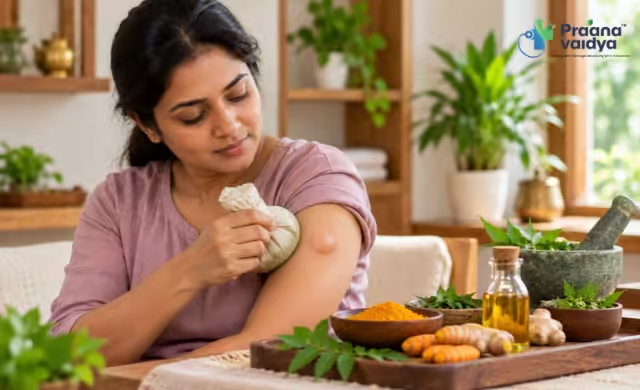
Finding a lump beneath the skin can naturally lead to searches for lipoma home remedies. Oils, massage, herbal pastes, dietary changes and other household approaches are often discussed online, but it can be difficult to separate traditional practices from information that is actually supported by evidence.
The first step is not deciding which remedy to try. It is understanding what the lump is, what a particular home approach is intended to do, and whether there is enough evidence to associate that approach with removing or reducing a lipoma.
At Praanavaidya, we believe people should have clear information before trying self-care approaches for a lump. This guide looks at commonly searched home remedies, explains how to evaluate them, and highlights situations where professional assessment deserves priority.
What Do People Mean by Lipoma Home Remedies?
The term lipoma home remedies can refer to many different practices. Some involve applying something to the skin, while others involve changing diet or daily habits.
Common searches include:
- Applying oils to the area
- Massaging the lump
- Using herbal pastes
- Trying traditional topical preparations
- Applying warm compresses
- Changing the diet
- Losing weight
- Increasing physical activity
- Taking supplements or herbal products
These approaches should not all be treated as though they have the same purpose or level of evidence.
A useful starting point is to ask a simple question: What outcome is the remedy actually expected to produce?
Improving general wellbeing, caring for the skin or providing temporary comfort are different goals from removing a lump. A remedy should not be described as a method for removing a lipoma unless that specific outcome is supported by appropriate evidence.
Confirm the Diagnosis Before Trying Home Remedies
One of the most important parts of dealing with a lump is knowing what it actually is.
People may use the word “lipoma” based on how a lump looks or feels. However, self-identifying a lump from an online description or photograph is not the same as having it assessed.
This matters because a home remedy chosen for a presumed lipoma may not be appropriate if the lump has not been properly identified.
Before trying home treatment, consider:
- When did you first notice the lump?
- Has its size changed?
- Has its appearance changed?
- Has its texture changed?
- Is it causing discomfort?
- Have you noticed any other changes around the area?
Keeping track of these details can make a later consultation more useful.
If you are unsure whether a lump is a lipoma, a cyst or something else, understanding the lipoma and cyst differences can also help you know why identification matters.
Oils and Massage for Lipoma
Oils and massage are among the most frequently searched approaches when people look for natural ways to manage a lipoma.
The attraction is understandable. Applying oil and gently massaging an area is simple and can be done at home.
However, there is an important distinction between using an oil as part of general skin care and claiming that it can remove a lump beneath the skin.
Anecdotal experiences, testimonials or photographs are not enough to establish that an oil or massage technique removes a lipoma. The same principle applies to claims that a particular oil can “break down”, “melt” or “dissolve” a lump.
If someone chooses to use a topical product, it is sensible to pay attention to how the skin responds. Stop using a product if it causes irritation or discomfort, and avoid vigorous manipulation of a lump.
Herbal Pastes and Traditional Lepa
Traditional approaches may include Lepa, which generally refers to applying a prepared paste to the skin.
Traditional use and modern evidence are not automatically the same thing. A practice may have a history of use, while evidence for a specific outcome may remain limited or uncertain.
This distinction is especially important when a topical paste is promoted as being able to reach a lump beneath the skin and remove it.
A person should not interpret redness, burning, irritation or another skin reaction as proof that a topical preparation is working.
Homemade attempts to burn, puncture, cut or otherwise physically remove a lump should also be avoided. Such actions can create additional skin problems and may make later assessment more difficult.
The more responsible approach is to understand the intended use of a traditional preparation without promising an outcome that has not been established.
What About Warm Compresses?
Warm compresses are another commonly searched home approach.
If you are considering any simple home measure, it is important to understand its intended purpose rather than assuming that warmth itself will change the underlying lump.
A warm compress should not automatically be presented as a method for shrinking or removing a lipoma.
If an area becomes increasingly uncomfortable, changes noticeably, or develops other concerning features, relying on repeated home applications can distract from the more important question of whether the lump should be assessed.
Is There a Special Diet for Lipoma?
Diet is another area where online advice can become confusing.
There is no special lipoma diet that needs to be followed simply because a person has a lipoma. There is also no particular food that should be presented as something that dissolves or removes a lipoma.
Similarly, people do not need to avoid specific foods solely because they have noticed a lump.
General nutrition can be discussed separately from lipoma treatment. Eating a varied and balanced diet may be part of overall health, but changing food intake should not be presented as a direct method for removing a lipoma.
Weight loss should also be kept separate from lipoma treatment. Losing weight and treating a lipoma are not interchangeable goals.
For readers specifically interested in this topic, a dedicated resource on diet and lipoma can explain what dietary changes can and cannot be associated with the condition without repeating the broader home-remedy discussion.
Can Exercise Remove a Lipoma?
Exercise is often included in searches for natural ways to reduce body lumps.
Regular physical activity can be part of a healthy lifestyle, but it should not be presented as a home treatment for removing a lipoma.
The same distinction applies to weight management. A change in overall body weight does not automatically mean that a particular lump will disappear.
Rather than choosing an exercise routine specifically to target a lump, focus on exercise for its general role in maintaining an active lifestyle.
What Does the Evidence Actually Support?
When assessing claims about lipoma home remedies, it helps to look beyond individual testimonials.
Consider whether the information:
- Examines the exact remedy being discussed
- Looks at the specific outcome being promised
- Uses more than personal experiences or photographs
- Clearly distinguishes traditional use from demonstrated results
- Explains limitations rather than promising a guaranteed outcome
- Considers whether the original diagnosis was confirmed
A photograph showing that a lump looks smaller does not, by itself, establish why the change occurred. Similarly, an individual experience cannot establish that the same approach will produce the same result for everyone.
This is why evidence should be considered carefully before describing any home remedy as a treatment.
When Should You Seek Professional Assessment?
Home remedies should not become a reason to postpone assessment when a lump is changing or causing concern.
Consider arranging an assessment if you notice:
- A noticeable change in size
- A change in texture or firmness
- New or increasing discomfort
- Changes in the appearance of the area
- A lump that you have not previously had assessed
- Uncertainty about whether the lump is actually a lipoma
- A lump that continues to concern you despite trying home measures
The focus should be on understanding the change rather than attempting increasingly aggressive home treatments.
For a more detailed discussion of changes in size, discomfort and appearance, readers can explore the article on a painful or growing lipoma.
What Should You Avoid Doing at Home?
Searching for natural solutions does not mean that every home method is worth trying.
Avoid approaches that involve:
- Puncturing the lump
- Cutting or attempting to remove it yourself
- Burning the skin
- Applying substances that cause significant irritation
- Vigorous or painful massage
- Continuing a topical product despite a skin reaction
- Treating irritation as proof that a remedy is working
- Delaying assessment because a remedy is described as “natural”
“Natural” describes the source or type of an approach. It does not automatically establish that an approach is appropriate for every lump.
A Practical Way to Think About Lipoma Home Remedies
If you are researching home remedies for lipoma, use a simple three-step approach.
1. Identify what you are dealing with
Do not assume that every lump is a lipoma. If there is uncertainty, assessment comes first.
2. Separate comfort and general care from removal
A practice used for skin care or general wellbeing should not automatically be described as a method for removing a lump.
3. Question strong promises
Be cautious about claims that a particular oil, paste, food, supplement or exercise can dissolve or permanently remove a lipoma without strong supporting evidence.
This approach helps keep expectations realistic while allowing you to explore traditional and natural health practices responsibly.
Can Ayurveda Be Considered Alongside This Information?
People interested in Ayurveda may also want to understand how Ayurvedic approaches discuss lipomas.
The important point is to distinguish traditional concepts and practices from claims about a specific outcome. Ayurveda-based care should be discussed in the context of an individual’s situation rather than reducing the subject to a single home remedy.
For a broader overview, readers can explore Ayurvedic approaches to lipoma treatment and then return to this article for the specific question of home remedies and their limitations.
Visit Us in –
Rajajinagar- 08065903133
Hubballi – 08065903145
Indiranagar- 08065903135
Mumbai-08065903118
Yelahanka- 08065903134
Mangaluru-08065903136
Jayanagar- 08065903132
Delhi-08065903140
Lucknow-08065903130
FAQs
Can a lipoma be removed with home remedies?
Home remedies should not be presented as a proven way to remove a lipoma. Claims about oils, pastes, foods or other household approaches should be considered according to the quality and relevance of the available evidence.
What are the most common lipoma home remedies?
Common searches include oils, massage, herbal pastes, traditional topical preparations, warm compresses, dietary changes and exercise. These approaches should not automatically be treated as methods for removing a lump.
Is there a special diet for lipoma?
There is no special diet that needs to be followed solely because of a lipoma. No particular food should be presented as something that dissolves or removes the lump.
Can weight loss get rid of a lipoma?
Weight loss and lipoma treatment are separate issues. Losing weight should not be presented as a method for removing a lipoma.
Can herbal pastes remove a lipoma?
Traditional herbal pastes may be discussed as topical practices, but traditional use alone does not establish that a paste can remove a lump beneath the skin.
Should I massage a lipoma at home?
Massage is commonly searched as a home approach, but it should not be treated as a confirmed method for removing a lump. Avoid vigorous or painful manipulation.
When should I get a lump checked?
Consider assessment when a lump is new, changing in size or texture, causing discomfort, changing in appearance, or has never been properly identified.
Should I puncture or cut a lipoma at home?
No home attempt should involve puncturing, cutting, burning or physically removing a lump yourself. If you are uncertain about a lump, appropriate assessment is a better starting point.
Praanavaidya
Healthcare Professional
Focused on patient-centric care and evidence-based treatment plans.
More from Praanavaidya