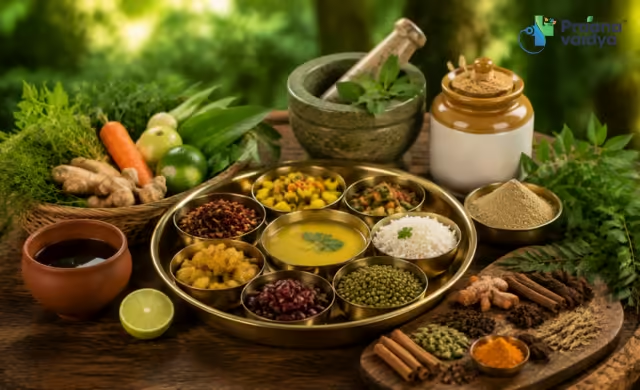

Fasting has been practised in different cultures for centuries, and Ayurveda approaches it through a broader framework that considers digestion, Agni, individual constitution, season, daily routine, and current health status.
Ayurvedic therapeutic fasting refers to traditional dietary practices that temporarily reduce or simplify food intake. Depending on the individual, this may involve eating lighter meals, choosing simpler foods, reducing meal frequency, or following a carefully supervised period of dietary restriction.
The traditional Ayurvedic perspective emphasises respecting the body’s digestive capacity rather than continually placing a heavy dietary load on the digestive system. Heavy meals, overeating, irregular eating patterns, and eating without adequate hunger may be associated with digestive discomfort such as bloating, heaviness, or reduced appetite.
However, therapeutic fasting is not appropriate for everyone. Prolonged or restrictive fasting can create health risks, particularly for children, pregnant or breastfeeding women, people with diabetes, individuals taking certain medications, people with nutritional deficiencies, and those with a current or previous eating disorder.
For this reason, Ayurvedic fasting is best approached as an individualised dietary practice rather than a universal fasting method.
What Is Ayurvedic Therapeutic Fasting?
Ayurvedic therapeutic fasting refers to traditional fasting or dietary-restriction practices intended to temporarily simplify food intake and reduce the digestive workload.
In Ayurveda, digestion is closely associated with Agni, traditionally described as the digestive and metabolic fire. Ayurveda uses concepts such as Agni and Ama to explain different aspects of digestion and food processing. These are traditional Ayurvedic concepts and should not be interpreted as direct equivalents of modern medical diagnoses.
Therapeutic fasting may be considered in traditional Ayurvedic practice when an individual is believed to benefit from temporarily reducing the quantity or complexity of food.
Importantly, Ayurvedic fasting does not always mean complete avoidance of food.
Depending on the individual, it may involve:
- Eating lighter meals
- Simplifying the diet
- Reducing meal frequency
- Avoiding heavy foods temporarily
- Allowing appropriate gaps between meals
- Following a short, supervised fasting routine
The appropriate approach depends on the person’s overall health, nutritional needs, digestive tolerance, and lifestyle.
Why Is Fasting Important in Ayurveda?
Ayurveda places importance on allowing sufficient time for digestion and maintaining a suitable eating routine.
Constant snacking, overeating, eating without hunger, or consuming another meal before feeling ready for it may be considered unfavourable within traditional Ayurvedic dietary principles.
A temporary reduction or simplification of food intake may therefore be used as part of a broader dietary routine.
Traditional Ayurvedic reasoning around fasting may include:
- Simplifying the digestive workload
- Supporting a regular eating routine
- Reducing dietary heaviness
- Encouraging mindful eating
- Reducing unnecessary snacking
- Helping individuals recognise hunger and fullness
- Adapting food intake to individual needs
These principles are traditionally personalised rather than applied in exactly the same way to everyone.
Understanding Agni and Therapeutic Fasting
Agni is one of the central concepts in Ayurvedic discussions of digestion.
Traditionally, Agni is associated with the body’s ability to digest and process food. Ayurveda considers digestive capacity to vary between individuals and to change according to different circumstances.
Factors traditionally considered include:
- Age
- Season
- Physical activity
- Sleep
- Stress
- Meal timing
- Food choices
- Illness
- Daily routine
When digestive capacity is considered reduced, Ayurveda may recommend simpler meals or, in selected situations, a temporary fasting or dietary-restriction approach.
The traditional goal is not simply to consume fewer calories. Instead, the focus is on choosing an eating pattern that is considered appropriate for the individual’s digestive condition and overall circumstances.
Different Forms of Ayurvedic Fasting
There is no single fasting method that represents all Ayurvedic traditions. Different approaches may involve different degrees of dietary restriction.
Light Food Fasting
Instead of completely avoiding food, an individual may consume simple meals that are traditionally considered lighter and easier to digest.
Examples may include:
- Simple rice preparations
- Light vegetable soups
- Cooked grains
- Warm fluids
- Lightly seasoned foods
This approach may be easier to tolerate than complete food deprivation.
Simplified or Single-Food Diet
Some traditional routines involve eating a limited selection of foods for a short period.
The purpose is to simplify food intake rather than necessarily create prolonged calorie restriction.
The specific foods and duration should be selected according to individual requirements.
Meal Reduction
Another approach may involve temporarily reducing the number or size of meals.
For example, an Ayurvedic practitioner may recommend eliminating unnecessary snacks and maintaining suitable gaps between meals.
Liquid-Based Fasting
Some fasting traditions involve consuming liquids during a fasting period.
However, prolonged liquid-only diets can make it difficult to meet nutritional requirements and should not be undertaken casually.
Intermittent Eating Windows
Modern intermittent fasting is sometimes compared with Ayurvedic fasting, but the two approaches are not identical.
Modern intermittent fasting generally uses predetermined eating and fasting windows. Traditional Ayurvedic dietary practices may instead consider factors such as digestion, constitution, season, food suitability, and individual tolerance.
Ayurvedic Therapeutic Fasting and the Three Doshas
Ayurveda describes three doshas:
- Vata
- Pitta
- Kapha
Traditional Ayurvedic practitioners may consider these concepts when developing an individualised dietary approach.
Vata and Fasting
Traditional Ayurvedic descriptions associate Vata with qualities such as movement, lightness, and variability.
Individuals with prominent Vata characteristics may find prolonged food restriction difficult to tolerate. A practitioner may therefore favour a gentler dietary approach.
Extended fasting may be associated with experiences such as:
- Weakness
- Dryness
- Restlessness
- Irregular appetite
These are traditional considerations rather than established medical effects of Vata imbalance.
Pitta and Fasting
Pitta is traditionally associated with heat, transformation, and digestion.
Some individuals may experience significant hunger or discomfort when meals are skipped. A practitioner may therefore recommend avoiding unnecessarily prolonged fasting.
The focus is generally on maintaining an appropriate balance rather than pursuing extreme food restriction.
Kapha and Fasting
Kapha is traditionally associated with qualities such as heaviness, stability, and nourishment.
Traditional Ayurvedic approaches may sometimes favour lighter dietary patterns for individuals showing characteristics associated with excess Kapha.
However, fasting should not be prescribed based solely on dosha classification. Overall health, nutritional status, medications, and individual tolerance also need to be considered.
Potential Benefits of Ayurvedic Therapeutic Fasting
The potential benefits of fasting should be interpreted carefully because traditional Ayurvedic explanations and modern scientific research use different frameworks.
A carefully planned period of simplified eating may help some individuals develop a more structured relationship with food.
Potential benefits may include:
A Simpler Eating Routine
Reducing dietary complexity for a short period may help some individuals establish a simpler meal pattern.
Greater Awareness of Hunger
A structured eating routine may encourage people to distinguish physical hunger from eating triggered by habit, boredom, or emotional cues.
Reduced Unnecessary Snacking
Creating appropriate gaps between meals may help reduce continuous snacking for some individuals.
More Mindful Eating
A more intentional approach to eating may encourage greater awareness of:
- Hunger
- Portion size
- Food choices
- Meal timing
- Eating speed
Dietary Simplification
Temporarily simplifying food choices may help some people observe how they feel after eating different types of meals.
A More Structured Daily Routine
Ayurveda places considerable emphasis on daily routines. Regular meal timing can be incorporated into a broader healthy lifestyle.
These potential benefits should not be interpreted as evidence that therapeutic fasting can prevent or cure specific diseases.
Is Ayurvedic Fasting the Same as Detox Fasting?
Not necessarily.
The term detox is commonly used in wellness and dietary marketing, but the body already has organs and physiological systems, including the liver and kidneys, that perform important waste-processing and elimination functions.
Ayurvedic fasting is better understood within its traditional framework of dietary simplification and digestive support rather than being automatically described as a medical detoxification process.
Fasting should not be promoted as a guaranteed way to remove toxins or cure disease.
How Long Should Ayurvedic Therapeutic Fasting Last?
There is no universally appropriate fasting duration.
The suitability and duration of fasting can depend on:
- Age
- Overall health
- Nutritional status
- Medication use
- Physical activity
- Hydration
- Digestive tolerance
- Pregnancy or breastfeeding
- Existing medical conditions
For some people, simply avoiding unnecessary snacks and choosing lighter meals may be sufficient.
More restrictive fasting should only be considered with appropriate professional guidance.
A longer fast is not automatically a more beneficial fast.
What Can You Eat During a Gentle Ayurvedic Fast?
When an Ayurvedic fasting approach includes food, traditional recommendations often focus on simple preparations.
The exact foods should depend on individual tolerance and nutritional requirements.
Lightly Cooked Foods
Simple cooked foods may be preferred over heavy, fried, or highly processed meals.
Simple Grains
Rice and other suitable grains may be included in a light meal depending on individual dietary needs.
Cooked Vegetables
Well-cooked vegetables can form part of simple meals.
Light Soups
Simple soups may provide fluids and nourishment without making meals excessively heavy.
Herbal Preparations
Some Ayurvedic traditions use herbs or herbal drinks during fasting.
However, natural does not automatically mean risk-free. Certain herbs can interact with medications or cause unwanted effects.
Anyone taking medication or managing a health condition should seek appropriate professional advice before using therapeutic herbs.
Foods Commonly Limited During a Light Ayurvedic Fast
Recommendations vary according to the individual, but a gentle fasting routine may temporarily reduce foods that are:
- Deep-fried
- Highly processed
- Excessively sugary
- Very heavy
- Extremely spicy
- Difficult for the individual to tolerate
- Consumed in excessive quantities
The traditional objective is generally dietary simplicity rather than unnecessary restriction.
The Importance of Hydration
Fasting should not involve deliberately becoming dehydrated.
Fluid requirements vary according to factors such as:
- Climate
- Physical activity
- Body size
- Diet
- Health status
People exercising or spending time in hot environments may have higher fluid requirements.
Anyone experiencing significant dizziness, fainting, confusion, severe weakness, or other concerning symptoms during fasting should stop the fast and seek appropriate medical advice.
Who Should Avoid Therapeutic Fasting?
Fasting can be inappropriate or potentially risky for certain people.
Extra caution is required for:
- Children and adolescents
- Pregnant women
- Breastfeeding women
- Older adults with nutritional concerns
- People with diabetes
- Individuals taking medicines that require food
- People with kidney or liver disease
- Individuals with significant nutritional deficiencies
- People who are underweight
- People recovering from serious illness
- Individuals with a current or previous eating disorder
People with medical conditions should discuss fasting with an appropriate healthcare professional before making major dietary changes.
Ayurvedic Fasting for Digestive Health
Digestive health is one of the areas in which fasting is traditionally discussed in Ayurveda.
Some individuals may consider a gentler dietary routine during periods of temporary digestive heaviness or reduced appetite.
However, fasting should not be used as a substitute for medical evaluation when symptoms are persistent or severe.
Seek appropriate medical advice for symptoms such as:
- Recurrent abdominal pain
- Blood in the stool
- Persistent vomiting
- Unexplained weight loss
- Severe or persistent diarrhoea
- Long-lasting constipation
- Difficulty swallowing
- Persistent or severe heartburn
These symptoms may have different underlying causes and should be properly evaluated.
How to Practise Ayurvedic Therapeutic Fasting Safely
If fasting is considered appropriate, a gradual and sensible approach is preferable.
Assess Your Health
Consider your age, medical history, medications, nutritional needs, activity level, and current symptoms before beginning a fasting routine.
Choose a Gentle Approach
For many people, a lighter and simplified meal plan may be more appropriate than complete food avoidance.
Maintain Adequate Hydration
Drink sufficient fluids unless a healthcare professional has advised you to restrict fluid intake.
Avoid Excessive Physical Stress
Combining prolonged fasting with intense physical activity may increase fatigue and may not be appropriate for everyone.
Pay Attention to Warning Signs
Stop fasting if you develop significant weakness, fainting, persistent dizziness, confusion, or other concerning symptoms.
Resume Normal Eating Gradually
After a period of fasting, avoid immediately consuming a very large or heavy meal.
A simple, balanced meal may be easier to tolerate.
Ayurvedic Fasting vs Modern Intermittent Fasting
Although there can be some overlap, Ayurvedic fasting and modern intermittent fasting are based on different frameworks.
| Ayurvedic Fasting | Modern Intermittent Fasting |
| Traditionally considers digestive capacity | Usually focuses on predetermined eating and fasting windows |
| May consider constitution and dosha concepts | Generally does not use dosha classification |
| Emphasises digestion and food suitability | Often focuses on metabolic or calorie-related outcomes |
| May involve lighter foods rather than complete fasting | Often involves defined periods without food |
| Traditionally personalised | Often follows a predefined schedule |
| Rooted in Ayurvedic dietary principles | Studied within modern nutrition and health research |
Neither approach should automatically be considered suitable for everyone.
Common Mistakes to Avoid During Ayurvedic Fasting
Assuming Longer Fasting Is Better
More restriction does not necessarily mean greater benefit.
Ignoring Medical Conditions
Fasting without considering existing health conditions or medications can create avoidable risks.
Overeating After Fasting
Consuming a very large meal immediately after fasting may cause digestive discomfort.
Neglecting Hydration
Adequate fluid intake remains important unless medically restricted.
Treating Fasting as a Cure
Fasting should not replace diagnosis or appropriate treatment for a medical condition.
Following Someone Else’s Routine
A fasting plan that is suitable for one individual may be inappropriate for another.
Using Fasting as a Substitute for Balanced Nutrition
Repeated restrictive fasting can make it difficult to meet nutritional requirements if not properly planned.
Ayurvedic Therapeutic Fasting: What Does Modern Evidence Say?
Modern research has investigated different forms of fasting, including intermittent fasting and time-restricted eating.
Research has explored possible effects on areas such as body weight and certain metabolic markers. However, findings vary according to the type of fasting, duration, population studied, and health outcome being measured.
Modern research should not automatically be interpreted as proof of every traditional Ayurvedic claim.
Concepts such as Agni, Ama, and dosha balance belong to the traditional Ayurvedic framework and should be presented as traditional concepts rather than established medical diagnoses or mechanisms.
A responsible approach can respect traditional dietary practices while also considering modern nutritional science and appropriate medical evaluation.
How Praanavaidya Can Support an Individualised Ayurvedic Approach
At Praanavaidya, Ayurveda can be approached as a personalised system that considers an individual’s constitution, dietary habits, digestive patterns, lifestyle, and overall health.
Rather than treating fasting as a one-size-fits-all wellness trend, an Ayurvedic consultation can help determine whether a gentler dietary routine is appropriate and how it may fit into the person’s broader lifestyle.
Depending on individual needs, an Ayurvedic wellness plan may focus on:
- Appropriate meal timing
- Digestive-friendly food choices
- Daily routine
- Lifestyle habits
- Seasonal considerations
- Stress management
- Personalised Ayurvedic therapies when appropriate
Any significant or persistent health concern should also receive appropriate medical assessment.
Final Thoughts
Ayurvedic therapeutic fasting is best understood as a traditional and personalised approach to temporarily simplifying food intake rather than as a competition to see how long someone can go without eating.
Ayurveda places considerable emphasis on digestion, appropriate food choices, meal timing, individual constitution, and lifestyle balance. For some healthy adults, a carefully planned period of lighter eating may fit within these traditional principles.
However, fasting is not universally appropriate, and prolonged or restrictive fasting can create health risks. People with medical conditions, nutritional concerns, pregnancy, breastfeeding, medication requirements, or a current or previous eating disorder should seek appropriate professional guidance before fasting.
Ultimately, the most useful approach is not necessarily the most restrictive one. A sustainable routine that supports adequate nourishment, comfortable digestion, and long-term well-being is more valuable than extreme dietary practices.
Visit Us in-
Rajajinagar- 08065903133
Hubballi – 08065903145
Indiranagar- 08065903135
Mumbai-08065903118
Yelahanka- 08065903134
Mangaluru-08065903136
Chamrajpet-08065903132
Delhi-08065903140
Lucknow-08065903130
Frequently Asked Questions About Ayurvedic Therapeutic Fasting
What is Ayurvedic therapeutic fasting?
Ayurvedic therapeutic fasting is a traditional approach that uses temporary dietary restriction or simplified eating as part of an individualised dietary routine. The approach may consider factors such as digestion, constitution, season, lifestyle, and overall health.
Is Ayurvedic fasting the same as intermittent fasting?
No. Although the two may sometimes involve periods without food, Ayurvedic fasting traditionally considers factors such as digestive capacity, constitution, season, and food suitability. Modern intermittent fasting generally focuses on predetermined eating and fasting windows.
Can Ayurvedic fasting improve digestion?
A short period of simplified eating may help some people feel less dietary heaviness, but persistent digestive symptoms should be medically evaluated rather than managed through fasting alone.
Can I drink water while fasting?
Many fasting approaches allow water, but individual requirements vary. People with certain medical conditions may have specific fluid restrictions and should follow professional advice.
Can fasting detox the body?
Ayurvedic fasting is better described as a traditional dietary and digestive practice. Claims that fasting universally removes toxins or cures disease are not scientifically established.
Praanavaidya
Healthcare Professional
Focused on patient-centric care and evidence-based treatment plans.
More from Praanavaidya