Clove is a small spice with a remarkably strong aroma and a long history of culinary and traditional use. Known as Lavanga or Lavang in Ayurveda, clove has traditionally been valued for its warming, aromatic, and stimulating qualities.
It is commonly used in Indian cooking, spice blends, traditional beverages, and selected Ayurvedic preparations. Its distinctive flavour comes largely from eugenol, a naturally occurring aromatic compound found in clove.
The growing interest in the Ayurvedic health benefits of clove has also led to many claims about digestion, oral health, immunity, weight loss, blood sugar, and respiratory health. Some traditional uses have scientific research behind them, but clove should not be presented as a cure for medical conditions.
In Ayurveda, the usefulness of a spice is considered in relation to factors such as Dosha, Agni, Prakriti, Vikriti, season, quantity, and individual tolerance.
What Is Clove?
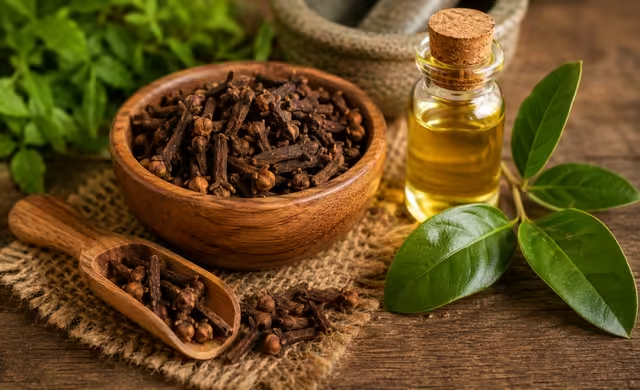
Clove is the dried flower bud of the clove tree, botanically known as Syzygium aromaticum.
Before the flower opens, the buds are harvested and dried. They develop the familiar dark brown colour and intense fragrance associated with the spice.
Cloves are available as:
- Whole dried buds
- Ground clove powder
- Clove-infused preparations
- Clove essential oil
- Culinary spice mixtures
Clove is widely used in cuisines around the world, particularly in South Asian, Middle Eastern, and Southeast Asian cooking.
What Is Clove Called in Ayurveda?
In Ayurveda, clove is commonly known as Lavanga.
Traditional Ayurvedic descriptions consider clove to have strong aromatic and warming qualities. It is often discussed in relation to Kapha and Vata, although its suitability depends on the individual’s overall condition.
Ayurveda does not view an herb or spice as universally beneficial simply because it is traditionally used.
The amount, preparation, timing, and individual constitution all matter.
Ayurvedic Properties of Clove
Traditional Ayurvedic understanding evaluates substances through concepts such as:
- Rasa – taste
- Guna – qualities
- Virya – potency
- Vipaka – post-digestive effect
Clove is generally considered:
- Pungent
- Warming
- Aromatic
- Stimulating
- Relatively light
These traditional qualities help explain why clove has historically been incorporated into preparations intended to support digestion and address sensations associated with coldness or heaviness.
9 Ayurvedic Health Benefits of Clove
1. Traditionally Supports Digestion
One of the most familiar traditional uses of clove is digestive support.
Its warming and aromatic qualities have made it a common ingredient in traditional spice combinations and after-meal preparations.
Clove may be used traditionally when someone experiences occasional:
- Heaviness after meals
- Reduced digestive appetite
- Gas
- Feeling of sluggish digestion
However, persistent bloating, abdominal pain, vomiting, or changes in bowel habits require proper evaluation rather than repeated home remedies.
2. May Help Freshen the Breath
Clove has a long history of traditional oral use.
Its strong aroma can help mask unpleasant breath, while eugenol has demonstrated antimicrobial activity in laboratory and dental applications.
This is one reason clove-derived ingredients have historically appeared in some oral-care preparations.
However, chewing cloves does not replace:
- Tooth brushing
- Flossing
- Professional dental cleaning
- Treatment of gum disease
- Treatment of dental infections
Persistent bad breath can sometimes indicate an underlying dental or medical problem.
3. Traditionally Used for Occasional Tooth Discomfort
Clove is particularly well known for traditional dental use.
Clove oil contains eugenol, which has been used in dentistry in specific formulations.
This does not mean undiluted clove oil should be placed directly on a painful tooth or gum.
Dental pain can result from:
- Tooth decay
- Dental infection
- Cracked teeth
- Gum disease
- Impacted teeth
- Dental trauma
Clove may temporarily affect the sensation of discomfort, but the underlying dental problem still requires appropriate care.
4. Traditionally Used in Respiratory Preparations
Clove’s warming and aromatic nature has led to its inclusion in traditional preparations for seasonal respiratory discomfort.
It is sometimes combined with ingredients such as:
- Ginger
- Black pepper
- Honey
- Cardamom
These combinations are traditionally used in warm beverages and household preparations.
However, clove is not a substitute for treatment of asthma, pneumonia, persistent bronchitis, or other respiratory diseases.
Difficulty breathing, chest pain, or severe wheezing requires prompt medical attention.
5. May Provide Antioxidant Compounds
Clove is rich in naturally occurring plant compounds.
Eugenol and other constituents have demonstrated antioxidant activity in laboratory research.
This contributes to scientific interest in clove as a functional spice.
However, laboratory antioxidant activity should not be interpreted as proof that consuming clove prevents cancer, heart disease, or other illnesses.
A varied diet containing fruits, vegetables, whole grains, legumes, nuts, seeds, and spices provides a broader nutritional foundation.
6. Traditionally Associated With Kapha
Clove is traditionally considered a warming and stimulating spice, making it relevant to Kapha-oriented Ayurvedic approaches.
Kapha is traditionally characterised by qualities such as:
- Heaviness
- Coolness
- Stability
- Slowness
- Moisture
Warming and aromatic spices are often incorporated into dietary approaches intended to counter excessive heaviness and sluggishness.
This does not mean that increasing clove consumption automatically balances Kapha.
The complete lifestyle and dietary pattern matters more than one spice.
7. May Support a Warming Dietary Routine
Clove can be particularly useful as a culinary ingredient during colder seasons.
It can be included in:
- Herbal beverages
- Soups
- Curries
- Rice dishes
- Spice blends
- Warm milk preparations
Its intense flavour means that only a small amount is generally required.
8. Traditionally Used for Oral Freshness
Clove’s intense aroma has made it a traditional ingredient for oral freshness.
Whole cloves may be used occasionally as a flavouring or aromatic spice.
However, excessive chewing may irritate sensitive oral tissues.
Anyone experiencing bleeding gums, persistent mouth ulcers, swelling, or dental pain should seek professional dental advice.
9. May Complement a Balanced Lifestyle
Clove is best viewed as one small part of a broader Ayurvedic lifestyle.
A traditional wellness routine may include:
- Appropriate food
- Regular meal timing
- Adequate sleep
- Physical activity
- Yoga
- Pranayama
- Stress management
- Seasonal adjustments
Adding clove to an otherwise unhealthy routine will not provide the same value as addressing the overall lifestyle.
Clove and Agni in Ayurveda
Agni, or digestive fire, is a central concept in Ayurvedic health.
Traditional Ayurvedic thinking considers whether digestion is strong, weak, irregular, or excessive.
Because clove is traditionally warming and stimulating, it may be incorporated into dietary routines where sluggish digestion is considered prominent.
But more is not necessarily better.
If someone experiences:
- Burning sensation
- Frequent acidity
- Excessive thirst
- Mouth irritation
- Digestive heat
large amounts of pungent spices may not be appropriate.
Final Thoughts
The Ayurvedic health benefits of clove are best understood through its traditional qualities rather than through exaggerated claims about detoxification, rapid weight loss, or disease cures.
Known as Lavanga in Ayurveda, clove is traditionally valued for its warming, pungent, and aromatic nature. It has long been incorporated into food, traditional beverages, oral-care practices, and selected Ayurvedic preparations.
Its traditional relationship with Agni and Kapha-oriented dietary practices makes it an interesting culinary spice, while its strong aroma and eugenol content have also contributed to its longstanding use in oral-care traditions.
At the same time, concentrated clove products—particularly clove essential oil—require considerably more caution than ordinary culinary use. Excessive intake can cause irritation and other adverse effects, and clove should not replace appropriate medical or dental treatment.
From an Ayurvedic perspective, the important question is not simply whether clove is beneficial, but whether its warming and stimulating qualities are appropriate for the individual’s Prakriti, Vikriti, Agni, Dosha pattern, season, and current needs.
At Praanavaidya, personalised Ayurvedic guidance can help determine how traditional herbs and spices may fit into a broader routine involving diet, lifestyle, yoga, and appropriate Ayurvedic therapies.
Clove is best appreciated as a potent traditional spice—not a miracle remedy—and its greatest everyday value may come from using it thoughtfully, moderately, and as part of a balanced lifestyle.
Visit Us in-
Rajajinagar- 08065903133
Hubballi – 08065903145
Indiranagar- 08065903135
Mumbai-08065903118
Yelahanka- 08065903134
Mangaluru-08065903136
Chamrajpet-08065903132
Delhi-08065903140
Lucknow-08065903130
Frequently Asked Questions About the Ayurvedic Health Benefits of Clove
What are the Ayurvedic health benefits of clove?
Clove is traditionally valued for its warming, aromatic, and stimulating qualities. It has commonly been used in Ayurvedic dietary and traditional preparations related to digestion, oral care, and Kapha-oriented routines.
What is clove called in Ayurveda?
Clove is commonly known as Lavanga or Lavang in Ayurveda.
Is clove good for digestion?
Clove is traditionally used to support digestion and is commonly included in warming spice preparations. Persistent digestive symptoms should be evaluated rather than managed solely with clove.
Is clove good for Kapha Dosha?
Its warming and stimulating qualities are traditionally considered compatible with Kapha-oriented approaches. Individual suitability still depends on the person’s overall constitution and condition.
Can clove help with toothache?
Clove and eugenol have a long history in dental care and may temporarily reduce discomfort. However, toothache can indicate decay or infection and requires dental evaluation.
Can clove help with cough?
Clove is traditionally included in warm preparations used for throat and respiratory comfort. It should not be considered a proven treatment for persistent cough or respiratory disease.
Can clove help with weight loss?
Clove is not a standalone weight-loss treatment. It can be used as a flavourful spice within a balanced diet and healthy lifestyle.
Praanavaidya
Healthcare Professional
Focused on patient-centric care and evidence-based treatment plans.
More from Praanavaidya