A few minutes of gentle head massage can turn an ordinary evening into a calming self-care ritual.
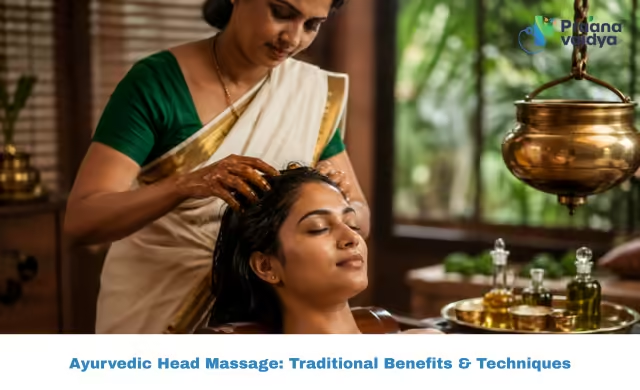
In Ayurveda, this idea is taken further through Shiro Abhyanga, a traditional oil massage practice involving the head and scalp. The practice is traditionally associated with relaxation, scalp nourishment, and supporting a balanced daily routine.
Unlike a modern head massage that may focus primarily on temporary relaxation, Ayurvedic head massage considers factors such as the individual’s constitution, scalp condition, oil selection, season, and overall lifestyle.
It is often performed using warm oil and gentle massage movements across the scalp, forehead, temples, and sometimes the neck and shoulders.
At Praanavaidya, Ayurvedic consultations may include personalised guidance on traditional oil massage practices according to an individual’s constitution, lifestyle, and health needs.
What Is Ayurvedic Head Massage?
Ayurvedic head massage is a traditional practice involving gentle massage of the scalp and head, often using an Ayurvedic oil.
One traditional form is called Shiro Abhyanga.
The word Shiro refers to the head, while Abhyanga refers broadly to oil massage.
Depending on the traditional approach, massage may include:
- Scalp
- Forehead
- Temples
- Behind the ears
- Neck
- Upper shoulders
The movements should generally be comfortable and controlled rather than aggressive.
Why Does Ayurveda Emphasise Head Massage?
Ayurveda places considerable importance on daily self-care.
The head is traditionally considered an important region containing sensory organs and structures associated with the nervous system.
Traditional Ayurvedic oil massage is therefore used as part of broader approaches to:
- Relaxation
- Scalp care
- Supporting comfortable sleep
- Maintaining healthy hair and scalp
- Reducing the feeling of physical tension
These are traditional Ayurvedic perspectives and should not be interpreted as proof that massage can treat neurological or medical disorders.
Traditional Benefits of Ayurvedic Head Massage
1. Promotes Relaxation
One of the most noticeable effects of a gentle head massage can be relaxation.
Slow, repetitive movements across the scalp may help create a calming experience, particularly after a stressful day.
It can be incorporated into an evening routine to help the body transition from work and activity toward rest.
2. Helps Release Scalp and Facial Tension
People may unconsciously tighten the forehead, jaw, temples, and scalp when concentrating or experiencing stress.
Gentle massage can help these areas feel more relaxed.
It may be particularly useful for people who spend long periods:
- Working at a computer
- Looking at screens
- Studying
- Driving
- Concentrating intensely
3. Supports Scalp Moisturisation
Oil massage can provide emollient properties that help reduce the feeling of dryness on the scalp.
This may be particularly comfortable for people with a dry scalp.
However, oil is not suitable for every scalp condition.
People with oily scalp, dandruff, seborrheic dermatitis, or folliculitis may need a different approach.
4. May Make Hair Feel Softer
Applying a suitable oil to the hair and scalp can reduce the feeling of dryness and make hair feel smoother.
However, this is different from proving that oil massage can permanently increase hair growth.
Hair loss has many possible causes and should be evaluated when persistent.
5. Creates a Mindful Self-Care Ritual
An important benefit of head massage Ayurveda practices is the opportunity to slow down.
Instead of treating hair care as another rushed task, a short massage can become a deliberate period of relaxation.
Ayurvedic Head Massage and Doshas
Ayurveda describes three Doshas:
- Vata
- Pitta
- Kapha
Traditional oil and massage recommendations may vary according to the qualities associated with these Doshas.
Vata
Vata is traditionally associated with dryness, lightness, and movement.
An Ayurvedic approach may favour warm, nourishing oils and gentle massage for Vata-related patterns.
Pitta
Pitta is associated with heat and intensity.
A person experiencing heat or scalp sensitivity may require a gentler approach and an appropriately selected oil.
Very hot oil or vigorous massage may not be suitable.
Kapha
Kapha is traditionally associated with heaviness and oiliness.
People with an oily scalp may not need frequent heavy oil application.
This is why there is no universally appropriate oil or massage schedule.
Which Oil Is Used for Ayurvedic Head Massage?
The choice depends on the person’s scalp, hair, constitution, season, and purpose of the massage.
Commonly used oils include:
Sesame Oil
Sesame oil is traditionally important in Ayurveda and is often associated with Vata-balancing routines.
It can feel nourishing and warming.
Coconut Oil
Coconut oil is commonly used in traditional hair care and can feel cooling and moisturising.
It may be preferred in certain situations but is not suitable for everyone.
Brahmi-Based Oils
Ayurvedic formulations containing Brahmi and other herbs are traditionally used in head and scalp care.
Their suitability depends on the specific formulation and individual needs.
Bhringraj-Based Oils
Bhringraj is traditionally associated with Ayurvedic hair care.
Oils containing Bhringraj may be used as part of traditional scalp-care routines.
The use of herbal oils should be guided by a qualified practitioner when there are specific scalp or health concerns.
How to Choose the Right Ayurvedic Head Massage Oil
Consider:
- Scalp type
- Hair type
- Dryness or oiliness
- Sensitivity
- Existing scalp conditions
- Allergies
- Climate
- Season
- Ayurvedic constitution
For example, applying a heavy oil to an already oily or inflamed scalp may not be comfortable.
More oil is not automatically better.
How to Practise Ayurvedic Head Massage at Home
A simple scalp massage does not require complicated techniques.
Step 1: Choose a Suitable Oil
Use a small amount of an oil that is appropriate for your scalp.
If using a new product, patch testing can help identify sensitivity.
Step 2: Warm the Oil Gently
The oil can be slightly warmed to a comfortable temperature.
It should never be hot enough to burn or irritate the scalp.
Step 3: Apply the Oil
Part the hair gently and apply small amounts of oil to the scalp.
You do not need to soak the entire scalp.
Step 4: Use the Fingertips
Place your fingertips on the scalp and use gentle circular movements.
Avoid scratching with your fingernails.
Step 5: Work Across the Scalp
Gradually massage:
- Front scalp
- Crown
- Sides
- Back of the head
Keep the pressure comfortable.
Step 6: Massage the Temples
Use small circular movements around the temples.
Avoid excessive pressure.
Step 7: Include the Neck
If comfortable, gently massage the sides and back of the neck.
Avoid forceful pressure over the front of the neck.
How Long Should an Ayurvedic Head Massage Last?
A home scalp massage can take approximately 5–15 minutes.
There is no need to massage for an extended period to obtain the benefits of relaxation.
Comfort and consistency are more important than duration.
A professional Ayurvedic therapy may follow a different protocol depending on the individual’s condition.
How Often Should You Do Ayurvedic Head Massage?
There is no universal frequency.
Some people may enjoy a short massage several times per week, while others may prefer once weekly.
Frequency should depend on:
- Scalp type
- Oil used
- Season
- Lifestyle
- Hair-washing routine
- Skin sensitivity
- Existing scalp conditions
If oiling repeatedly causes itching, acne-like bumps, dandruff, or increased scalp irritation, stop and reassess the practice.
Should You Massage Your Head Before Bed?
An evening head massage can be incorporated into a relaxing bedtime routine.
Some people find gentle massage calming.
A simple evening routine might be:
Warm oil → gentle scalp massage → quiet time → wash according to hair needs → sleep
However, there is no requirement to sleep with oil on the scalp.
Leaving oil overnight may not be suitable for everyone.
Does Ayurvedic Head Massage Improve Hair Growth?
This is one of the most common questions.
Traditional Ayurvedic hair care often includes oil massage, but it should not be presented as a guaranteed treatment for hair loss.
Hair growth can be affected by:
- Genetics
- Hormonal changes
- Nutritional deficiencies
- Thyroid disorders
- Stress
- Medications
- Scalp diseases
- Autoimmune conditions
Massage may support scalp care and relaxation, but persistent hair loss requires appropriate evaluation.
Can Head Massage Help With Headaches?
Some people find gentle massage relaxing when experiencing tension around the scalp, temples, neck, or shoulders.
However, headaches have many possible causes.
A severe, sudden, recurrent, or unusual headache should not be treated solely with massage.
Seek medical evaluation if headaches are:
- Sudden and severe
- Associated with weakness
- Associated with vision changes
- Accompanied by confusion
- Associated with fainting
- Accompanied by fever or neck stiffness
- Increasing in frequency or severity
Ayurvedic Head Massage and Sleep
Relaxation before bedtime can support a calming routine.
A gentle head massage may help some people feel relaxed before sleep, particularly when incorporated with:
- Reduced screen exposure
- Dim lighting
- Quiet surroundings
- Regular bedtime
- Slow breathing
It should be viewed as a relaxation practice rather than a guaranteed treatment for insomnia.
Persistent sleep problems deserve proper evaluation.
What Not to Do During Head Massage
Avoid:
- Scratching the scalp
- Pulling the hair
- Using very hot oil
- Applying excessive pressure
- Using too much oil
- Massaging over open wounds
- Applying unknown herbal products
- Continuing massage when irritation develops
Gentle technique is usually preferable.
A Simple Ayurvedic Hair and Scalp Routine
A practical routine could look like this:
Once or Twice a Week
Use a suitable oil and gently massage the scalp for several minutes.
Regularly
Wash the scalp according to your hair and scalp needs.
Daily
Avoid excessive heat styling, harsh chemical treatments, and tight hairstyles when possible.
Long Term
Maintain a balanced diet, adequate sleep, regular physical activity, and appropriate stress management.
If significant hair loss develops, seek professional evaluation rather than relying solely on home remedies.
Conclusion
Ayurvedic head massage is a simple traditional practice that can be incorporated into a broader self-care routine. Known in Ayurveda through practices such as Shiro Abhyanga, it commonly involves applying suitable oil to the scalp and using gentle massage movements across the head.
Its traditional role is associated with relaxation, scalp nourishment, comfortable hair care, and maintaining a calming daily routine.
The practice does not need to be complicated. A small amount of suitable oil, comfortable pressure, and a few minutes of mindful massage can be enough for a simple home routine.
However, the right oil and frequency depend on the individual. Oily scalps, sensitive skin, active scalp conditions, and unexplained hair loss require additional consideration.
At Praanavaidya, Ayurvedic consultations can help determine whether head massage, specific oils, dietary changes, lifestyle practices, or other Ayurvedic approaches are appropriate for your individual needs.
Visit Us in-
Rajajinagar- 08065903133
Hubballi – 08065903145
Indiranagar- 08065903135
Mumbai-08065903118
Yelahanka- 08065903134
Mangaluru-08065903136
Chamrajpet-08065903132
Delhi-08065903140
Lucknow-08065903130
Frequently Asked Questions
What is Ayurvedic head massage?
Ayurvedic head massage is a traditional scalp and head massage practice, often involving oil and gentle movements. Shiro Abhyanga is a traditional Ayurvedic form of head oil massage.
What is Shiro Abhyanga?
Shiro Abhyanga refers to Ayurvedic oil massage of the head and scalp. It is traditionally used as part of personal care and relaxation practices.
Which oil is best for Ayurvedic head massage?
There is no single oil that is ideal for everyone. Sesame, coconut, Brahmi-based, and Bhringraj-based oils may be used depending on individual needs.
How often should I do Ayurvedic head massage?
Frequency varies according to scalp type, oil, season, and individual tolerance. Some people may prefer once or twice a week, while others may use shorter sessions more frequently.
Can Ayurvedic head massage stop hair fall?
Massage should not be considered a guaranteed treatment for hair loss. Persistent hair fall can have nutritional, hormonal, genetic, autoimmune, or scalp-related causes and may require professional evaluation.
Is it safe to leave oil on the scalp overnight?
Not necessarily for everyone. People with oily, acne-prone, or sensitive scalps may experience irritation or buildup from prolonged oil application.
Can head massage help with stress?
Gentle head massage can be a relaxing self-care practice and may help reduce the feeling of physical tension. It should not be considered a standalone treatment for chronic stress or mental health conditions.
Praanavaidya
Healthcare Professional
Focused on patient-centric care and evidence-based treatment plans.
More from Praanavaidya