One of the most common questions people ask before beginning Ayurvedic detoxification is how often to do Panchakarma. Some believe it should be done every month, while others think a single session is enough for life. In reality, there is no one-size-fits-all answer.
According to Ayurveda, the frequency of Panchakarma depends on several factors, including your body constitution (Prakriti), current Dosha imbalance, age, lifestyle, digestive health, medical conditions, and even the season. Rather than following a fixed schedule, Panchakarma is planned according to each individual’s needs.
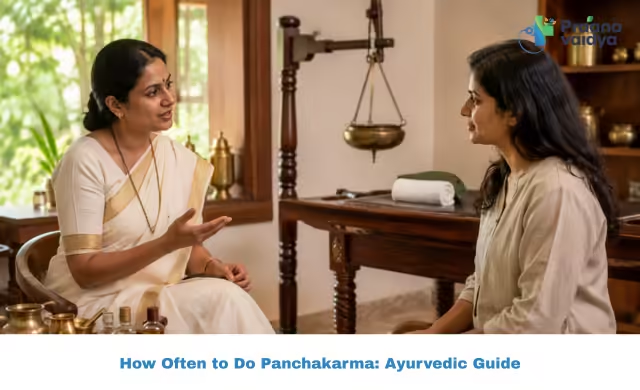
At Praanavaidya, experienced Ayurvedic physicians carefully assess every patient before recommending Panchakarma. The goal is to ensure that the therapies are appropriate, safe, and aligned with the person’s overall health.
In this article, we’ll explain how often to do Panchakarma, the factors that influence its frequency, the best seasons for treatment, and why personalised planning is essential.
What Is Panchakarma?
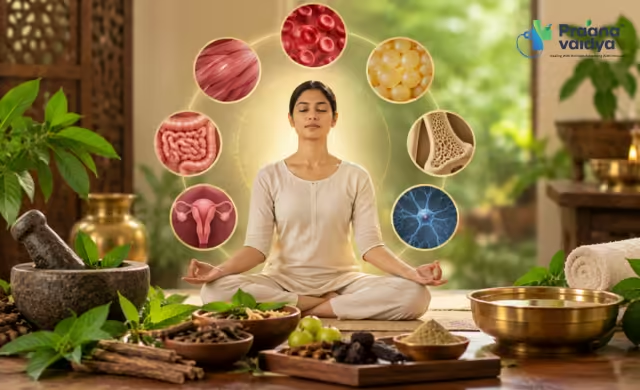
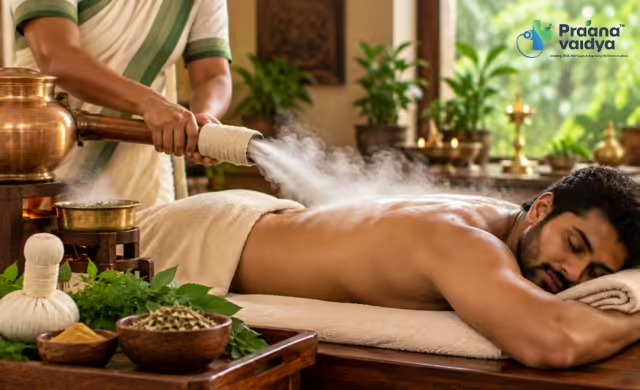
Panchakarma is a group of classical Ayurvedic purification therapies designed to eliminate accumulated Doshas and support the body’s natural balance. The word Panchakarma literally means “five actions,” referring to five principal therapeutic procedures described in Ayurveda.
Depending on the individual’s condition, Panchakarma may include therapies such as:
- Vamana (therapeutic emesis)
- Virechana (therapeutic purgation)
- Basti (medicated enemas)
- Nasya (nasal therapy)
- Raktamokshana (bloodletting procedures in selected cases)
Not every patient undergoes all five therapies. The treatment plan is customised after a detailed Ayurvedic consultation.
Is Panchakarma a One-Time Treatment?
No.
Many people assume Panchakarma is a treatment that needs to be done only once. However, Ayurveda views health as a dynamic process. Daily habits, diet, stress, environmental factors, seasonal changes, and ageing can gradually influence the balance of the Doshas.
Just as regular exercise and healthy eating support long-term wellness, Panchakarma may be recommended periodically depending on an individual’s health status.
For some people, one course of treatment may be sufficient for a long period, while others with chronic conditions may benefit from more frequent physician-supervised therapies.
How Often to Do Panchakarma According to Ayurveda
The answer to how often to do Panchakarma varies from person to person.
Generally, Ayurvedic physicians may recommend:
Once a Year
Many healthy individuals choose to undergo Panchakarma once a year as part of their preventive healthcare routine.
Annual Panchakarma is often planned around seasonal transitions, when Dosha imbalances are believed to become more prominent.
Twice a Year
Some individuals may benefit from Panchakarma twice a year, particularly if they experience recurring seasonal health concerns or have lifestyles that contribute to frequent Dosha imbalance.
The decision is always based on professional assessment rather than a fixed rule.
As Part of Managing Chronic Conditions
Patients with chronic health conditions may require Panchakarma at different intervals depending on:
- The nature of the illness
- Severity of symptoms
- Response to previous treatment
- Overall health
- Physician recommendations
Treatment frequency should never be determined without medical guidance.
Does Everyone Need Panchakarma Every Year?
Not necessarily.
While annual Panchakarma is often discussed in Ayurveda, it is not mandatory for everyone.
Some individuals may not require intensive detoxification, while others may benefit from simpler seasonal therapies, dietary adjustments, or lifestyle modifications instead.
The physician considers several factors before making recommendations.
Factors That Influence How Often to Do Panchakarma
Several factors determine the ideal frequency.
Body Constitution (Prakriti)
Each person has a unique constitutional balance of Vata, Pitta, and Kapha.
Some constitutions are naturally more prone to specific imbalances and may require different treatment schedules.
Current Dosha Imbalance
The physician evaluates whether one or more Doshas are aggravated and whether Panchakarma is the most appropriate method for restoring balance.
Age
Age influences both the body’s strength and its ability to undergo purification therapies.
Treatment intensity and frequency may differ for younger adults, older adults, and children.
Existing Medical Conditions
People living with chronic disorders often require carefully individualised treatment plans.
The type of illness, stage of the disease, and overall health determine whether Panchakarma is suitable and how often it may be repeated.
Lifestyle
Irregular sleep, high stress, poor dietary habits, prolonged sitting, environmental pollution, and physically demanding work may all influence Dosha balance.
Lifestyle is therefore an important consideration when planning Panchakarma.
Digestive Health (Agni)
Ayurveda considers Agni, or digestive fire, to be central to health.
Healthy digestion supports proper nourishment of tissues, while weak digestion may contribute to the formation of Ama, described as incompletely processed metabolic waste.
Assessing digestive health helps determine whether purification therapies are appropriate.
Why Are Seasons Important?
Ayurveda places great emphasis on Ritucharya, or seasonal living.
Different seasons naturally influence the Doshas.
For example:
- Spring is often associated with Kapha aggravation.
- Summer may increase Pitta.
- Rainy and colder seasons may aggravate Vata.
For this reason, Panchakarma is frequently planned during seasonal transitions when the body is considered more receptive to balancing therapies.
However, the most suitable timing depends on the individual’s health and should always be decided after consultation.
Signs That You May Benefit from an Ayurvedic Consultation
Rather than deciding how often to do Panchakarma on your own, it is better to consult an Ayurvedic physician if you experience:
- Persistent fatigue
- Frequent digestive discomfort
- Recurrent seasonal illnesses
- Joint stiffness
- Chronic stress
- Sleep disturbances
- Feeling of heaviness
- Reduced energy
- Difficulty maintaining general well-being
These symptoms do not automatically mean Panchakarma is required, but they may indicate the need for a professional evaluation.
Conclusion
Understanding how often to do Panchakarma begins with understanding that Ayurveda does not recommend the same treatment schedule for everyone. The ideal frequency depends on your body constitution, Dosha imbalance, digestive health, lifestyle, age, and overall medical condition.
Rather than viewing Panchakarma as a routine annual detox, Ayurveda considers it a personalised therapeutic process that should be planned only after careful evaluation. When appropriately recommended, Panchakarma may support overall well-being, seasonal balance, and long-term health as part of a comprehensive Ayurvedic care plan.
At Praanavaidya, experienced Ayurvedic physicians carefully assess each individual before recommending Panchakarma or any other therapy. If you are considering Ayurvedic detoxification and want to know how often to do Panchakarma, schedule a consultation with a qualified Ayurvedic physician who can develop a treatment plan based on your unique health needs.
Visit Us in-
Rajajinagar- 08065903133
Hubballi – 08065903145
Indiranagar- 08065903135
Mumbai-08065903118
Yelahanka- 08065903134
Mangaluru-08065903136
Chamrajpet-08065903132
Delhi-08065903140
Lucknow-08065903130
Frequently Asked Questions
How often should healthy people do Panchakarma?
Many healthy individuals choose to undergo Panchakarma once a year as part of preventive Ayurvedic care. However, the ideal frequency depends on individual assessment.
Can Panchakarma be done every month?
Classical Panchakarma is generally not intended as a monthly detox routine. Frequent treatments should only be performed when specifically recommended by a qualified Ayurvedic physician.
Is Panchakarma necessary if I feel healthy?
Not always. Some people may benefit more from dietary improvements, seasonal routines, and healthy lifestyle practices. A consultation helps determine whether Panchakarma is appropriate.
What is the best season for Panchakarma?
Seasonal transitions are commonly considered favourable in Ayurveda, but the best time varies according to the individual’s Dosha balance, health condition, and physician’s advice.
How long does a Panchakarma programme usually last?
The duration depends on the therapies selected and the individual’s health. Some programmes may last several days, while more comprehensive treatment plans may continue for longer under medical supervision.
Praanavaidya
Healthcare Professional
Focused on patient-centric care and evidence-based treatment plans.
More from Praanavaidya