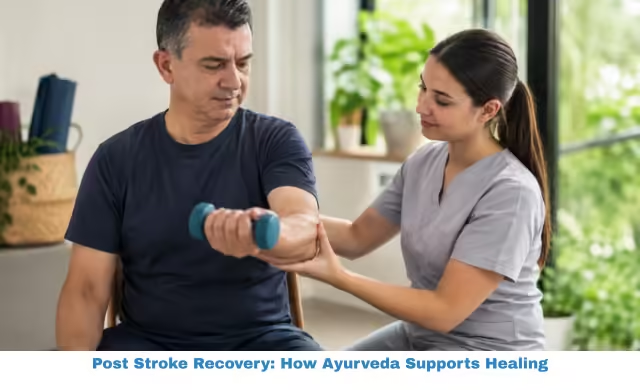
Post Stroke Recovery is often a gradual journey that extends well beyond emergency treatment and hospital care. While immediate medical intervention plays a vital role in saving lives and limiting brain damage, rehabilitation is equally important in helping individuals regain strength, mobility, independence, and confidence.
At Praanavaidya, rehabilitation after stroke is approached through the principles of Ayurveda while complementing modern medical care. Once a patient is medically stable, experienced Ayurvedic physicians perform a detailed assessment and design an individualized treatment plan aimed at supporting mobility, reducing stiffness, improving muscle strength, and enhancing overall quality of life.
Recovery after a stroke varies greatly from person to person. Some individuals regain function within weeks, while others require months of rehabilitation involving physiotherapy, occupational therapy, speech therapy, nutritional support, and continuous medical supervision. Ayurveda offers supportive therapies that work alongside these conventional rehabilitation methods rather than replacing them.
In this article, you’ll learn what Post Stroke Recovery involves, how Ayurveda interprets stroke-related disorders, the therapies commonly recommended, lifestyle modifications that support recovery, and how personalised Ayurvedic care can become part of a comprehensive rehabilitation journey.
Understanding Post Stroke Recovery
A stroke occurs when the blood supply to part of the brain is interrupted, either because of a blockage (ischaemic stroke) or bleeding within the brain (haemorrhagic stroke). Without adequate oxygen and nutrients, brain cells become damaged, affecting movement, speech, memory, sensation, and coordination.
Post Stroke Recovery refers to the rehabilitation period following the acute medical phase. During this time, the brain gradually adapts while patients work to regain lost physical and neurological functions through structured rehabilitation.
Recovery may continue for months or even years depending on the severity of the stroke, the area of the brain affected, age, overall health, and consistency of rehabilitation.
Common Challenges After a Stroke
Stroke survivors may experience one or more of the following:
- Weakness or paralysis on one side of the body
- Difficulty walking
- Muscle stiffness or spasticity
- Poor balance and coordination
- Difficulty speaking or understanding language
- Difficulty swallowing
- Reduced hand function
- Memory and concentration problems
- Fatigue
- Emotional changes such as anxiety or depression
Every person’s recovery journey is unique, making personalised rehabilitation essential.
Why Early Rehabilitation Is Important
The rehabilitation process usually begins as soon as the treating medical team considers the patient stable.
Early rehabilitation helps:
- Improve muscle strength
- Restore mobility
- Prevent muscle shortening and joint stiffness
- Improve balance and coordination
- Increase independence in daily activities
- Reduce long-term disability
- Improve emotional confidence
Successful recovery often requires collaboration between neurologists, physiotherapists, occupational therapists, speech therapists, dietitians, and rehabilitation specialists.
How Ayurveda Understands Stroke
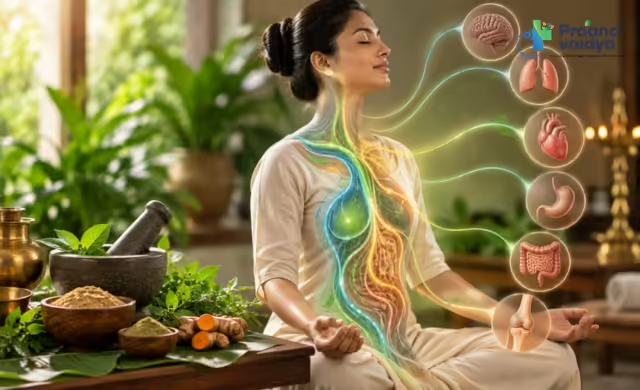
In Ayurveda, stroke-like conditions are broadly described under Pakshaghata, one of the disorders primarily associated with aggravated Vata Dosha.
Vata governs:
- Movement
- Nervous system function
- Muscle activity
- Coordination
- Communication between the brain and body
When Vata becomes severely disturbed, movement, muscle control, and sensory functions may become impaired.
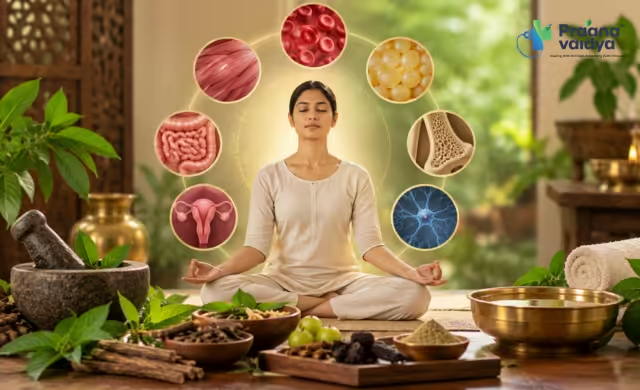
The Ayurvedic approach focuses on calming aggravated Vata while supporting gradual restoration of strength, flexibility, and overall body function.
Ayurvedic Goals During Post Stroke Recovery
The objective of Ayurvedic management is to support rehabilitation by:
- Improving muscle strength
- Supporting mobility
- Reducing stiffness
- Improving flexibility
- Supporting circulation
- Nourishing the nervous system
- Promoting better quality of life
- Enhancing physical function
Treatment is always individualised based on the patient’s age, constitution (Prakriti), recovery stage, and current health status.
Ayurvedic Therapies That May Support Recovery
Following a comprehensive consultation, an Ayurvedic physician may recommend therapies suited to the individual’s rehabilitation needs.
Abhyanga (Therapeutic Oil Massage)
Abhyanga involves rhythmic massage using warm medicated oils.
Traditionally, it is used to:
- Improve circulation
- Reduce stiffness
- Support joint flexibility
- Calm aggravated Vata
- Promote relaxation
Basti Therapy
Basti is regarded as one of Ayurveda’s principal therapies for balancing Vata Dosha.
Depending on the patient’s condition, medicated oil or herbal decoction enemas may be advised under physician supervision as part of a broader Panchakarma programme.
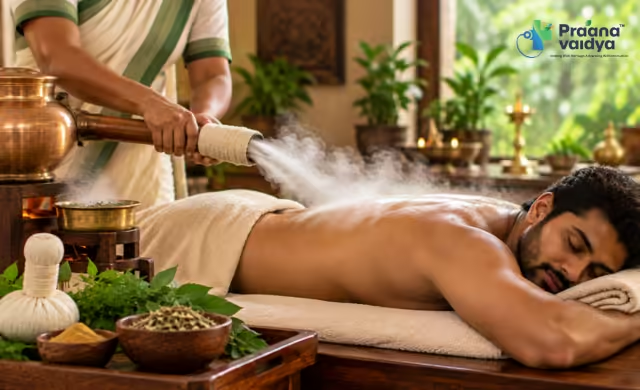
Swedana (Herbal Steam Therapy)
Controlled herbal steam therapy may help:
- Relax muscles
- Improve flexibility
- Reduce stiffness
- Support circulation
Nasya
For selected individuals, Nasya may be incorporated into a comprehensive treatment plan after careful evaluation by an Ayurvedic physician.
Diet During Recovery
Nutrition plays a major role in supporting rehabilitation.
Ayurveda generally recommends:
- Freshly prepared meals
- Seasonal fruits
- Green vegetables
- Whole grains
- Easily digestible foods
- Healthy fats in moderation
- Adequate hydration
Patients are often advised to reduce:
- Highly processed foods
- Deep-fried foods
- Excess sugar
- Excess salt
- Alcohol
- Smoking
Dietary recommendations should always be personalised.
Can Ayurveda Replace Conventional Stroke Treatment?
No.
Stroke is a medical emergency requiring immediate hospital treatment.
Ayurveda should never replace emergency medical care, neurological treatment, prescribed medications, or rehabilitation programmes.
Instead, Ayurvedic care is generally introduced after medical stabilisation as a complementary approach alongside conventional rehabilitation.
Conclusion
Post Stroke Recovery requires patience, consistency, and a multidisciplinary rehabilitation approach. While emergency medical treatment addresses the immediate effects of stroke, long-term recovery depends on structured rehabilitation, physiotherapy, healthy nutrition, emotional support, and regular follow-up.
At Praanavaidya, Ayurvedic rehabilitation is designed to complement conventional stroke care—not replace it. After a detailed consultation, experienced Ayurvedic physicians create personalised treatment plans that may include appropriate Panchakarma therapies, herbal medicines, dietary guidance, and lifestyle recommendations based on each patient’s recovery stage and overall health.
If you or a loved one is recovering from a stroke, continue regular follow-up with your neurologist and rehabilitation team. A consultation with the Ayurvedic physicians at Praanavaidya can help determine whether supportive Ayurvedic therapies may safely complement your ongoing rehabilitation programme.
Visit Us At –
Rajajinagar- 08065903133
Hubballi – 08065903145
Indiranagar- 08065903135
Mumbai-08065903118
Yelahanka- 08065903134
Mangaluru-08065903136
Chamrajpet-08065903132
Frequently Asked Questions
How long does Post Stroke Recovery take?
Recovery varies considerably. Some individuals recover within weeks, while others continue rehabilitation for months or years depending on the severity of the stroke and consistency of treatment.
Can Ayurveda cure paralysis after stroke?
Ayurveda does not claim to cure paralysis. It may support rehabilitation by improving mobility, reducing stiffness, and enhancing quality of life alongside conventional medical care.
Which Ayurvedic therapies are commonly recommended?
Depending on individual assessment, therapies such as Abhyanga, Pizhichil, Basti, Swedana, and Nasya may be recommended.
Can Ayurveda and physiotherapy be used together?
Yes. Ayurvedic therapies are commonly used as complementary approaches alongside physiotherapy and conventional rehabilitation after medical stabilisation.
Is every stroke patient suitable for Ayurvedic treatment?
No. Suitability depends on the patient’s medical condition, recovery stage, existing illnesses, and physician evaluation.
Praanavaidya
Healthcare Professional
Focused on patient-centric care and evidence-based treatment plans.
More from Praanavaidya