Your heart races even while you’re sitting still. You feel unusually warm when everyone else seems comfortable. Despite eating well, you’re losing weight, sleeping poorly, and feeling anxious for no obvious reason.
For many people, these symptoms eventually lead to a diagnosis of hyperthyroidism, a condition where the thyroid gland becomes overactive and produces excessive thyroid hormones.
While conventional medicine plays a vital role in diagnosing and managing hyperthyroidism, many patients also look for ways to improve their overall well-being, reduce stress, and support long-term health. This is where Ayurvedic treatment for hyperthyroidism may serve as a complementary approach.
At Praanavaidya, Ayurvedic physicians evaluate each individual beyond laboratory reports. They assess digestive health, Dosha balance, lifestyle, stress levels, sleep quality, and overall body constitution before creating a personalized treatment plan.
This article explains how Ayurveda understands hyperthyroidism, what treatments may be recommended, and how holistic care can support your thyroid health.
Understanding Hyperthyroidism Beyond the Thyroid Gland
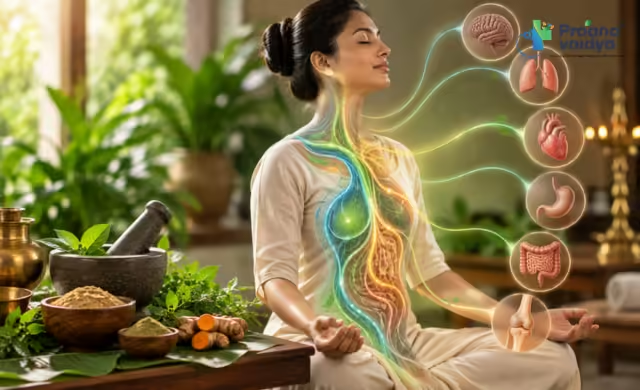
The thyroid is a small butterfly-shaped gland located in the front of your neck. Although small, it influences nearly every organ by producing hormones that regulate metabolism.
When the thyroid becomes overactive, your body’s systems begin working faster than they should.
Common causes include:
- Graves’ disease
- Toxic thyroid nodules
- Thyroiditis
- Excess iodine intake
- Certain medications
- Rare pituitary disorders
Because metabolism speeds up, multiple organs may be affected—not just the thyroid itself.
How an Overactive Thyroid Can Affect Your Entire Body
Hyperthyroidism doesn’t simply cause weight loss.
It can influence almost every body system.
Physical Changes
Many people notice:
- Unexplained weight loss
- Rapid heartbeat
- Palpitations
- Excessive sweating
- Tremors
- Heat intolerance
- Muscle weakness
Digestive Changes
An overactive thyroid often speeds digestion, leading to:
- Increased appetite
- Frequent bowel movements
- Loose stools
Emotional Changes
Excess thyroid hormones can also affect mental well-being.
Some patients experience:
- Anxiety
- Restlessness
- Irritability
- Difficulty concentrating
- Sleep disturbances
Since these symptoms develop gradually, they are sometimes mistaken for stress or lifestyle problems before the correct diagnosis is made.
How Ayurveda Understands Hyperthyroidism
Although classical Ayurvedic texts do not describe hyperthyroidism by the same modern medical name, many of its features can be understood through disturbances in multiple physiological principles.
Rather than focusing only on the thyroid gland, Ayurveda evaluates how the entire body’s regulatory systems have become imbalanced.
In many patients, physicians observe:
Aggravated Pitta
Pitta governs metabolism and transformation.
When excessively increased, it may manifest as:
- Heat intolerance
- Excess sweating
- Increased appetite
- Irritability
- Inflammatory tendencies
Disturbed Vata
As metabolism accelerates, Vata may also become aggravated, contributing to:
- Tremors
- Anxiety
- Poor sleep
- Weight loss
- Restlessness
Tikshna Agni
Ayurveda describes an overly sharp digestive fire known as Tikshna Agni.
People may feel constantly hungry yet continue losing weight because tissues are not nourished efficiently.
Ojas Depletion
Long-standing hyperthyroidism may gradually weaken Ojas—the body’s vital essence associated with strength, immunity, and resilience.
This explains why some patients feel exhausted despite appearing energetic.
Why Managing Stress Matters
Stress does not directly cause hyperthyroidism, but it can aggravate symptoms.
Poor sleep, chronic anxiety, emotional strain, and an irregular lifestyle may worsen:
- Palpitations
- Nervousness
- Fatigue
- Digestive disturbances
For this reason, Ayurvedic care places significant emphasis on restoring mental calmness alongside physical health.
How Praanavaidya Approaches Hyperthyroidism
Every patient’s experience is different.
Instead of offering identical treatment plans, Praanavaidya physicians follow a structured assessment process.
Step 1: Comprehensive Ayurvedic Consultation
The consultation includes evaluation of:
- Medical history
- Current symptoms
- Digestive health
- Sleep quality
- Emotional well-being
- Dosha predominance
- Lifestyle habits
Laboratory investigations and previous medical reports are also reviewed wherever available.
Step 2: Understanding the Root Imbalance
Rather than focusing solely on hormone levels, physicians identify contributing factors such as:
- Aggravated Pitta
- Vata imbalance
- Digestive disturbances
- Accumulated Ama
- Poor dietary habits
- Chronic stress
This helps create an individualized treatment strategy.
Step 3: Personalized Herbal Medicines
Ayurvedic treatment for hyperthyroidism may include physician-prescribed herbal formulations selected according to each patient’s constitution and clinical presentation.
The goals may include:
- Supporting healthy metabolism
- Improving digestion
- Balancing Doshas
- Promoting overall vitality
- Supporting better sleep and emotional well-being
Self-medication is not recommended.
Step 4: Panchakarma Therapies When Appropriate
Not every patient requires Panchakarma.
When clinically suitable, therapies may be recommended as part of a broader treatment plan.
Daily Habits That Support Thyroid Health
Small lifestyle changes often make a meaningful difference.
Your physician may recommend:
- Sleeping before 10:30 PM
- Eating meals at regular times
- Gentle yoga
- Daily meditation
- Breathing exercises
- Walking
- Reducing screen time before bed
- Managing work-related stress
Consistency is more important than perfection.
What Happens If Hyperthyroidism Is Ignored?
Without appropriate medical care, prolonged hyperthyroidism may increase the risk of complications such as:
- Heart rhythm disturbances
- Bone loss
- Muscle weakness
- Eye complications in Graves’ disease
- Reduced quality of life
Rarely, severe untreated hyperthyroidism can lead to thyroid storm, a life-threatening medical emergency.
Early diagnosis and regular medical follow-up are essential.
Begin Your Journey Towards Better Thyroid Health
Living with hyperthyroidism can affect your energy, emotions, sleep, digestion, and overall quality of life. While conventional treatment remains essential, Ayurvedic treatment for hyperthyroidism offers a holistic perspective that focuses on balancing the body, supporting digestion, improving lifestyle habits, and promoting overall wellness.
At Praanavaidya, our experienced Ayurvedic physicians develop personalized treatment plans tailored to your unique constitution and health needs. If you’re looking for comprehensive thyroid care that combines traditional Ayurvedic wisdom with responsible clinical practice, schedule a consultation with our team today and take the first step toward better long-term health.
Visit Us At –
Rajajinagar- 08065903133
Hubballi – 08065903145
Indiranagar- 08065903135
Mumbai-08065903118
Yelahanka- 08065903134
Mangaluru-08065903136
Chamrajpet-08065903132
Frequently Asked Questions
Is Ayurveda effective for hyperthyroidism?
Ayurveda may help support overall health, improve quality of life, and manage certain symptoms through individualized treatment. It should complement—not replace—conventional medical care.
Which Dosha is commonly involved?
Many symptoms are associated with aggravated Pitta along with Vata imbalance, although each patient’s assessment is unique.
Can Panchakarma help with hyperthyroidism?
Selected Panchakarma therapies may be recommended depending on your health status, constitution, and physician’s evaluation.
Will diet alone control hyperthyroidism?
No. A healthy diet supports overall well-being but cannot replace medical treatment or prescribed medications.
Is stress related to thyroid symptoms?
Stress may not directly cause hyperthyroidism, but it can worsen anxiety, sleep problems, and other symptoms experienced by many patients.
Praanavaidya
Healthcare Professional
Focused on patient-centric care and evidence-based treatment plans.
More from Praanavaidya