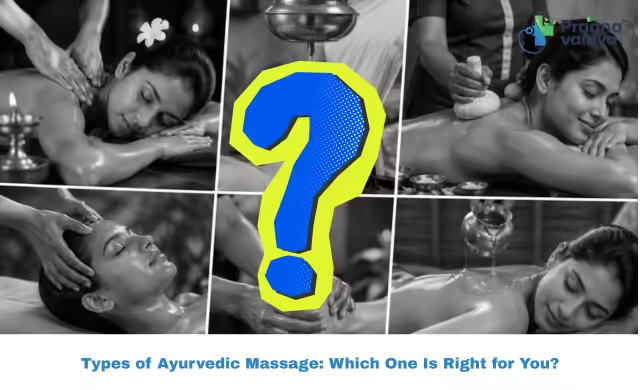
Ayurvedic massage is more than a wellness or relaxation experience. It is a personalised therapeutic approach that uses medicated oils, herbal powders, heat, poultices and rhythmic movements to support physical comfort, mobility, skin health and mental relaxation.
Different types of Ayurvedic massage are selected for different health needs. Abhyanga is commonly used for nourishment and Vata balance, Udvartana is more stimulating and is traditionally recommended for Kapha and Meda imbalance, while therapies such as Choornapinda Sweda and Jambeera Pinda Sweda combine massage with herbal heat.
Some Ayurvedic body treatments, including Kati Basti, Janu Basti, Greeva Basti and Shirodhara, are not technically massages. However, they are often included alongside massage therapies because they form part of external Ayurvedic treatment programmes.
The most appropriate treatment depends on:
- Your Prakriti, or natural body constitution
- Your current dosha imbalance
- The location and nature of your symptoms
- Age and physical strength
- Digestive health
- Skin sensitivity
- Existing medical conditions
- Season and climate
- The purpose of treatment
At Praanavaidya, Ayurvedic body therapies are selected after evaluating the individual rather than applying the same massage to every person.
Not sure which Ayurvedic massage is suitable for you?
What Are the Main Types of Ayurvedic Massage?
The main Ayurvedic massage and related body therapies covered in this guide are:
- Abhyanga
- Abhyanga with Sweda
- Choornapinda Sweda
- Jambeera Pinda Sweda
- Udvartana
- Janu Basti
- Kati Basti
- Greeva Basti
- Shirodhara
- Shirolepa
- Lepa
- Mukhalepa
Abhyanga, Udvartana and Pinda Sweda therapies involve massage movements. Janu Basti, Kati Basti, Greeva Basti, Shirodhara and Lepa are external Ayurvedic therapies rather than conventional massage techniques.
Understanding Doshas and Their Role in Ayurvedic Massage
Ayurveda describes three functional energies known as Vata, Pitta and Kapha. These doshas influence physical structure, movement, digestion, temperature regulation and mental tendencies.
Vata Dosha
Vata is associated with dryness, coldness, lightness and movement.
An aggravated Vata dosha may be associated with:
- Joint stiffness
- Dryness
- Muscular weakness
- Fatigue
- Restlessness
- Irregular sleep
- Low-back discomfort
- Nerve-related symptoms
Vata generally responds well to warm, slow and nourishing oil therapies.
Pitta Dosha
This dosha is associated with heat, sharpness and intensity.
Pitta aggravation may be associated with:
- Skin sensitivity
- Redness
- Burning sensations
- Irritability
- Headache
- Heat intolerance
- Inflammatory symptoms
Pitta generally benefits from calming treatments using moderate pressure and carefully selected oils or herbal preparations.
Kapha Dosha
It is associated with heaviness, stability, coolness and moisture.
Kapha aggravation may be associated with:
- Heaviness
- Sluggishness
- Fluid retention
- Congestion
- Reduced activity
- Excess body weight
- Slow metabolism
Kapha generally benefits from stimulating, warming and less oily therapies.
Dosha-based guidance is general. People can have combined imbalances, and the same symptom may have different causes. A professional Ayurvedic assessment is therefore important.
1. Abhyanga Massage
What Is Abhyanga?
Abhyanga is a traditional full-body Ayurvedic oil massage performed using warm medicated oil and rhythmic strokes.
It may be performed as a standalone wellness treatment or included in a broader Ayurvedic treatment programme.
Abhyanga is traditionally considered in conditions associated with:
- Sandhivata
- Pakshaghata
- Mamsa Kshaya
- Snayugata Vata
In modern clinical terms, these may involve symptoms seen in osteoarthritis, post-stroke weakness, muscular wasting and tendon or soft-tissue discomfort. Ayurvedic massage should be used as supportive care and not as a substitute for neurological, orthopaedic or rehabilitative treatment.
How Is Abhyanga Performed?
A typical Abhyanga session may include:
- Selection of a suitable medicated oil
- Gentle warming of the oil
- Application over the scalp or body
- Long strokes over the arms and legs
- Circular movements around the joints
- Gentle work over the back, neck and muscles
- Adjustment of pressure according to comfort
- Short rest after the massage
- Warm bathing or mild steam therapy when advised
Traditional Benefits of Abhyanga
Abhyanga may help:
- Nourish dry skin and tissues
- Support joint mobility
- Reduce muscular fatigue
- Relax tense muscles
- Improve the feeling of physical comfort
- Calm aggravated Vata
- Promote relaxation and regular sleep
- Prepare the body for selected Ayurvedic procedures
2. Abhyanga with Sweda
What Is Abhyanga with Sweda?
Abhyanga with Sweda combines an oil massage with controlled sweating or fomentation therapy.
The oil massage is performed first, followed by mild steam or localised heat. The purpose is to soften tissues, promote relaxation and reduce stiffness.
It is traditionally considered in conditions such as:
- Amavata
- Gridhrasi
- Katigraha
These may correspond to symptoms seen in rheumatoid arthritis, sciatica and lower-back stiffness. However, active inflammatory arthritis or severe radiating pain should first be medically evaluated.
How Is the Therapy Performed?
- A suitable medicated oil is selected.
- Abhyanga massage is performed over the body or affected region.
- Mild steam or local heat is applied.
- The temperature is monitored continuously.
- The person rests after the procedure.
- Bathing and dietary instructions may be provided.
Potential Benefits
Abhyanga with Sweda may help:
- Reduce muscular stiffness
- Relax the lower back
- Improve the feeling of flexibility
- Support comfortable movement
- Calm Vata and Kapha aggravation
- Prepare the body for other Ayurvedic therapies
Sweda may not be suitable during acute inflammation, fever, severe weakness, uncontrolled blood pressure or certain cardiac conditions.
3. Choornapinda Sweda
What Is Choornapinda Sweda?
Choornapinda Sweda is an Ayurvedic poultice massage using heated cloth bundles filled with herbal powders.
The bundles are warmed and rhythmically applied over the body or selected areas. This therapy combines massage, herbal application and controlled heat.
It is traditionally considered in:
- Amavata
- Sthoulya
These may involve symptoms associated with rheumatoid arthritis, heaviness, stiffness and obesity-related Kapha-Meda imbalance.
How Is Choornapinda Sweda Performed?
- Herbal powders are selected according to the condition.
- The powders are tied securely inside cloth bundles.
- The bundles are warmed using a suitable medium.
- The temperature is tested before application.
- The therapist applies the poultices using rhythmic movements.
- Areas of stiffness or heaviness receive additional attention.
- The skin is monitored for redness or discomfort.
- The person rests after treatment.
Traditional Benefits
Choornapinda Sweda may help:
- Reduce the feeling of heaviness
- Ease muscular and joint stiffness
- Support circulation
- Stimulate the body
- Balance Kapha and Ama-related qualities
- Support mobility
- Complement a structured weight-management plan
The therapy should not be described as a direct fat-burning treatment. Weight management also requires appropriate diet, movement, sleep and medical evaluation.
4. Jambeera Pinda Sweda
What Is Jambeera Pinda Sweda?
Jambeera Pinda Sweda is a heated poultice massage prepared using lemon and selected herbal ingredients.
The herbal mixture is tied inside cloth bundles, warmed and applied over the affected muscles and joints.
It is traditionally considered in:
- Sandhigata Vata
- Mamsa Shosha
These may involve osteoarthritis-related stiffness, reduced joint mobility and muscular wasting.
How Is the Therapy Performed?
- Lemon and prescribed herbs are prepared.
- The ingredients are tied inside cloth poultices.
- The poultices are warmed carefully.
- Oil may be applied before the poultice treatment.
- The bundles are pressed and moved over affected areas.
- Heat and pressure are adjusted continuously.
- The person rests after the procedure.
Traditional Benefits
Jambeera Pinda Sweda may help:
- Reduce muscular stiffness
- Support joint comfort
- Improve the feeling of flexibility
- Stimulate local circulation
- Reduce heaviness around affected areas
- Support movement during rehabilitation
It should not be applied over inflamed, injured, numb or infected skin.
5. Udvartana Therapy
What Is Udvartana?
Udvartana, also written as Udwartana, is a stimulating Ayurvedic massage performed with herbal powders or herbal pastes.
Unlike Abhyanga, it generally uses less oil and includes upward, friction-based movements.
It is traditionally considered in:
- Sthoulya
- Kapha-Meda Roga
These terms are associated with excess body weight, heaviness, sluggish metabolism and lipid imbalance. In modern contexts, Udvartana may be used as supportive care in structured weight-management programmes.
How Is Udvartana Performed?
- The person’s skin and dosha imbalance are assessed.
- A suitable herbal powder or paste is selected.
- The preparation is applied over the body.
- Upward strokes are used over the arms and legs.
- The abdomen, thighs and other areas may receive focused treatment.
- Pressure is adjusted according to skin sensitivity.
- The person rests after the procedure.
- A warm shower may be advised.
Traditional Benefits of Udvartana
Udvartana may help:
- Reduce the feeling of heaviness
- Exfoliate the skin
- Support healthy circulation
- Improve skin texture
- Stimulate the body
- Balance aggravated Kapha
- Support weight-management efforts
- Reduce excessive oiliness in selected individuals
Udvartana cannot independently treat obesity or hyperlipidaemia. These conditions require appropriate dietary, medical and lifestyle management.
6. Janu Basti
What Is Janu Basti?
Janu Basti is a localised Ayurvedic oil-retention therapy for the knee.
A ring made from herbal dough is placed around the knee, and warm medicated oil is retained inside it for a prescribed period.
Janu Basti is not a massage, although a gentle local massage may be performed before or after the procedure.
It is traditionally considered for Janu Sandhigata Vata, which may involve symptoms associated with knee osteoarthritis.
How Is Janu Basti Performed?
- The knee is examined and positioned comfortably.
- A leak-proof dough ring is placed around the joint.
- Warm medicated oil is poured into the ring.
- The oil temperature is maintained carefully.
- The oil is removed after the prescribed duration.
- Gentle local massage or fomentation may follow.
Potential Benefits
Janu Basti may help:
- Reduce the feeling of knee stiffness
- Support comfortable joint movement
- Nourish dry tissues
- Relax surrounding muscles
- Complement physiotherapy and medical care
Acute swelling, redness, recent injury or severe knee pain should be medically evaluated before treatment.
7. Kati Basti
What Is Kati Basti?
Kati Basti is a localised oil-retention therapy performed over the lower back.
Warm medicated oil is held within a dough ring placed over the lumbar or sacral region.
It is traditionally considered for:
- Katigraha
- Trika Sandhigata Vata
These may involve lower-back stiffness, sciatica-like symptoms and discomfort around the sacroiliac region.
How Is Kati Basti Performed?
- The person lies comfortably in a prone position.
- A dough ring is placed over the lower back.
- Warm medicated oil is poured into the ring.
- The temperature is maintained throughout the session.
- The oil is removed after the prescribed time.
- Gentle massage or mild fomentation may follow.
Potential Benefits
Kati Basti may help:
- Relax lower-back muscles
- Reduce the sensation of stiffness
- Support comfortable movement
- Calm localised Vata aggravation
- Complement a broader pain-management plan
Kati Basti should not delay medical evaluation for weakness, numbness, bladder or bowel changes, fever, trauma or severe radiating pain.
8. Greeva Basti
What Is Greeva Basti?
Greeva Basti is a localised oil-retention therapy performed over the neck and upper-back region.
It is traditionally considered for Greevagraha, a condition involving neck stiffness and restricted movement. In modern clinical settings, it may be used as supportive care for symptoms associated with cervical spondylosis.
How Is Greeva Basti Performed?
- The neck and upper back are assessed.
- The person lies comfortably.
- A dough ring is positioned over the affected area.
- Warm medicated oil is retained inside the ring.
- The temperature is monitored carefully.
- Gentle massage or fomentation may be performed afterward.
Potential Benefits
Greeva Basti may help:
- Relax neck muscles
- Reduce stiffness
- Support comfortable neck movement
- Ease upper-back tension
- Complement physiotherapy and posture correction
Neck pain associated with arm weakness, severe headache, trauma, numbness or balance problems requires medical assessment.
9. Shirodhara Therapy
What Is Shirodhara?
Shirodhara is an Ayurvedic therapy in which a continuous stream of warm medicated oil or another prescribed liquid is poured over the forehead.
It is commonly discussed among Ayurvedic massage types, although it is technically a liquid-pouring treatment rather than a massage.
Shirodhara is traditionally considered for:
- Anidra
- Shirashoola
These terms may involve disturbed sleep, mental restlessness and certain headache patterns. Shirodhara is often used as supportive therapy for insomnia, stress, anxiety-related symptoms and migraine.
How Is Shirodhara Performed?
- An Ayurvedic assessment is completed.
- A suitable oil or liquid is selected.
- The person lies comfortably on a treatment table.
- The eyes and hairline are protected.
- A continuous stream flows over the forehead.
- The therapist monitors the temperature and flow.
- The person rests after the procedure.
Traditional Shirodhara Benefits
Shirodhara may help:
- Promote deep relaxation
- Support healthy sleep routines
- Calm mental restlessness
- Reduce the feeling of stress
- Relax the forehead and scalp
- Balance aggravated Vata and Pitta
- Support mental clarity
Shirodhara should not be described as a cure for anxiety disorders, migraine or chronic insomnia. Persistent symptoms require appropriate medical evaluation.
Experiencing disturbed sleep or persistent stress?
Schedule a Shirodhara consultation at PraanaVaidya for a personalised treatment assessment.
10. Shirolepa
What Is Shirolepa?
Shirolepa is an Ayurvedic external therapy in which a prescribed herbal paste is applied over the scalp or head.
It is traditionally considered for Ardhavabhedaka and certain headache conditions, including migraine-like or fever-related headache patterns.
Shirolepa is not a massage. It may be combined with other therapies depending on the diagnosis.
Traditional Benefits
Shirolepa may help:
- Create a cooling or soothing effect
- Relax the scalp
- Support relief from selected headache patterns
- Balance aggravated Pitta
- Complement a broader Ayurvedic treatment plan
A sudden, severe or recurring headache requires medical evaluation before any external therapy.
11. Lepa
What Is Lepa Therapy?
Lepa is the external application of a medicinal herbal paste over a selected part of the body.
It is traditionally considered in:
- Vatarakta
- Vrana
- Shotha
These may involve symptoms associated with gout, wounds, ulcers and swelling.
Lepa is not a conventional massage. The herbal paste is selected according to the condition and applied for a prescribed duration.
Potential Benefits
Lepa may help:
- Provide localised cooling or warmth
- Reduce the feeling of discomfort
- Support skin and tissue care
- Calm swelling in selected conditions
- Complement wound-care or joint-care protocols
Open wounds, ulcers, cellulitis and suspected infections require qualified medical treatment. Herbal paste application should not be attempted without professional guidance.
12. Mukhalepa
What Is Mukhalepa?
Mukhalepa is a specialised Ayurvedic facial paste treatment using herbs selected according to skin type and dosha imbalance.
It is traditionally considered for:
- Vyanga
- Mukhadushika
These terms may involve pigmentation and acne-related concerns, including melasma and acne vulgaris.
How Is Mukhalepa Performed?
- The skin is assessed and cleansed.
- A suitable herbal paste is prepared.
- The paste is applied evenly over the face.
- Sensitive areas around the eyes and lips are avoided.
- The paste is retained for a prescribed duration.
- It is removed gently without excessive rubbing.
Traditional Benefits
Mukhalepa may help:
- Support skin cleansing
- Improve the appearance of dull skin
- Calm selected skin concerns
- Support an even-looking complexion
- Reduce excessive oiliness in suitable individuals
Acne, pigmentation and melasma can have hormonal, inflammatory or medication-related causes. Dermatological evaluation may be necessary.
How to Choose the Right Ayurvedic Massage or Therapy
The right therapy depends on the nature and location of your symptoms.
| Health concern or wellness goal | Ayurvedic therapies commonly considered |
| General relaxation and nourishment | Abhyanga |
| Stiffness with heaviness | Abhyanga with Sweda |
| Rheumatic stiffness and Kapha-Ama features | Choornapinda Sweda |
| Joint stiffness and muscular wasting | Jambeera Pinda Sweda |
| Weight-management support | Udvartana |
| Knee stiffness | Janu Basti |
| Lower-back stiffness | Kati Basti |
| Neck stiffness | Greeva Basti |
| Stress-related sleep disturbance | Shirodhara |
| Selected headache patterns | Shirodhara or Shirolepa |
| Local swelling or skin-related concerns | Lepa |
| Acne or pigmentation-related skin care | Mukhalepa |
This table is intended as general guidance and should not be used for self-diagnosis.
Conclusion
The different types of Ayurvedic massage vary in their ingredients, techniques and traditional applications.
Abhyanga is a nourishing oil massage commonly used for Vata-related dryness and stiffness. Abhyanga with Sweda combines massage and controlled heat. Choornapinda Sweda and Jambeera Pinda Sweda use heated herbal poultices, while Udvartana uses stimulating herbal powders.
Janu Basti, Kati Basti and Greeva Basti are local oil-retention therapies for the knee, lower back and neck. Shirodhara and Shirolepa are traditionally considered for relaxation, disturbed sleep and selected headache patterns. Lepa and Mukhalepa are external herbal paste applications used for localised body or skin concerns.
The most appropriate therapy is not necessarily the most popular one. It is the treatment that matches the person’s symptoms, dosha imbalance, physical strength and medical condition.
At Praanavaidya, every Ayurvedic massage and body therapy is selected after an individual assessment to support safe, personalized and professionally guided care.
Visit Us At –
Rajajinagar- 08065903133
Hubballi – 08065903145
Indiranagar- 08065903135
Mumbai-08065903118
Yelahanka- 08065903134
Mangaluru-08065903136
Chamrajpet-08065903132
Frequently Asked Questions
1. What are the main types of Ayurvedic massage?
The main massage-based treatments include Abhyanga, Abhyanga with Sweda, Choornapinda Sweda, Jambeera Pinda Sweda and Udvartana. Related external therapies include Janu Basti, Kati Basti, Greeva Basti and Shirodhara.
2. Which Ayurvedic massage is best for joint stiffness?
Abhyanga, Abhyanga with Sweda and Pinda Sweda therapies may be considered. Local therapies such as Janu Basti, Kati Basti or Greeva Basti may be selected depending on the affected area.
3. Which Ayurvedic massage is used for weight management?
Udvartana and Choornapinda Sweda may be used as supportive therapies in Kapha-Meda and weight-management programmes. They do not independently produce significant weight loss.
4. Are Ayurvedic massage therapies safe?
They are generally well tolerated when selected and performed by trained professionals. Incorrect heat, pressure, oil or patient selection may lead to irritation, dizziness or worsening discomfort.
5. Can Ayurvedic massage cure arthritis?
Ayurvedic massage may support comfort, mobility and relaxation, but it should not be described as a cure for arthritis. Medical diagnosis and ongoing management remain important.
6. How often should Ayurvedic massage be taken?
The frequency depends on the condition, dosha imbalance, age and treatment goal. Some people may receive occasional wellness sessions, while others may be advised to follow a supervised course.
Praanavaidya
Healthcare Professional
Focused on patient-centric care and evidence-based treatment plans.
More from Praanavaidya