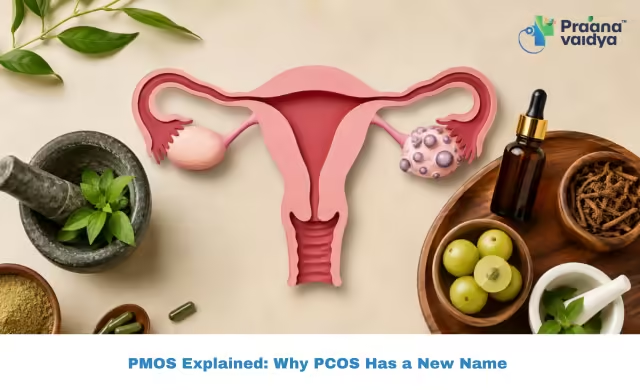
PMOS is becoming one of the most discussed terms in women’s health, leading many to wonder whether PCOS has officially been renamed.
For decades, Polycystic Ovary Syndrome (PCOS) has been used to describe a hormonal disorder affecting millions of women worldwide. However, many healthcare professionals and researchers now believe that the name “PCOS” is misleading because it focuses only on ovarian cysts, even though many women with the condition do not have cysts at all.
This has led to the proposal of a new term—PMOS (PolyMetabolic Ovary Syndrome)—which better reflects the metabolic and hormonal nature of the disorder.
At Praanavaidya, we understand that this condition extends far beyond irregular periods or ovarian cysts. Ayurveda views it as a systemic imbalance involving hormones, metabolism, digestion, and reproductive health. This holistic perspective aligns closely with why experts are advocating for the term PMOS.
Looking for Ayurvedic support for PMOS or PCOS?
Why Was PCOS Renamed to PMOS?
The term PMOS was proposed because the traditional name, Polycystic Ovary Syndrome, does not accurately describe what happens in many women.
Several reasons prompted experts to recommend a new terminology.
1. Not Every Woman Has Ovarian Cysts
Many women diagnosed with PCOS never develop multiple ovarian cysts.
Instead, they experience:
- Irregular menstrual cycles
- Elevated androgen hormones
- Insulin resistance
- Weight gain
- Acne
- Excess facial hair
The presence of cysts is only one possible feature—not the defining characteristic.
2. Metabolic Problems Are the Real Concern
Research has shown that insulin resistance affects a large percentage of women diagnosed with PCOS.
Many patients also develop:
- Prediabetes
- Type 2 diabetes
- Fatty liver disease
- High cholesterol
- Obesity
- Cardiovascular risk factors
The word PolyMetabolic better reflects these widespread metabolic disturbances.
3. The Old Name Often Causes Confusion
Many women believe that PCOS simply means ovarian cysts.
Some even think surgery is necessary to remove them.
In reality:
- PCOS is primarily a hormonal disorder.
- Ovarian cysts are not tumors.
- Surgery is rarely required.
- Treatment focuses on restoring hormonal balance.
Changing the terminology helps patients better understand the condition.
Is PMOS an Official Medical Diagnosis?
At present, PMOS is not yet an officially adopted medical diagnosis worldwide.
Organizations and experts continue to discuss whether the terminology should replace PCOS in future clinical guidelines.
Therefore:
- Most hospitals still diagnose PCOS
- Researchers increasingly use PMOS
- Both terms refer to the same underlying disorder
The change is primarily intended to improve understanding rather than redefine the disease.
Understanding PMOS from an Ayurvedic Perspective
Ayurveda has described hormonal and reproductive disorders for thousands of years without focusing solely on ovarian anatomy.
Instead, it evaluates the body’s overall balance.
According to Ayurveda, women with PMOS often exhibit imbalances involving:
- Kapha Dosha
- Vata Dosha
- Meda Dhatu (fat tissue)
- Artava Vaha Srotas (reproductive channels)
- Agni (digestive fire)
When digestion weakens, metabolism slows, toxins (Ama) accumulate, and hormonal pathways become disturbed.
Rather than treating only the ovaries, Ayurveda aims to restore systemic balance.
Common Symptoms of PMOS
Women may experience different combinations of symptoms.
Common signs include:
- Irregular or absent periods
- Weight gain
- Difficulty losing weight
- Acne
- Oily skin
- Facial hair growth
- Hair thinning
- Dark pigmentation around the neck
- Mood changes
- Fatigue
- Difficulty conceiving
- Insulin resistance
Some women experience only mild symptoms, while others develop multiple metabolic complications.
How Ayurveda Helps Manage PMOS
At Praanavaidya, treatment is personalised after understanding each patient’s Dosha imbalance, symptoms, digestion, lifestyle, and reproductive health.
Instead of only regulating menstrual cycles, Ayurvedic management focuses on restoring natural hormonal harmony.
Treatment plans may include:
Panchakarma Therapies
Depending on clinical assessment, therapies may include:
- Virechana
- Basti
- Udvartana
- Abhyanga
- Swedana
These therapies aim to support metabolism and eliminate accumulated toxins.
Herbal Medicines
Individualized Ayurvedic formulations may help support:
- Hormonal balance
- Menstrual regularity
- Healthy ovulation
- Metabolic function
- Digestive strength
Herbal medicines should always be prescribed by a qualified Ayurvedic physician.
Diet Recommendations
Women with PMOS often benefit from:
- Fresh home-cooked meals
- High-fiber foods
- Seasonal vegetables
- Whole grains
- Healthy proteins
- Reduced refined sugars
- Limited processed foods
Diet plans vary according to individual constitution.
Lifestyle Changes
Ayurveda encourages:
- Daily exercise
- Stress management
- Yoga
- Adequate sleep
- Regular meal timings
- Mindfulness practices
Even small lifestyle improvements can positively influence hormonal health.
Can Ayurveda Cure PMOS?
PMOS is a long-term metabolic and hormonal disorder.
Ayurveda does not promise an instant cure.
However, with consistent treatment, many women experience improvements in:
- Menstrual regularity
- Ovulation
- Weight management
- Digestion
- Energy levels
- Acne
- Fertility
- Overall quality of life
Treatment outcomes depend on age, symptom severity, metabolic health, and adherence to the treatment plan.
Conclusion
Although the name PMOS is relatively new, the condition it describes has affected women for decades. The proposed change shifts attention away from ovarian cysts and toward the broader hormonal and metabolic disturbances that define the disorder.
At Praanavaidya, Ayurvedic physicians focus on identifying the root causes of hormonal imbalance and creating personalized treatment plans that support menstrual health, fertility, metabolism, and long-term wellness. If you’re experiencing symptoms associated with PMOS or PCOS, early evaluation and consistent care can make a meaningful difference in your health journey.
Visit Us At –
Rajajinagar- 08065903133
Hubballi – 08065903145
Indiranagar- 08065903135
Mumbai-08065903118
Yelahanka- 08065903134
Mangaluru-08065903136
Chamrajpet-08065903132
Frequently Asked Questions
Is PMOS different from PCOS?
No. PMOS is a proposed new name for PCOS that better reflects its metabolic nature.
Why is PCOS being renamed?
Experts believe the old name emphasizes ovarian cysts, while the condition actually involves widespread hormonal and metabolic dysfunction.
Is PMOS officially recognized?
Not yet. Most healthcare providers still use the term PCOS, although PMOS is increasingly discussed in medical research.
Can Ayurveda help women with PMOS?
Ayurveda may help support hormonal balance, metabolism, menstrual health, and overall well-being through individualized treatment plans.
Is weight gain common in PMOS?
Yes. Many women experience insulin resistance, making weight management more challenging.
Praanavaidya
Healthcare Professional
Focused on patient-centric care and evidence-based treatment plans.
More from Praanavaidya