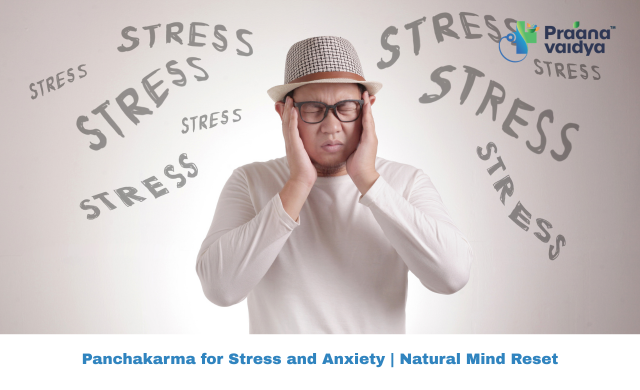
Panchakarma for stress and anxiety is a structured Ayurvedic approach that helps calm the nervous system, regulate stress hormones, and restore mental balance from within. Unlike temporary relaxation methods, it works on the physiological root of chronic stress—digestion, metabolism, nervous system imbalance, and toxin accumulation (Ama).
📞 Call / WhatsApp: 08065903127 | +91 96117 73811
At Praanavaidya, Panchakarma for stress is delivered as a doctor-supervised clinical program designed to support people experiencing anxiety, burnout, insomnia, emotional exhaustion, and stress-related physical symptoms such as fatigue, hair fall, digestive issues, and hormonal imbalance.
Why Panchakarma for Stress and Anxiety Works
Stress is not just psychological—it is a full-body condition. When stress becomes chronic, it disrupts:
- Cortisol and adrenal rhythm
- Sleep cycles
- Digestive strength (Agni)
- Nervous system stability
- Immune response
Over time, this leads to anxiety, irritability, poor sleep, brain fog, and physical exhaustion.
Panchakarma for stress and anxiety works by correcting these internal imbalances rather than suppressing symptoms.
Key root causes addressed in Ayurveda:
- Weak digestion leading to toxin buildup (Ama)
- Nervous system overstimulation (Vata imbalance)
- Mental fatigue and burnout
- Hormonal and metabolic disruption
- Poor sleep and irregular lifestyle
By correcting these, the body gradually shifts from a stress-dominant state to a recovery state.
Understanding Stress in Ayurveda
In Ayurvedic science, chronic stress is primarily a Vata imbalance, especially involving Prana Vata (mind and nervous system regulation).
When Vata becomes disturbed:
- Thoughts become scattered and overactive
- Sleep becomes light or disturbed
- Anxiety and fear increase
- Digestion becomes irregular
- The body remains in a “hyper-alert” state
In many cases, Pitta imbalance is also present, leading to:
- Irritability
- Anger
- Heat sensations
- Emotional reactivity
And when Ama (toxins) accumulate, it worsens mental fog, fatigue, and emotional instability.
Panchakarma Therapies for Stress and Anxiety
Panchakarma for stress and anxiety uses a combination of therapies chosen based on individual condition and dosha imbalance.
1. Shirodhara – Deep Mental Relaxation
A continuous flow of warm medicated oil is poured over the forehead.
Benefits:
- Calms overactive nervous system
- Reduces mental chatter
- Supports deep sleep
- Lowers stress response activity
It is especially useful for anxiety, insomnia, and burnout.
2. Abhyanga – Full Body Oil Therapy
A synchronized herbal oil massage performed by trained therapists.
Benefits:
- Relaxes tight muscles caused by stress
- Improves circulation
- Calms Vata imbalance
- Supports emotional grounding
It prepares the body for deeper detoxification and relaxation therapies.
3. Nasya – Nasal Oil Therapy for Mental Clarity
Medicated oils are administered through the nasal passages.
Benefits:
- Clears accumulated stress from head channels
- Improves focus and clarity
- Supports emotional balance
- Reduces sinus-related and stress-related heaviness
4. Basti – Vata Regulation Therapy
A specialized medicated enema therapy that works on the colon, where Vata is primarily located.
Benefits:
- Balances nervous system activity
- Improves sleep quality
- Reduces chronic anxiety patterns
- Restores internal stability
5. Virechana – Detox for Pitta and Emotional Overload
A controlled cleansing therapy that removes excess heat and toxins.
Benefits:
- Reduces irritability and anger
- Clears metabolic toxins
- Supports emotional cooling
- Improves hormonal balance
How Panchakarma Reduces Stress Physically
| Stress Impact | Body Effect | Ayurvedic Correction |
| High cortisol | Anxiety, poor sleep | Nervous system calming therapies |
| Weak digestion | Bloating, fatigue | Agni correction |
| Ama buildup | Brain fog, heaviness | Detox therapies |
| Vata imbalance | Restlessness, fear | Oil therapies & Basti |
| Sleep disruption | Exhaustion | Shirodhara & routine correction |
Diet During Panchakarma for Stress
Food plays a major role in nervous system recovery.
Foods that are recommended
- Warm, freshly cooked meals
- Simple khichdi (moong dal + rice)
- Ghee in moderation
- Herbal teas (stress-calming herbs)
- Sesame seeds and healthy fats
- Light soups and easily digestible foods
Lifestyle Changes That Support Stress Recovery
To enhance Panchakarma results, lifestyle correction is essential:
- Sleep before 10:30 PM consistently
- Avoid screens before bedtime
- Practice slow breathing (Nadi Shodhana)
- Take short daily walks without digital distractions
- Avoid multitasking during work
- Maintain fixed daily routines
These habits reduce nervous system overload and help maintain calmness after treatment.
Who Should Consider Panchakarma for Stress and Anxiety
This program is suitable for:
- People with chronic stress or burnout
- Individuals with anxiety or panic tendencies
- Those suffering from insomnia or disturbed sleep
- Professionals with high mental workload
- People with stress-related physical symptoms (hair fall, fatigue, digestive issues)
- Individuals who feel emotionally drained or mentally overloaded
What to Expect During Treatment
First 3 Days
- Improved relaxation
- Better sleep onset
- Reduced physical tension
Day 4–7
- Mental clarity improves
- Anxiety levels reduce
- Digestion stabilizes
Day 8–14
- Emotional stability increases
- Better stress handling
- Deeper sleep cycles
After Completion
- Improved resilience
- Reduced reactivity
- Stable energy and mood balance
Why Choose Praanavaidya for Panchakarma for Stress
At Praanavaidya, Panchakarma for stress and anxiety is not a spa-based relaxation service. It is a physician-supervised clinical program.
Key features include:
- Individual diagnosis by Ayurvedic doctors
- Customized therapy plan based on dosha imbalance
- Medical-grade oils and protocols
- Structured detox and recovery phases
- Continuous monitoring and follow-up care
Each patient receives a tailored program based on stress severity, body constitution, and associated health conditions.
Duration of Panchakarma for Stress
- Mild stress: 7–10 days
- Moderate stress: 10–14 days
- Chronic stress or burnout: 14–21 days
Long-standing cases may require follow-up Rasayana (rejuvenation) therapy for sustained results.
Conclusion
Panchakarma for stress and anxiety offers a structured, root-cause approach to managing modern-day mental health challenges. Instead of temporarily suppressing symptoms, it works by restoring balance in the nervous system, digestion, and hormonal regulation.
For individuals experiencing long-term stress, emotional exhaustion, or anxiety-related physical symptoms, Panchakarma provides a clinically guided path toward recovery, stability, and resilience.
At Praanavaidya, the program is designed to help patients move from chronic stress to a calmer, more balanced physiological state through personalized Ayurvedic care.
Visit us near you
Rajajinagar- 08065903133
Hubballi – 08065903145
Indiranagar- 08065903135
Mumbai-08065903118
Yelahanka- 08065903134
Mangaluru-08065903136
Chamrajpet-08065903132
Frequently Asked Questions (FAQs)
1. Is Panchakarma effective for stress and anxiety?
Yes. Panchakarma for stress and anxiety helps regulate the nervous system, reduce cortisol levels, improve sleep quality, and calm Vata imbalance. It works on the root physiological causes of stress rather than only providing temporary relaxation.
2. How long does Panchakarma take to reduce stress?
Most people begin noticing improvements in sleep and relaxation within 3–7 days. A complete Panchakarma for stress and anxiety program usually takes 7–21 days depending on the severity of symptoms and overall health condition.
3. Can Panchakarma help with anxiety and panic attacks?
Yes. Panchakarma for stress and anxiety can help reduce anxiety by calming the overactive nervous system and improving emotional regulation. Therapies like Shirodhara, Basti, and Nasya are commonly used under medical supervision.
4. Is Panchakarma safe for people with long-term stress or burnout?
Yes, when guided by qualified Ayurvedic doctors. Panchakarma for stress and anxiety is customized based on the patient’s strength, stress level, and medical history, making it safe even for chronic stress and burnout cases.
5. Will I need lifestyle changes after Panchakarma for stress?
Yes. For lasting results, Panchakarma for stress and anxiety is supported with lifestyle changes such as proper sleep routine, stress management practices, light exercise, and a balanced diet to maintain nervous system stability.
Praanavaidya
Healthcare Professional
Focused on patient-centric care and evidence-based treatment plans.
More from Praanavaidya