
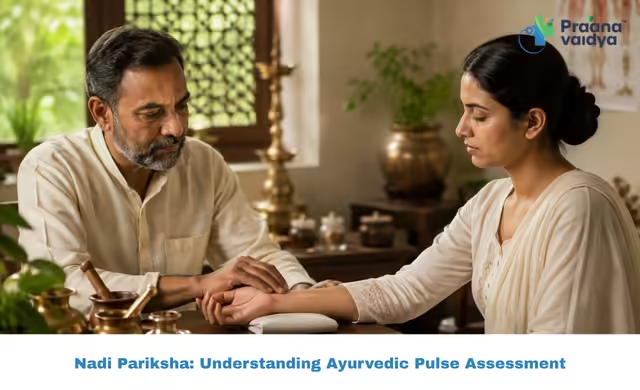
Nadi Pariksha is a traditional Ayurvedic method of health assessment that involves examining the pulse at the wrist. In Ayurveda, the pulse is traditionally assessed along with other observations to understand an individual’s Prakriti (natural constitution) and Vikriti (current state of imbalance).
Unlike simply checking the pulse rate, traditional Ayurvedic pulse diagnosis involves observing qualities of the pulse and interpreting them within the broader Ayurvedic framework of Vata, Pitta, and Kapha. Practitioners may also consider factors such as digestion, appetite, sleep, lifestyle, stress, and current symptoms.
Nadi Pariksha is generally a non-invasive part of an Ayurvedic consultation and may help practitioners develop a more individualized understanding of a person’s health patterns. At Praanavaidya, Nadi Pariksha may be included as part of an Ayurvedic consultation when appropriate, alongside a broader assessment of the patient’s health and lifestyle.
How Is Nadi Pariksha Traditionally Performed?
During a Nadi examination in Ayurveda, the practitioner traditionally examines the pulse at the wrist using the fingers. The patient is usually seated comfortably while the practitioner gently feels the pulse.
Traditional Ayurvedic pulse reading may involve observing characteristics such as:
- Pulse rhythm and regularity
- Speed and movement
- Strength or intensity
- Qualitative characteristics perceived by the practitioner
- Patterns traditionally associated with Vata, Pitta, and Kapha
- Changes considered relevant to the individual’s overall condition
The exact technique can differ depending on the practitioner’s training, experience, and Ayurvedic tradition.
Importantly, Nadi Pariksha is not normally performed as an isolated assessment. A practitioner may combine pulse examination with questions about the patient’s health history, digestion, sleep, diet, lifestyle, and symptoms.
What Does Nadi Pariksha Assess?
A common question is: What can Nadi Pariksha tell you?
Traditionally, Nadi Pariksha is used as one component of an Ayurvedic health assessment. Practitioners may interpret the pulse in relation to Dosha balance, Prakriti, and Vikriti.
Understanding Prakriti
Prakriti refers to an individual’s natural constitution. Ayurveda describes three fundamental Doshas:
- Vata: Traditionally associated with movement, variability, and qualities such as lightness and dryness.
- Pitta: Traditionally associated with transformation, metabolism, and qualities such as heat and intensity.
- Kapha: Traditionally associated with stability, structure, and qualities such as heaviness and steadiness.
According to Ayurveda, understanding Prakriti can help guide individualized approaches to food, lifestyle, daily routines, and general wellness.
Understanding Vikriti
Vikriti refers to the current state of imbalance in relation to an individual’s natural constitution.
Through Dosha assessment through Nadi Pariksha, practitioners traditionally consider whether certain Doshic patterns may be prominent at the time of consultation. However, this assessment is generally interpreted together with the patient’s symptoms, health history, lifestyle, and other observations.
This distinction is important because a person’s natural constitution and their current state may not be the same.
What Are the Traditional Nadi Pariksha Benefits?
The traditional Nadi Pariksha benefits are mainly associated with individualized Ayurvedic assessment rather than disease diagnosis.
Potential traditional uses include:
1. Personalized Ayurvedic Assessment
Nadi Pariksha may help a practitioner understand an individual’s constitution and current health patterns as part of a broader consultation.
2. Understanding Dosha Patterns
Traditional pulse reading is interpreted in relation to Vata, Pitta, and Kapha, which form an important part of Ayurvedic health assessment.
3. Non-Invasive Evaluation
Nadi Pariksha is generally performed by feeling the pulse at the wrist and does not require invasive procedures.
4. Supporting Lifestyle Guidance
Information gathered during an Ayurvedic consultation may contribute to recommendations concerning diet, daily routines, physical activity, sleep, and other lifestyle practices.
5. Holistic Health Assessment
Rather than focusing on one symptom, Ayurveda traditionally considers multiple aspects of an individual’s health and daily routine.
These are traditional applications of Nadi Pariksha. They should not be interpreted as proof that pulse examination can independently diagnose medical diseases.
Nadi Pariksha and Modern Medical Diagnosis
One of the most important things patients should understand about pulse diagnosis in Ayurveda is that it should not replace modern medical diagnosis.
Nadi Pariksha is a traditional assessment technique. It is not equivalent to diagnostic investigations such as blood tests, ECGs, ultrasound, X-rays, CT scans, MRI scans, or other clinical investigations.
For example, symptoms such as persistent chest pain, difficulty breathing, unexplained weight loss, prolonged fever, severe abdominal pain, or other concerning changes may require prompt medical evaluation.
An Ayurvedic consultation can be considered alongside appropriate medical care, but patients should not delay necessary medical diagnosis or treatment based solely on an Ayurvedic pulse reading.
What Should You Expect During a Nadi Pariksha Consultation?
Patients often wonder what happens during a Nadi Pariksha consultation.
The consultation may begin with a discussion about the patient’s health concerns and lifestyle. The practitioner may ask questions about:
- Appetite and digestion
- Sleep patterns
- Food habits
- Daily routine
- Physical activity
- Stress and general wellbeing
- Current symptoms
- Previous health concerns
- Medications and ongoing treatments
- Relevant medical history
The practitioner may then perform Nadi Pariksha and consider the findings alongside the information collected during the consultation.
At Praanavaidya, patients can discuss their health concerns with Ayurvedic practitioners and understand how traditional assessment methods such as Nadi Pariksha may fit into their consultation. The practitioner can explain the assessment process and provide guidance based on the individual’s health needs and Ayurvedic evaluation.
Patients should feel comfortable asking questions about any recommendation, especially when they are already receiving treatment from another healthcare professional.
Common Misconceptions About Ayurvedic Pulse Reading
Myth 1: Nadi Pariksha is only about measuring heart rate
Nadi Pariksha involves more than counting the number of heartbeats per minute. Traditional practitioners assess qualitative characteristics of the pulse within an Ayurvedic framework.
Myth 2: Nadi Pariksha can diagnose every disease
This is an inaccurate claim. Nadi Pariksha should not be presented as a standalone diagnostic method capable of identifying every disease or medical condition.
Myth 3: The pulse alone determines treatment
An Ayurvedic practitioner generally considers multiple factors, including symptoms, lifestyle, digestion, sleep, health history, and other observations.
Myth 4: Medical tests are unnecessary after Nadi Pariksha
Nadi Pariksha does not eliminate the need for appropriate medical testing. If symptoms indicate the need for conventional medical evaluation, patients should seek it.
What Are the Limitations of Nadi Pariksha?
Understanding the limitations of Nadi Pariksha in Ayurveda helps patients approach the practice with realistic expectations.
Pulse interpretation can vary between practitioners because traditional Nadi assessment involves qualitative interpretation. Differences in training, experience, methodology, and Ayurvedic tradition may influence how findings are understood.
Additionally, a pulse examination cannot provide the same objective information as laboratory investigations or medical imaging.
A responsible Ayurvedic consultation should therefore avoid making unsupported claims about diagnosing serious medical conditions solely through pulse reading.
For persistent or concerning symptoms, appropriate medical evaluation remains important.
Frequently Asked Questions About Nadi Pariksha
What is Nadi Pariksha?
Nadi Pariksha is a traditional Ayurvedic pulse examination performed at the wrist. It is used as part of a broader Ayurvedic assessment of an individual’s constitution and current health patterns.
Is Nadi Pariksha painful?
No. Nadi Pariksha is generally a gentle and non-invasive examination involving the practitioner feeling the pulse at the wrist.
What is assessed during Nadi Pariksha?
Traditionally, practitioners observe characteristics of the pulse and interpret them in relation to Vata, Pitta, Kapha, Prakriti, Vikriti, and other aspects of the individual’s health.
Can Nadi Pariksha diagnose diseases?
Nadi Pariksha should not be considered a replacement for modern medical diagnosis. When a health condition requires investigation, appropriate clinical examinations and diagnostic tests may be necessary.
How long does a Nadi Pariksha consultation take?
The duration varies depending on the practitioner and the individual’s health concerns. A consultation may include health-history questions, pulse examination, and discussion of lifestyle and Ayurvedic recommendations.
Who can undergo Nadi Pariksha?
Nadi Pariksha is traditionally used as part of Ayurvedic consultations for people seeking an assessment based on Ayurvedic principles. The practitioner can determine whether it is appropriate based on the individual’s concerns and circumstances.
Final Thoughts
Nadi Pariksha is a traditional Ayurvedic approach to pulse-based health assessment. It is traditionally connected with the concepts of Dosha, Prakriti, and Vikriti and is often considered alongside information about digestion, sleep, diet, lifestyle, and other individual health patterns.
For patients, the most useful way to understand Nadi Pariksha is as one part of a broader Ayurvedic consultation rather than as a replacement for modern medical diagnosis. A qualified practitioner can explain what the assessment involves, how traditional findings are interpreted, and how they may contribute to an individualized Ayurvedic approach.
When necessary, Ayurvedic care should be complemented by appropriate medical evaluation, particularly when symptoms are persistent, severe, or unexplained.
Visit Us in-
Rajajinagar- 08065903133
Hubballi – 08065903145
Indiranagar- 08065903135
Mumbai-08065903118
Yelahanka- 08065903134
Mangaluru-08065903136
Chamrajpet-08065903132
Delhi-08065903140
Lucknow-08065903130
Praanavaidya
Healthcare Professional
Focused on patient-centric care and evidence-based treatment plans.
More from Praanavaidya