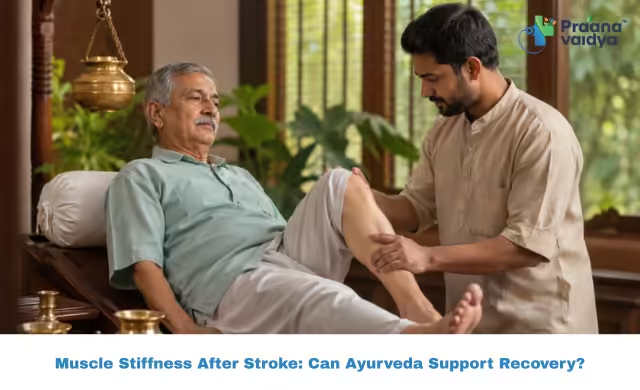
Recovering from a stroke is often a long journey that extends far beyond the initial emergency treatment. While many people survive a stroke with timely medical care, the weeks and months that follow can bring new challenges. One of the most common is muscle stiffness after stroke, where the affected arm, leg, hand, or foot gradually becomes tight, difficult to move, and sometimes painful. In many patients, this stiffness progresses into spasticity, making routine activities such as walking, dressing, writing, or holding objects increasingly difficult.
From the perspective of modern medicine, spasticity occurs because a stroke damages the brain’s ability to regulate muscle movement. Ayurveda describes a similar condition under Pakshaghata, a disorder predominantly caused by aggravated Vata Dosha, affecting the body’s movement, muscles, nerves, and coordination.
Rather than viewing rehabilitation as simply restoring muscle strength, Ayurveda considers stroke recovery a process of rebalancing the body, nourishing weakened tissues, improving circulation, and gradually restoring functional movement. Along with conventional rehabilitation, personalised Ayurvedic therapies may help improve comfort, flexibility, and overall quality of life.
At Praanavaidya, every stroke survivor undergoes a detailed Ayurvedic assessment before any therapy is recommended. Treatment is individualised and designed to complement neurologist-guided rehabilitation—not replace it.
Understanding Muscle Stiffness After Stroke
Muscle stiffness after stroke develops because communication between the brain and muscles becomes disrupted.
Normally, the brain sends signals that tell muscles when to contract and when to relax. After a stroke damages these pathways, muscles may remain continuously contracted, resulting in increased tone or spasticity.
The stiffness usually develops gradually over several weeks after the stroke rather than immediately.
Commonly affected areas include:
- Shoulder
- Elbow
- Wrist
- Fingers
- Hip
- Knee
- Ankle
- Toes
Without appropriate rehabilitation, joints may gradually lose their range of motion.
What Is Spasticity?
Spasticity is a condition where muscles become excessively tight due to abnormal nerve signals.
Unlike ordinary muscle stiffness after exercise, spasticity involves continuous muscle overactivity.
Patients may notice:
- Difficulty straightening the arm
- Clenched fist
- Bent elbow
- Foot pointing downward
- Leg stiffness while walking
- Pain during movement
- Muscle spasms
- Poor balance
The severity varies greatly between individuals.
Why Early Rehabilitation Matters
The brain has an extraordinary ability known as neuroplasticity, allowing healthy areas of the brain to gradually take over some lost functions.
This recovery process is strongest during the first few months after a stroke.
Early rehabilitation helps:
- Maintain joint mobility
- Prevent muscle shortening
- Improve circulation
- Reduce complications
- Encourage functional recovery
Ayurveda supports this rehabilitation process through therapies aimed at improving flexibility, reducing Vata aggravation, and nourishing affected tissues.
How Ayurveda Understands Stroke Recovery
In Ayurveda, stroke closely resembles Pakshaghata, one of the important Vata disorders described in classical texts.
Vata governs:
- Movement
- Nervous system function
- Muscle coordination
- Sensory perception
- Speech
- Balance
When Vata becomes severely aggravated, it may disturb neuromuscular function, leading to weakness, paralysis, reduced coordination, stiffness, and impaired movement.
Therefore, Ayurvedic management focuses primarily on balancing Vata while supporting tissue nourishment and functional recovery.
Why Does Vata Cause Muscle Stiffness?
Among the three Doshas, Vata possesses qualities such as dryness, roughness, lightness, and mobility.
When aggravated following illness or injury, Vata may contribute to:
- Muscle tightness
- Joint stiffness
- Poor circulation
- Reduced flexibility
- Weakness
- Difficulty coordinating movement
Many Ayurvedic therapies used after stroke aim to counter these qualities through warmth, nourishment, and gentle stimulation.
Ayurvedic Assessment Before Treatment
At Praanavaidya, no two stroke survivors receive identical treatment.
The Ayurvedic physician evaluates:
- Type of stroke
- Time since stroke
- Neurologist’s diagnosis
- Current medications
- Muscle stiffness
- Spasticity severity
- Walking ability
- Speech function
- Swallowing ability
- Body constitution (Prakriti)
- Dosha imbalance
- Digestive strength (Agni)
- Overall medical stability
Only after this assessment is a personalised rehabilitation plan developed.
Ayurvedic Therapies for Muscle Stiffness After Stroke
Treatment is selected according to the patient’s recovery stage, strength, and neurological status.
Abhyanga (Therapeutic Oil Massage)
Abhyanga is one of the most commonly recommended therapies after stroke.
Warm medicated oils are gently applied using specialised massage techniques.
According to Ayurveda, Abhyanga may help:
- Balance aggravated Vata
- Improve local circulation
- Support muscle relaxation
- Nourish tissues
- Prepare the body for further therapies
The oils used are selected individually according to the patient’s condition.
Pinda Sweda (Herbal Bolus Fomentation)
Following massage, physicians may recommend Pinda Sweda, where warm herbal boluses are gently applied over affected muscles.
This therapy traditionally helps:
- Reduce stiffness
- Improve flexibility
- Support circulation
- Promote comfortable movement
Patra Pinda Sweda
This therapy uses heated medicinal leaves wrapped in cloth boluses.
It combines warmth with herbal properties to support:
- Muscle relaxation
- Joint flexibility
- Improved mobility
Basti Therapy
Among all Panchakarma procedures, Basti is considered one of the most important therapies for Vata disorders.
Medicated enemas are administered under physician supervision.
Classical Ayurvedic texts describe Basti as an important therapy for neurological disorders because of its role in balancing Vata throughout the body.
The type of Basti depends entirely on clinical evaluation.
Nasya
If facial weakness, speech difficulties, or upper body involvement are present, Nasya may be incorporated into the treatment plan when appropriate.
Shirodhara
Some patients experience anxiety, disturbed sleep, or emotional stress following a stroke.
Shirodhara may be recommended in selected individuals to promote relaxation and support mental well-being as part of a comprehensive rehabilitation programme.
Diet During Stroke Rehabilitation
Ayurveda considers digestion an important part of recovery.
General recommendations may include:
- Warm, freshly prepared meals
- Easily digestible foods
- Adequate hydration
- Balanced nutrition
- Regular meal timings
Diet is personalised according to digestive strength, associated illnesses, and physician recommendations.
Conclusion
Muscle stiffness after stroke is one of the most challenging aspects of recovery, often affecting independence and quality of life. Ayurveda views this condition as a manifestation of aggravated Vata Dosha and approaches rehabilitation through therapies that nourish tissues, improve flexibility, support circulation, and promote functional movement.
Classical therapies such as Abhyanga, Pinda Sweda, Patra Pinda Sweda, Njavarakizhi, and Basti, when recommended after a thorough assessment, may complement conventional stroke rehabilitation. Along with personalised herbal medicines, diet, lifestyle guidance, and ongoing physiotherapy, these therapies aim to support a more comprehensive recovery journey.
At Praanavaidya, experienced Ayurvedic physicians create personalised rehabilitation plans tailored to each patient’s neurological condition, stage of recovery, and overall health. If you or a loved one is experiencing muscle stiffness after stroke, consulting a qualified Ayurvedic physician can help determine how Ayurvedic care may safely complement ongoing neurological treatment and rehabilitation.
Visit Us in-
Rajajinagar- 08065903133
Hubballi – 08065903145
Indiranagar- 08065903135
Mumbai-08065903118
Yelahanka- 08065903134
Mangaluru-08065903136
Chamrajpet-08065903132
Delhi-08065903140
Lucknow-08065903130
Frequently Asked Questions
Can Ayurveda cure paralysis after stroke?
Stroke recovery varies greatly between individuals. Ayurveda aims to support rehabilitation, improve comfort, enhance mobility, and complement conventional treatment, but it does not guarantee complete recovery.
When should Ayurvedic treatment begin?
Ayurvedic rehabilitation should only begin after the patient has been medically stabilised and cleared by the treating neurologist or physician.
Can I stop my stroke medicines?
No. Continue all prescribed medications unless your neurologist advises otherwise.
Is Panchakarma safe after a stroke?
Certain Panchakarma therapies may be appropriate after careful evaluation, but not every therapy is suitable for every patient or every stage of recovery.
How long does stroke rehabilitation treatment take?
Stroke rehabilitation is a gradual process. The duration depends on the severity of neurological damage, overall health, consistency of rehabilitation, and individual response to treatment.
Praanavaidya
Healthcare Professional
Focused on patient-centric care and evidence-based treatment plans.
More from Praanavaidya