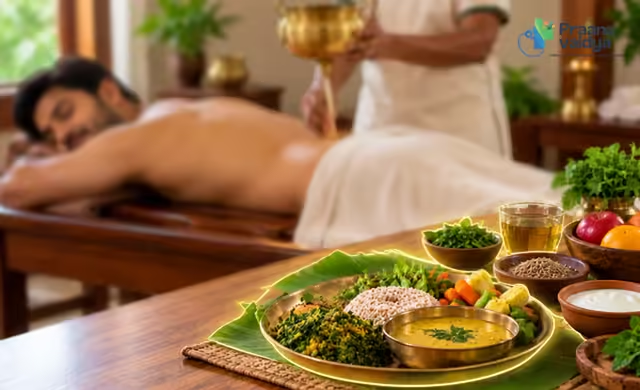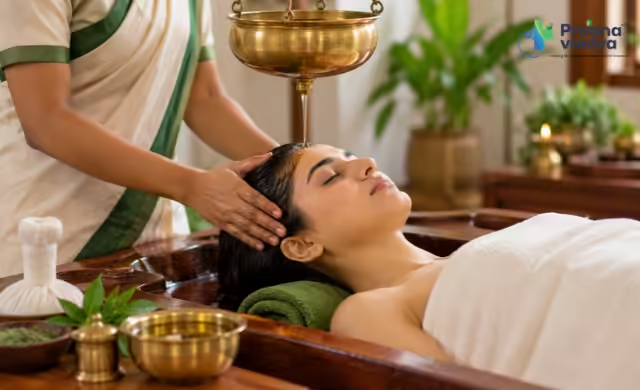
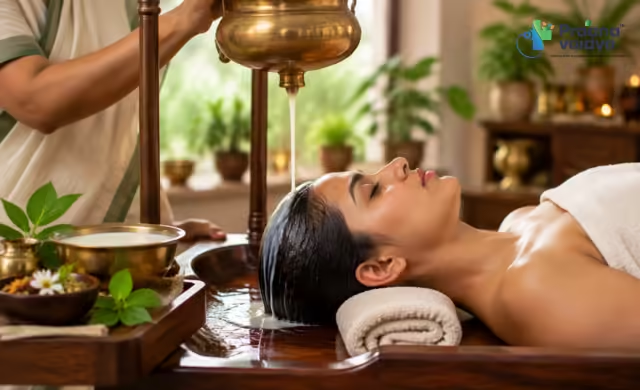
Ayurveda includes several traditional therapies in which carefully prepared liquids are applied to the body in a controlled manner. Ksheeradhara is one such therapy, involving a continuous flow of milk or a specially prepared milk-based formulation over a selected area of the body.
From a traditional Ayurvedic perspective, the therapy is intended to provide a calming, nourishing, or soothing experience depending on the preparation and individual assessment.
At Praanavaidya, Ksheeradhara can be considered within an individualized Ayurvedic approach, where the choice of ingredients, treatment area, duration, and procedure may vary according to the person’s constitution, current condition, and therapeutic goals.
Ksheeradhara is different from simply applying milk to the skin. It is a structured traditional procedure that is generally performed under the supervision of a trained practitioner.
What Is Ksheeradhara?
The word Ksheera refers to milk, while Dhara refers to a controlled and continuous flow of liquid.
Ksheeradhara can therefore be broadly understood as an Ayurvedic therapy involving the continuous application of milk or a specially prepared milk-based formulation over a selected area.
The liquid is prepared according to the treatment protocol and maintained at an appropriate temperature before being poured in a controlled, rhythmic stream.
The therapy may combine:
- Continuous liquid flow
- Gentle warmth or a comfortable temperature
- Rhythmic application
- Traditionally selected ingredients
- Relaxation
- A structured therapeutic setting
The exact procedure can vary between Ayurvedic practices and according to the individual’s needs.
How Is Ksheeradhara Different From Regular Milk Application?
Simply applying milk to the skin is not the same as undergoing Ksheeradhara.
A traditional Ksheeradhara procedure generally involves:
- Individual assessment
- Selection of an appropriate preparation
- Preparation and temperature control
- Correct positioning
- Controlled and continuous pouring
- Monitoring during the procedure
- Appropriate post-treatment care
The controlled flow and structured application are important features of Dhara therapies.
Therefore, Ksheeradhara is better understood as a traditional therapeutic procedure rather than a home skincare remedy.
What Is Used in Ksheeradhara?
Milk forms the foundation of Ksheeradhara, but the exact preparation can vary.
Depending on the Ayurvedic protocol, the preparation may include:
- Milk
- Water
- Selected herbs
- Herbal decoctions
- Other traditionally used ingredients
The formulation may be selected according to the person’s condition, constitution, treatment area, and intended therapeutic objective.
There is no single Ksheeradhara formulation that is appropriate for everyone.
Why Is Milk Used in Ksheeradhara?
Milk has traditionally been described in Ayurveda as nourishing and soothing.
In Ksheeradhara, the use of milk or a milk-based preparation is combined with the experience of a continuous liquid flow.
From a traditional Ayurvedic perspective, this combination may be selected when a practitioner is seeking nourishing, calming, or soothing qualities depending on the preparation and individual assessment.
These traditional descriptions should not be interpreted as proof that Ksheeradhara can prevent, treat, or cure a particular disease.
How Is Ksheeradhara Performed?
Although procedures can vary between Ayurvedic centres, a typical session may follow a structured sequence.
Step 1: Individual Assessment
The practitioner first considers the individual’s health status, symptoms, constitution, and suitability for the therapy.
The treatment area, formulation, and overall procedure can then be determined.
Step 2: Preparation of the Milk-Based Formulation
Milk or a milk-based herbal preparation is prepared according to the treatment plan.
The temperature should be carefully monitored because excessively hot liquid can cause skin burns or irritation.
Step 3: Positioning
The individual is positioned comfortably on an appropriate treatment table.
The treatment area is exposed while other areas are protected as necessary.
Step 4: Continuous Pouring
The prepared liquid is poured over the selected area in a controlled stream.
The practitioner monitors the flow, temperature, and individual’s comfort throughout the session.
Step 5: Completion and Cleansing
After the therapy, excess liquid is removed and the person may receive instructions regarding bathing, food, activity, or rest.
Post-treatment instructions can vary according to the specific protocol.
What Does Ksheeradhara Feel Like?
Many people may experience Ksheeradhara as warm, soothing, and relaxing.
The sensation may come from the combination of:
- Continuous liquid flow
- Comfortable temperature
- Rhythmic movement
- A quiet treatment environment
- A period of rest
The experience can differ depending on the treatment area, formulation, temperature, duration, and individual sensitivity.
The liquid should always remain at a safe and comfortable temperature.
What Are the Traditional Ayurvedic Uses of Ksheeradhara?
Within traditional Ayurvedic practice, Ksheeradhara may be selected as part of individualized care for concerns associated with:
- General stress
- Mental fatigue
- Restlessness
- Difficulty relaxing
- Certain dryness-related concerns
- Selected Vata- or Pitta-related imbalances according to Ayurvedic assessment
- General nourishment and relaxation
These are traditional Ayurvedic uses, not established medical indications.
Ksheeradhara should not be promoted as a replacement for appropriate medical treatment for neurological, psychiatric, dermatological, hormonal, or other diagnosed conditions.
Ksheeradhara and Dosha Considerations
Ayurveda traditionally describes three doshas: Vata, Pitta, and Kapha.
An Ayurvedic practitioner may consider these concepts when deciding whether Ksheeradhara is appropriate and how the therapy should be performed.
Vata
Vata is traditionally associated with qualities such as dryness, lightness, and movement.
A practitioner may consider nourishing or calming therapies in selected Vata-related situations.
Pitta
Pitta is traditionally associated with qualities such as heat and intensity.
Depending on the preparation and treatment protocol, soothing or cooling approaches may be considered in appropriate cases.
Kapha
Kapha is traditionally associated with qualities such as heaviness, stability, and moisture.
The suitability of Ksheeradhara in Kapha-related situations depends on the individual’s overall assessment and the formulation selected.
Dosha-based recommendations are individualized. A particular therapy should not be considered automatically suitable or unsuitable solely because someone identifies with a particular dosha.
Ksheeradhara vs Shirodhara
Ksheeradhara and Shirodhara can sometimes be confused because both involve a continuous flow of liquid.
Shirodhara traditionally involves a continuous stream of a selected liquid over the forehead or head region.
Ksheeradhara specifically describes the use of milk or a milk-based preparation as the Dhara liquid.
The two concepts can overlap when milk is used during a Shirodhara procedure, but the terms describe different aspects of the therapy.
Ksheeradhara vs Tailadhara
The primary difference is the liquid used.
Ksheeradhara
Uses milk or a milk-based preparation.
Tailadhara
Uses oil or an oil-based preparation.
The choice between different Dhara therapies depends on the practitioner’s assessment, intended therapeutic approach, treatment area, and individual suitability.
What Are the Potential Wellness Benefits of Ksheeradhara?
Ksheeradhara is traditionally valued for its potential to support a relaxing and soothing treatment experience.
Relaxation
The steady flow of liquid and quiet treatment environment may provide an opportunity to rest and relax.
Traditional Nourishing Qualities
Milk-based preparations are traditionally associated with nourishing qualities in Ayurveda.
Soothing Sensation
Depending on the formulation and treatment area, the therapy may provide a soothing or comfortable sensation.
Support for Mind-Body Relaxation
The rhythmic nature of the treatment may encourage relaxation as part of a broader wellness routine.
Traditional Dosha Support
An Ayurvedic practitioner may select Ksheeradhara when its traditional qualities are considered appropriate for an individual’s Ayurvedic assessment.
These potential benefits represent traditional wellness perspectives and should not be interpreted as guaranteed medical outcomes.
Who May Consider Ksheeradhara?
Ksheeradhara may be considered by individuals interested in traditional Ayurvedic wellness or relaxation therapies when a qualified practitioner determines that the procedure is appropriate.
It may appeal to people seeking:
- Ayurvedic relaxation therapies
- Traditional nourishing treatments
- Mind-body wellness
- Structured Ayurvedic self-care
- Traditional approaches to everyday stress management
Suitability should be assessed individually rather than assuming that the therapy is appropriate for everyone.
Who Should Avoid or Use Extra Caution With Ksheeradhara?
Ksheeradhara may not be suitable for everyone.
Additional caution may be appropriate for people with:
- Milk allergy
- Significant skin sensitivity
- Active skin infections
- Open wounds
- Severe skin inflammation
- Certain acute illnesses
- Temperature sensitivity
- Conditions where prolonged treatment positioning may be unsuitable
People who are pregnant, children, older adults, and those with significant medical conditions should seek appropriate professional advice before undergoing therapeutic procedures.
The practitioner should also be informed about existing medical conditions, allergies, and medications.
Can Ksheeradhara Be Done at Home?
A full Ksheeradhara procedure is generally better performed by a trained Ayurvedic professional rather than attempted at home.
Several factors require careful attention, including:
- Formulation
- Temperature
- Flow rate
- Positioning
- Treatment duration
- Hygiene
- Skin sensitivity
- Individual suitability
Incorrectly heated liquid can cause burns, while unsuitable ingredients may irritate the skin.
Simple milk-based skincare or relaxation practices should not be confused with professional Ksheeradhara therapy.
How Long Does a Ksheeradhara Session Take?
There is no single standard duration for every individual.
The length of a session may depend on:
- Treatment area
- Preparation used
- Therapeutic objective
- Individual assessment
- Practitioner protocol
- Response during the session
The practitioner should determine the appropriate duration rather than following a fixed time from an online article.
What Should You Do After Ksheeradhara?
Post-treatment instructions can vary depending on the therapy protocol.
A practitioner may recommend:
- Resting for a short period
- Avoiding strenuous activity immediately afterward
- Following appropriate bathing instructions
- Eating suitable meals
- Staying comfortably hydrated
- Avoiding sudden exposure to extreme temperatures
Follow the specific instructions provided by the practitioner performing the treatment.
Can Ksheeradhara Cure Diseases?
Ksheeradhara should not be described as a guaranteed cure for any disease.
An Ayurvedic practitioner may incorporate it into a broader traditional treatment or wellness plan, but traditional use alone does not establish that Ksheeradhara can cure neurological disorders, psychiatric conditions, hormonal disorders, skin diseases, or other serious medical conditions.
For a diagnosed medical condition, appropriate medical care should continue alongside any complementary Ayurvedic therapy.
Final Thoughts
Ksheeradhara is a traditional Ayurvedic Dhara therapy that combines a carefully prepared milk-based liquid with a controlled and continuous flow.
Its traditional appeal comes not simply from the use of milk but from the complete treatment process, including preparation, temperature, flow, treatment setting, and individualized assessment.
From an Ayurvedic perspective, Ksheeradhara may be incorporated into selected wellness and therapeutic programs when its traditional qualities are considered appropriate.
However, it should not be presented as a universal cure or as a replacement for appropriate medical treatment.
With professional assessment and suitable precautions, Ksheeradhara can be explored as part of a broader Ayurvedic approach to relaxation, nourishment, and holistic wellbeing at Praanavaidya.
Visit Us in-
Rajajinagar- 08065903133
Hubballi – 08065903145
Indiranagar- 08065903135
Mumbai-08065903118
Yelahanka- 08065903134
Mangaluru-08065903136
Chamrajpet-08065903132
Delhi-08065903140
Lucknow-08065903130
Frequently Asked Questions
What is Ksheeradhara?
Ksheeradhara is a traditional Ayurvedic Dhara therapy in which milk or a specially prepared milk-based formulation is poured continuously over a selected area of the body in a controlled manner.
What does Ksheeradhara mean?
“Ksheera” refers to milk, while “Dhara” refers to a continuous or controlled flow of liquid. Ksheeradhara therefore describes a milk-based Dhara therapy.
What are the traditional benefits of Ksheeradhara?
Ksheeradhara is traditionally associated with relaxation, nourishment, soothing qualities, and support for certain Ayurvedic dosha-related approaches. Its suitability depends on individual assessment.
Is Ksheeradhara the same as Shirodhara?
No. Ksheeradhara describes the use of milk or a milk-based preparation in Dhara therapy, while Shirodhara traditionally refers to the application of a continuous stream over the head or forehead region.
Is Ksheeradhara suitable for everyone?
No. Suitability depends on individual health, skin condition, allergies, constitution, treatment area, and the specific protocol. A qualified practitioner should assess the individual before treatment.
What temperature is used during Ksheeradhara?
The temperature depends on the treatment protocol and preparation. The liquid should be maintained at a safe and comfortable temperature and should never be hot enough to burn or irritate the skin.
Can Ksheeradhara be performed at home?
A professional Ksheeradhara procedure is best performed by a trained practitioner because formulation, temperature, flow, positioning, hygiene, and duration require careful control.
Does Ksheeradhara help with stress?
Ksheeradhara may be used in traditional Ayurvedic wellness settings as a relaxation therapy. However, it should not replace professional care for significant anxiety, depression, or other mental-health conditions.
How often should Ksheeradhara be done?
There is no universal schedule. Frequency depends on the individual’s needs, treatment objective, preparation, and practitioner assessment.
Is Ksheeradhara a cosmetic treatment?
Although milk-based preparations may provide a moisturizing or soothing sensation, traditional Ksheeradhara is a structured Ayurvedic therapy rather than simply a cosmetic milk application.
Praanavaidya
Healthcare Professional
Focused on patient-centric care and evidence-based treatment plans.
More from Praanavaidya