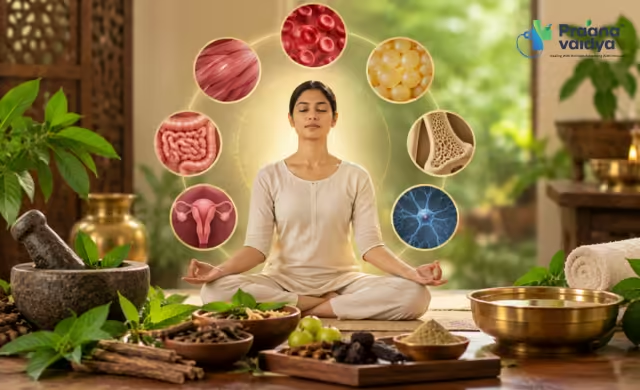
Dhatus in Ayurveda refers to the seven fundamental tissues described in classical Ayurvedic physiology as supporting the structure, nourishment, strength, and functioning of the body.
The Sanskrit word Dhatu is derived from a root meaning “to support” or “to sustain.” In Ayurvedic theory, Dhatus are therefore considered important structural and functional components that help maintain the body.
Ayurveda describes seven primary Dhatus:
- Rasa Dhatu
- Rakta Dhatu
- Mamsa Dhatu
- Meda Dhatu
- Asthi Dhatu
- Majja Dhatu
- Shukra Dhatu
Together, these are traditionally called Sapta Dhatu, meaning the seven Dhatus.
The concept is part of the traditional Ayurvedic understanding of physiology and should not be interpreted as a direct one-to-one equivalent of modern anatomical tissue classification.
Why Are the Seven Dhatus Important?
According to Ayurveda, the body continuously undergoes processes of nourishment, transformation, and renewal.
The Dhatu system provides a traditional framework for understanding how nourishment is believed to support different levels of tissue development.
Healthy Dhatus are traditionally associated with:
- Physical strength
- Structural stability
- Nourishment
- Vitality
- Proper tissue function
- Reproductive capacity
- Overall resilience
Ayurvedic assessment considers the quality and condition of the Dhatus alongside factors such as Agni, Doshas, digestion, lifestyle, and individual constitution.
The Seven Dhatus at a Glance
| Dhatu | Traditional Association | General Role |
| Rasa | Nutritional fluid | Nourishment and hydration |
| Rakta | Blood | Vitality and circulation |
| Mamsa | Muscle tissue | Structure and movement |
| Meda | Adipose/fat tissue | Lubrication and energy storage |
| Asthi | Bone tissue | Support and structure |
| Majja | Marrow and nervous tissue | Filling, nourishment, and neurological associations |
| Shukra | Reproductive tissue | Reproduction and vitality |
These descriptions represent the traditional Ayurvedic framework rather than modern biomedical definitions.
1. Rasa Dhatu
Rasa Dhatu is traditionally described as the first of the seven Dhatus.
It is associated with the nutritional fluid that nourishes the body after digestion. Ayurveda connects Rasa with nourishment, hydration, circulation of nutrients, and maintenance of tissues.
When Rasa is considered properly nourished, Ayurveda traditionally associates it with qualities such as freshness, adequate moisture, and vitality.
Factors traditionally considered important for Rasa nourishment include:
- Proper digestion
- Adequate fluid intake
- Nutritious food
- Regular meals
- Sufficient rest
- Appropriate lifestyle habits
Because digestion is considered closely connected with tissue nourishment, Ayurveda places considerable emphasis on maintaining healthy Agni.
2. Rakta Dhatu
Rakta Dhatu is traditionally associated with blood and is considered the second Dhatu.
Ayurveda describes Rakta as important for life, vitality, and the nourishment of the body’s tissues.
Traditional Ayurvedic assessment may consider factors such as complexion, energy, bleeding tendencies, and other physical signs when discussing Rakta.
Modern medicine, however, uses detailed laboratory and clinical assessment to evaluate blood health. Ayurvedic descriptions of Rakta should therefore not be treated as a substitute for blood testing or medical diagnosis.
3. Mamsa Dhatu
Mamsa Dhatu is traditionally associated with muscle tissue.
It provides structure and is connected with movement, physical strength, and the body’s muscular covering.
Ayurveda considers adequate nourishment and digestion important for maintaining Mamsa.
Lifestyle factors traditionally associated with supporting healthy muscle tissue include:
- Appropriate physical activity
- Adequate nutrition
- Sufficient rest
- Good digestion
- Individualized exercise
- Proper recovery after exertion
The Ayurvedic concept of Mamsa should not be assumed to represent every aspect of modern muscle physiology.
4. Meda Dhatu
Meda Dhatu is traditionally associated with adipose or fatty tissue.
In Ayurveda, Meda has functions beyond simply representing stored body fat. It is traditionally associated with lubrication, softness, energy storage, and supporting certain bodily structures.
Ayurveda distinguishes between healthy nourishment of Meda and excessive accumulation.
This is one reason Ayurvedic approaches to weight management may consider not only food intake but also digestion, activity, sleep, metabolism, constitution, and lifestyle.
Modern assessment of body fat and metabolic health requires evidence-based measurements and medical evaluation when appropriate.
5. Asthi Dhatu
Asthi Dhatu is traditionally associated with the bones and skeletal structure.
Bones provide the framework that supports the body and allows movement.
Ayurvedic discussions of Asthi often consider factors such as:
- Bone strength
- Structural support
- Joint health
- Age
- Lifestyle
- Nutrition
Traditional Ayurvedic approaches may use dietary practices, lifestyle measures, oil therapies, and other treatments depending on the individual.
However, conditions such as osteoporosis, fractures, persistent bone pain, or significant mineral deficiencies require appropriate medical evaluation.
6. Majja Dhatu
Majja Dhatu is one of the more complex concepts within Ayurvedic physiology.
It is traditionally associated with the marrow within bones and is also linked with structures and functions that modern readers may associate with the nervous system.
Ayurveda therefore discusses Majja in relation to nourishment, filling of bones, strength, and certain neurological functions.
Because the Ayurvedic concept does not correspond exactly to one modern anatomical tissue, it is better understood within its original Ayurvedic framework rather than translated simply as “bone marrow” or “nervous tissue.”
7. Shukra Dhatu
Shukra Dhatu is traditionally described as the seventh and final Dhatu.
It is associated with reproductive tissue and reproductive capacity. In classical Ayurvedic descriptions, Shukra has a broader significance than simply referring to reproductive fluid.
It is also traditionally connected with vitality, strength, and reproductive potential.
Ayurvedic discussions of Shukra may therefore include aspects of reproductive health and overall vitality.
For fertility concerns, hormonal disorders, sexual health problems, or reproductive conditions, appropriate medical assessment remains important.
How Are Dhatus Traditionally Formed?
Ayurveda describes digestion and metabolism as important to the formation and nourishment of Dhatus.
Food is first processed through digestion, and the resulting nourishment is traditionally understood to progressively support the tissues.
The classical model describes a sequence:
Rasa → Rakta → Mamsa → Meda → Asthi → Majja → Shukra
This does not mean that one modern anatomical tissue literally transforms into another. Instead, it represents an Ayurvedic model of progressive tissue nourishment and metabolism.
What Is Dhatu Agni?
The concept of Dhatu Agni is closely related to Dhatu metabolism.
Ayurveda describes specialized metabolic processes associated with each Dhatu. These are traditionally understood to help transform and utilize nutrients at the tissue level.
In this framework, the quality of digestion at the broader level and tissue-level metabolism are interconnected.
This is why Ayurvedic assessment may consider both Jatharagni, associated with primary digestion, and Dhatu Agni when discussing tissue nourishment.
How Does Nutrition Affect Dhatus?
Ayurveda places strong emphasis on the relationship between food, digestion, and tissue nourishment.
Rather than focusing only on individual nutrients, the traditional approach considers:
- Food quality
- Digestibility
- Meal timing
- Portion size
- Individual constitution
- Seasonal changes
- Digestive capacity
- Lifestyle
- Sleep and rest
From a modern nutritional perspective, adequate protein, vitamins, minerals, essential fats, carbohydrates, fiber, and hydration are important for maintaining tissues and physiological functions.
The Ayurvedic and modern nutritional frameworks are different, although both recognize the importance of nourishment for health.
Dhatus and Doshas: How Are They Connected?
Dhatus and Doshas represent different concepts in Ayurveda.
The three Doshas—Vata, Pitta, and Kapha—are traditionally described as regulatory principles associated with physiological functions.
Dhatus are described as the tissues that support and maintain the body.
Ayurvedic health assessment therefore considers how Doshas, Dhatus, Agni, and waste products known as Malas interact.
For example, an Ayurvedic practitioner may consider whether a person’s symptoms indicate an imbalance affecting a particular tissue while also examining digestion, Dosha status, lifestyle, and constitution.
Dhatu Nourishment and Agni
In Ayurvedic theory, healthy tissue nourishment begins with appropriate digestion.
Even nutrient-rich food may not be considered beneficial if digestion is impaired according to the Ayurvedic framework.
This is why traditional Ayurvedic recommendations often begin with improving digestive habits rather than immediately focusing on specific herbs or supplements.
Practical habits may include eating according to appetite, avoiding unnecessary overeating, choosing foods that are appropriate for one’s digestion, and maintaining regular routines.
What Happens When Dhatus Are Not Properly Nourished?
Ayurveda describes different possibilities when tissue nourishment is considered inadequate, excessive, or disturbed.
Traditional signs can vary depending on the Dhatu involved.
For example, Ayurvedic practitioners may consider:
- Reduced strength
- Dryness
- Poor physical nourishment
- Fatigue
- Reduced muscle bulk
- Changes in reproductive function
- Bone-related complaints
- General weakness
These symptoms are nonspecific and can have many causes.
A person should not assume that symptoms automatically indicate a particular Dhatu imbalance. Persistent or concerning symptoms should be evaluated using appropriate medical assessment.
Can Dhatus Be Strengthened Naturally?
Ayurvedic approaches to tissue nourishment generally focus on the entire routine rather than one isolated remedy.
A supportive lifestyle may include:
Balanced Nutrition
Regular meals containing adequate nutrients provide the raw materials required for normal physiological function.
Good Digestion
Ayurveda considers digestive health central to tissue nourishment.
Adequate Sleep
Sleep supports recovery and normal physiological processes.
Appropriate Exercise
Regular physical activity helps maintain muscle, bone, cardiovascular, and metabolic health.
Stress Management
Chronic stress can affect eating patterns, sleep, energy, and general wellbeing.
Seasonal Adaptation
Ayurveda traditionally recommends adjusting food and lifestyle practices according to seasonal changes.
Dhatus and Modern Medicine
It is important to understand the distinction between traditional Ayurvedic physiology and modern biomedical science.
The seven Dhatus are part of a classical Ayurvedic model. They do not correspond exactly to the seven categories of tissues recognized by modern anatomy and histology.
Modern medicine classifies tissues based on microscopic structure and biological function, while Ayurveda uses a broader functional and physiological framework.
Understanding this distinction allows readers to appreciate Dhatus as an Ayurvedic concept without making unsupported scientific equivalences.
When Should You Seek Medical Advice?
Ayurvedic wellness practices should not delay professional medical evaluation.
Seek appropriate medical care if you experience:
- Persistent or unexplained fatigue
- Unintentional weight loss or gain
- Persistent bone or joint pain
- Recurrent bleeding
- Significant muscle weakness
- Persistent digestive problems
- Menstrual or reproductive problems
- Neurological symptoms
- Severe or rapidly worsening symptoms
These signs may have medical causes that require examination, laboratory testing, imaging, or other evidence-based evaluation.
How Praanavaidya Approaches Dhatu-Based Wellness
At Praanavaidya, the traditional Ayurvedic understanding of Dhatus can be considered as part of a broader assessment that includes individual constitution, digestion, Dosha balance, lifestyle, nutrition, and overall wellbeing.
Rather than treating the seven Dhatus as isolated body parts, Ayurveda looks at the relationship between digestion, nourishment, metabolism, tissues, and daily habits.
Any Ayurvedic therapy, dietary recommendation, or herbal approach should be selected according to individual needs and should be used responsibly alongside appropriate medical care when required.
Final Thoughts
The concept of Dhatus in Ayurveda provides a traditional framework for understanding how the body is nourished, maintained, and supported.
The seven Dhatus—Rasa, Rakta, Mamsa, Meda, Asthi, Majja, and Shukra—are viewed as interconnected rather than completely independent. Ayurveda places particular importance on digestion, metabolism, nutrition, lifestyle, and individual constitution when considering tissue health.
While the Dhatu model comes from traditional Ayurvedic physiology and should not be treated as a direct equivalent of modern anatomy, it remains an important concept for understanding Ayurvedic approaches to nourishment and wellbeing.
A balanced lifestyle, adequate nutrition, regular physical activity, sufficient sleep, and appropriate professional care remain important foundations for maintaining overall health.
Visit Us in-
Rajajinagar- 08065903133
Hubballi – 08065903145
Indiranagar- 08065903135
Mumbai-08065903118
Yelahanka- 08065903134
Mangaluru-08065903136
Chamrajpet-08065903132
Delhi-08065903140
Lucknow-08065903130
Frequently Asked Questions About Dhatus in Ayurveda
What Are Dhatus in Ayurveda?
Dhatus are seven fundamental tissues described in classical Ayurveda as supporting and maintaining the body. They are Rasa, Rakta, Mamsa, Meda, Asthi, Majja, and Shukra.
What Are the Seven Dhatus?
The seven Dhatus are Rasa Dhatu, Rakta Dhatu, Mamsa Dhatu, Meda Dhatu, Asthi Dhatu, Majja Dhatu, and Shukra Dhatu.
What Does Sapta Dhatu Mean?
Sapta Dhatu is a Sanskrit term meaning “seven Dhatus.” It refers to the seven fundamental tissue categories described in Ayurvedic physiology.
Which Is the First Dhatu?
Rasa Dhatu is traditionally described as the first of the seven Dhatus. It is associated with nourishment and the body’s nutritional fluid.
Which Is the Last Dhatu?
Shukra Dhatu is traditionally described as the seventh and final Dhatu. It is associated primarily with reproductive tissue and reproductive vitality.
Are Dhatus the Same as Tissues in Modern Medicine?
Not exactly. Dhatus are part of the traditional Ayurvedic physiological framework and do not correspond one-to-one with the tissue categories used in modern anatomy and histology.
What Is the Relationship Between Agni and Dhatus?
Ayurveda considers Agni, or metabolic and digestive processes, important for the nourishment and transformation of Dhatus. Dhatu Agni refers to tissue-level metabolic processes in the traditional model.
Can Diet Improve Dhatu Health?
A balanced and adequate diet supports normal nutrition and physiological function. In Ayurveda, food quality, digestibility, meal timing, constitution, and digestive capacity are also considered important for Dhatu nourishment.
What Is Dhatu Agni?
Dhatu Agni refers to the metabolic processes traditionally associated with each of the seven Dhatus. Ayurveda describes these processes as helping transform and utilize nourishment at the tissue level.
Can Weak Dhatus Cause Health Problems?
Ayurveda describes inadequate or disturbed Dhatu nourishment as potentially contributing to various symptoms. However, symptoms such as weakness, fatigue, or weight changes can have many causes and should not automatically be attributed to Dhatu imbalance.
Praanavaidya
Healthcare Professional
Focused on patient-centric care and evidence-based treatment plans.
More from Praanavaidya