Skin concerns can range from occasional acne and dryness to persistent pigmentation, itching, rashes, or recurring inflammatory conditions. Because the causes of skin problems can differ from person to person, Ayurveda traditionally approaches skin health by considering the individual rather than relying on one remedy for everyone.
Ayurvedic skin treatment may involve a combination of personalised dietary guidance, lifestyle changes, herbal preparations, external applications, and traditional therapies. The approach may also consider Prakriti, Vikriti, Dosha balance, digestion, sleep, stress, seasonal changes, and existing health conditions.
Patients often have practical questions before beginning Ayurvedic skin care. How does Ayurveda assess skin problems? Can Ayurvedic treatment help acne or pigmentation? How long does treatment take? Are herbal products safe?
This guide answers some of the most common questions while explaining what patients should realistically expect from an Ayurvedic approach.
At Praanavaidya, consultation can help assess individual skin concerns and determine an appropriate Ayurvedic approach based on the person’s overall health and skin condition.
What Is Ayurvedic Skin Treatment?
Ayurvedic skin treatment refers to traditional approaches used to support skin health and manage certain skin concerns.
Depending on the individual, an Ayurvedic approach may include:
- Dietary recommendations
- Lifestyle modifications
- Herbal preparations
- External herbal applications
- Facial therapies
- Oil-based therapies
- Traditional Ayurvedic procedures
- Stress and sleep guidance
The exact approach depends on the person’s condition.
Ayurveda does not necessarily treat every skin problem with the same herbal formulation or therapy.
How Does Ayurveda Assess a Skin Problem?
A conventional diagnosis and an Ayurvedic assessment are not necessarily identical.
During an Ayurvedic consultation, the practitioner may consider:
- Nature of the skin concern
- Duration of symptoms
- Skin type
- Diet
- Digestion
- Bowel habits
- Sleep
- Stress
- Lifestyle
- Seasonal changes
- Prakriti
- Vikriti
- Current medications
- Previous treatments
The objective is to understand the broader pattern surrounding the skin concern.
For persistent or unusual skin symptoms, appropriate medical or dermatological evaluation may also be important.
Can Ayurveda Help With Acne?
Acne is one of the most common reasons people explore Ayurvedic skin care.
Ayurvedic treatment may focus on factors that can influence skin health, including:
- Diet
- Skin hygiene
- Stress
- Sleep
- Lifestyle
- Digestive health
- Appropriate topical care
External herbal preparations may sometimes be used as part of an individualised approach.
However, severe acne, painful nodules, scarring, or rapidly worsening acne should be professionally evaluated.
Ayurvedic skin care should not encourage people to delay evidence-based treatment when significant acne is present.
Can Ayurvedic Treatment Help With Pigmentation?
Pigmentation can have many causes.
It may occur due to:
- Sun exposure
- Acne or inflammation
- Hormonal changes
- Melasma
- Skin irritation
- Certain medications
- Underlying skin conditions
Ayurveda may approach pigmentation through topical care and broader lifestyle considerations.
Traditional therapies such as Mukhalepa may be used for selected facial skin concerns.
However, Ayurvedic skin treatment should not be presented as a guaranteed way to permanently remove pigmentation.
Identifying the cause is important.
What Is Mukhalepa?
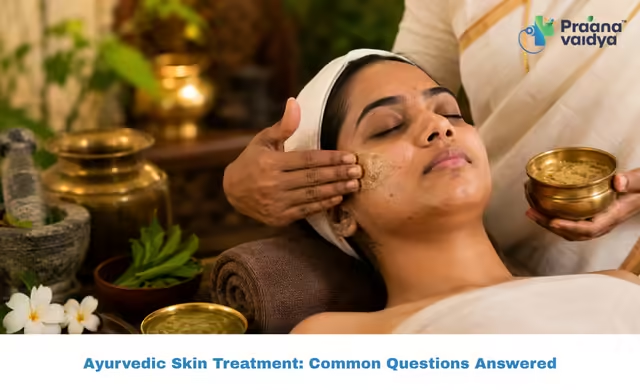
Mukhalepa is a traditional Ayurvedic facial application.
A herbal paste is prepared and applied to the face according to the intended purpose and the individual’s skin condition.
The ingredients may vary and can include traditionally used herbs and natural substances.
Mukhalepa may be considered for certain concerns involving:
- Uneven skin tone
- Dull-looking skin
- Certain pigmentation concerns
- General facial skin care
The formulation should be appropriate for the individual’s skin type.
Can Ayurveda Help With Dry Skin?
Ayurveda traditionally pays attention to qualities such as dryness, roughness, and sensitivity.
For people with dry skin, an Ayurvedic approach may include:
- Appropriate oil-based external care
- Dietary guidance
- Hydration
- Gentle cleansing
- Avoiding excessive exfoliation
- Sleep and lifestyle recommendations
Oil-based therapies may be selected according to individual needs.
However, severe or persistent dryness accompanied by scaling, cracks, bleeding, or itching should be medically evaluated because conditions such as eczema or psoriasis can present with similar symptoms.
Can Ayurveda Treat Eczema?
Eczema is a chronic inflammatory skin condition that can cause:
- Itching
- Dryness
- Redness
- Scaling
- Cracking
- Skin irritation
Ayurvedic approaches may focus on diet, lifestyle, external care, and individualised herbal preparations.
However, eczema can vary considerably in severity.
Patients should not discontinue prescribed dermatological treatment without discussing it with their doctor.
Ayurvedic consultation may be considered as complementary care when appropriate.
What About Psoriasis?
Psoriasis is a chronic immune-mediated skin condition that can cause raised, scaly patches.
Because psoriasis can be persistent and may involve joints in some people, professional diagnosis and ongoing medical care are important.
Ayurvedic treatment may be explored by some patients as a complementary approach involving personalised diet, lifestyle, external therapies, and traditional herbal preparations.
Any complementary treatment should be discussed with the healthcare professionals involved in the patient’s care.
Can Ayurveda Help With Skin Allergies?
Skin reactions can have many causes.
Examples include:
- Contact dermatitis
- Drug reactions
- Atopic dermatitis
- Urticaria
- Insect reactions
- Food-related reactions
Ayurvedic consultation may consider lifestyle and dietary factors, but sudden or severe allergic reactions require appropriate medical attention.
If a rash is accompanied by swelling of the lips or tongue, breathing difficulty, dizziness, or widespread severe symptoms, urgent medical care is required.
Does Ayurveda Treat Skin Problems From the Inside?
One of the distinctive aspects of traditional Ayurvedic thinking is that skin health is not viewed entirely as a surface issue.
Ayurvedic assessment may consider:
- Digestion
- Dietary habits
- Elimination
- Sleep
- Stress
- Lifestyle
- Seasonal influences
This does not mean that every skin condition originates from the digestive system.
Rather, Ayurveda traditionally considers overall health when developing an individualised approach.
Are Ayurvedic Skin Treatments Suitable for Everyone?
No.
A treatment that suits one person may not suit another.
Factors that can influence suitability include:
- Age
- Pregnancy
- Skin sensitivity
- Existing medical conditions
- Allergies
- Current medications
- Severity of the skin problem
- Previous skin treatments
This is why personalised consultation is preferable to choosing strong herbal preparations based solely on an online recommendation.
Are Herbal Skin Products Always Safe?
“Natural” does not automatically mean risk-free.
Herbal products can potentially cause:
- Allergic reactions
- Irritation
- Dryness
- Sensitivity
- Interactions with medicines
Quality and formulation also matter.
Patients should be cautious with products containing unknown ingredients, unclear concentrations, or unsupported claims.
Patch testing may be appropriate for some topical preparations, but it does not eliminate the possibility of a reaction.
How Long Does Ayurvedic Skin Treatment Take to Show Results?
There is no fixed timeline.
Treatment response can depend on:
- Type of skin condition
- Severity
- Duration
- Individual health
- Treatment consistency
- Lifestyle
- Diet
- Trigger exposure
- Response to the selected therapy
Some skin concerns may show changes relatively quickly, while chronic conditions may require longer-term management.
A realistic treatment plan should focus on gradual and sustainable improvement rather than promising immediate results.
Can Ayurvedic Skin Treatment Prevent Skin Problems From Returning?
Recurrence depends on the underlying condition.
For example, pigmentation may return with continued sun exposure, while acne may recur due to hormonal, genetic, lifestyle, or other factors.
Ayurvedic skin care may therefore include preventive lifestyle recommendations such as:
- Sun protection
- Gentle skin care
- Adequate sleep
- Balanced nutrition
- Stress management
- Avoiding known triggers
- Maintaining an appropriate routine
The goal is to support long-term skin health rather than simply addressing a visible symptom.
What External Ayurvedic Therapies May Be Used?
Depending on the condition, Ayurvedic skin care may involve different external approaches.
These can include:
Abhyanga
Oil massage may be used for selected purposes and according to individual suitability.
Mukhalepa
A herbal paste applied to the face.
Lepa
Herbal pastes may be applied to selected areas of the body.
Herbal Baths or Washes
Certain herbal preparations may be used externally under appropriate guidance.
The therapy should be selected according to the condition rather than simply because it is traditionally available.
What Should You Avoid During Ayurvedic Skin Treatment?
Certain habits can make skin problems worse.
Avoid:
- Excessive scrubbing
- Picking acne
- Using multiple new products simultaneously
- Applying undiluted essential oils
- Using unknown herbal mixtures
- Ignoring worsening symptoms
- Excessive sun exposure
- Stopping prescribed medication without medical advice
A simpler, consistent skin-care routine is often easier to monitor.
Can Ayurveda and Modern Dermatology Be Used Together?
In some situations, complementary care may be possible.
For example, a person may continue appropriate dermatological care while also receiving Ayurvedic guidance regarding:
- Diet
- Lifestyle
- Stress management
- Gentle skin care
However, herbs and supplements can interact with medications.
Patients should inform their healthcare providers about all herbal products and therapies they are using.
Conclusion
Ayurvedic skin treatment takes a personalised approach to skin health, combining traditional principles with attention to diet, lifestyle, skin care, and individual constitution.
Whether the concern involves acne, pigmentation, dryness, eczema, psoriasis, or another skin problem, Ayurveda does not necessarily recommend the same treatment for every person. Factors such as Prakriti, Vikriti, Dosha considerations, digestion, lifestyle, sleep, and environmental exposure may be considered during consultation.
Traditional therapies such as Mukhalepa and other external applications may form part of an Ayurvedic skin-care plan when appropriate.
At the same time, realistic expectations are essential. Chronic or severe skin conditions may require dermatological diagnosis and medical treatment. Ayurvedic care can be considered as complementary support where appropriate, rather than a reason to delay necessary medical care.
At Praanavaidya, consultation can help you understand your individual skin concerns and explore an Ayurvedic approach suited to your health, skin condition, and lifestyle.
Visit Us in-
Rajajinagar- 08065903133
Hubballi – 08065903145
Indiranagar- 08065903135
Mumbai-08065903118
Yelahanka- 08065903134
Mangaluru-08065903136
Chamrajpet-08065903132
Delhi-08065903140
Lucknow-08065903130
Frequently Asked Questions About Ayurvedic Skin Treatment
What is Ayurvedic skin treatment?
Ayurvedic skin treatment is a traditional approach to skin care that may combine diet, lifestyle guidance, herbal preparations, external applications, and Ayurvedic therapies according to an individual’s needs.
Can Ayurveda treat acne naturally?
Ayurvedic care may support people with acne through personalised diet, lifestyle, skin care, and selected herbal approaches. Moderate to severe acne should also receive appropriate professional evaluation.
Is Ayurveda effective for pigmentation?
Ayurvedic approaches may support the appearance of uneven skin tone and pigmentation, but results depend on the underlying cause. Sun protection and appropriate diagnosis remain important.
Can Ayurvedic treatment help eczema?
Ayurvedic care may be explored as complementary support for eczema, but persistent or severe eczema requires appropriate medical management.
Can Ayurvedic treatment cure psoriasis permanently?
Psoriasis is a chronic condition and can have periods of improvement and recurrence. No treatment should guarantee permanent elimination. Appropriate medical care remains important.
How long does Ayurvedic skin treatment take?
There is no standard treatment duration. It depends on the type and severity of the condition, individual response, lifestyle, and treatment plan.
Are Ayurvedic skin treatments safe?
They can be appropriate when properly selected and administered, but herbal products and therapies can still cause side effects or interactions. Individual assessment is important.
Can I use Ayurvedic remedies with dermatological medicines?
Sometimes complementary approaches may be possible, but herbal products can interact with medicines. Discuss all Ayurvedic products and therapies with your healthcare providers.
Does Ayurveda consider diet important for skin health?
Yes. Traditional Ayurveda considers diet and digestion as part of overall health and may include personalised dietary guidance in a skin-care plan.
When should I seek medical help for a skin problem?
Seek professional medical evaluation for rapidly changing, severe, infected, bleeding, widespread, or unexplained skin problems, or whenever symptoms are significantly affecting your daily life.
Praanavaidya
Healthcare Professional
Focused on patient-centric care and evidence-based treatment plans.
More from Praanavaidya