A slipped disc can make everyday activities such as sitting, bending, walking or sleeping uncomfortable. Many people searching for Ayurvedic treatment for slipped disc want to know what Ayurveda involves, what a consultation may cover, and how to approach care responsibly.
At Praanavaidya, care can begin with a doctor-led consultation to understand your back or spine concern, previous evaluations, current symptoms, daily routine and treatment history. An Ayurvedic plan can then be discussed according to the individual rather than a fixed template.
What Is a Slipped Disc?
“Slipped disc” is a common everyday term. People may also use terms such as herniated disc or disc bulge. The spine contains discs between many vertebrae, and changes involving a disc can be associated with different symptoms.
People may notice:
- Lower-back discomfort
- Pain that travels into the buttock or leg
- Tingling or numb sensations
- Stiffness or difficulty with certain movements
- Symptoms that are more noticeable during sitting or bending
These symptoms can have different causes, so the phrase “slip disc” should not be treated as a diagnosis by itself. New or worsening weakness, loss of bladder or bowel control, numbness around the groin or significant symptoms after trauma warrant prompt medical assessment.
How Does Ayurveda Approach Slipped Disc Concerns?
Ayurveda uses a traditional framework for understanding health and musculoskeletal complaints. In Ayurvedic practice, back and spine concerns may be considered alongside factors such as individual constitution, lifestyle, sleep, activity and daily routine.
There is no single Ayurvedic treatment for every person. A consultation may cover:
- Where symptoms occur and when they appear
- Movement, posture and daily activity
- Previous reports, treatment or procedures
- Current medicines or other care
- Sleep, routine and practical schedule
- The person’s expectations and questions
This consultation-first approach keeps the focus on the individual rather than selecting a therapy simply because it is popular online.
Ayurvedic Therapies That May Be Discussed
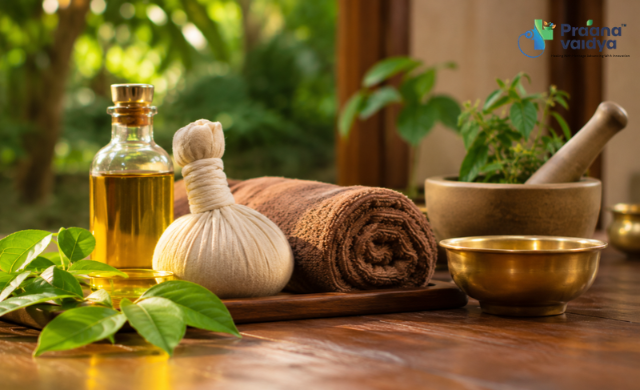
The exact therapies depend on the consultation and individual plan. Depending on the concern, an Ayurvedic doctor may discuss options such as Kati Basti, Abhyanga, Swedana, Marma-based approaches or selected Panchakarma procedures.
Kati Basti
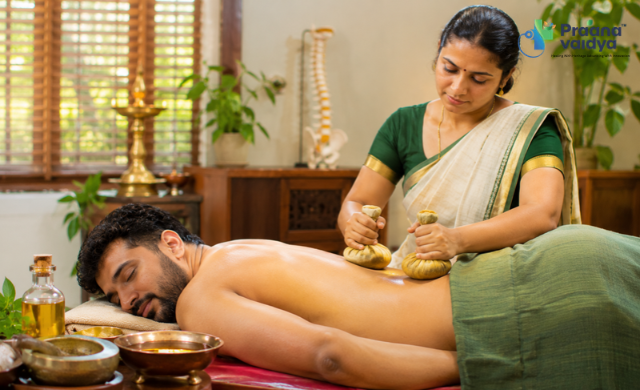
Kati Basti is a traditional Ayurvedic procedure involving a prepared area over the lower back. It is commonly discussed in Ayurvedic settings for back-related concerns. Suitability should be considered during consultation.
Abhyanga
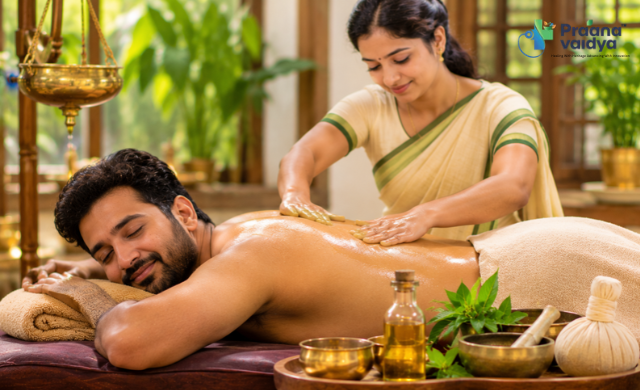
Abhyanga refers to an Ayurvedic oil massage practice. It may be included in a broader plan depending on the person’s needs, comfort and schedule.
Swedana
Swedana refers to traditional Ayurvedic sweating or fomentation procedures. The method can vary, so the practitioner should determine whether it is appropriate.
Panchakarma
Panchakarma is a group of traditional Ayurvedic procedures rather than one treatment. It should not be assumed that everyone with a slipped disc needs Panchakarma. A practitioner can explain whether any procedure is relevant.
What to Expect During an Ayurvedic Consultation
A first consultation is an opportunity to explain your concerns and understand available options. You may be asked about when symptoms started, activities that affect them, previous scans or reports, current medicines, work routine, sitting time, physical activity and sleep.
Bring relevant reports and a list of current medicines if available. It can also help to note when symptoms occur and how they have changed.
Questions You Can Ask During Your Consultation
Consider asking:
- What does my current back or spine concern involve?
- Which Ayurvedic therapies are being considered?
- How often would consultations or therapies be needed?
- What preparation is required?
- What should I continue or avoid during the care plan?
- When should I return for follow-up?
Having these questions ready can make the consultation more useful.
How Long Does Ayurvedic Treatment for Slipped Disc Take?
There is no useful one-size-fits-all answer. The duration and number of sessions can vary according to the individual’s symptoms, previous care, therapy plan and follow-up needs.
Some people may discuss a short consultation-led plan, while others may discuss a longer course of therapies or follow-ups. A fixed number of days should not be assumed before assessment.
Searches for “permanent cure for slip disc” can also create unrealistic expectations. A responsible care discussion should focus on assessment, available options and realistic expectations rather than guarantees.
What Can Affect the Treatment Schedule?
The schedule may depend on factors such as:
- The nature of the back or spine concern
- Previous evaluations and treatment
- The therapies included in the individual plan
- Frequency of visits
- Follow-up requirements
- The person’s daily routine and availability
What Can You Do Alongside an Ayurvedic Care Plan?
Practical routine measures may include:
- Taking movement breaks during long periods of sitting
- Paying attention to comfortable sitting and working positions
- Following activity guidance from your healthcare professional
- Avoiding sudden changes in physical activity
- Keeping track of symptoms and changes
- Taking medicines only as advised
Do not stop prescribed medicines or replace an existing treatment plan simply because you are considering Ayurveda. Discuss major changes or additional therapies with the appropriate clinician.
If you are unsure which Ayurvedic approach may be appropriate for your back or spine concern, speak with the Praanavaidya team about a consultation and available care options.
When Should You Seek Medical Assessment?
Ayurvedic care should not replace urgent evaluation when warning symptoms are present.
Seek prompt assessment for:
- New or worsening weakness
- Major difficulty walking or controlling a limb
- Loss of bladder or bowel control
- Numbness around the inner thighs, buttocks or genital area
- Severe symptoms after significant trauma
- Rapidly worsening symptoms
The purpose of this guidance is not to create alarm. It is to help readers understand when a back concern needs timely assessment rather than relying only on self-care or internet searches.
Why Choose a Consultation-First Approach at Praanavaidya?
Search results can list many therapy names, but a treatment plan is more useful when it starts with the person’s situation.
At Praanavaidya, a consultation can provide an opportunity to discuss:
- Your specific back or spine concern
- Previous reports and treatment history
- Suitable Ayurvedic therapy options
- Expected scheduling and follow-up
- Practical questions about visits and preparation
Final Thoughts
An Ayurvedic approach to slipped disc concerns should begin with understanding the individual situation rather than choosing a popular therapy from a search result. Terms such as slipped disc, disc bulge and herniated disc are often used online, but each person’s situation can differ.
If you are considering Ayurveda, take your previous reports, treatment details and questions to a qualified practitioner. Keep other healthcare professionals involved where appropriate, and avoid promises of guaranteed results or fixed treatment timelines.
Looking for Ayurvedic consultation for slipped disc or other back and spine concerns? Contact Praanavaidya to explore your options in
Rajajinagar- 08065903133
Hubballi – 08065903145
Indiranagar- 08065903135
Mumbai-08065903118
Yelahanka- 08065903134
Mangaluru-08065903136
Jayanagar- 08065903132
Delhi-08065903140
Lucknow-08065903130
FAQs
Is Ayurveda suitable for slipped disc?
Ayurvedic care may be considered as an option to discuss with a qualified practitioner. Suitability depends on the individual situation, symptoms, previous evaluations and other care already being received.
What is the Ayurvedic treatment for a slipped disc?
There is no single treatment used for every person. Depending on the consultation, an Ayurvedic practitioner may discuss therapies such as Kati Basti, Abhyanga, Swedana, Marma-based approaches or selected Panchakarma procedures.
Can Ayurveda cure a slipped disc permanently?
It is not appropriate to promise a permanent cure or a fixed outcome. A responsible consultation should focus on the person’s condition, available options, realistic expectations and follow-up.
How long does Ayurvedic treatment for slipped disc take?
There is no standard duration for everyone. The schedule can vary according to symptoms, the plan recommended after consultation, previous care and follow-up needs.
Is Kati Basti used for slipped disc?
Kati Basti is a traditional Ayurvedic procedure commonly discussed for lower-back concerns. Whether it is suitable depends on an individual’s situation and should be decided during a consultation.
Should I stop my current treatment when starting Ayurveda?
Do not stop prescribed medicines or existing treatment on your own. Discuss any planned change or additional therapy with the appropriate healthcare professional.
Praanavaidya
Healthcare Professional
Focused on patient-centric care and evidence-based treatment plans.
More from Praanavaidya