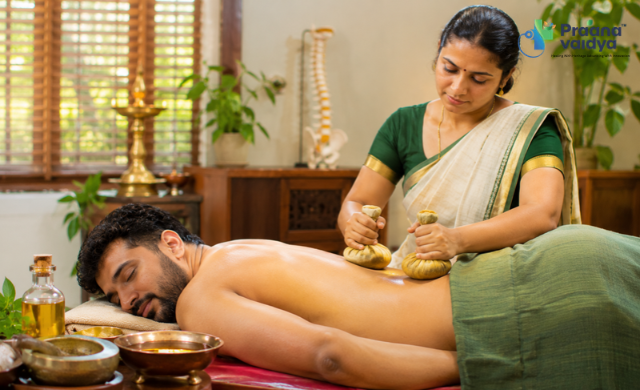

Back pain does not follow the same pattern for everyone, so there is no single number of days that applies to every Ayurvedic treatment plan. The duration can vary based on the nature and duration of the discomfort, daily routine, physical activity, sleep, and the approach recommended after a consultation.
If you are searching for how long Ayurvedic treatment takes for back pain, the more useful question is: what determines the length of a personalized plan, and what should you expect during the process? This guide explains the main factors, common stages of care, and practical ways to make the plan easier to follow.
Looking for personalized Ayurvedic care for back pain?
Is There a Fixed Duration for Ayurvedic Back Pain Treatment?
No. Ayurvedic back pain treatment duration is not fixed because back pain can have different patterns and contributing factors.
Someone with recent discomfort after a change in activity may have a different care plan from someone with recurring lower back discomfort. The same applies when back pain is associated with posture, work habits, physical activity, or an existing condition.
A practitioner may consider:
- How long the back pain has been present
- Where the discomfort is located
- Whether it is occasional or recurring
- Daily activity and work routine
- Sleep and rest patterns
- Previous treatments or therapies
- Age and overall health
- How consistently the recommended plan can be followed
This is why searches such as “how many days Ayurvedic treatment for back pain” do not have one universal answer.
How Long Does Ayurvedic Treatment Take for Back Pain?
The duration can range from a short, focused care plan to a longer course with follow-ups, depending on the individual assessment.
It is helpful to think of Ayurvedic care as a process rather than a single session.
Initial consultation and assessment
The first step is understanding the person’s back-pain history and current concerns. A practitioner may discuss the location and pattern of discomfort, daily activities, sleep, work posture, previous care, and other relevant factors.
This helps determine what type of approach may be appropriate and whether further medical evaluation is needed.
Personalised treatment planning
After the consultation, the practitioner may recommend a plan based on individual needs. Depending on the case, it may include Ayurvedic therapies, lifestyle guidance, diet-related suggestions, movement advice, and follow-up consultations.
Commonly discussed Ayurvedic approaches for back-related concerns include Abhyanga and Kati Basti. Panchakarma may also be considered in selected cases when a practitioner believes it is appropriate.
These approaches should not be treated as a standard package for every person.
Follow-up and plan adjustment
A follow-up gives the practitioner an opportunity to understand how the person is progressing and whether any part of the routine needs adjustment.
The plan may be modified according to the person’s experience, schedule, and changing needs rather than following a rigid timetable.
What Factors Affect Ayurvedic Back Pain Treatment Duration?
Several factors can influence the length and structure of an Ayurvedic back pain care plan.
Duration of back pain
Recent discomfort and long-standing recurring pain may require different approaches. A longer history does not automatically mean that a person needs a longer course, but it is an important part of the assessment.
Nature of the problem
Lower back discomfort, stiffness, sciatica-related symptoms, and discomfort associated with an existing spinal condition should not automatically be approached in the same way.
Daily routine
Long periods of sitting, repetitive physical work, lifting, poor workstation setup, and limited movement can influence the overall care plan.
If these factors remain unchanged, the practitioner may need to address them as part of the routine.
Consistency
Following the recommended schedule and daily-care instructions consistently can make the treatment process easier to monitor.
Frequently changing the routine or missing follow-ups can make it harder to assess how the plan is working.
Individual response
People do not respond to the same approach in exactly the same way. A practitioner may therefore adjust the plan based on the individual’s experience instead of following a fixed timetable.
What Can an Ayurvedic Back Pain Plan Include?
There is no universal package, but a personalised plan may involve several components.
Ayurvedic therapies
Depending on the consultation, therapies such as Abhyanga or Kati Basti may be included. The choice, frequency, and duration should be determined according to individual needs.
Lifestyle guidance
A practitioner may discuss practical habits related to posture, movement, rest, work routines, and everyday activity.
For people who spend many hours at a desk, simple changes such as adjusting the workstation and taking regular movement breaks may become part of the overall routine.
Diet and daily routine
Dietary and daily-routine guidance may be discussed as part of an overall Ayurvedic approach. Recommendations can vary from one person to another.
Follow-up consultations
Follow-ups help keep the plan personalised. Instead of assuming that the same schedule should continue indefinitely, the practitioner can review the situation and make adjustments when needed.
How Can You Make an Ayurvedic Back Pain Plan Easier to Follow?
The treatment schedule is only one part of the process. Your everyday routine can also affect how practical the plan is.
Consider these simple habits:
- Follow the schedule recommended during your consultation.
- Avoid sudden changes in physical activity.
- Take regular movement breaks if you sit for long periods.
- Pay attention to your sleeping and working posture.
- Keep track of changes in pain, stiffness, or mobility.
- Attend follow-up consultations as advised.
- Tell your practitioner about any new or worsening symptoms.
Avoid comparing your treatment timeline with someone else’s. A friend’s experience or an online testimonial cannot determine the right duration for your situation.
When Should You Seek Medical Evaluation for Back Pain?
Ayurvedic care should not replace urgent medical assessment when back pain is accompanied by concerning symptoms.
Seek prompt medical attention if back pain occurs with:
- New or significant weakness or numbness
- Loss of bladder or bowel control
- Severe pain after a major injury
- Fever or feeling seriously unwell
- Sudden symptoms that are rapidly worsening
- Other symptoms that feel unusual or concerning
If you have already been diagnosed with a spinal or neurological condition, discuss any complementary treatment plan with your treating healthcare professional.
How Can You Know Whether Your Treatment Plan Is Appropriate?
Before starting, consider asking:
- What is the main focus of my treatment plan?
- How often will I need sessions?
- What daily changes should I follow?
- When should I return for a follow-up?
- What changes should I report?
- Are there symptoms that require another type of medical evaluation?
- How will the plan be adjusted if my symptoms change?
These questions can help you understand the process instead of focusing only on the number of treatment days.
Ayurvedic Treatment for Back Pain: Focus on the Right Plan, Not a Fixed Number
If you are searching for “how long does Ayurvedic treatment take for back pain,” there is no single duration that can be recommended for everyone.
The length of care depends on the individual’s symptoms, history, routine, treatment approach, and follow-up needs.
The most useful starting point is a proper consultation. Instead of choosing a treatment duration based on someone else’s experience, discuss your specific concerns with a qualified practitioner and understand what the proposed plan involves.
Looking for Ayurvedic care for back pain? Praanavaidya offers personalised consultations across
Rajajinagar- 08065903133
Hubballi – 08065903145
Indiranagar- 08065903135
Mumbai-08065903118
Yelahanka- 08065903134
Mangaluru-08065903136
Jayanagar- 08065903132
Delhi-08065903140
Lucknow-08065903130
Contact your nearest Praanavaidya centre to discuss your back-pain concerns and understand the care plan suited to your needs.
FAQs
How long does Ayurvedic treatment take for back pain?
There is no fixed duration for everyone. The treatment plan can vary depending on the nature and duration of the back pain, individual needs, daily routine, and follow-up requirements.
How many days of Ayurvedic treatment are needed for back pain?
The number of days depends on the individual assessment and the type of care recommended. A practitioner can explain the expected schedule after understanding the person’s concerns.
Is Ayurvedic treatment for back pain a long-term process?
Not necessarily. Some people may have a focused care plan, while others may require continued follow-up or adjustments based on their individual situation.
What factors affect Ayurvedic back pain treatment duration?
Factors can include how long the discomfort has been present, its pattern and location, daily activity, work routine, previous care, lifestyle, and consistency with the recommended plan.
Can Kati Basti be included in an Ayurvedic back pain treatment plan?
Kati Basti is one of the Ayurvedic therapies that may be considered as part of a back-care plan. Whether it is appropriate, and how often it is used, depends on the individual consultation.
Does Ayurvedic treatment for back pain require follow-up?
Follow-up may be recommended so the practitioner can review the person’s experience and adjust the care plan when necessary.
Should I wait for Ayurvedic treatment if my back pain is severe?
Severe or rapidly worsening symptoms, particularly when accompanied by significant weakness, numbness, bladder or bowel changes, fever, or injury, warrant prompt medical evaluation rather than waiting for routine care.
Praanavaidya
Healthcare Professional
Focused on patient-centric care and evidence-based treatment plans.
More from Praanavaidya