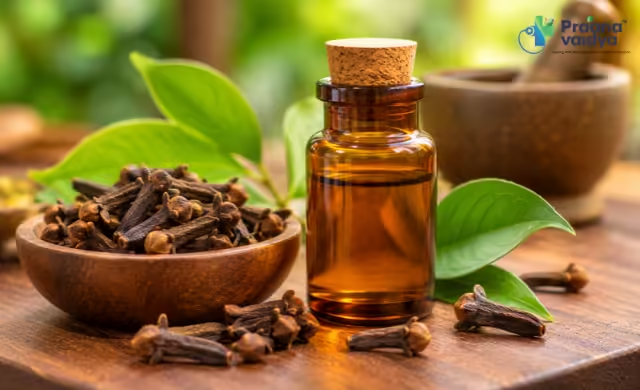
Clove oil is a concentrated aromatic oil made from clove, a spice widely known as Lavanga in Ayurveda. Many people search for clove oil because they want to understand its traditional uses, how it is prepared, and how it differs from simply using whole cloves.
In Ayurveda, the form and method of using an ingredient matter. Clove oil is concentrated, so it should not automatically be treated like whole clove or used in the same quantity. This guide explains the traditional Ayurvedic context of clove oil, common ways it may be used, and important points to consider before using it.
At Praanavaidya, Ayurvedic care is approached with attention to the individual, the preparation being used, and the way it fits into a broader care plan.
What Is Clove Oil in Ayurveda?
Clove oil is an aromatic oil obtained from clove buds. In Ayurveda, clove is commonly referred to as Lavanga. The oil is much more concentrated than the whole spice, which is why its use requires more attention to quantity, formulation and method.
Clove contains naturally occurring aromatic compounds, including eugenol, which contributes to its characteristic smell and taste. From an Ayurvedic perspective, however, an ingredient is not considered only by its chemical composition. Traditional use also considers the form, preparation and context in which it is used.
This distinction is important when reading online information about clove oil benefits. Traditional use should not be confused with proof that an oil can treat, cure or prevent a medical condition.
What Is Clove Oil Traditionally Used For?
The answer depends on the formulation and the intended use. Clove oil may be found in selected Ayurvedic and traditional preparations because of its strong aroma and characteristic properties.
Aromatic preparations
The distinctive fragrance of clove makes its oil suitable for certain aromatic applications. It may be used as part of a blend rather than as a standalone oil.
Topical oil blends
In traditional practices, concentrated aromatic oils may be combined with a suitable base oil before topical use. The exact dilution and combination can vary according to the preparation.
Oral-care preparations
Clove has a long history of use in traditional oral-care practices. Clove-derived ingredients can also appear in products designed for oral hygiene. However, concentrated clove oil should not be assumed to be suitable for direct application inside the mouth.
Herbal formulations
Clove may be included as one ingredient in a larger herbal formulation. In such preparations, the overall formulation matters more than considering clove oil as an isolated ingredient.
What Are the Traditional Benefits of Clove Oil?
When people search for “clove oil benefits,” they are often looking for a simple list of health effects. Ayurveda takes a more contextual approach.
Traditional discussions of clove commonly focus on qualities such as its strong aroma and warming character. These qualities help explain why clove appears in certain traditional preparations and aromatic blends.
It is useful to separate three ideas:
- Traditional Ayurvedic use describes how an ingredient has been used within an established traditional system.
- Product use describes how a particular preparation is formulated and intended to be used.
- Medical evidence is a separate question and should not be inferred from traditional use alone.
Therefore, clove oil should not be presented as a guaranteed solution for a disease or symptom. Its suitability depends on the preparation, concentration, route of use and individual circumstances.
Clove Oil vs Whole Cloves: What Is the Difference?
Whole cloves and clove oil come from the same plant, but they are not interchangeable.
Whole cloves are a dried spice and contain their constituents within the plant material. Clove oil is a concentrated preparation, so a small amount can contain a much higher concentration of aromatic compounds.
This difference affects how each is handled.
| Whole Cloves | Clove Oil |
| Dried plant material | Concentrated aromatic oil |
| Commonly used as a spice | Commonly used in selected formulations and blends |
| Can be used in cooking | Requires greater attention to dilution and application |
| Less concentrated | Highly concentrated |
The key point is simple: more concentrated does not automatically mean better. The appropriate form depends on the intended purpose.
How Is Clove Oil Used in Ayurveda?
The method of use depends on the product and the traditional formulation.
Diluted topical use
When clove oil is intended for external use, it is generally considered in diluted form rather than as a concentrated oil applied directly to the skin. A suitable carrier oil and appropriate dilution can depend on the specific preparation.
As part of a formulation
Clove oil may be combined with other ingredients to create a particular traditional preparation. In these cases, the complete formulation should be followed rather than changing the proportions independently.
In aromatic applications
Because of its strong fragrance, clove oil may be used in selected aromatic preparations. The amount used should follow the instructions for the specific product.
Can You Use Clove Oil Directly?
It is better not to assume that concentrated clove oil is suitable for direct use.
Essential oils are highly concentrated, and clove oil can be particularly strong. Undiluted use may be uncomfortable or irritating, especially on sensitive skin or delicate areas.
Before using a clove oil product, check:
- Whether it is intended for internal, topical or aromatic use
- Whether it needs dilution
- Which carrier oil or base is recommended
- The amount specified for the product
- Any precautions on the label
- Whether a qualified Ayurveda professional has recommended it for your specific situation
Do not swallow concentrated clove oil unless the specific product and a qualified professional indicate that it is appropriate.
Who Should Be Careful With Clove Oil?
Clove oil is not automatically suitable for everyone. Extra care is sensible when using concentrated oils, particularly for children, during pregnancy or breastfeeding, for people with known sensitivities, or when multiple medicines or products are being used.
If you have a health condition or are already receiving treatment, discuss the use of concentrated herbal oils with a qualified healthcare or Ayurveda professional before adding them to your routine.
At Praanavaidya, suitability can be considered based on the individual’s needs, health history and the specific Ayurvedic preparation being discussed.
How to Choose a Clove Oil Product
Not every bottle labelled “clove oil” is intended for the same purpose. Before buying or using one, look at the product information carefully.
Consider:
- Botanical name and plant part used
- Intended method of use
- Ingredients and carrier oils
- Concentration or dilution information
- Storage instructions
- Manufacturer information
- Usage and safety directions
A clearly labelled product is easier to use correctly than an oil with limited information about its contents or intended application.
Clove Oil in Ayurveda: A Practical Takeaway
Clove oil has a distinct place in traditional herbal and aromatic practices, but it is important to understand what that means. Ayurveda considers ingredients within a broader context rather than treating every herb or oil as a universal remedy.
If you are exploring clove oil in Ayurveda, focus on the preparation, concentration, intended use and individual suitability. Avoid assuming that traditional use means a specific medical outcome is guaranteed.
Praanavaidya follows an individualised approach to Ayurvedic care, with attention to the person, the preparation and the context in which it is being considered.
A Note on Traditional Ayurvedic Information
This article is intended for general educational purposes. It describes traditional Ayurvedic uses and does not claim that clove oil can diagnose, treat, cure or prevent any medical condition. Suitability and use can vary based on the individual, the product and the method of application. For personalised guidance, speak with a qualified Ayurveda professional.
Conclusion
Clove oil is a concentrated preparation associated with the traditional use of clove, or Lavanga, in Ayurveda. It may be included in selected aromatic, topical, oral-care or herbal preparations, but the way it is used matters.
Understanding the difference between whole cloves and concentrated clove oil is equally important. Rather than using an essential oil simply because it is natural, check its intended use, dilution requirements and product instructions.
If you want to explore Ayurvedic care or learn whether a particular preparation is appropriate for you, Praanavaidya can help you understand the options available across its centres in
Rajajinagar- 08065903133
Hubballi – 08065903145
Indiranagar- 08065903135
Mumbai-08065903118
Yelahanka- 08065903134
Mangaluru-08065903136
Jayanagar- 08065903132
Delhi-08065903140
Lucknow-08065903130
FAQ
What is clove oil in Ayurveda?
Clove oil is a concentrated aromatic oil obtained from clove, known as Lavanga in Ayurveda. It may be included in selected traditional formulations, topical preparations or aromatic applications.
What is clove oil used for in Ayurveda?
Traditional use can vary by preparation and purpose. Clove oil may be used in selected aromatic, topical, oral-care and herbal formulations. The specific method and concentration matter.
Is clove oil the same as using whole cloves?
No. Whole cloves are dried plant material, while clove oil is a concentrated preparation. They should not automatically be used in the same way or quantity.
Can clove oil be applied directly to the skin?
Concentrated clove oil should not automatically be applied directly to the skin. Whether dilution is required depends on the product and intended use. Follow the product instructions or guidance from a qualified professional.
Can clove oil be taken internally?
Do not assume that an essential oil is suitable for internal use. Concentrated clove oil should only be used internally when the specific product is intended for that purpose and appropriate professional guidance has been provided.
What are the traditional benefits of clove oil?
Traditional Ayurvedic discussions focus on the qualities and uses of clove within specific preparations. These traditional uses should not be interpreted as proof that clove oil can treat or cure a medical condition.
How should I choose a clove oil product?
Check the botanical name, plant part, ingredients, concentration or dilution, intended use, manufacturer information and safety directions. Choose a clearly labelled product suited to the purpose for which it is intended.
Praanavaidya
Healthcare Professional
Focused on patient-centric care and evidence-based treatment plans.
More from Praanavaidya