Avascular necrosis (AVN) can begin quietly, but damage to a joint can progress over time. When blood supply to bone is reduced, bone tissue may weaken and eventually collapse. In the hip, this can lead to persistent pain, reduced movement and, in advanced cases, the need for joint replacement.
A common question is: can Ayurvedic treatment for avascular necrosis help before joint replacement becomes necessary?
The honest answer is nuanced. Ayurveda may have a supportive role in managing pain, stiffness, mobility, daily routine and overall wellbeing, but there is not enough high-quality clinical evidence to say that Ayurvedic treatment can reliably restore damaged bone or prevent joint collapse. If AVN is suspected or already diagnosed, the stage of the condition matters greatly. Early assessment gives you more options to discuss with an orthopaedic specialist.
At Praanavaidya, an Ayurvedic consultation can help review symptoms, daily habits, existing health concerns and current medicines and determine whether supportive Ayurvedic care is appropriate. Ayurveda should not be used as a reason to postpone imaging, orthopaedic review or a procedure that is medically indicated.
What Is Avascular Necrosis?
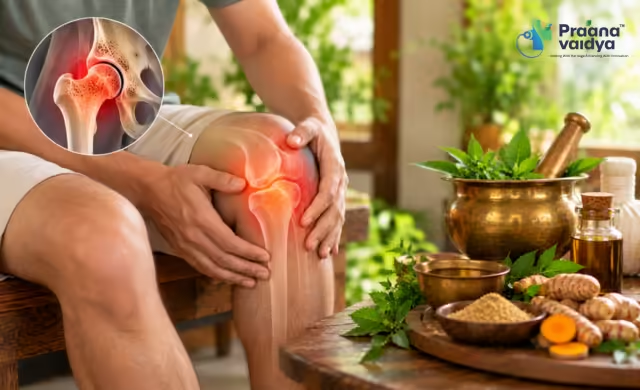
Avascular necrosis, also called osteonecrosis, occurs when reduced blood flow causes bone tissue to die. It most often affects the femoral head, the rounded top of the thigh bone that forms the hip joint, although other joints can also be involved.
When AVN progresses, the weakened bone may lose its normal structure. In the hip, this can eventually cause the femoral head to collapse, affecting the smooth movement of the joint.
Common Risk Factors for AVN
Avascular necrosis can have several possible causes. Some recognised risk factors include:
- Long-term or high-dose corticosteroid use
- Heavy alcohol use
- Previous hip or other joint trauma
- Certain blood disorders, including sickle cell disease
- Some autoimmune and inflammatory conditions
- Certain medical treatments and conditions that affect blood vessels or bone health
Sometimes, however, no single cause can be identified.
What Are the Symptoms of AVN?
Early avascular necrosis may cause few symptoms. As the condition progresses, people may develop:
- Pain in the groin, hip or buttock
- Pain that becomes worse with walking or weight-bearing
- Stiffness or reduced hip movement
- Difficulty climbing stairs or walking longer distances
- Pain that may eventually occur even at rest
Because early symptoms can resemble arthritis, muscle problems or other hip conditions, diagnosis should not be based on symptoms alone.
How Is Avascular Necrosis Diagnosed?
A clinician may begin with a medical history and physical examination. Imaging is then used to assess the bone.
An X-ray can show changes in more established disease, but an MRI can detect AVN earlier and can help determine how much of the bone is affected. The stage and size of the affected area are important when considering treatment.
Can AVN Be Treated Without Joint Replacement?
Sometimes, particularly when AVN is detected before the femoral head has collapsed. Treatment depends on the stage, location and extent of bone involvement, symptoms, age, general health and the underlying cause.
Depending on the individual case, an orthopaedic specialist may consider:
- Activity modification or reduced weight-bearing
- Treatment of an underlying medical cause or risk factor
- Pain management
- Joint-preserving procedures such as core decompression in selected early cases
- Other surgical options in selected patients
- Total hip replacement when the joint has significantly deteriorated or the femoral head has collapsed
Not every person with AVN needs a joint replacement immediately. However, avoiding surgery should not become the only goal. The priority is to choose treatment appropriate to the stage of the disease.
Where Might Ayurveda Fit Into AVN Care?
Ayurveda takes a broader view of symptoms, function, daily routine, diet and overall health. In an AVN care plan, an Ayurvedic doctor may assess pain, stiffness, mobility, sleep, digestion, activity level and other individual factors before recommending supportive measures.
Depending on the person’s assessment and medical history, Ayurvedic care may include:
- Individualised diet and daily-routine guidance
- Gentle movement or yoga-based practices where appropriate
- Measures intended to support comfort and mobility
- Ayurvedic medicines or procedures when considered suitable by a qualified practitioner
- Guidance on weight management, activity and recovery habits
These approaches should be individualised. They should also be reviewed for safety, particularly when a person is taking steroids, blood thinners, pain medicines or other prescription drugs.
What Ayurveda Cannot Currently Promise
This distinction is important.
AVN involves structural changes in bone, and advanced disease can lead to collapse. Current evidence is not strong enough to claim that Ayurveda alone can reliably:
- Re-establish the blood supply to necrotic bone
- Reverse established femoral-head collapse
- Regrow damaged bone in a predictable way
- Eliminate the need for joint replacement in every patient
Research specifically evaluating Ayurveda for avascular necrosis remains limited compared with the evidence base for established orthopaedic treatments.
Therefore, Ayurvedic care is better viewed as supportive and complementary when appropriate, rather than as a guaranteed alternative to orthopaedic treatment.
Why Early-Stage AVN Deserves Attention
If AVN is diagnosed early, the joint may not yet have collapsed. This can be a crucial point for discussing joint-preserving options.
A practical approach is:
- Confirm the diagnosis and stage with appropriate medical evaluation and imaging.
- Identify possible causes and risk factors.
- Discuss evidence-based orthopaedic options.
- If you want to include Ayurveda, share your diagnosis and all current medicines with a qualified Ayurvedic practitioner.
- Continue appropriate follow-up and repeat imaging when advised.
This approach avoids a common mistake: waiting for pain to become severe before taking action.
Can Ayurvedic Treatment Help With AVN Pain and Stiffness?
It may help some people manage symptoms and support day-to-day function, but the response varies.
Pain relief should not be taken as proof that the underlying bone damage has healed.
This is especially important with AVN because symptoms and structural progression do not always move together. A person may feel better while the underlying condition still requires monitoring.
If you are exploring Ayurveda for AVN, speak with a qualified practitioner before starting medicines or procedures. At Praanavaidya, the consultation can focus on your diagnosis, current treatment, medicines, symptoms and suitability for supportive Ayurvedic care.
When Should You See a Doctor?
Seek prompt medical evaluation if hip or joint pain is persistent, worsening, associated with significant difficulty walking, or follows trauma.
If you already have a diagnosis of AVN, do not stop prescribed medicines or delay recommended imaging or surgery solely to try an alternative treatment.
Early medical assessment can help establish whether the condition is stable, progressing or already affecting the structure of the joint.
Ayurveda and Joint Replacement: Can They Be Used Together?
Yes. Supportive Ayurvedic care and conventional orthopaedic care do not necessarily have to be treated as competing systems.
Depending on the individual situation, an Ayurvedic practitioner and orthopaedic specialist may both be involved in a person’s care.
The key is communication. Tell both practitioners about the treatments you are receiving. Some herbs and medicines can interact with prescription drugs or may not be suitable before or after surgery.
For someone with early AVN, the most useful question is not simply, “Can Ayurveda prevent joint replacement?”
A better question is:
“What is the stage of my AVN, what evidence-based options are available now, and can Ayurvedic care safely support my overall management?”
That question keeps the focus on preserving function and making timely decisions rather than relying on a single treatment claim.
Conclusion
Avascular necrosis can be serious, particularly when the femoral head begins to collapse. Early diagnosis is therefore more important than waiting to see whether pain settles.
Ayurvedic treatment may have a supportive role for selected people, particularly around symptom management, daily routine, mobility and overall wellbeing. However, current evidence does not justify promising that Ayurveda alone can reverse established AVN or reliably prevent joint replacement.
If you have AVN, work with qualified clinicians, understand the stage of your condition and keep recommended monitoring on track. For people considering Ayurveda, Praanavaidya can provide a consultation-led approach that considers the individual’s health history and existing treatment plan.
Medical information on this page is educational and does not replace diagnosis or treatment from a qualified healthcare professional. No specific outcome can be guaranteed, and response to treatment varies between individuals.
Connect with Praanavaidya to discuss your symptoms, diagnosis and whether an Ayurvedic care plan may be appropriate alongside medically recommended treatment.
Rajajinagar- 08065903133
Hubballi – 08065903145
Indiranagar- 08065903135
Mumbai-08065903118
Yelahanka- 08065903134
Mangaluru-08065903136
Jayanagar- 08065903132
Delhi-08065903140
Lucknow-08065903130
FAQs
Can Ayurveda cure avascular necrosis?
There is currently insufficient high-quality evidence to say that Ayurveda can cure or reverse avascular necrosis. Ayurvedic care may have a supportive role in symptom management and overall wellbeing, but it should not replace appropriate diagnosis, monitoring or medically indicated treatment.
Can avascular necrosis be treated without joint replacement?
In some cases, particularly when AVN is diagnosed before significant bone collapse, joint-preserving approaches may be considered. The appropriate treatment depends on the stage and extent of AVN, the affected joint and the individual’s overall health.
Can Ayurvedic treatment help with AVN pain?
Ayurvedic care may help some people manage symptoms such as pain and stiffness, but individual responses vary. Improvement in symptoms does not necessarily mean that the underlying bone damage has reversed.
What is the best treatment for early-stage AVN?
There is no single treatment that is best for every person. Early-stage AVN requires assessment of the affected bone, disease stage, possible causes and risk factors. An orthopaedic specialist can discuss appropriate joint-preserving options, while Ayurveda may be considered as supportive care where appropriate.
Can avascular necrosis be reversed naturally?
Established AVN should not be assumed to reverse on its own. Early diagnosis and appropriate monitoring are important because the condition can progress to bone collapse even when symptoms are limited.
Is MRI necessary for diagnosing avascular necrosis?
MRI is particularly useful for detecting AVN at an earlier stage and assessing the extent of bone involvement. The appropriate imaging depends on the clinical situation and should be determined by a healthcare professional.
Can I take Ayurvedic medicines along with my AVN medicines?
Do not assume that Ayurvedic medicines are automatically safe to combine with prescription medicines. Tell your Ayurvedic doctor and other treating doctors about all medicines and supplements you use so that potential interactions and contraindications can be considered.
When does AVN require a joint replacement?
Joint replacement may be considered when AVN has progressed significantly, particularly when the femoral head has collapsed and the joint has developed substantial damage, pain or loss of function. The decision depends on individual assessment.
Praanavaidya
Healthcare Professional
Focused on patient-centric care and evidence-based treatment plans.
More from Praanavaidya