
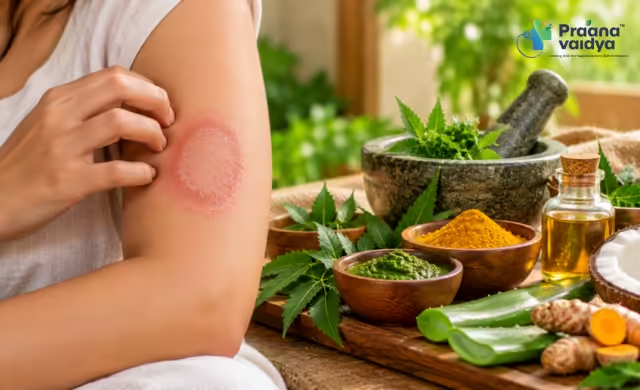
Humid weather can make the skin feel sticky, sweaty and uncomfortable, but persistent itching, scaling or ring-shaped rashes may be more than a seasonal nuisance. Warmth and moisture can create favourable conditions for several fungal skin infections, especially in skin folds, between the toes and around the groin.
Ayurvedic treatment for fungal skin infection should not mean relying on a home remedy or assuming every rash is fungal. At Praanavaidya, Ayurvedic care can be planned after assessing the symptoms, affected area, duration, recurrence and lifestyle factors. This guide explains why fungal infections can flare in humid climates, how Ayurvedic care may support skin health, and when medical evaluation or antifungal treatment is important.
Why Are Fungal Skin Infections Common in Humid Climates?
Fungi grow more easily in warm, moist environments. Sweat that remains on the skin, damp clothing, wet footwear and poorly ventilated skin folds can create conditions in which fungi multiply.
Common examples include:
- Tinea corporis, often called ringworm, which can cause itchy, scaly patches on the body.
- Tinea cruris, or jock itch, which affects the groin and nearby skin.
- Tinea pedis, or athlete’s foot, which commonly affects the spaces between the toes and the feet.
- Candidal skin infections, which can develop in warm, moist folds.
- Tinea versicolor, caused by an overgrowth of Malassezia yeast, which may produce lighter or darker patches with fine scaling.
What Does a Fungal Skin Infection Look and Feel Like?
Symptoms vary depending on the type and location of infection. A fungal rash may cause:
- Itching or burning
- Red, brownish or irritated skin
- Scaling or peeling
- A defined or ring-shaped border
- Cracks between the toes
- Moist, irritated skin in body folds
- Recurrent rashes after sweating
- Light or dark patches with fine scaling in tinea versicolor
However, not every itchy or red rash is fungal. Eczema, contact dermatitis, psoriasis, bacterial infections and other skin conditions can look similar. This is why repeated self-treatment without a proper assessment can delay the right care.
How Does Ayurveda Approach Fungal Skin Concerns?
Ayurveda traditionally views skin health in the context of the individual, including diet, digestion, daily routine, environment and other factors. An Ayurvedic practitioner may assess the nature of the skin symptoms and consider factors such as itching, dryness, heat, moisture and recurrence when planning care.
This does not mean that every fungal infection should be explained only through dosha imbalance. A clinically suspected fungal infection is still a fungal infection, and established antifungal treatment may be necessary.
Ayurvedic treatment may be used as a personalised approach to support skin care, healthy routines and symptom management. Depending on the individual’s assessment, an Ayurvedic practitioner may discuss:
Diet and Daily Routine
Dietary and lifestyle guidance may be recommended according to the person’s overall health and Ayurvedic assessment. Regular meals, adequate hydration and practical habits that reduce excessive sweating or prolonged dampness may be part of the plan.
External Skin Care
Ayurvedic external applications may be considered by a qualified practitioner for selected skin conditions. However, herbal does not automatically mean suitable for every fungal rash. Some oils, pastes or concentrated herbal preparations may irritate inflamed skin or trap moisture.
Avoid applying unfamiliar products to broken, infected or highly inflamed skin without professional guidance.
Personalised Ayurvedic Care
For recurring skin problems, an Ayurvedic consultation may look beyond the immediate rash and review habits such as sweating, clothing, bathing, exercise, sleep, work environment and previous treatments. The aim is to support long-term skin health rather than repeatedly treating symptoms without reviewing the pattern.
Can Ayurvedic Remedies Treat a Fungal Infection?
It is important to separate traditional supportive care from established antifungal treatment.
Some herbs and traditional preparations have been studied for antimicrobial or antifungal properties, but laboratory findings do not automatically mean a home preparation can treat a fungal infection in people. Evidence for individual Ayurvedic remedies varies.
For an active fungal infection, a doctor may recommend an antifungal medicine based on its type, location and severity. More extensive or difficult infections may need further medical assessment.
If you prefer Ayurvedic care, discuss this with a qualified practitioner and share any medicines or treatments you already use.
Humid-Climate Skin Care: Practical Steps That Can Help
The simplest prevention measures focus on reducing prolonged moisture and limiting spread.
Keep Skin Folds Dry
After bathing or exercise, gently dry the groin, underarms, between the toes and other skin folds. Avoid vigorous rubbing when the skin is already irritated.
Change Out of Sweaty Clothes
Do not remain in damp workout clothes or underwear for long periods. Choose clean, breathable clothing and change it after heavy sweating.
Look After Your Feet
Dry carefully between the toes. Rotate footwear when possible and allow shoes to dry fully before wearing them again.
Avoid Sharing Personal Items
Towels, socks, clothing, razors and other personal items can contribute to spread in some fungal infections. Wash towels and clothing regularly and avoid sharing them.
Be Careful With Steroid Combination Creams
Creams containing corticosteroids can reduce redness and itching temporarily while allowing some fungal infections to worsen or become harder to recognise. Do not self-treat a suspected fungal rash with a steroid-containing combination cream unless a clinician has advised it.
Do Not Scratch Repeatedly
Scratching can damage the skin barrier and increase irritation. If itching is persistent, the underlying cause should be assessed rather than repeatedly masking the symptom.
When Should You See a Doctor?
A skin rash deserves professional assessment when:
- It is spreading quickly.
- There is significant pain, swelling, pus or fever.
- The rash affects the scalp or nails.
- The face or genital area is involved.
- It keeps returning despite treatment.
- You have diabetes or a weakened immune system.
- The diagnosis is uncertain.
- The rash is not improving with appropriate treatment.
Fungal infections of the nails and scalp often need specific medical management and should not be managed solely with home remedies.
If the rash is severe, widespread or associated with systemic symptoms, seek medical care promptly.
How Can Praanavaidya Support Ayurvedic Skin Care?
Praanavaidya provides consultation-led Ayurvedic care that considers symptoms, lifestyle and individual needs. For recurring fungal concerns, a consultation can review practical triggers such as prolonged sweating, damp clothing and work routines.
Ayurvedic care may focus on supportive skin routines, diet and lifestyle guidance and practitioner-selected therapies where appropriate. The exact approach depends on the person’s condition and assessment.
A consultation can also help determine when a skin problem needs evaluation by a dermatologist or conventional medical treatment rather than continued self-care.
If you have recurring itching, scaling or suspected fungal skin infection, speak with a qualified Praanavaidya Ayurvedic practitioner before trying multiple home remedies.
How to Reduce Recurring Fungal Skin Infections in Humid Weather
Prevention is often a daily routine rather than a single treatment.
A practical routine includes:
- Shower after heavy sweating and dry the skin thoroughly.
- Change damp clothes promptly.
- Keep feet dry, especially between the toes.
- Use clean towels and do not share personal items.
- Keep footwear clean and dry.
- Avoid unnecessary creams or oils on moist skin folds.
- Complete any prescribed antifungal course as directed.
- Seek reassessment if the rash returns repeatedly.
Ayurvedic Treatment and Medical Care: Knowing When Both May Matter
Ayurveda and modern medical care do not have to be treated as mutually exclusive.
Ayurvedic care may support personalised lifestyle and skin-care planning, while conventional medical assessment can identify the condition when necessary and provide established antifungal treatment.
For persistent or complicated infections, coordination between qualified healthcare professionals can help avoid delays in diagnosis.
Do not assume a recurring rash is fungal simply because it improves temporarily with a cream. Repeated or unexplained rashes deserve assessment.
Looking for Ayurvedic skin care ? Connect with Praanavaidya for a consultation-led approach to persistent and recurring skin concerns.
Rajajinagar- 08065903133
Hubballi – 08065903145
Indiranagar- 08065903135
Mumbai-08065903118
Yelahanka- 08065903134
Mangaluru-08065903136
Jayanagar- 08065903132
Delhi-08065903140
Lucknow-08065903130
Praanavaidya
Healthcare Professional
Focused on patient-centric care and evidence-based treatment plans.
More from Praanavaidya